Gyrolite: what it is, where it's from, how to tell it's real
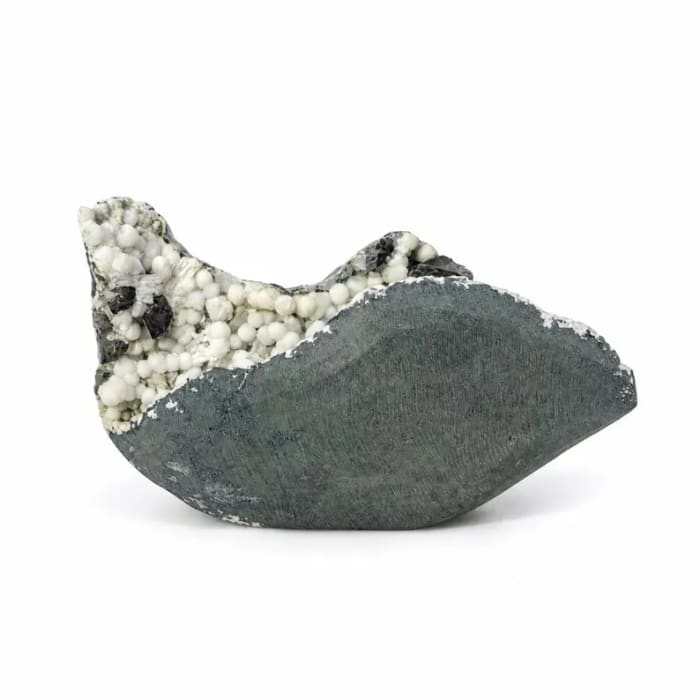
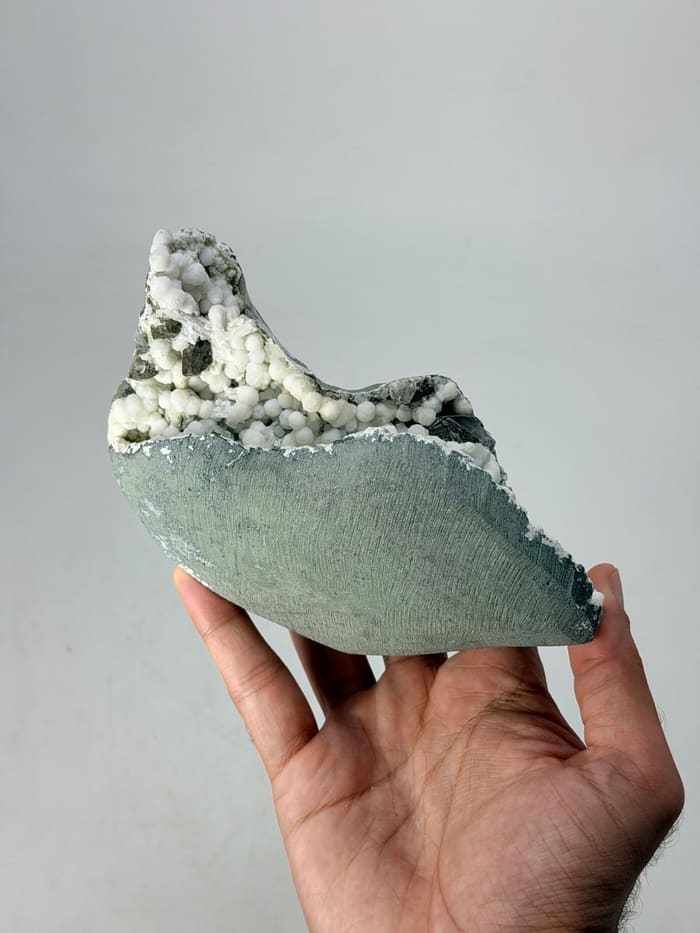
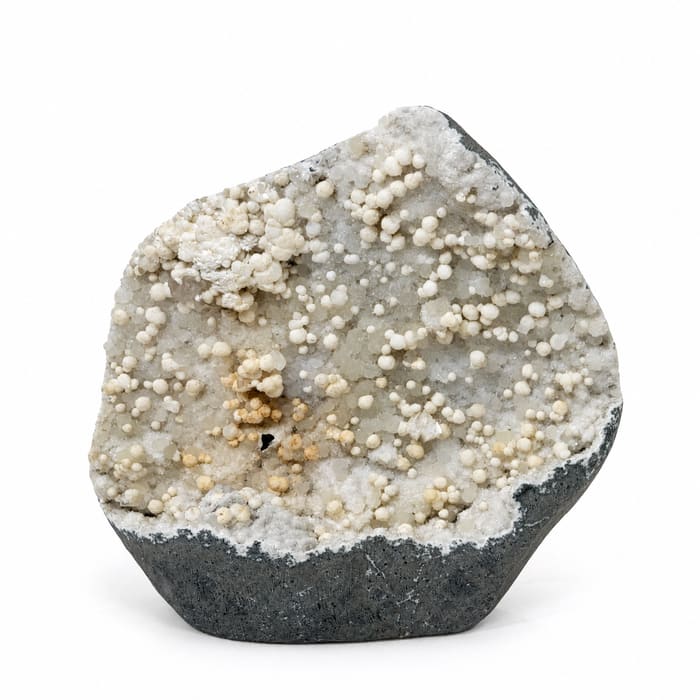
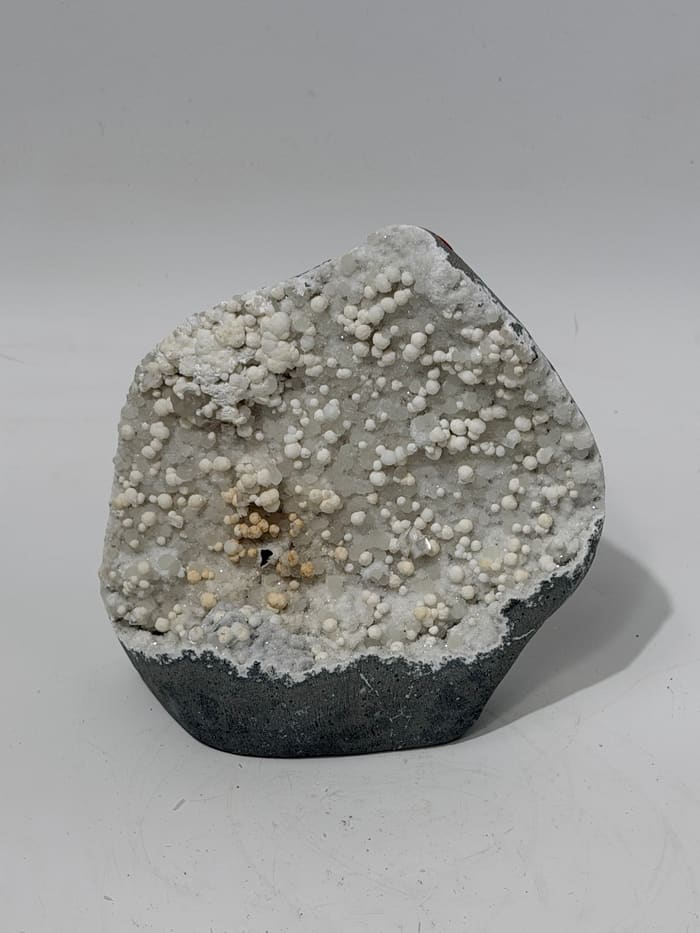
Gyrolite forms small, perfect-looking balls, white, cream or pale brown, sitting in cavities of volcanic rock, sometimes under a sprinkle of glassy apophyllite crystals. It's a quiet mineral next to cavansite's blue, but among collectors of Indian zeolites it's a favourite.
What it is
Gyrolite is a hydrated calcium silicate. It grows as thin, flexible plates that stack and curve around a centre until they form a rounded ball, which is where its name comes from: from the Greek for "round." Freshly broken balls show a radiating inside. It forms in the gas pockets of basalt, usually alongside apophyllite, stilbite, calcite and other zeolite-family minerals, and is sometimes overgrown by them.
Where it comes from
The best-known gyrolite comes from the Deccan Traps of Maharashtra, India, the ancient lava flows quarried around Mumbai, Pune and Nashik. Specimens from those quarries often pair gyrolite balls with apophyllite, which makes some of the most attractive Indian pieces. Gyrolite also occurs elsewhere in basalt around the world, but rarely in pieces as clean.
How to tell real gyrolite
- Look for a platy, pearly surface. Up close, gyrolite balls have a soft, pearly sheen and a slightly layered surface, not a chalky or painted one.
- Mind the matrix. As with other Indian zeolites, the thing to check isn't a fake mineral but a repair: loose balls glued into a cavity. Natural balls sit in the rock with no shiny film at the contact.
- Know the neighbours. Rounded white okenite is fibrous and fluffy, while gyrolite is firm and plated. Rounded white calcite is harder and fizzes in acid; gyrolite doesn't.
Looking after it
Gyrolite is soft and the balls can crumble if knocked. Handle it by the matrix, keep it in a cabinet away from dust, and clean it only with a soft brush or a puff of air. Don't wash it.
See gyrolite in the shop, and the apophyllite and stilbite it often grows with.
Questions
- Where does gyrolite come from?
- The best-known gyrolite comes from the Deccan Traps basalt of Maharashtra, India, where it is found in quarries around Mumbai, Pune and Nashik.
- What is the difference between gyrolite and okenite?
- Both are white Indian calcium silicates that form balls, but okenite is soft and fibrous like cotton wool, while gyrolite is firm, made of stacked, pearly plates.
- How do I care for gyrolite?
- Hold it by the rock, keep it away from dust and knocks, and clean it only with a soft brush or a puff of air.