Tiffany Stone: what it is, where it's from, how to tell it's real
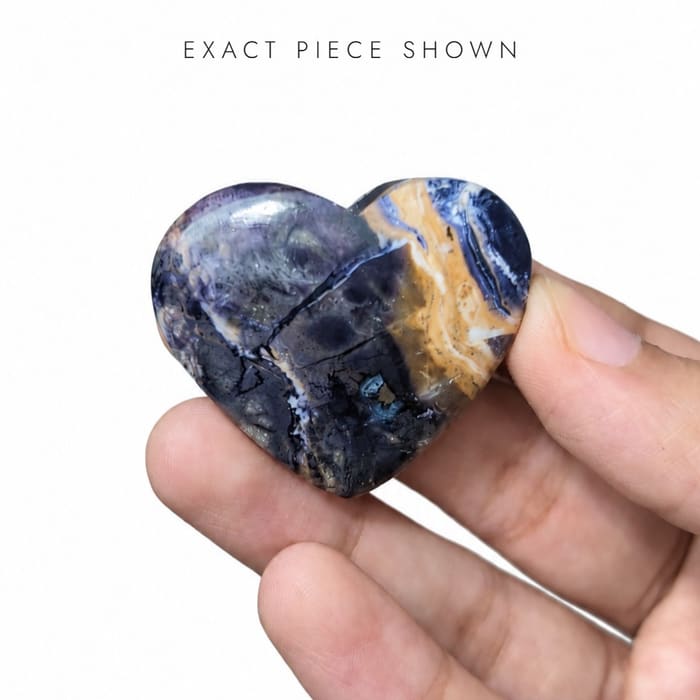
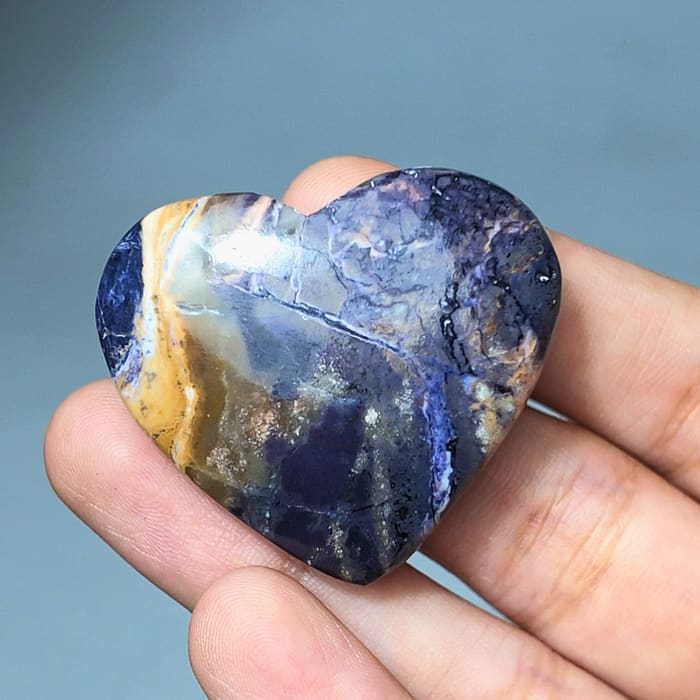
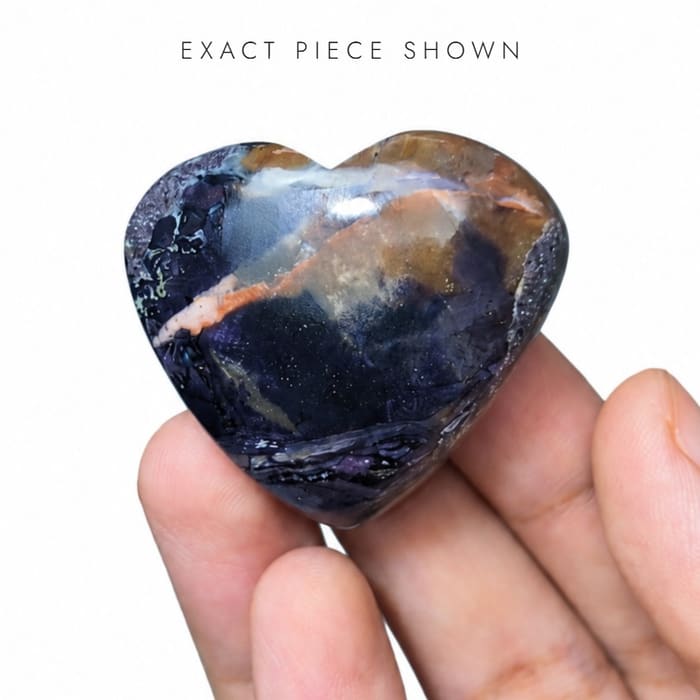
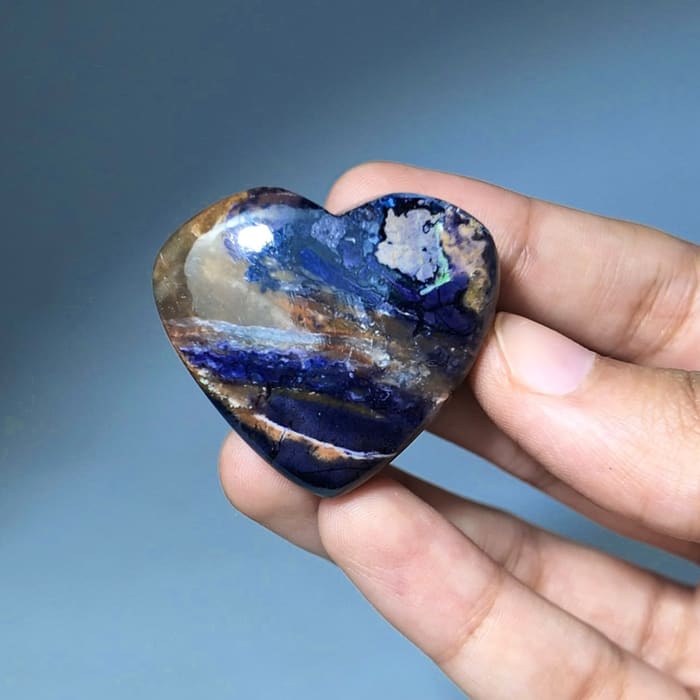
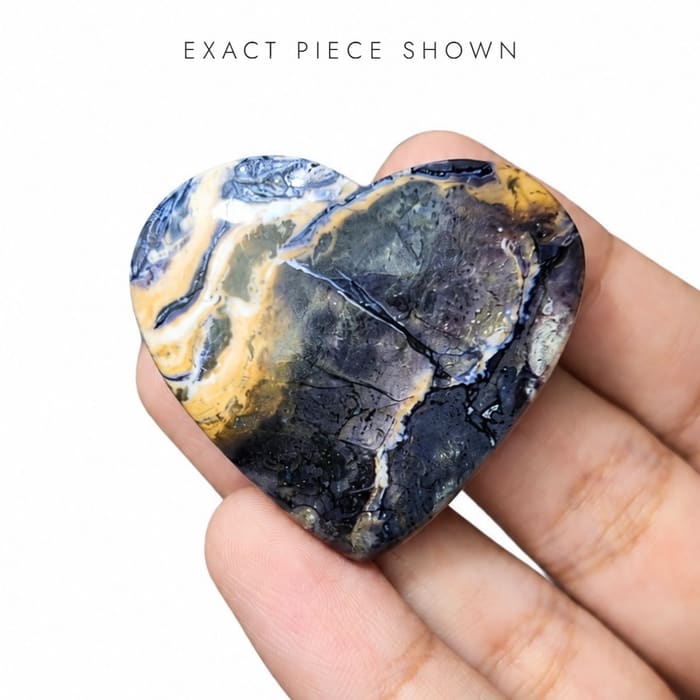
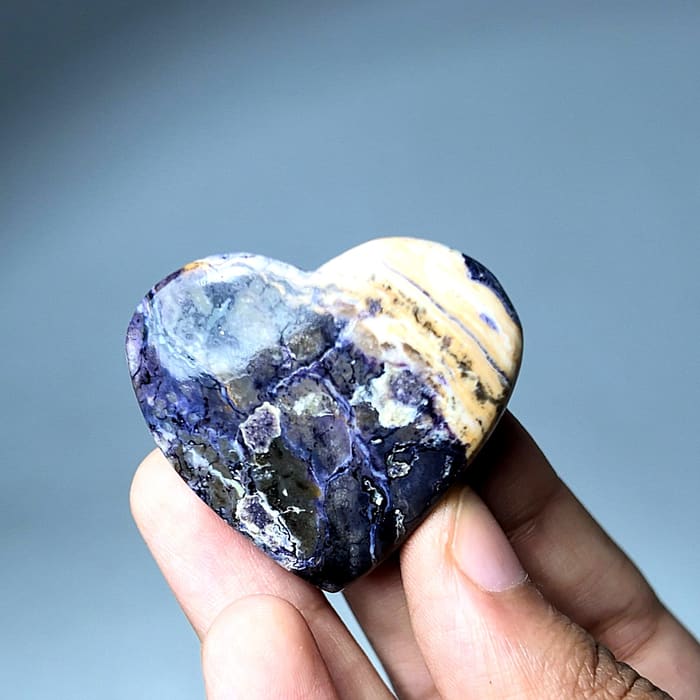
Tiffany Stone is one of the rarest stones in the shop: purple, cream and white, veined with black and dotted with orange, and found in one small corner of the world. Collectors also know it as bertrandite, opalized fluorite or "ice cream opal," after the way its colours swirl.
What it is
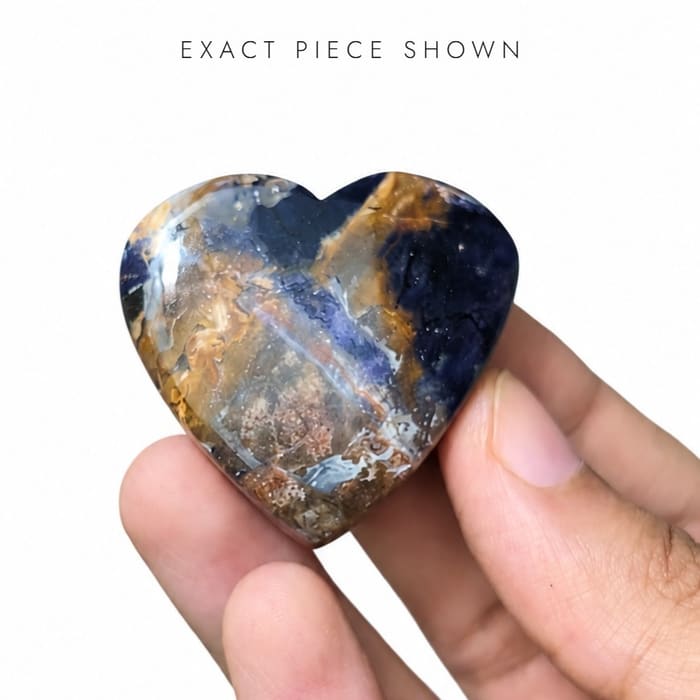
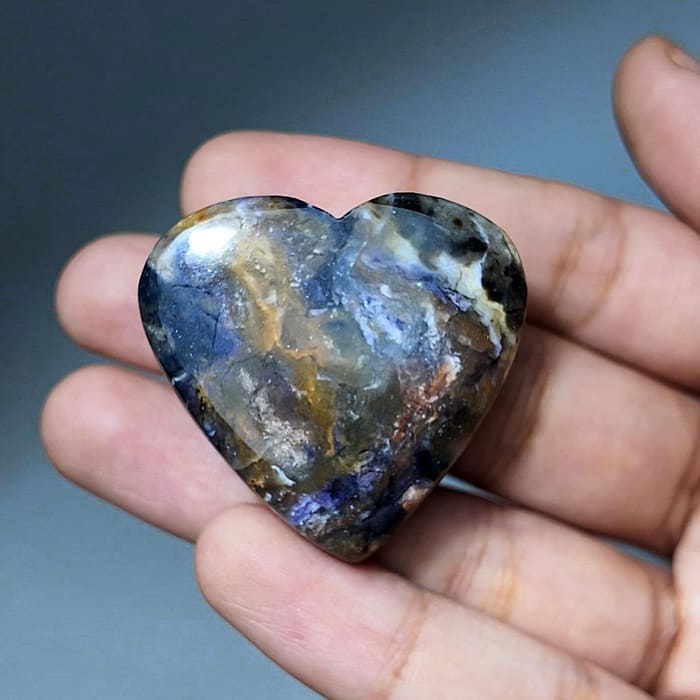
Tiffany Stone isn't a single mineral but a natural mix of several. Purple fluorite gives it its colour. Opal and chalcedony make up the creamy white areas and take a good polish. Quartz and dolomite are mixed through it, black and brown manganese oxides draw the veins and dendrites, and small amounts of bertrandite, a beryllium mineral, are why the stone was found in the first place. Because the mix changes from piece to piece, no two Tiffany Stone hearts or palm stones look alike.
Where it comes from
Tiffany Stone comes from the Spor Mountain area of Juab County in western Utah, USA. It was found in the course of mining the district for beryllium, not mined for itself, so the supply has always been small and irregular. When material stops coming out of that ground, there is no second source to replace it, which is why good pieces are hard to find and hold their value.
How to tell real Tiffany Stone
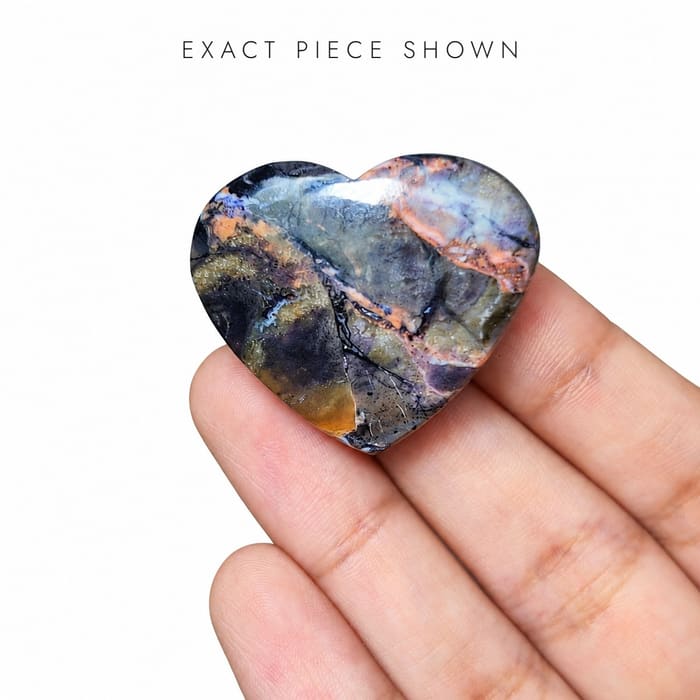
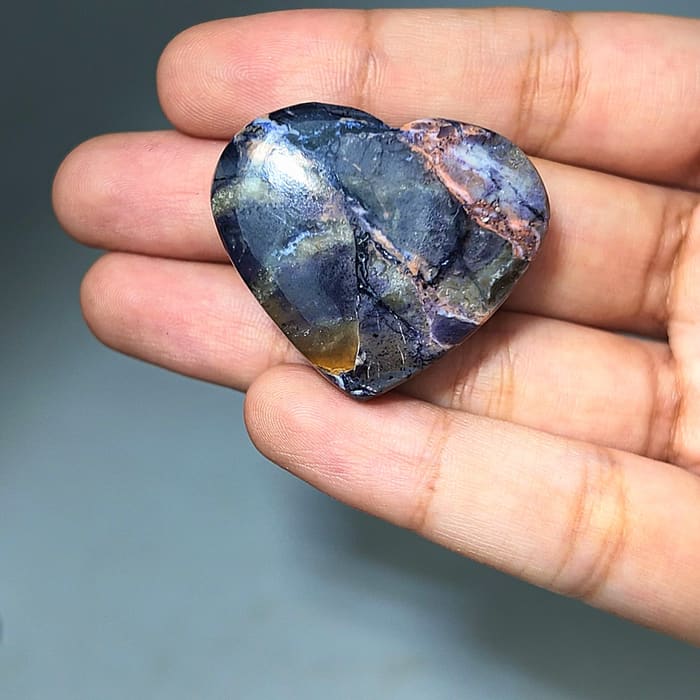
- Look for the mix. Real Tiffany Stone shows several materials side by side: translucent purple fluorite, milky white or cream opal-chalcedony, black or brown veins, and often small rusty orange spots. A piece that is one even purple all over is not it.
- Watch for dyed look-alikes. Howlite, magnesite and agate are dyed purple and sold as "Tiffany Stone" or "Tiffany jasper." Dye tends to collect in cracks and pits, and the colour sits on the surface rather than deep inside.
- Check the price and the name. Genuine Tiffany Stone costs noticeably more than jasper or dyed stone. A large, perfectly uniform piece at a bargain price is a warning sign, and so is a seller who can't say it comes from Utah.
Looking after it
Polished Tiffany Stone is safe to handle and display. Because it contains bertrandite, it shouldn't be cut, drilled or sanded at home: stone dust from beryllium minerals shouldn't be breathed. Its opal and fluorite are fairly soft, so keep it away from harder stones that could scratch it, and dust it with a soft dry cloth rather than washing it with chemicals. Strong, constant sun can dull the purple over many years.
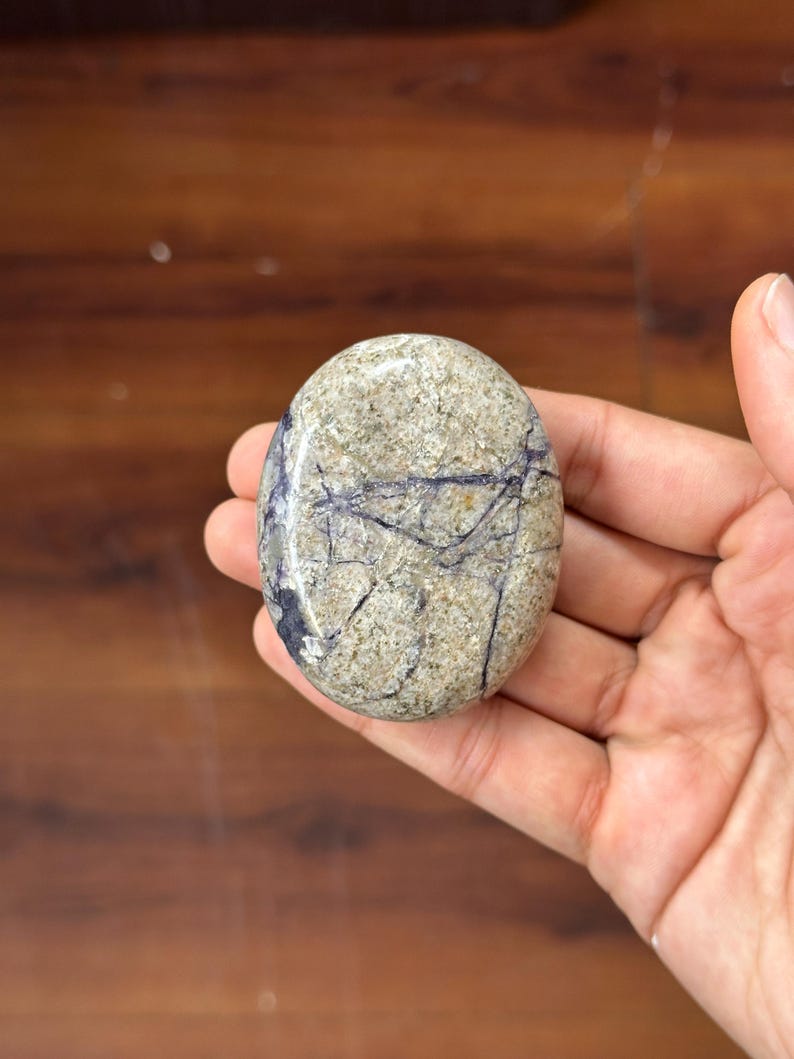
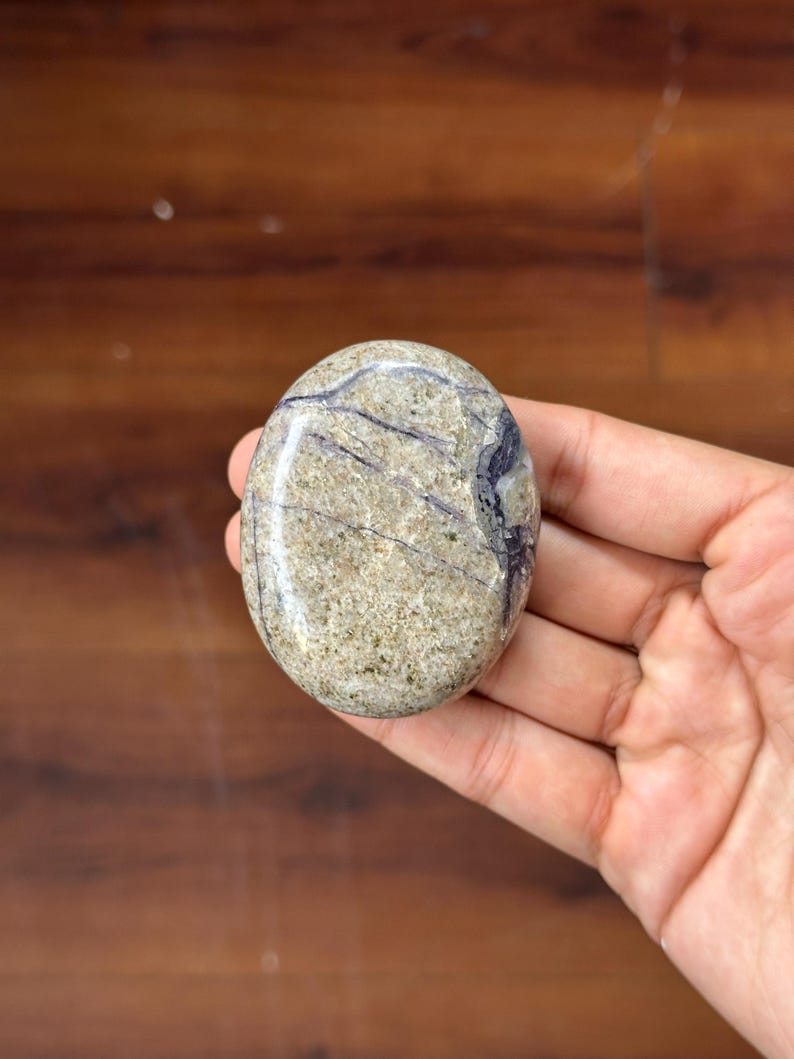
Every Tiffany Stone piece in the shop is photographed as it is, so the heart or palm stone in the pictures is the one you receive.
Questions
- Where does Tiffany Stone come from?
- Tiffany Stone comes from the Spor Mountain area of Juab County, Utah, USA, where it was found during beryllium mining. There is no other known source.
- Is Tiffany Stone the same as bertrandite?
- Not exactly. Tiffany Stone is a mix of purple fluorite, opal, chalcedony, quartz, dolomite and manganese oxides, with a little bertrandite. The trade often calls it bertrandite because that mineral is why the deposit was mined.
- How can I tell if Tiffany Stone is real?
- Real Tiffany Stone shows several materials together: translucent purple fluorite, cream or white opal, black veins and often orange spots. Evenly purple stone, or colour that pools in cracks, is usually dyed howlite, magnesite or agate.
- Why is Tiffany Stone expensive?
- It comes from one small area in Utah and was only ever recovered alongside beryllium mining, so very little reaches the market and supply can stop at any time.