How a crystal sphere is made
From rough block to polished ball: how crystal and stone spheres are sawn, ground and polished, why some stones make better spheres than others, and what to look for.
A polished sphere looks like the simplest shape there is. Getting one out of a rough, irregular lump of stone takes more steps than you might expect, and each one loses material.
1. Choosing the rough
It starts with a block of rough that's big and solid enough. Cracks are the enemy: a hidden fracture can split the sphere halfway through, wasting all the work so far. Cutters tap the rough and look at it in strong light, and for see-through stones like quartz, they study the inside to decide where a sphere will show the best colour or inclusions.
2. Sawing a cube
The rough is trimmed on a diamond saw, first to a slab, then to a cube a little bigger than the finished sphere. Then the eight corners are cut off, and the resulting edges are cut again, until the block is a rough, many-sided ball. A lot of stone ends up as offcuts at this stage, often more than half the block. The offcuts become tumbles, hearts and palmstones.
3. Grinding round
The rough ball goes onto a sphere machine: three cup-shaped grinding heads that press against it from different sides while all of them turn. Because the ball spins on several axes at once, it's worn down evenly until it's truly round. This is done in stages, from coarse grit to fine, and the grinding is done wet to keep the dust down and the stone cool.
4. Sanding and polishing
With the shape done, finer and finer abrasives take out the scratches from the grinding. The final polish is usually with a fine oxide powder, cerium or tin oxide, on a felt or leather pad. For hard stones like quartz, this gives a glassy finish. Softer or mixed stones need a gentler hand.
Why some stones are harder to sphere
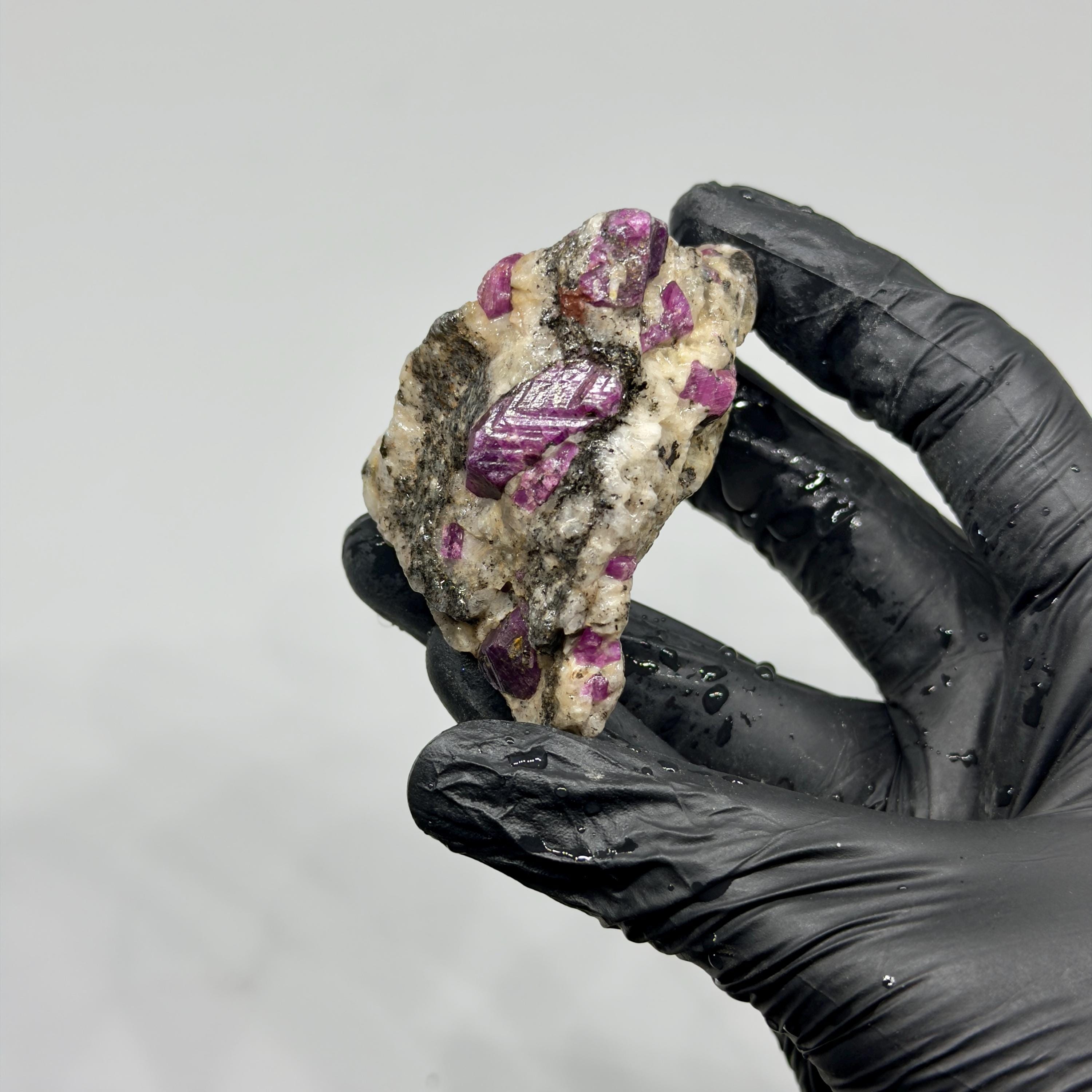
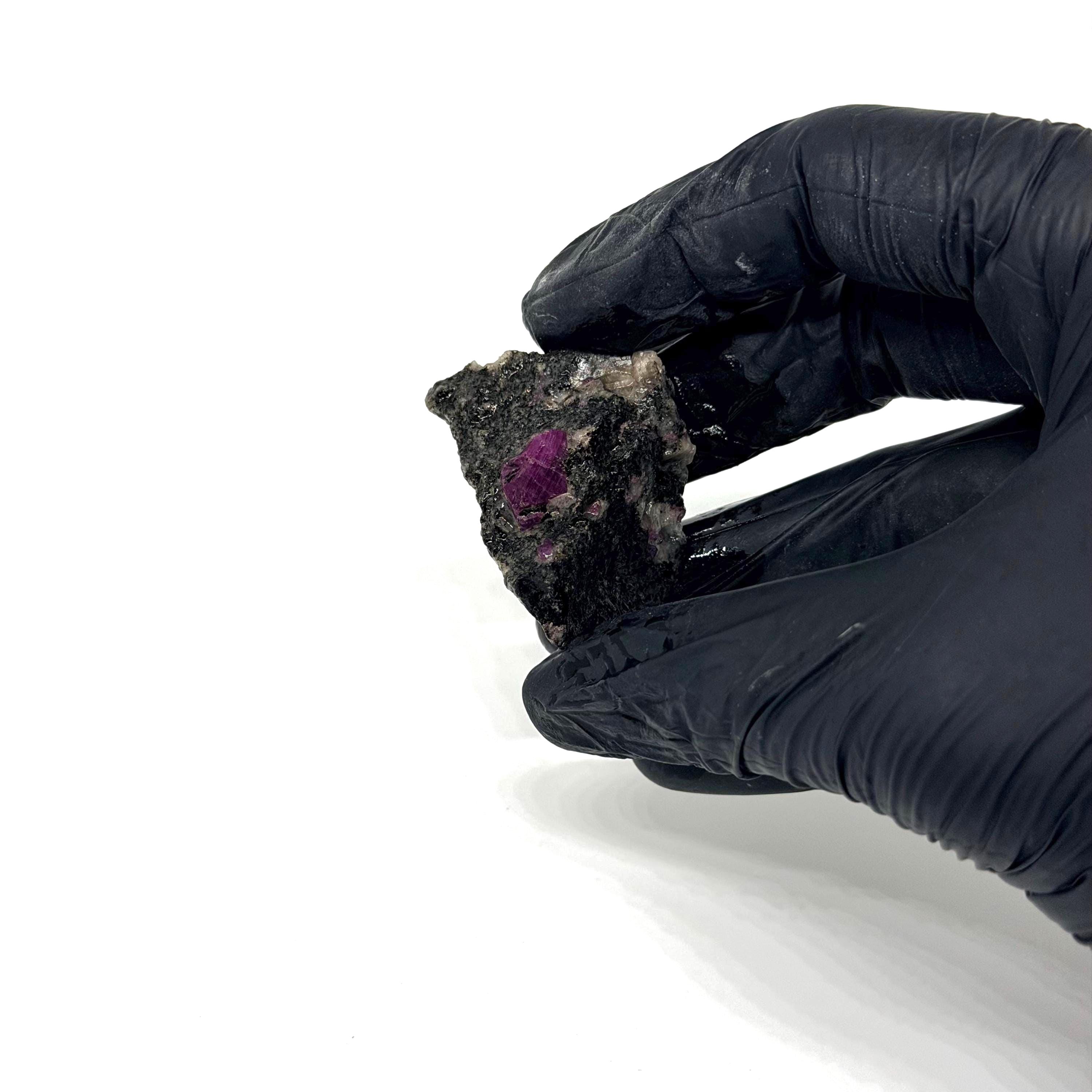
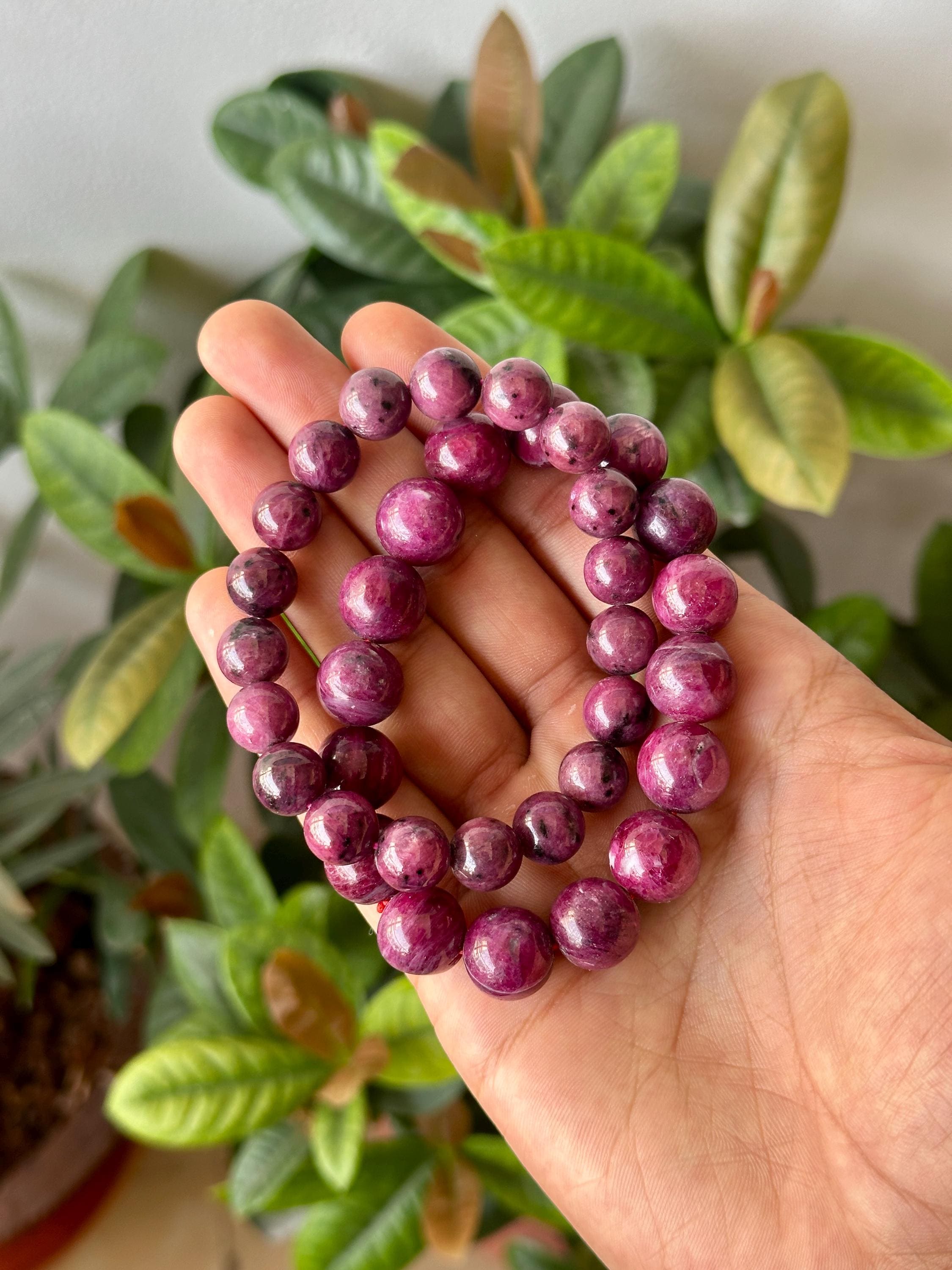
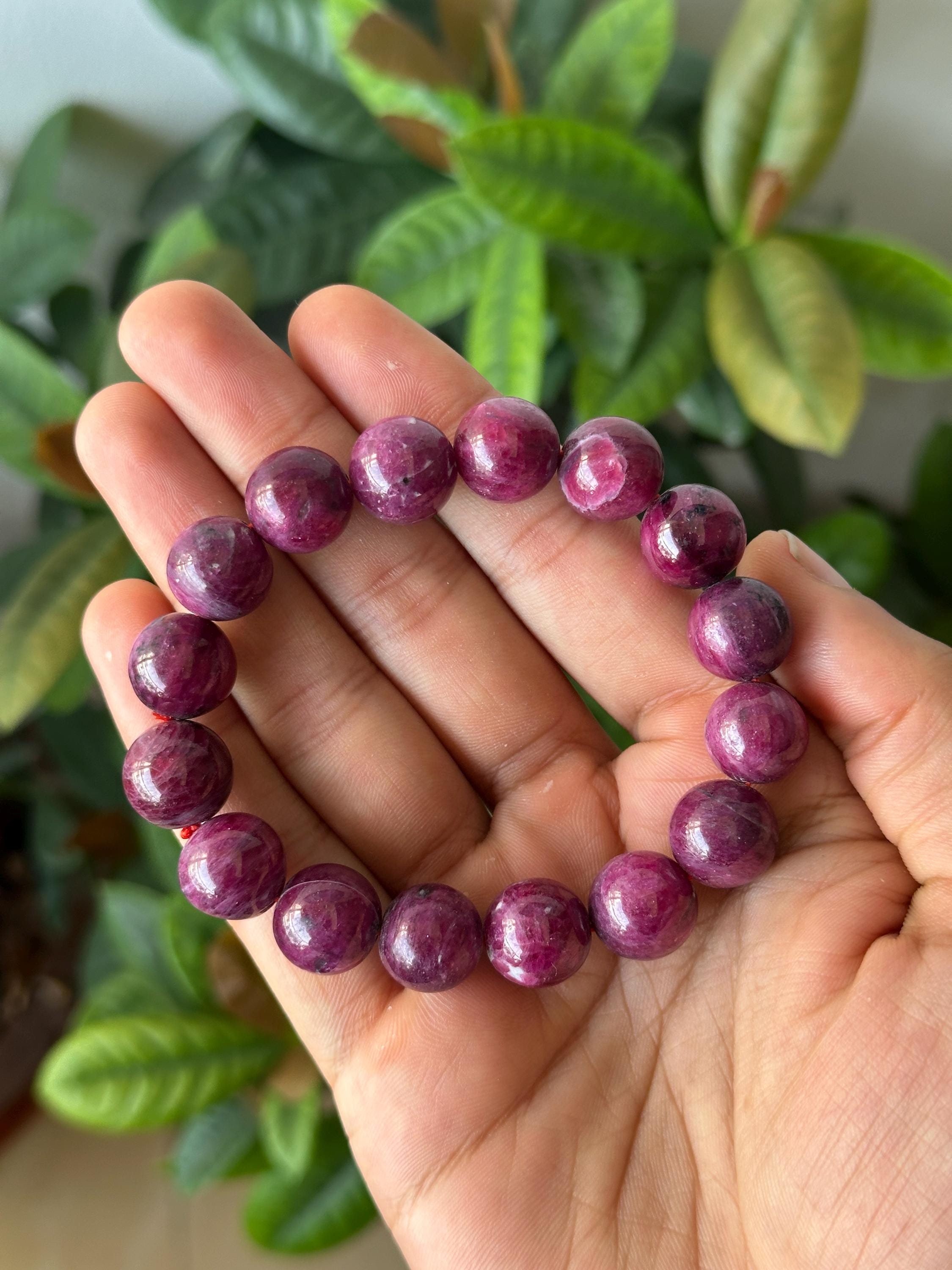
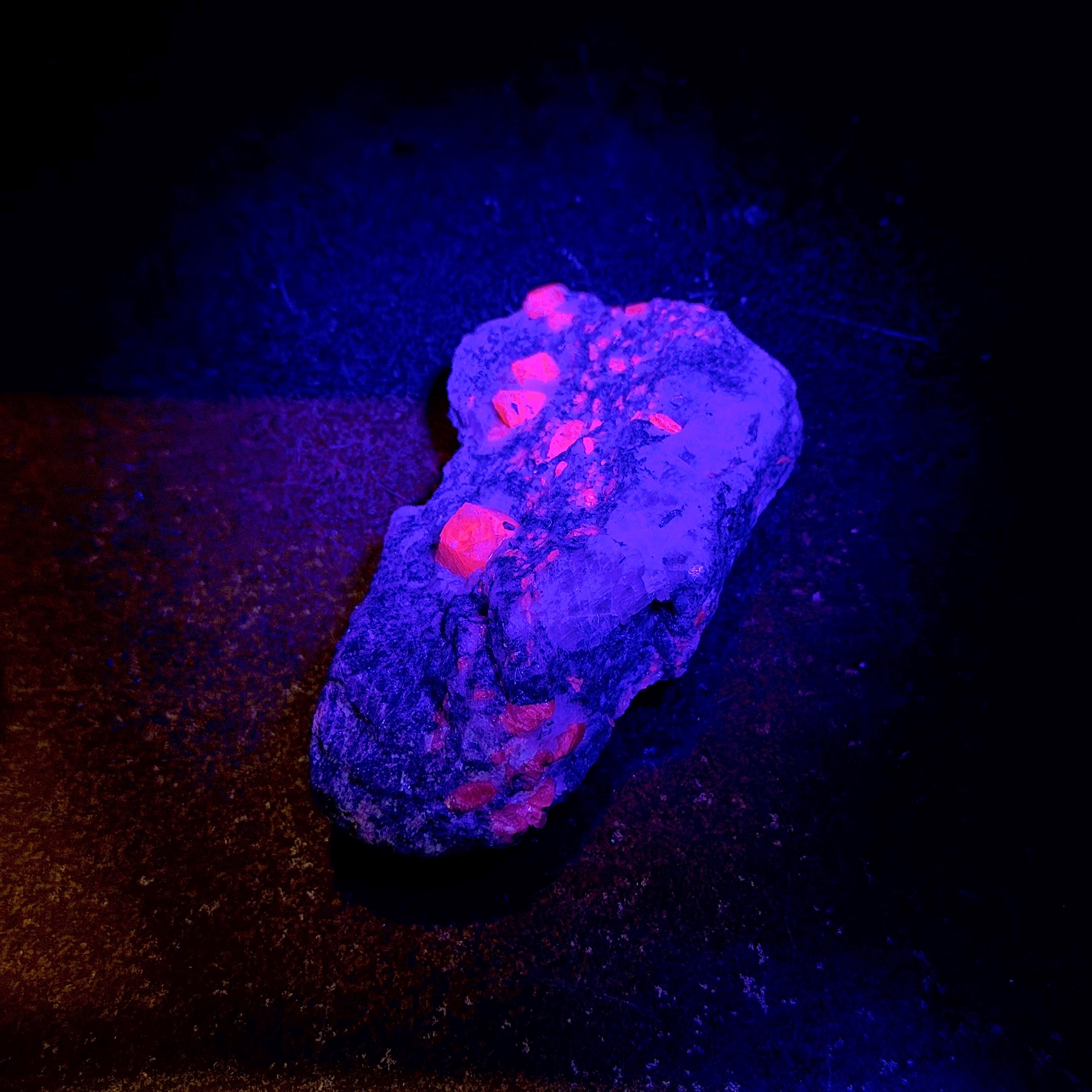
- Mixed rocks. Stones like ruby in fuchsite combine hard ruby with soft mica. The soft part wears faster, so it takes a careful polish to keep the surface smooth.
- Layered or fibrous stones. Pietersite and tiger's eye are made of fibres that can pluck out during polishing. Done well, they give a sphere whose light rolls around as you turn it.
- Soft stones. Rhodochrosite and lepidolite scratch easily and need slow, careful finishing.
What to look for
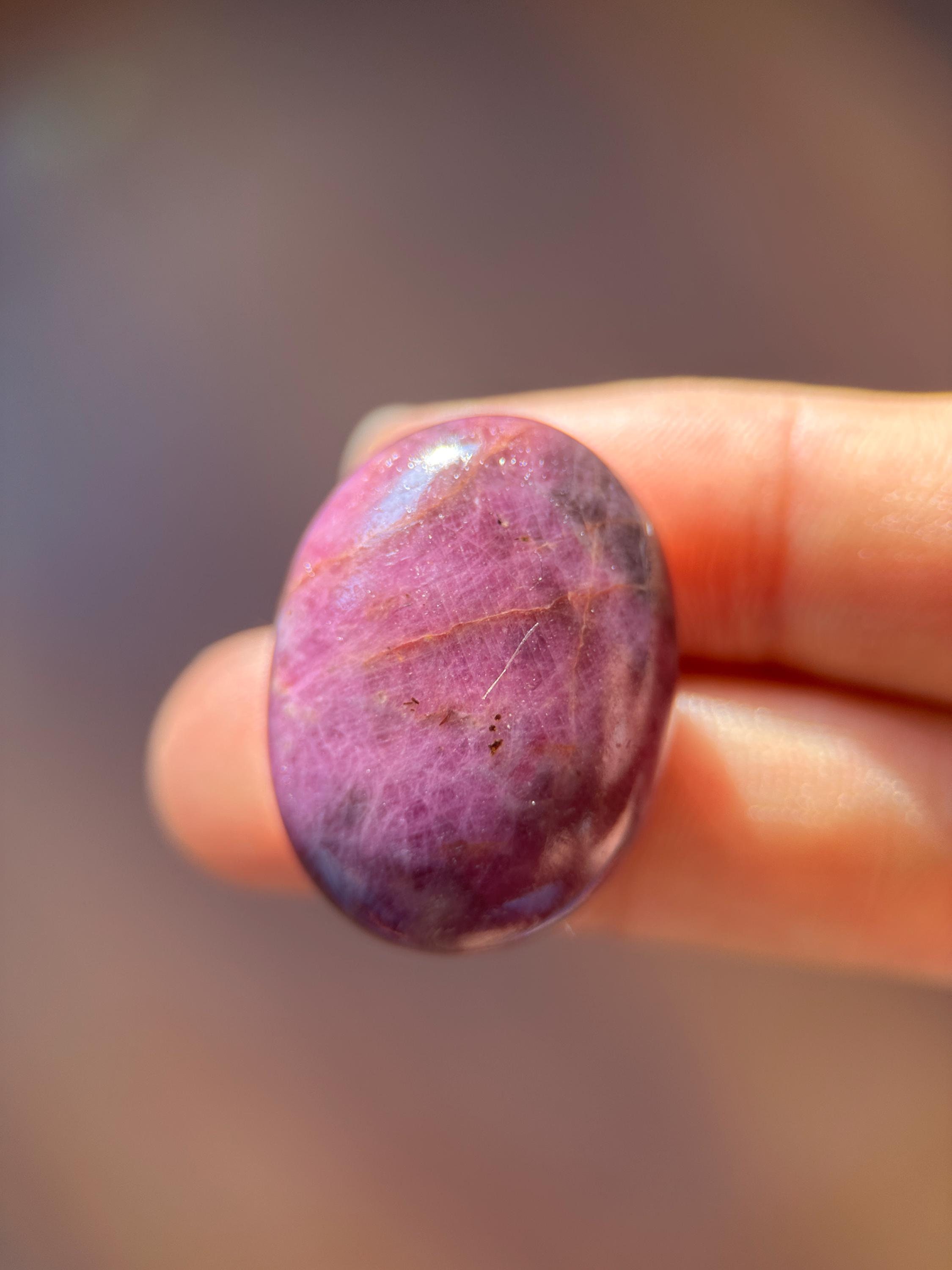
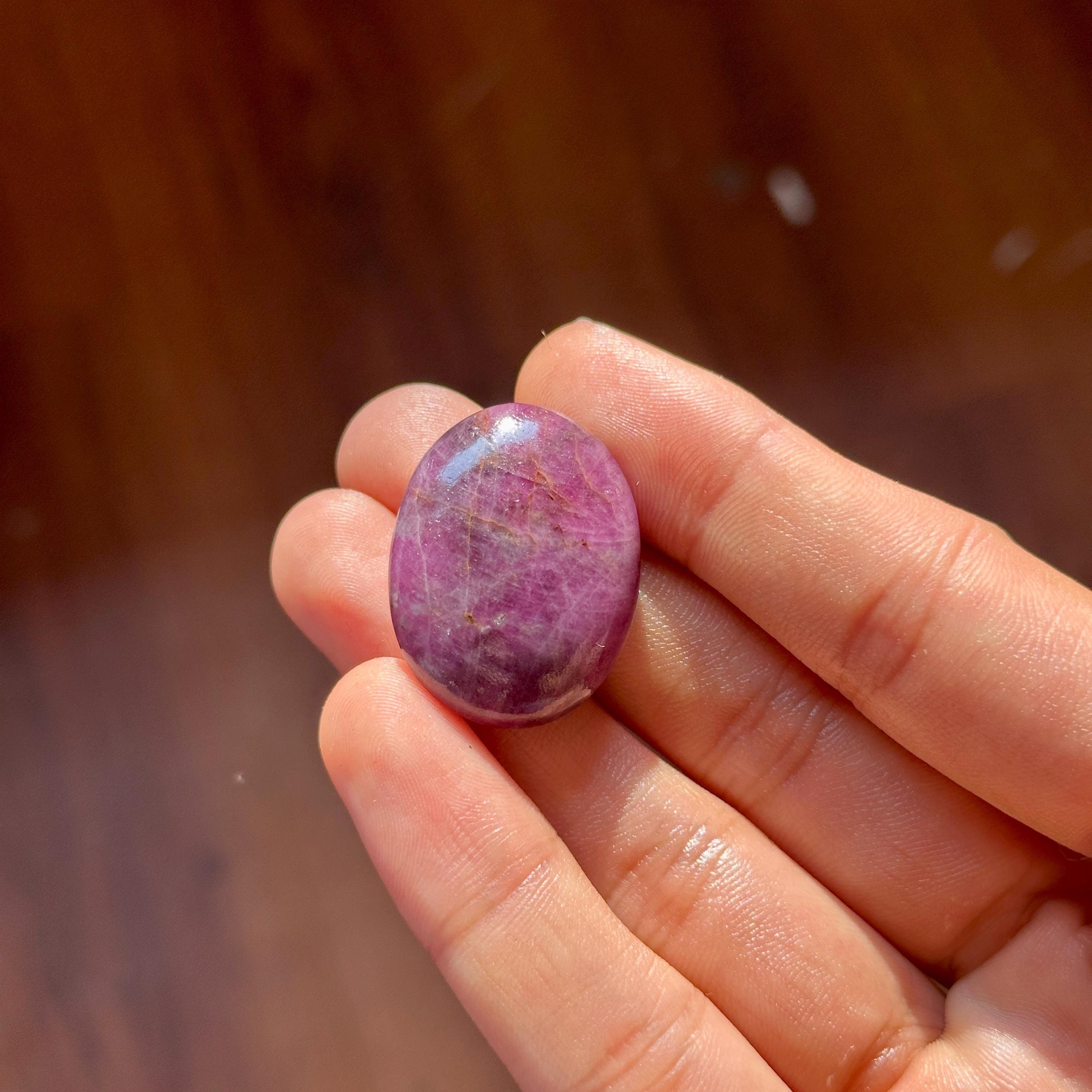
Turn a sphere in your hand under a lamp. The reflection should stay a clean, unbroken point of light as it moves, without flat spots or a wobble. Small natural pits are normal in many stones, especially mixed ones, and aren't a flaw. Deep scratches from the grinding are.
One-of-a-kind spheres are photographed individually, so the one in the pictures is the one you receive. Browse spheres by stone, for example ruby spheres, from each stone's page.