What is tiger's eye, and why does it shimmer?
How tiger's eye forms from fibrous crystals, why it shows a moving band of light, the difference between gold, red and blue, and how to spot the real thing.
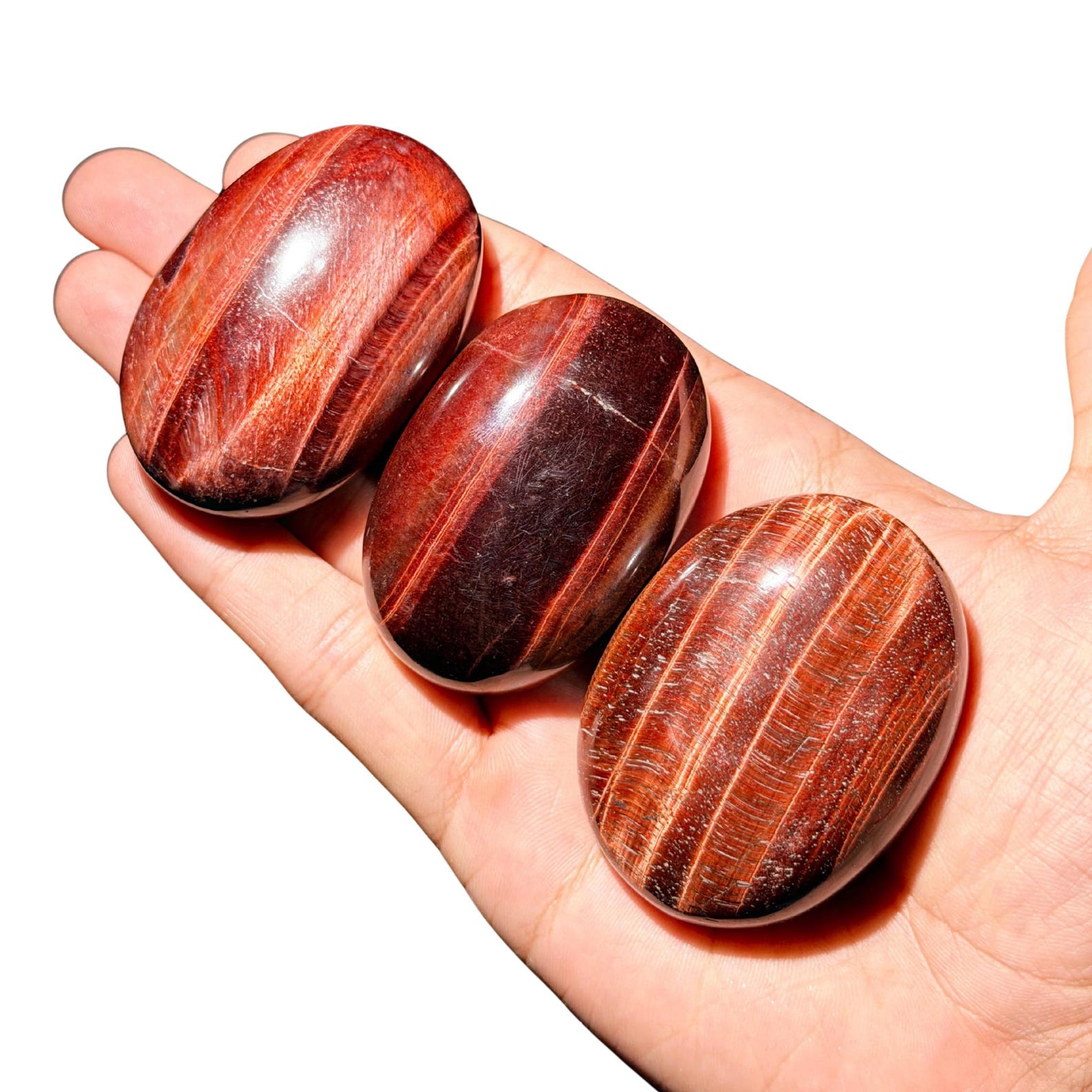
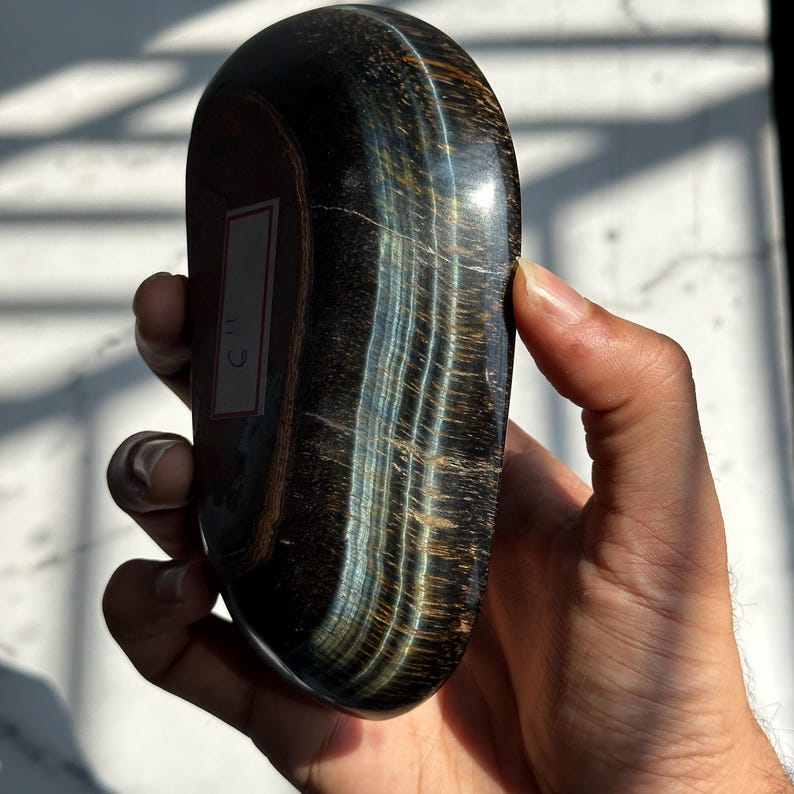
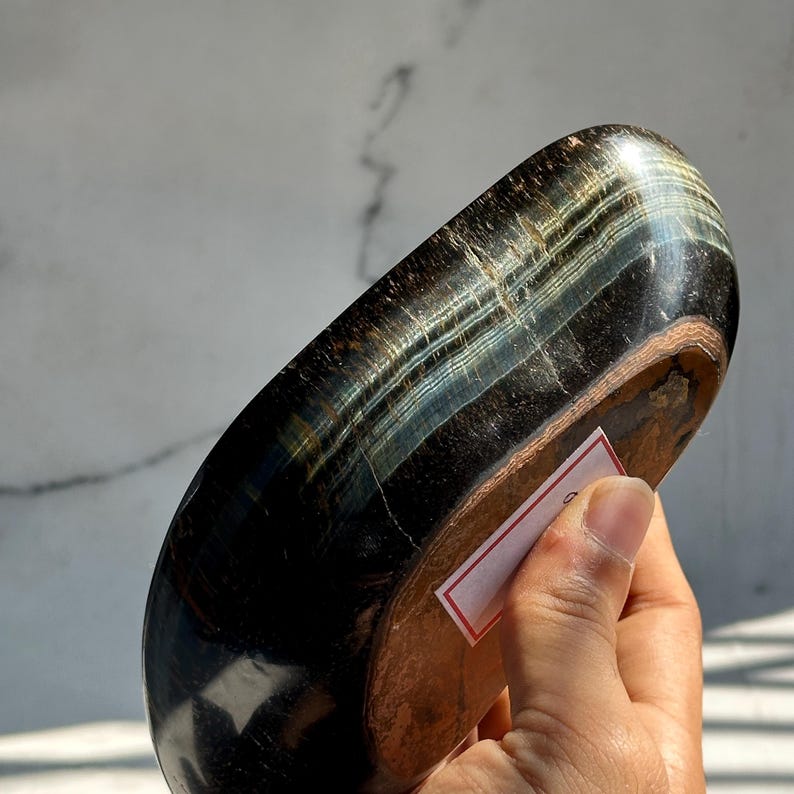
Turn a polished piece of tiger's eye slowly in your hand and a single band of light slides across it, gold against brown, as smooth as a torch beam. That moving shine is called chatoyancy, and it survives from a stone that doesn't exist in that piece any more.
A stone built on something that's gone
Tiger's eye starts as crocidolite, a fibrous blue mineral in the asbestos family, growing in tightly packed, parallel threads. Over time, silica-rich groundwater moves through the fibres and replaces them, strand by strand, with quartz. The process is slow enough that the quartz doesn't destroy the structure it's replacing: it takes on the exact shape and alignment of the original fibres, a kind of mineral cast called a pseudomorph.
That's the whole trick. A solid block of quartz has no chatoyancy at all. A block of quartz built from millions of aligned fibres, each one a tiny light pipe, does. Light that hits the fibres end-on gets channelled back out as a sharp line, and because the fibres all run the same way, the line moves as a single band rather than scattering into a blur. Cut and polished with the fibres running across the dome of the stone, the effect is as strong as it gets; cut the wrong way, and it barely shows.
One mineral, three colours
The fibres going in are blue-grey. What comes out depends on how much the iron in them has oxidised.
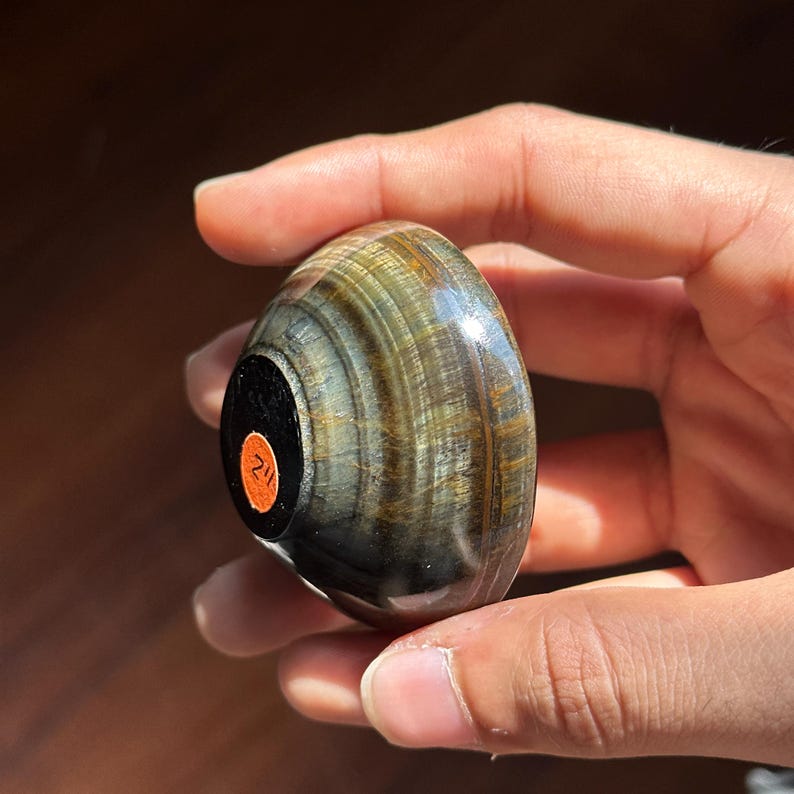
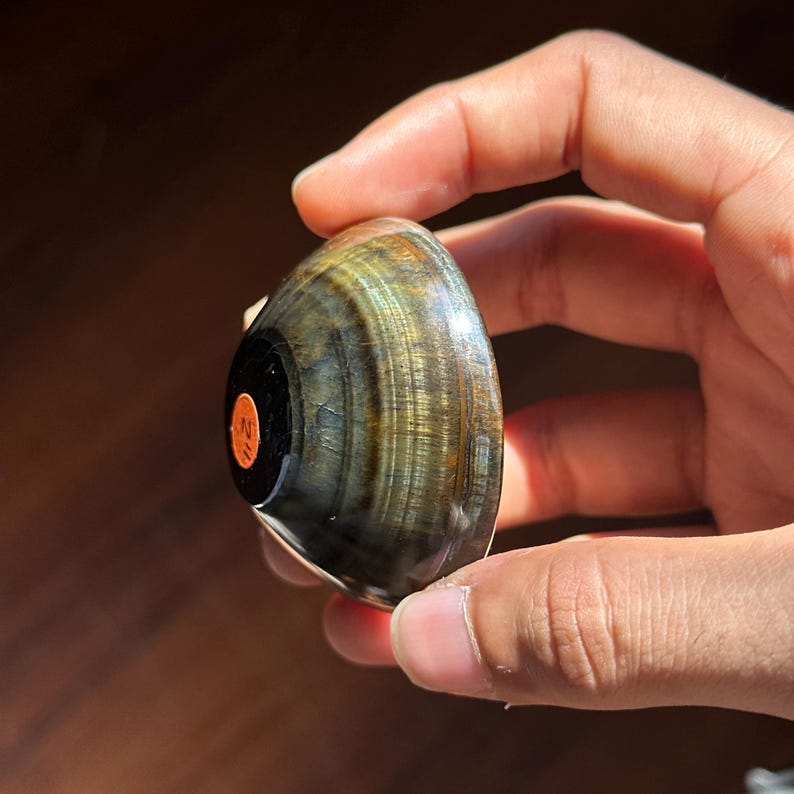
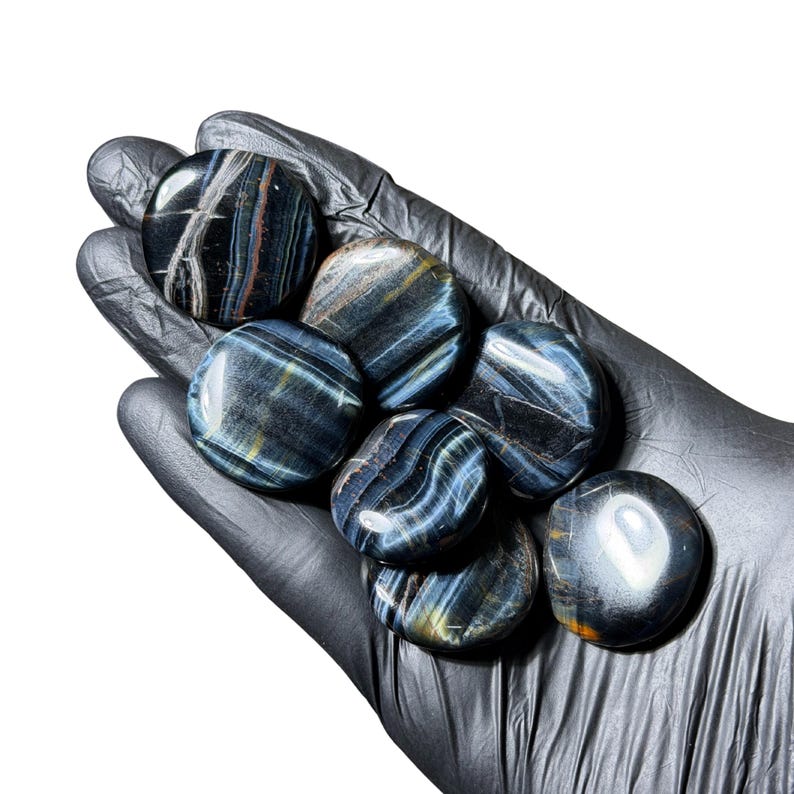
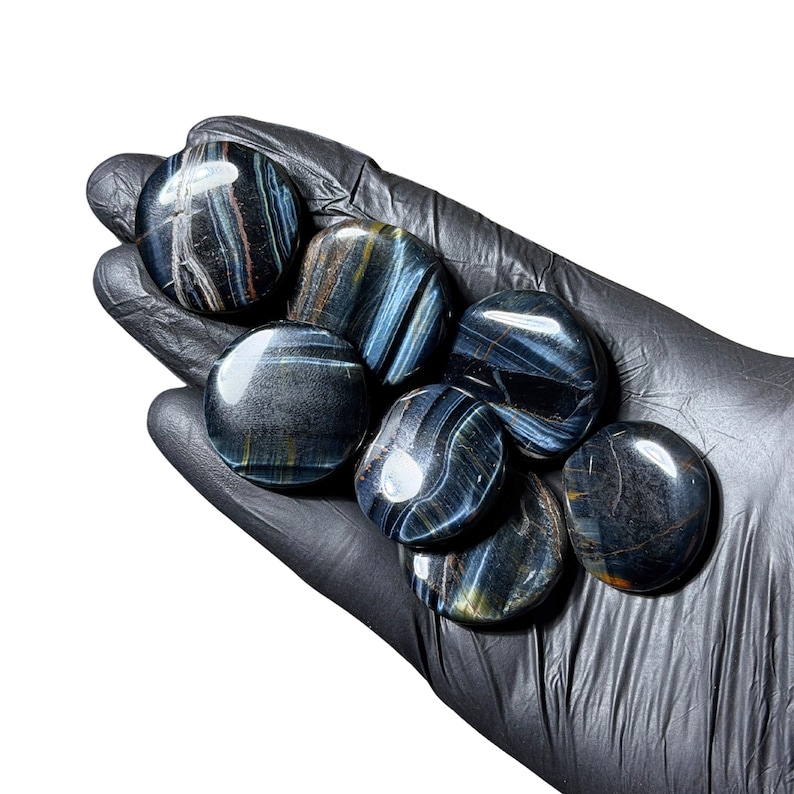
- Left alone, the iron stays close to its original state and the stone keeps a blue-grey colour with a silvery chatoyancy. This is sold as hawk's eye.
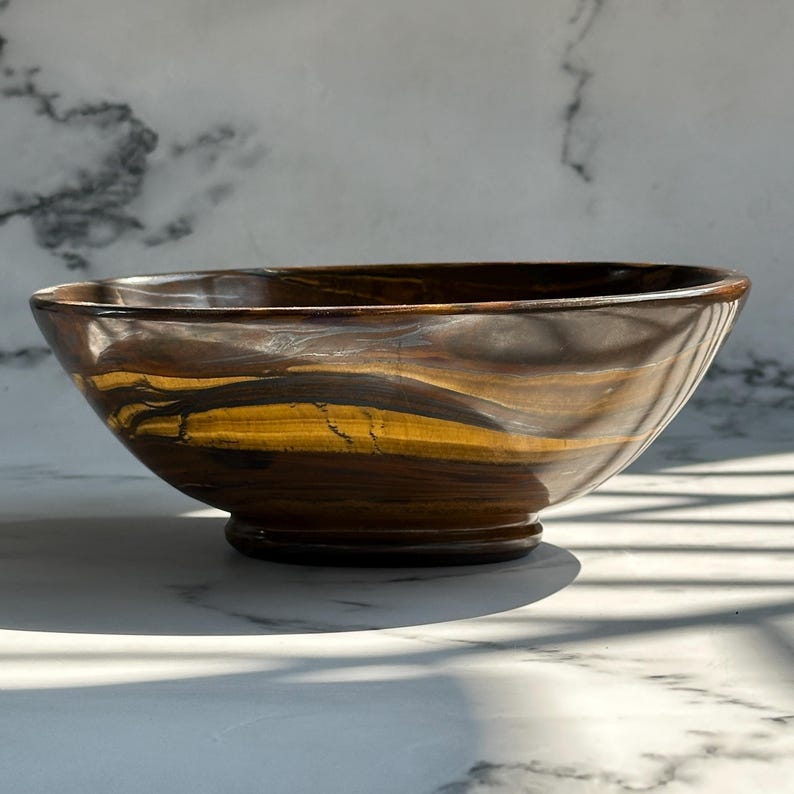
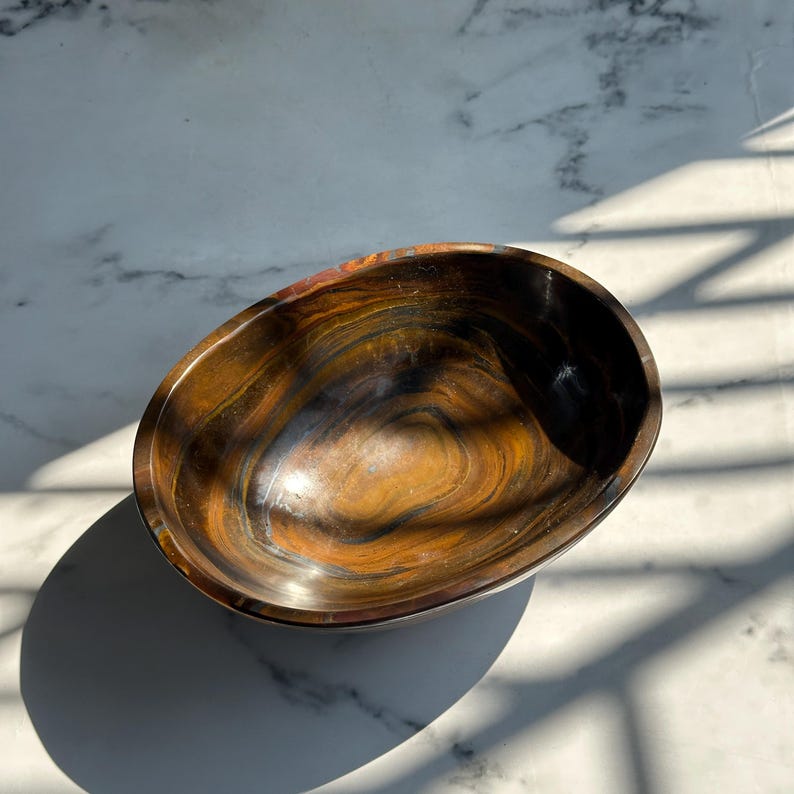
- Where the stone has weathered and the iron has oxidised to goethite and limonite, the colour turns golden brown. This is the classic tiger's eye, the most common of the three.
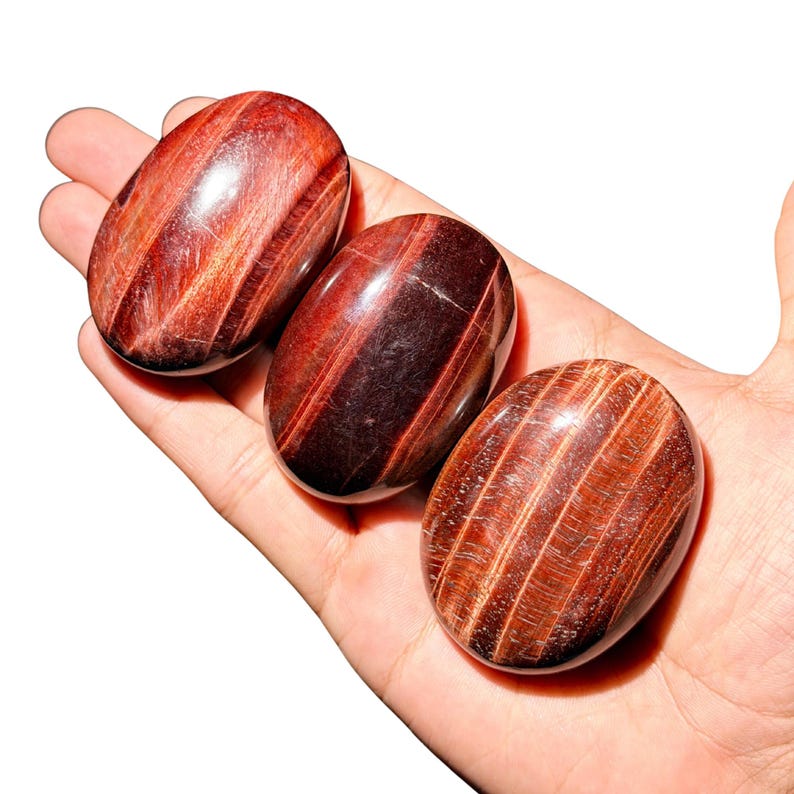
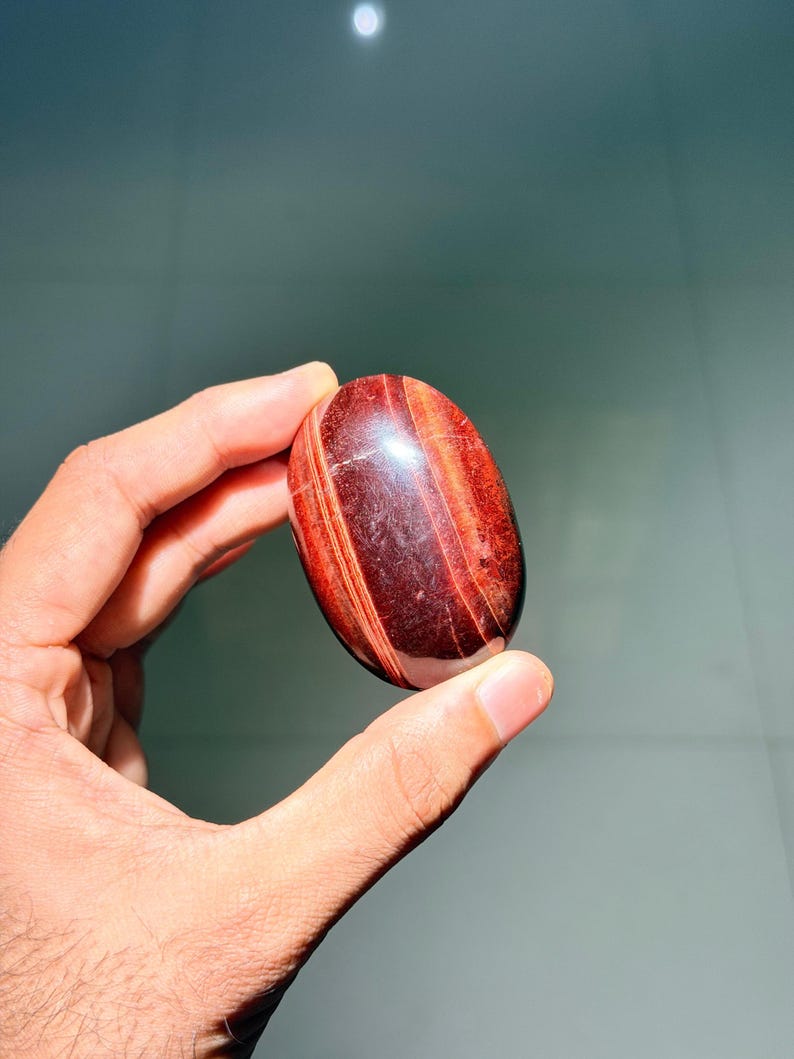
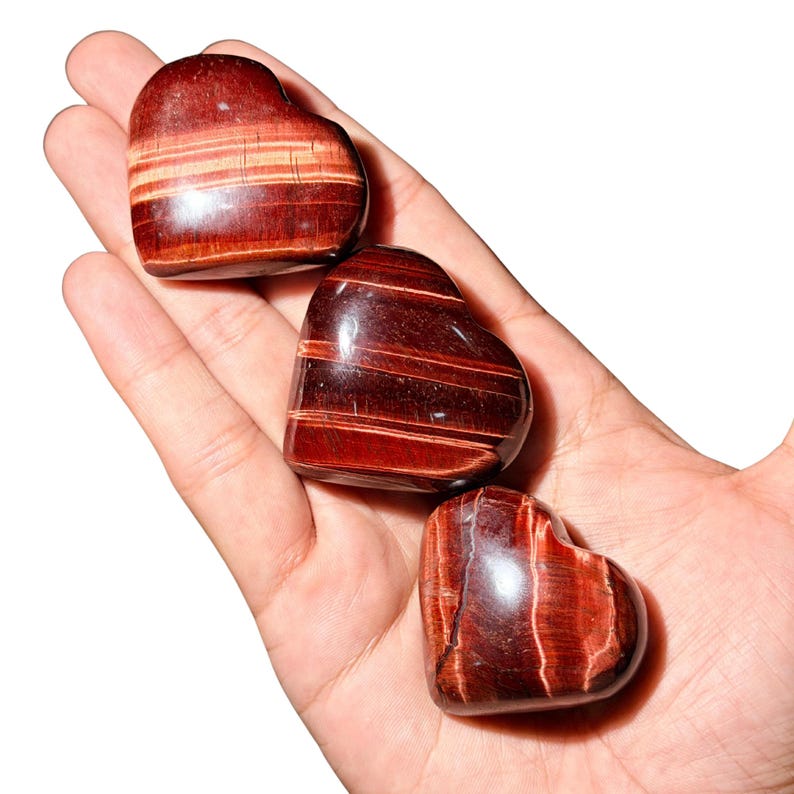
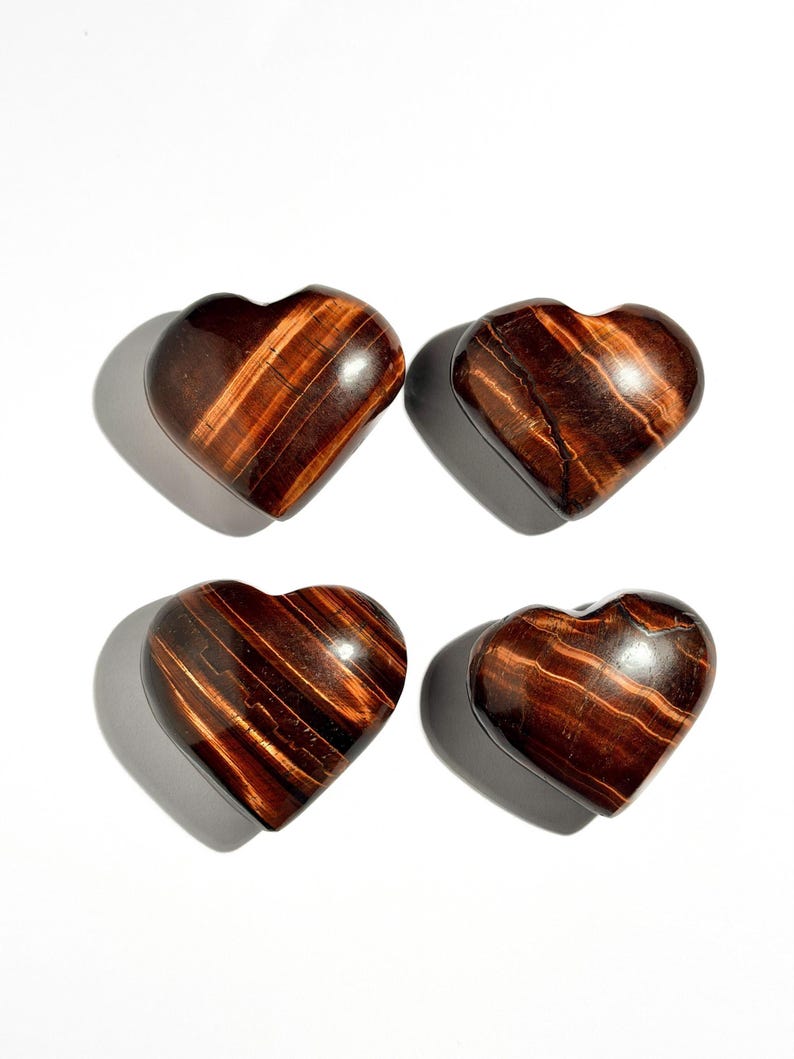
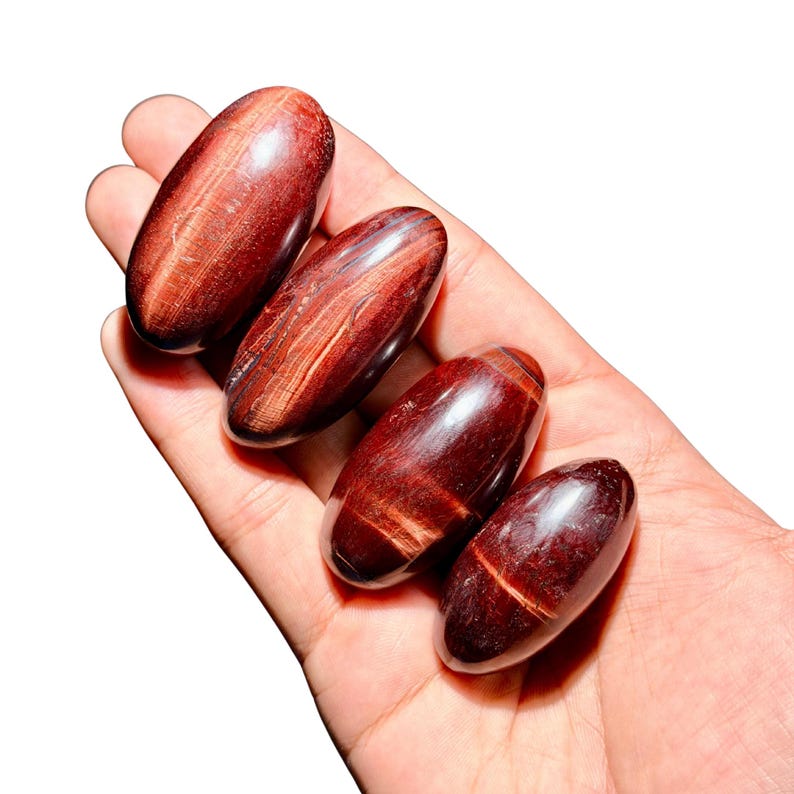
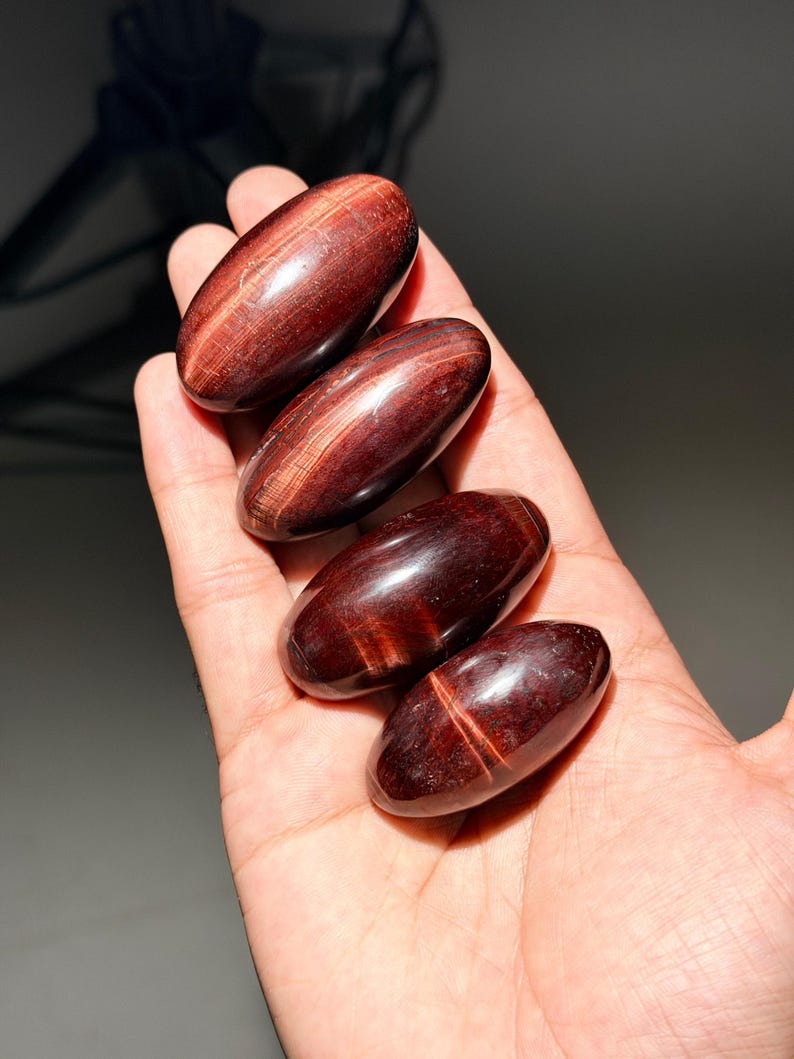
- Heating golden tiger's eye converts that iron oxide further, to hematite, and the stone turns a deep red. Almost all red tiger's eye on the market has been heat-treated this way; it isn't a separate mineral, just a cooked version of the gold.
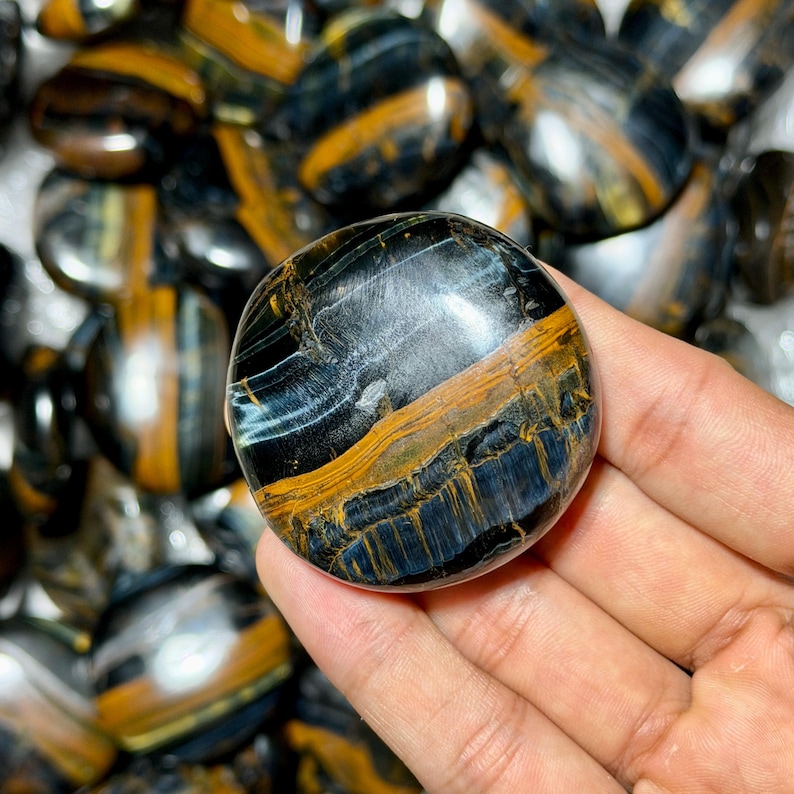
It isn't unusual to find all three in one piece, a grey-blue core shading into gold at the edges, where oxidation reached some of the stone and not the rest.
Its broken cousin
Pietersite is made the same way, quartz after fibrous minerals, but the fibres have been shattered and recemented before the silica finished its work, so the chatoyant bands run in swirling, broken directions instead of one neat line. We've written more about it in why pietersite is called storm stone.
Where it comes from
The best-known source is the Northern Cape of South Africa, around Prieska and Griqualand West, where tiger's eye has been mined since the early twentieth century, mostly as a byproduct of the same iron-formation geology that gives the region its crocidolite. Western Australia, Namibia and India also produce it, usually with the same blue-to-gold range depending on how weathered the material is. Most rough reaching a workshop today is already in the golden range; untouched blue-grey hawk's eye, where the iron never oxidised, is the less common of the two.
Telling the real thing from an imitation
Genuine tiger's eye is easy to check without any equipment.
- The band should be a single, clean line. It should stay sharp and move smoothly as you tilt the stone, not blur, jump or split.
- Look for fibres, not flecks. Under a loupe or strong light, you should see fine, parallel striations running the length of the stone. A dyed howlite or glass cabochon trying to fake chatoyancy usually shows a vague gradient or tiny bubbles instead of real fibre structure.
- Weight and cold. Tiger's eye is dense quartz; it feels heavier and colder in the hand than resin or glass cat's-eye imitations of a similar size.
- Colour that makes sense. Natural golden tiger's eye is a warm honey-brown, never a flat, uniform orange. Red tiger's eye, being heat-treated, is legitimate and common, but a colour that looks artificially even and bright is worth a second look.
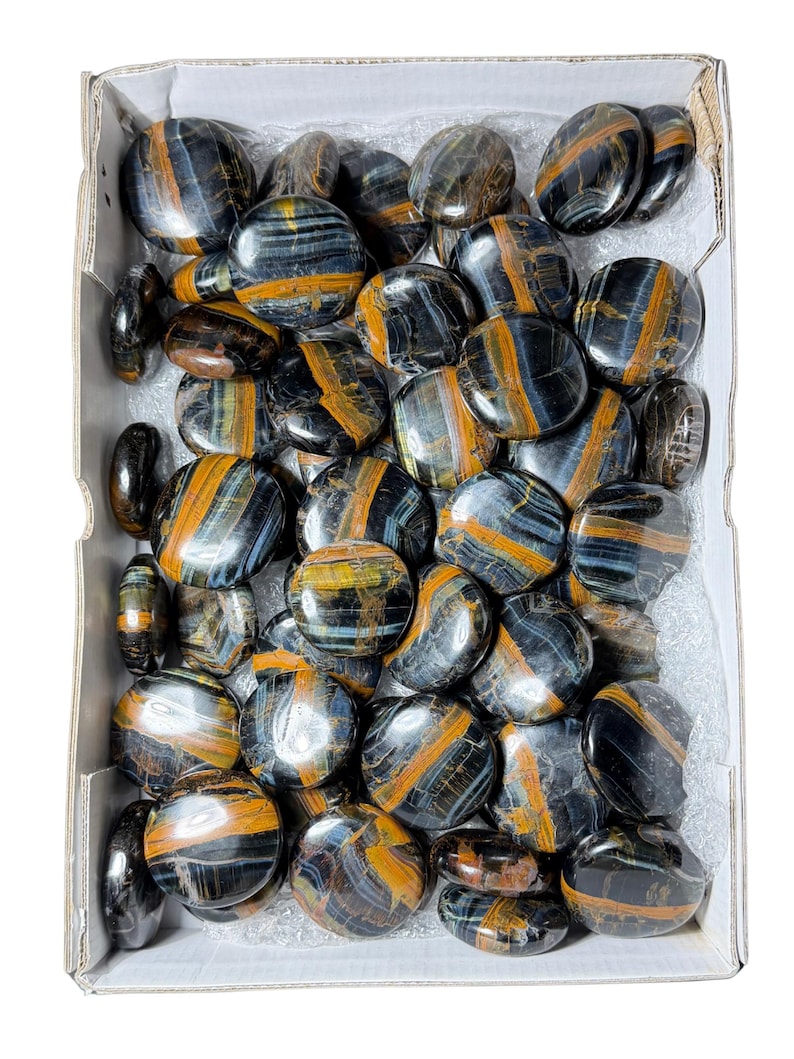
A good piece, whether a cabochon, a sphere or a tumbled stone, rewards exactly the thing that makes it: turn it in the light and watch the fibres that are no longer there still doing their work.