What is kyanite, and why does it have two hardnesses?
Kyanite's old name means 'two strengths': it's genuinely softer along the blade than across it. What that tells you about the crystal, and where it comes from.
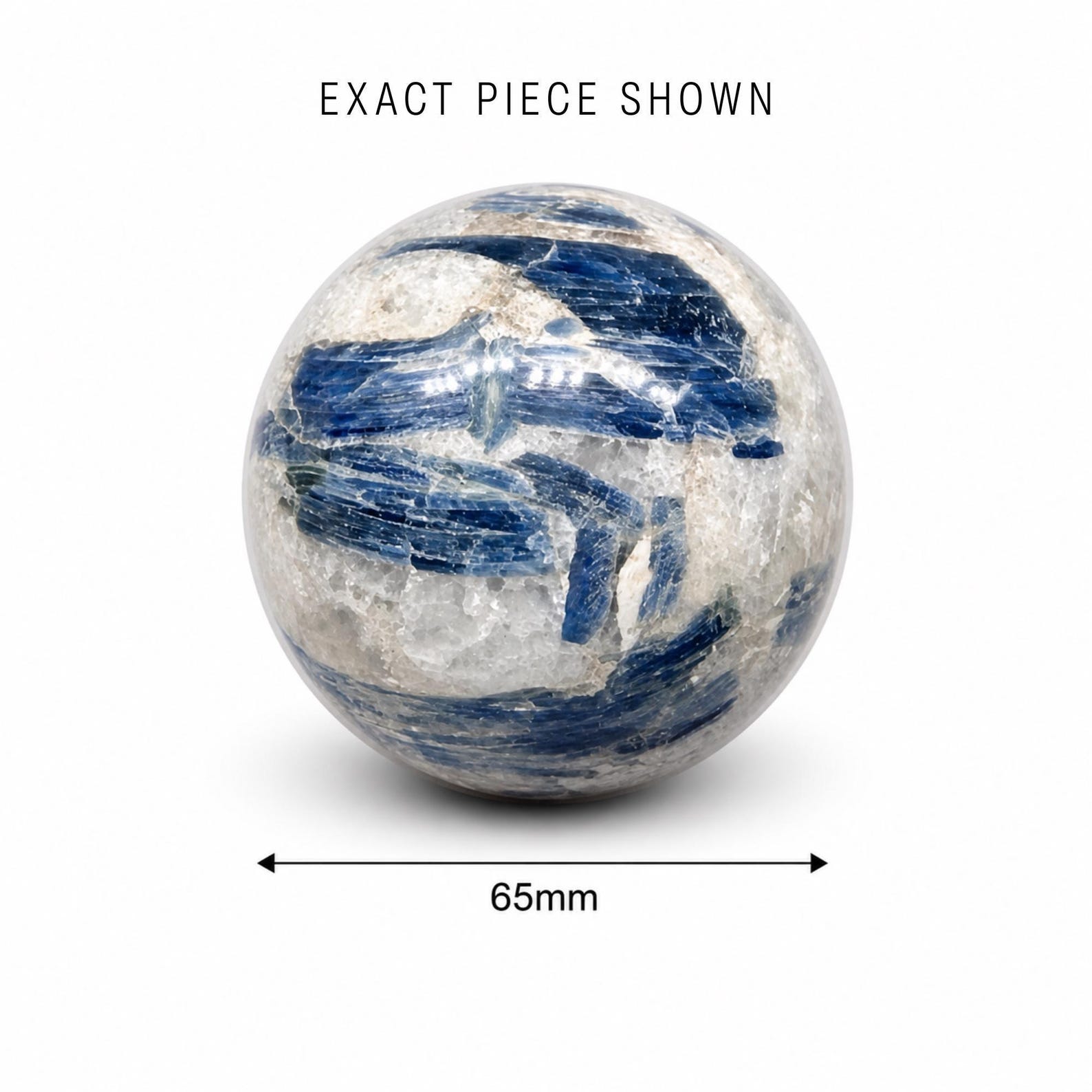
Most minerals have one hardness, a single number on the Mohs scale that holds no matter which way you scratch them. Kyanite doesn't. Run a steel point along the length of a blade and it bites in fairly easily, around 4 to 4.5. Turn the same blade sideways and try again, and the steel barely marks it: 6 to 7, hard enough to scratch window glass without trying. Same crystal, same point, two different answers. That's not a flaw in the stone. It's the reason mineralogists noticed kyanite in the first place.
A stone named "two strengths"
Kyanite's everyday name comes from the Greek kyanos, blue, after its usual colour. But an older name, disthene, is more telling: it's built from Greek roots meaning "two strengths." French mineralogist René-Just Haüy coined it after working out exactly what we described above, that the same crystal resists a scratch differently depending on direction. It's still the technical term in some languages, and it's the single fact most worth knowing about the stone.
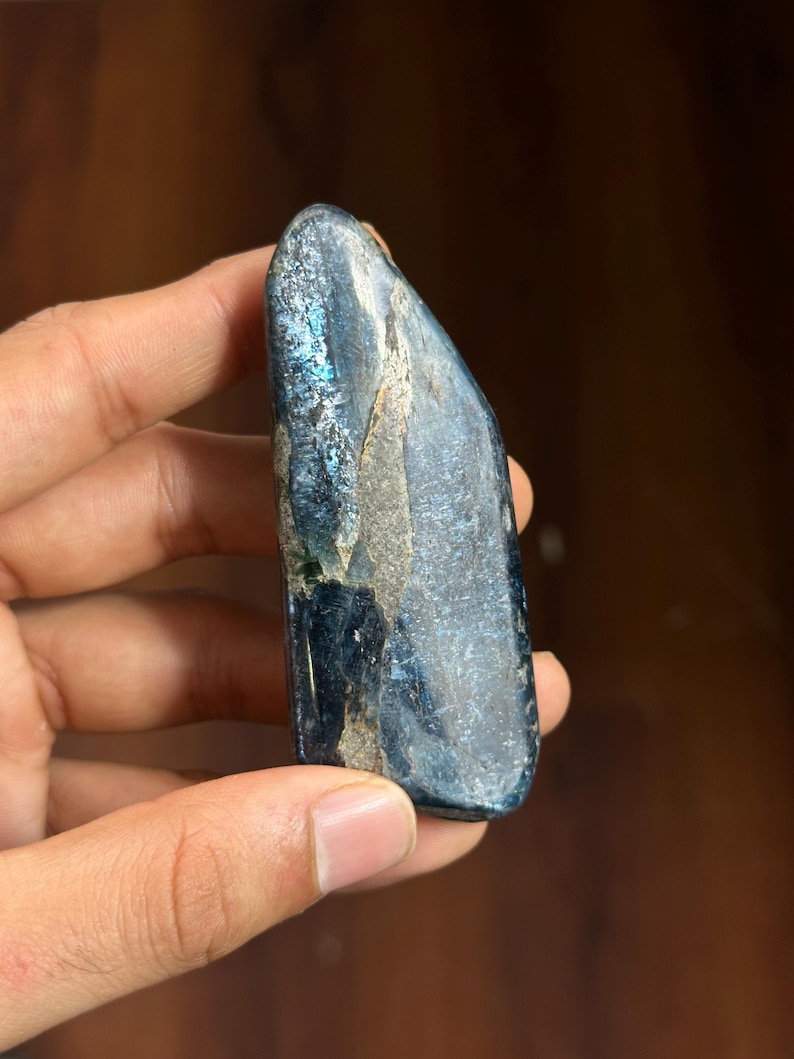
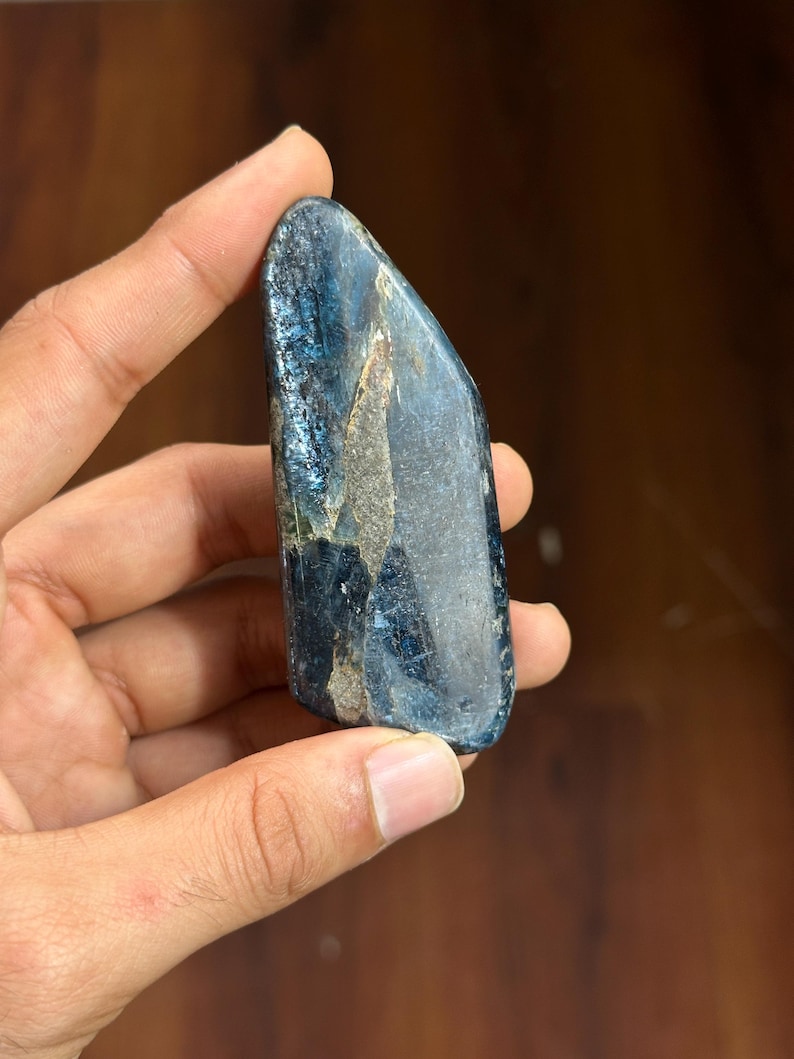
The reason sits in how kyanite is built. The mineral is aluminium silicate, Al₂SiO₅, and inside the crystal the aluminium and oxygen atoms line up into chains running the length of each blade. Bonds along that chain are different in character from the bonds holding one chain to the next, so a scratch travelling with the chains meets weaker resistance than one travelling across them. It's the atomic version of why it's easier to split a log along the grain than across it, except here the "grain" also changes how hard the surface feels.
That same internal structure gives kyanite a perfect cleavage along the length of the blade: a sharp knock in the wrong spot and it can split clean along its length rather than chipping. Worth knowing if you're setting a kyanite piece into jewellery rather than just displaying it.
A pressure gauge for old rock
Kyanite, andalusite and sillimanite are three different minerals with the exact same chemical formula. Which one a rock grows depends entirely on the pressure and temperature it formed under: andalusite at low pressure, sillimanite at high temperature, and kyanite at high pressure and relatively modest temperature, the conditions you get deep in a mountain root where one slab of crust has been shoved under another. Because of that, geologists use kyanite as a marker. Find it in a metamorphic rock and you know something concrete about the pressure that rock has seen, sometimes tens of kilometres down, long before erosion brought it back to the surface.
Colour: blue is only the start
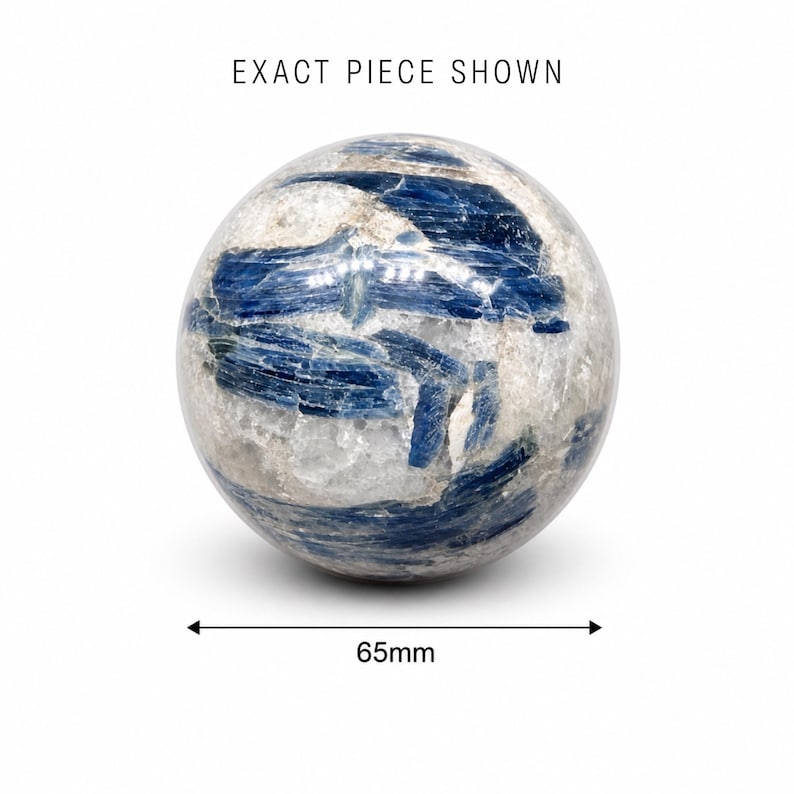
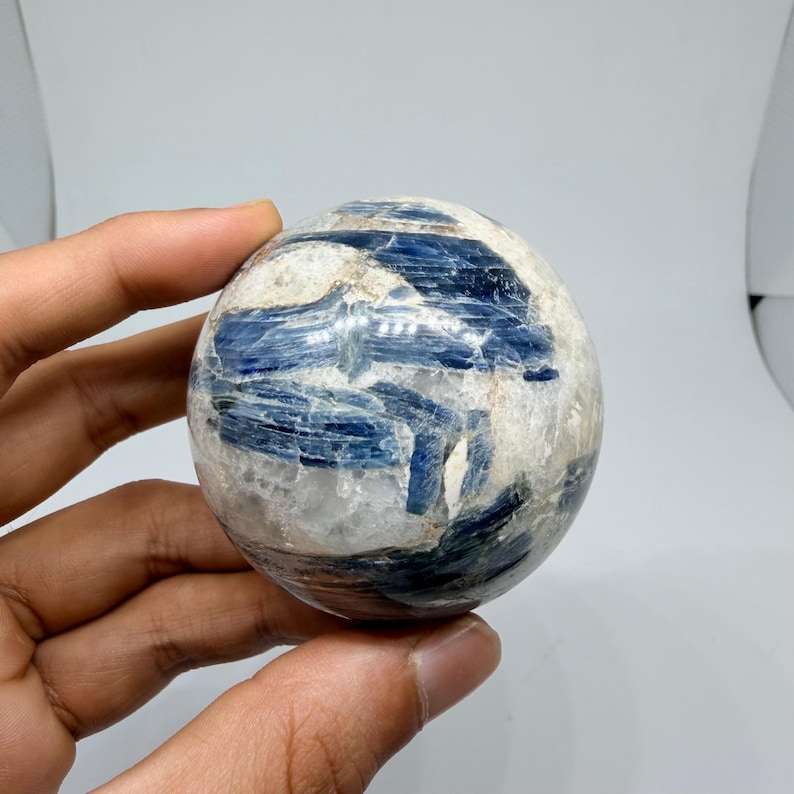
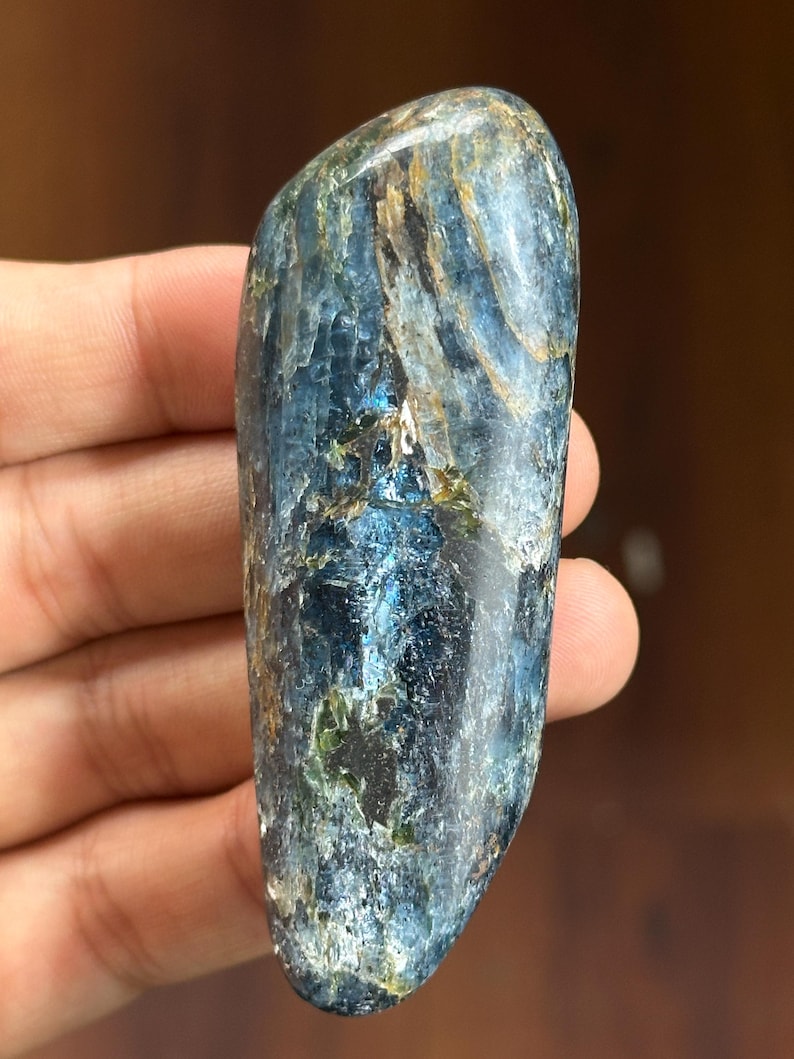
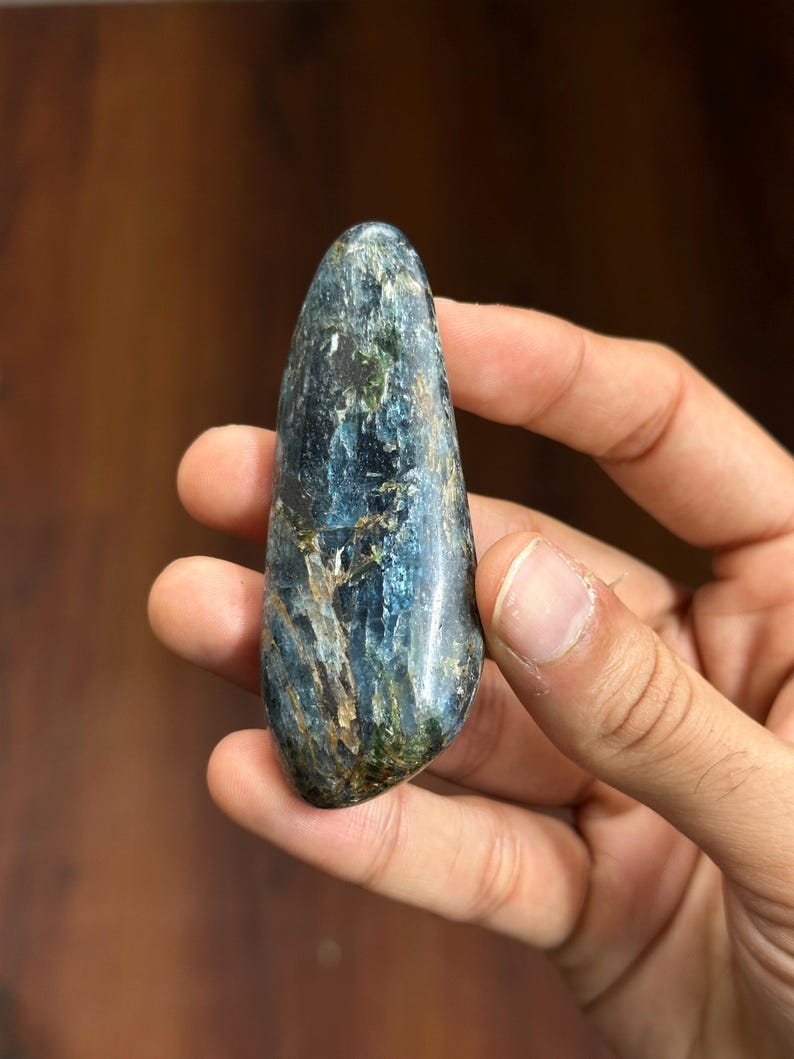
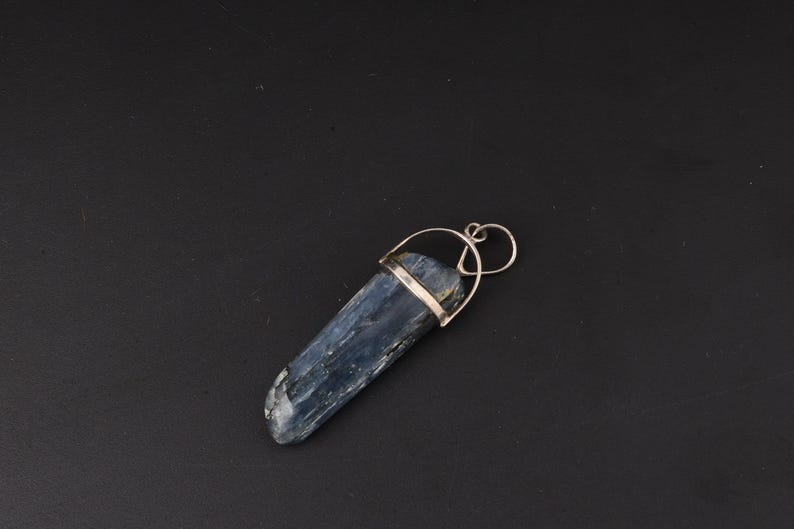
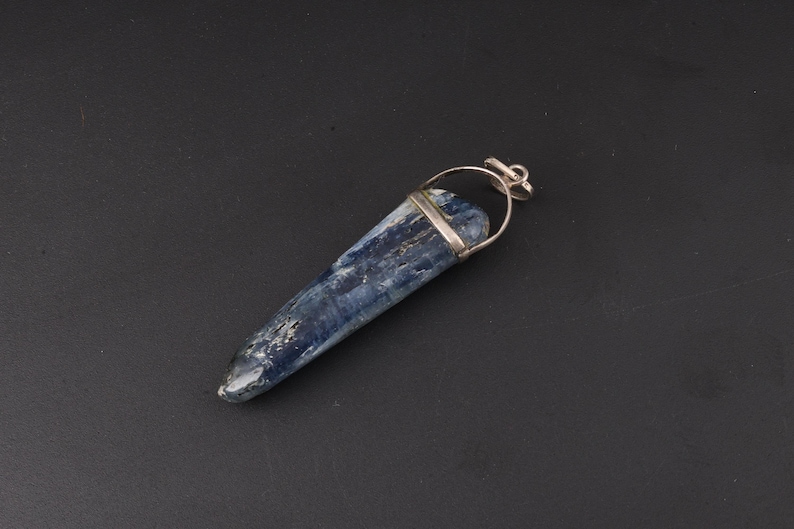
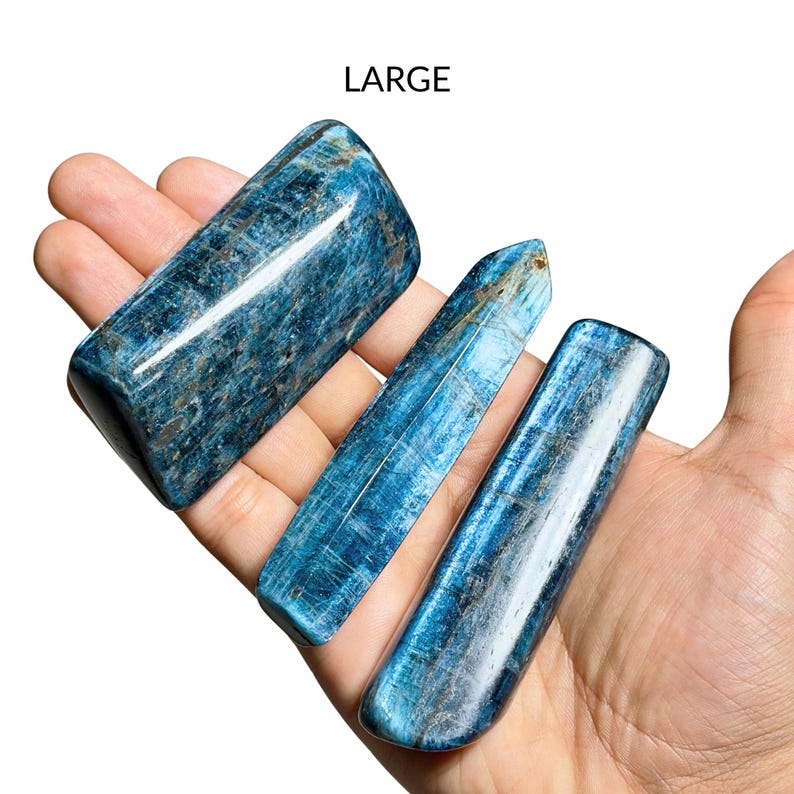
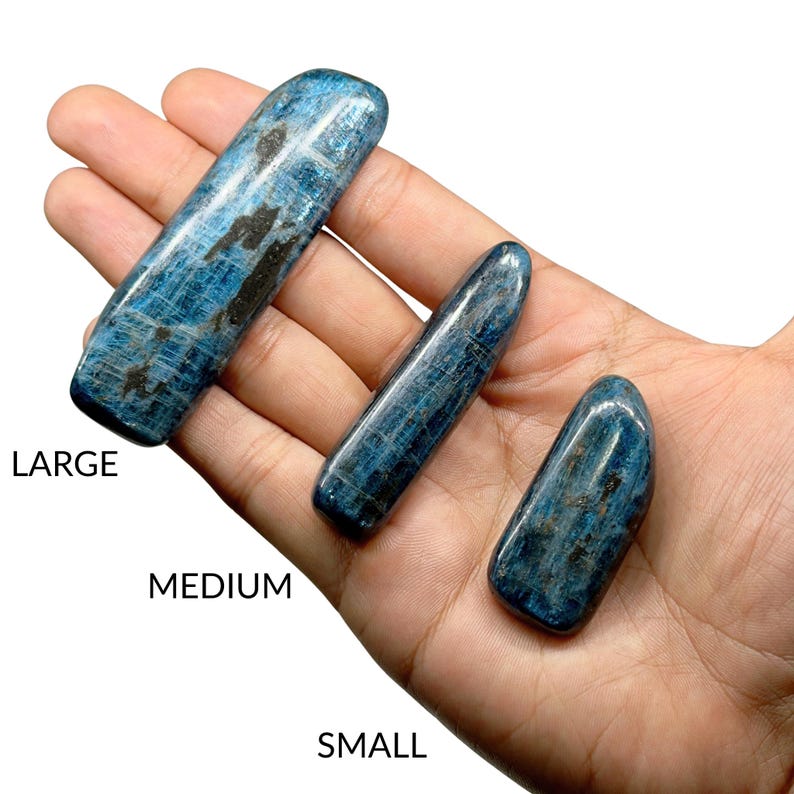
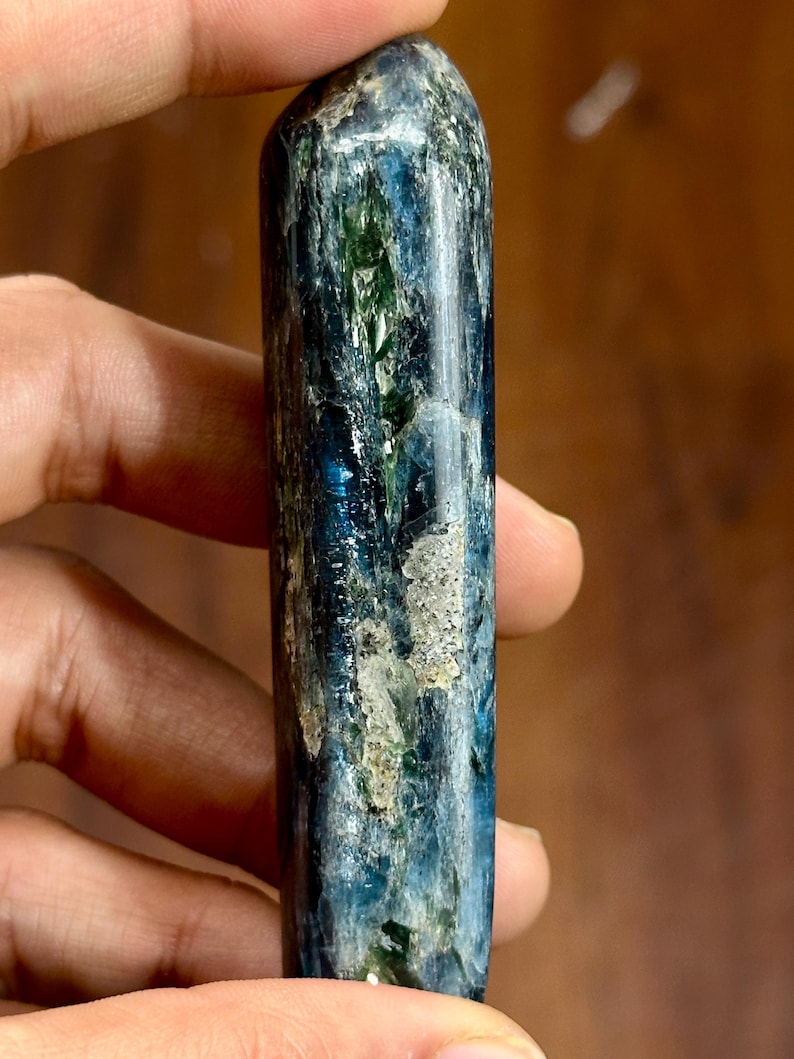
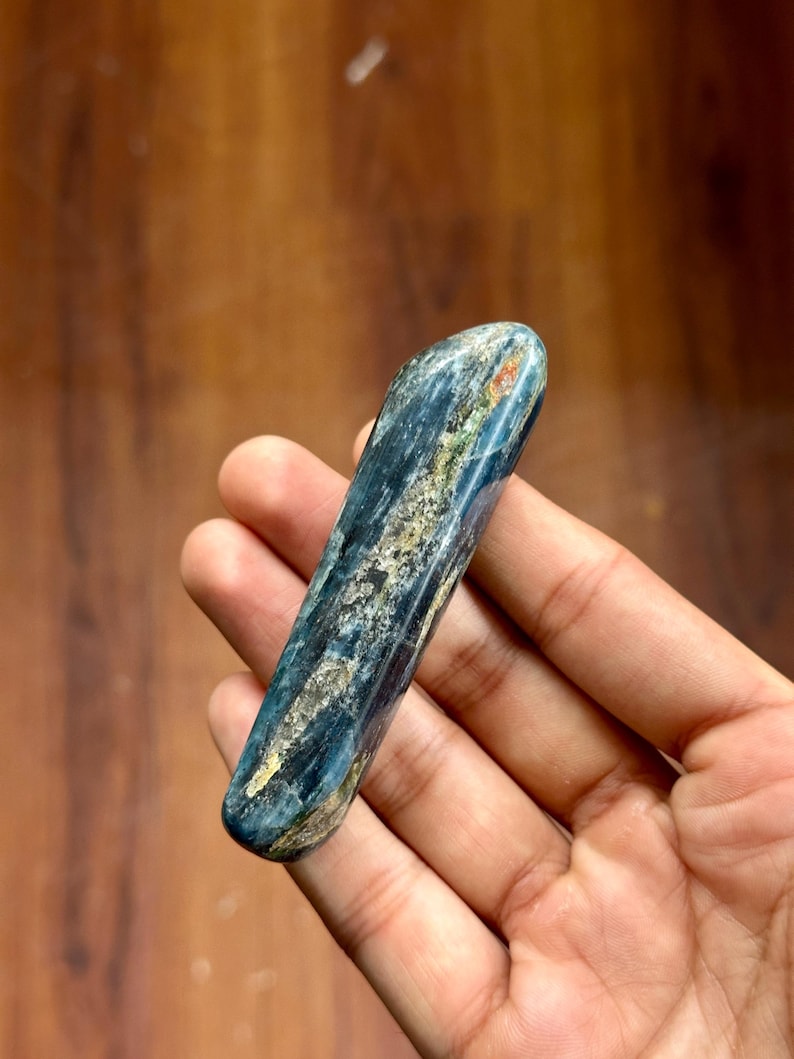
Classic kyanite is blue, often a cloudy, uneven blue with patches of white or colourless crystal in the same blade, caused by small amounts of iron and titanium standing in for aluminium. But the same mineral turns up green, orange and black depending on trace elements and the rock it grew in. Vivid orange kyanite, in particular, is a relatively recent find from Tanzania and has become sought after as a gem on its own, faceted along its hard direction to avoid the cleavage. Black kyanite, more common and less fussy to work with, is the kind most often cut into beads, cabochons and tumbled stones.
Where it comes from
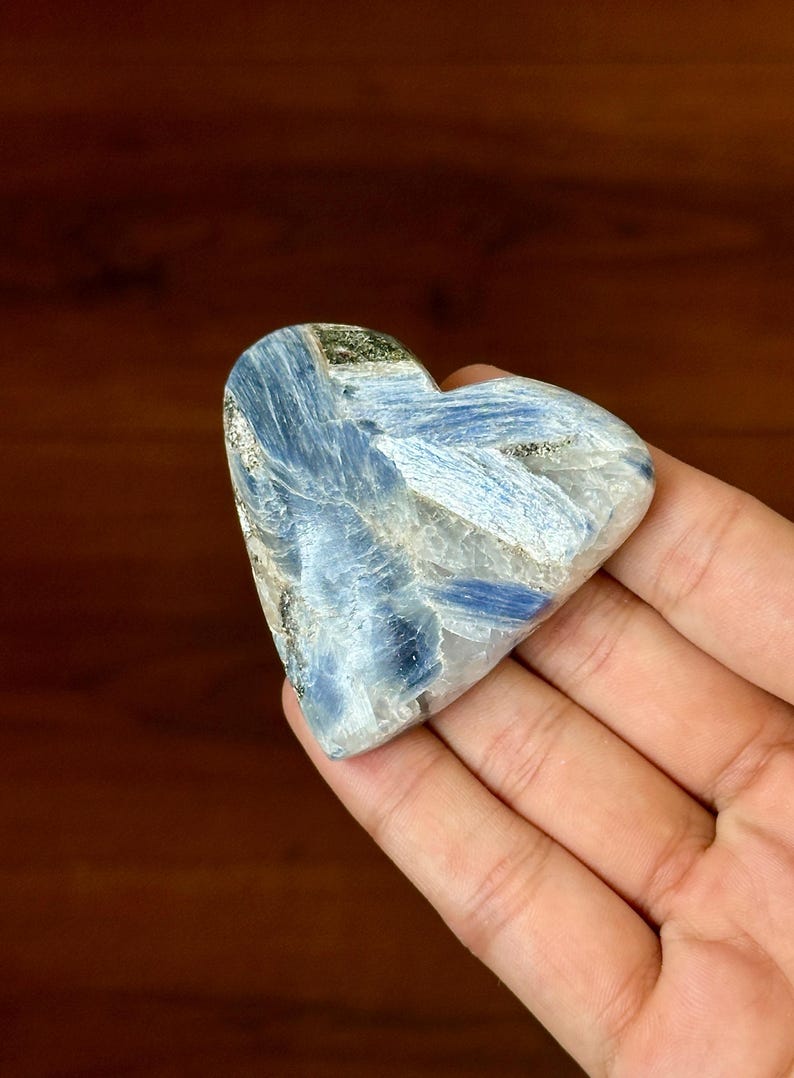
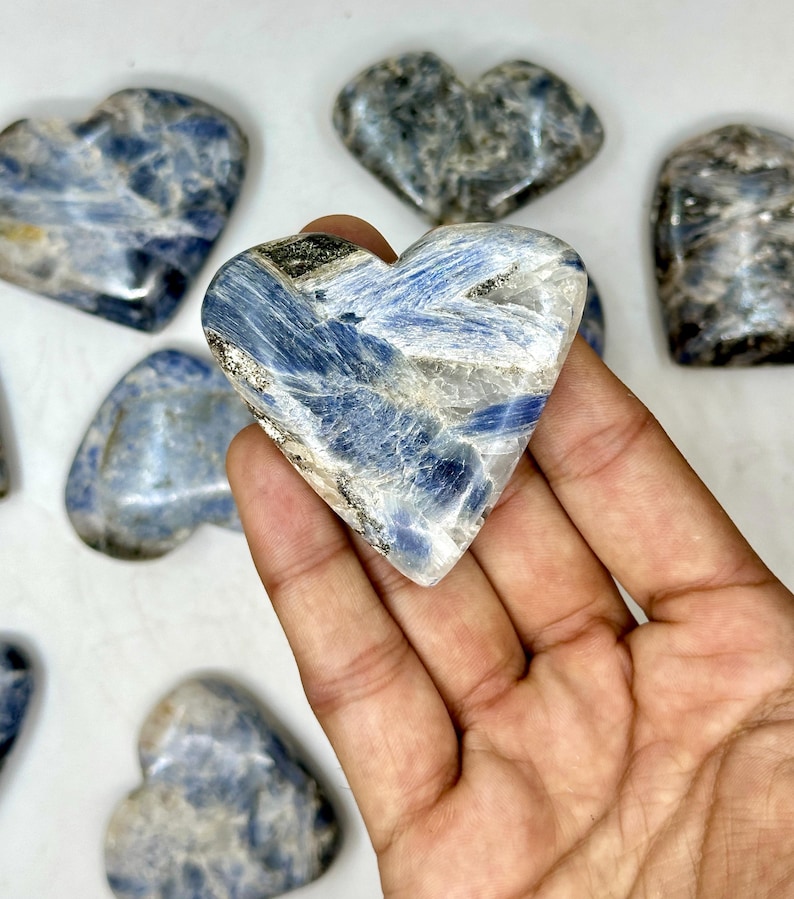
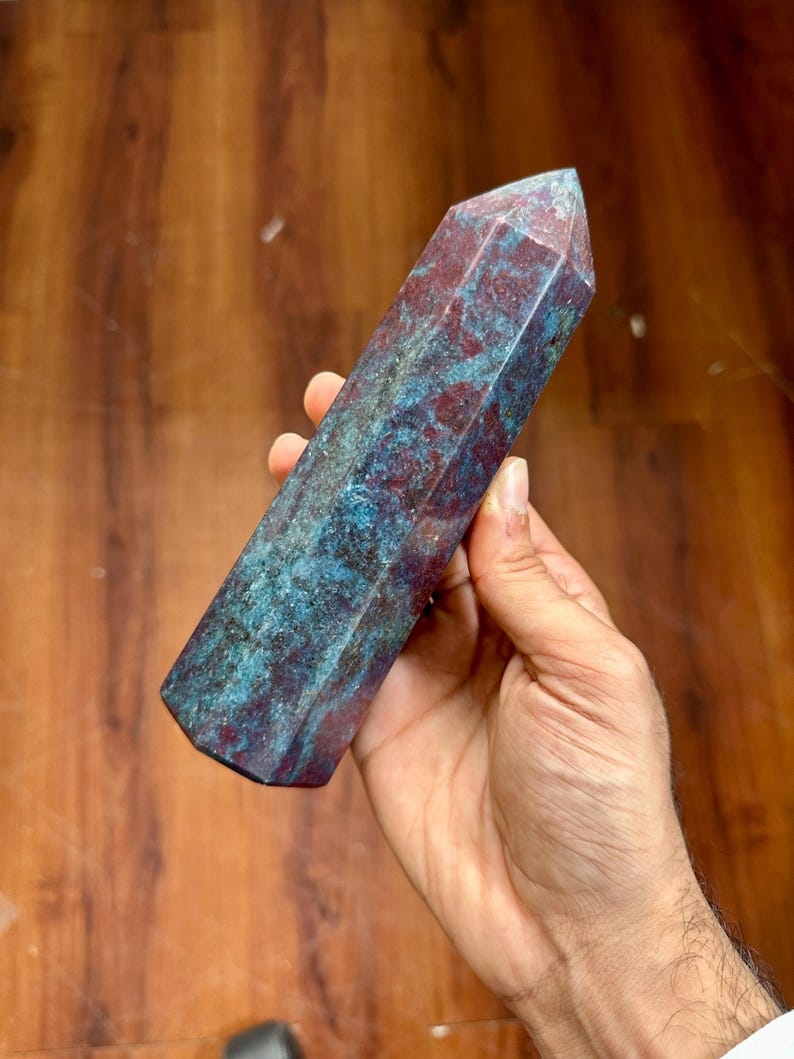
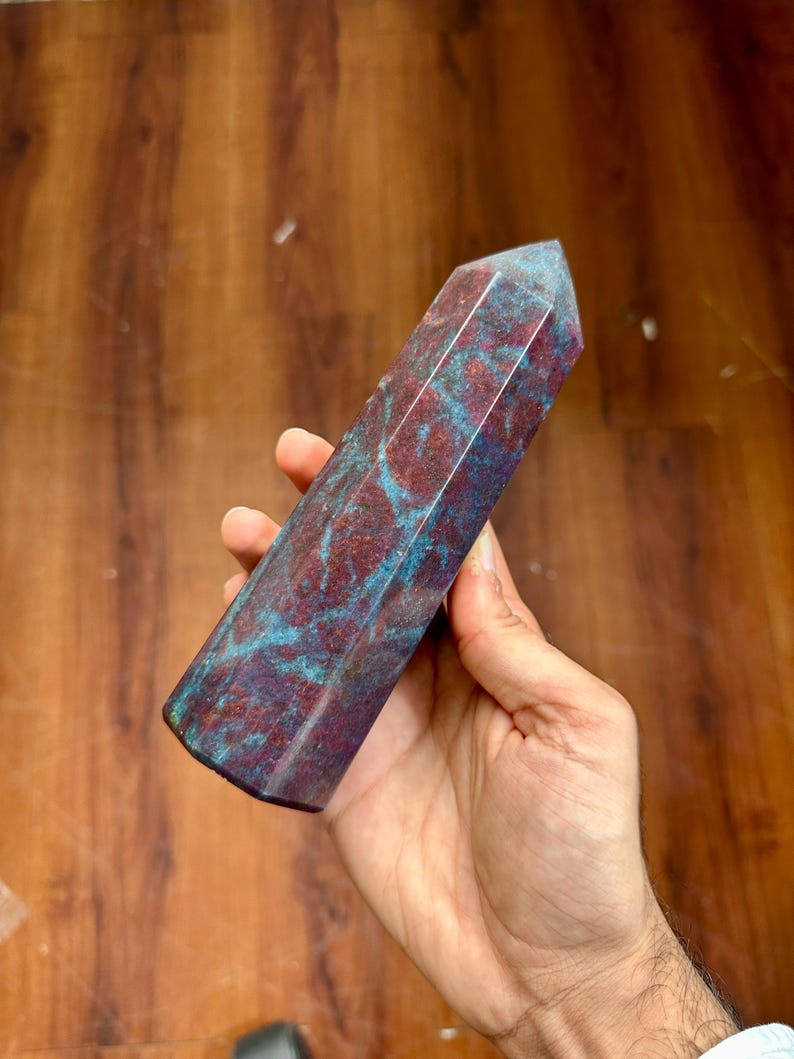
Gem-quality blue kyanite for cutting comes mainly from Nepal, Tanzania, Kenya and Brazil, usually as loose crystals and blades rather than large solid masses, since fine specimens are more valuable whole than cut up. Kyanite also grows in India, where, mixed in with red ruby crystals, it makes one of our most distinctive stones: ruby in kyanite, ruby set in a blue to blue-grey kyanite matrix, cut into spheres, hearts and palmstones. We've written separately about how to tell ruby in kyanite apart from ruby in fuchsite and ruby in zoisite, two other rocks that carry the same red ruby in a different green background.
Away from jewellery and specimens, kyanite has a dull but useful second life: fired at high temperature, it converts to mullite, a hard, heat-resistant ceramic used to line kilns and furnaces and to make spark plugs and other refractory parts. The mineral collectors prize for its colour is, by weight, mostly mined for that.
Living with kyanite's grain
For anyone handling a piece of kyanite rather than just admiring it, the two-hardness rule is practical, not just a curiosity. A loose blade can be scratched fairly easily if you drag something hard along its length, so store it away from harder stones that might mark it in a box or pouch. The cleavage means a sharp knock from the wrong angle is more likely to split it than a similar knock to a tougher stone like quartz or ruby. Treated gently, though, it holds its polish well, and the colour, blue, orange or black, stays exactly as it was mined: kyanite isn't routinely dyed or heat-treated the way some other stones are.
Next time you pick up a kyanite blade, it's worth trying the scratch test yourself, carefully, with a fingernail rather than steel: run it along the blade, then across it, and feel the difference the name was built to describe.