Rainbow moonstone isn't quite moonstone
What rainbow moonstone really is, the difference between adularescence and labradorescence, why the black lines inside are a good sign, and where it comes from.
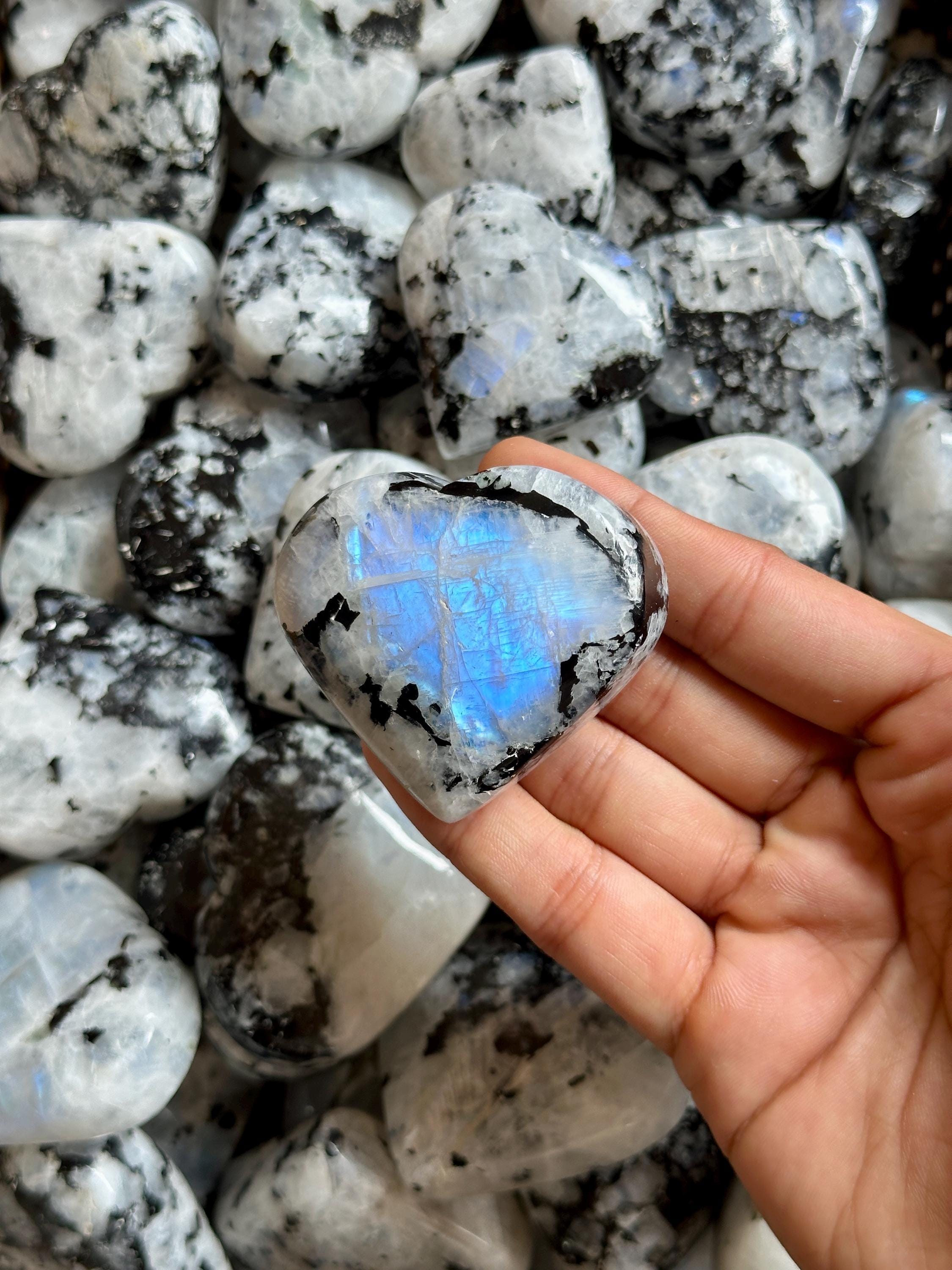
Rainbow moonstone is one of the most popular stones we sell, and one of the most misunderstood. Here's the short version: it's a real, natural stone, it's beautiful, and a mineralogist would call it labradorite.
Two kinds of glow
Moonstone and labradorite are both feldspars, the most common group of minerals in the earth's crust. What makes them special is how they're built inside. As they cooled, some feldspars separated into extremely thin, alternating layers of two slightly different compositions, thinner than a wavelength of light. When light enters the stone, those layers scatter it back.
In classic moonstone, an orthoclase feldspar, the layers make a soft, milky, bluish-white light that seems to float just under the surface and slide across as you tilt the stone. That's called adularescence.
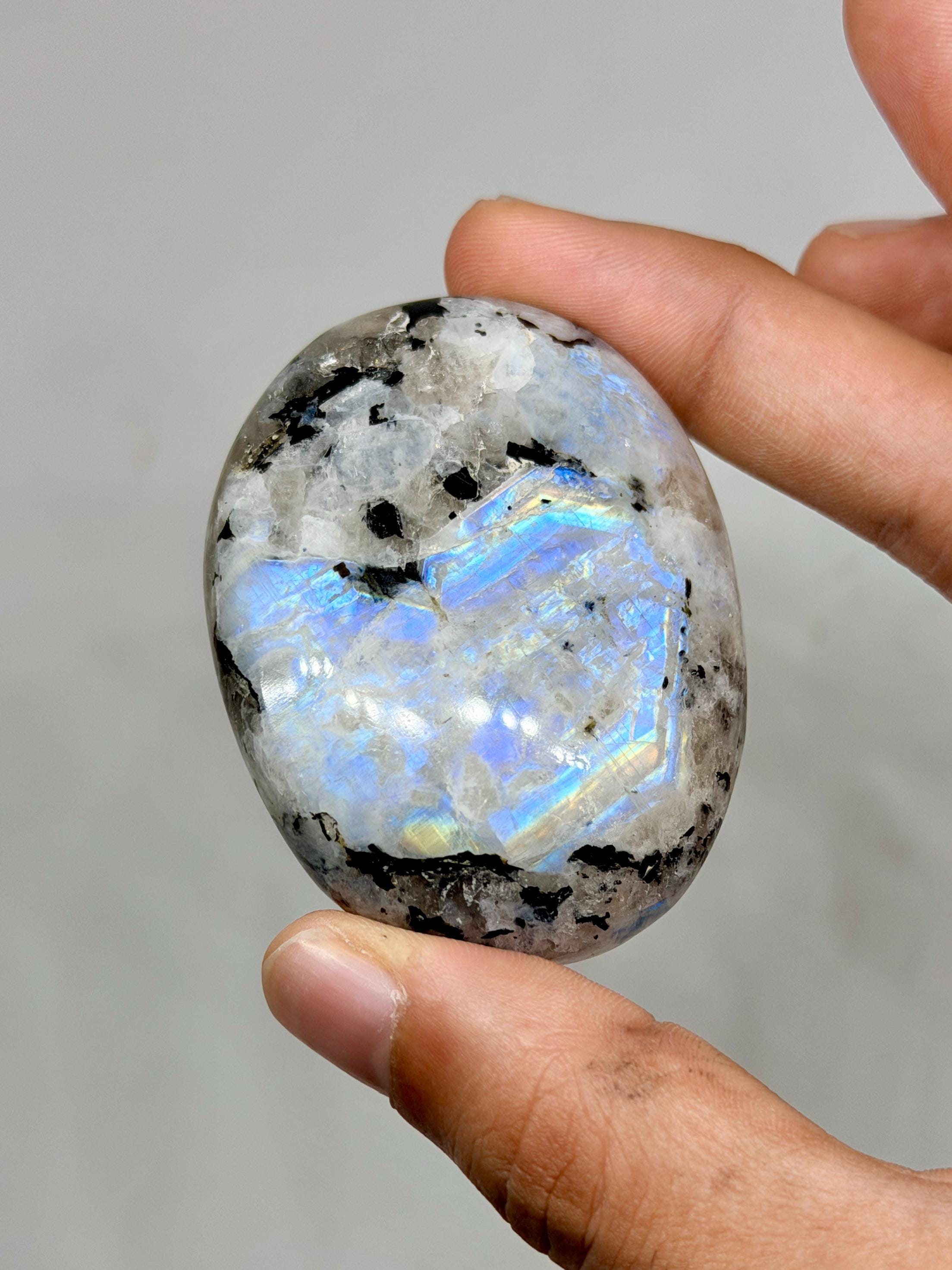
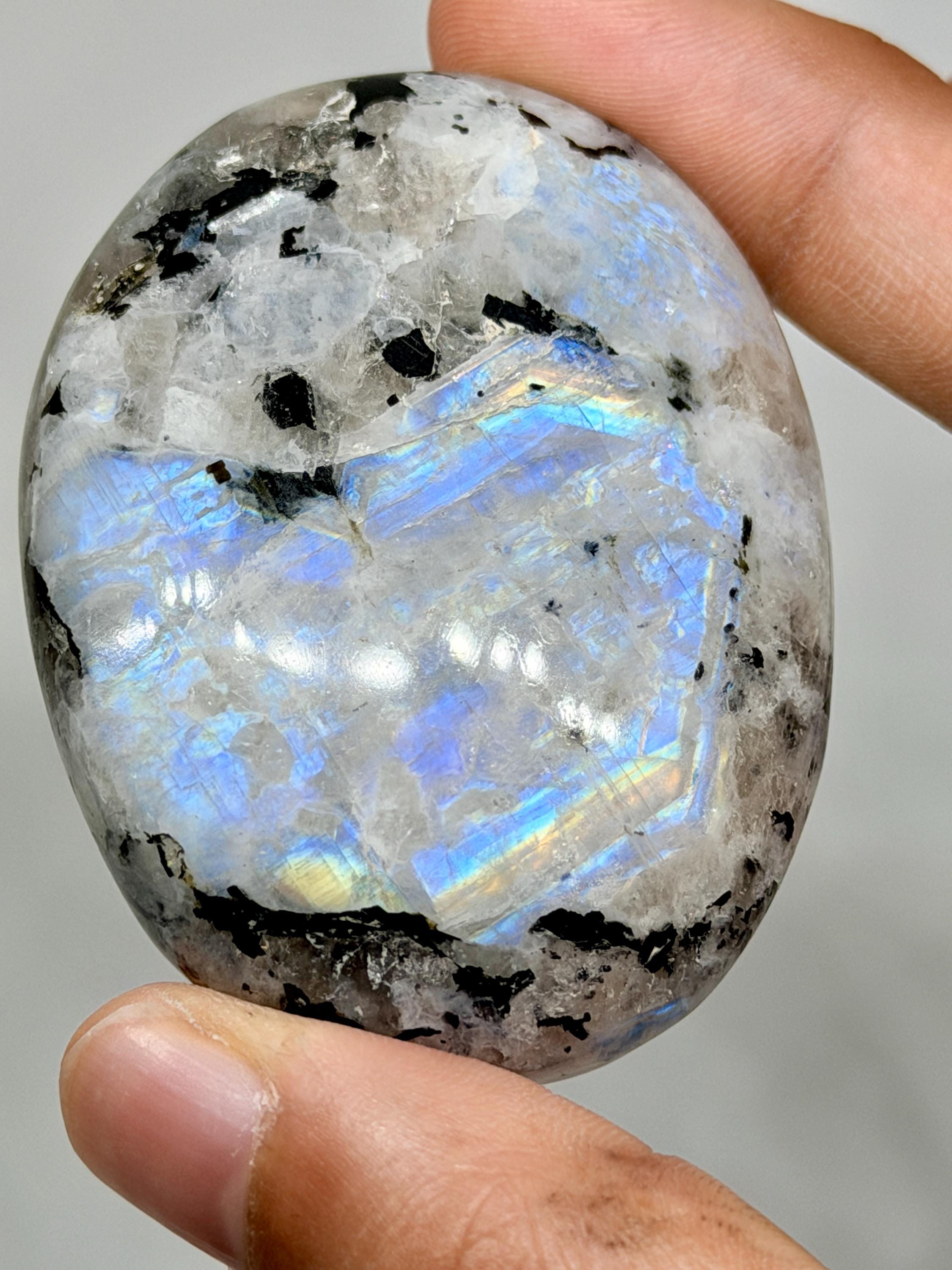
In labradorite, a plagioclase feldspar, the layers are a little different, and the light comes back as bright flashes of colour, blue and green, sometimes gold or orange, which switch on and off at particular angles. That's labradorescence.
So what's rainbow moonstone?
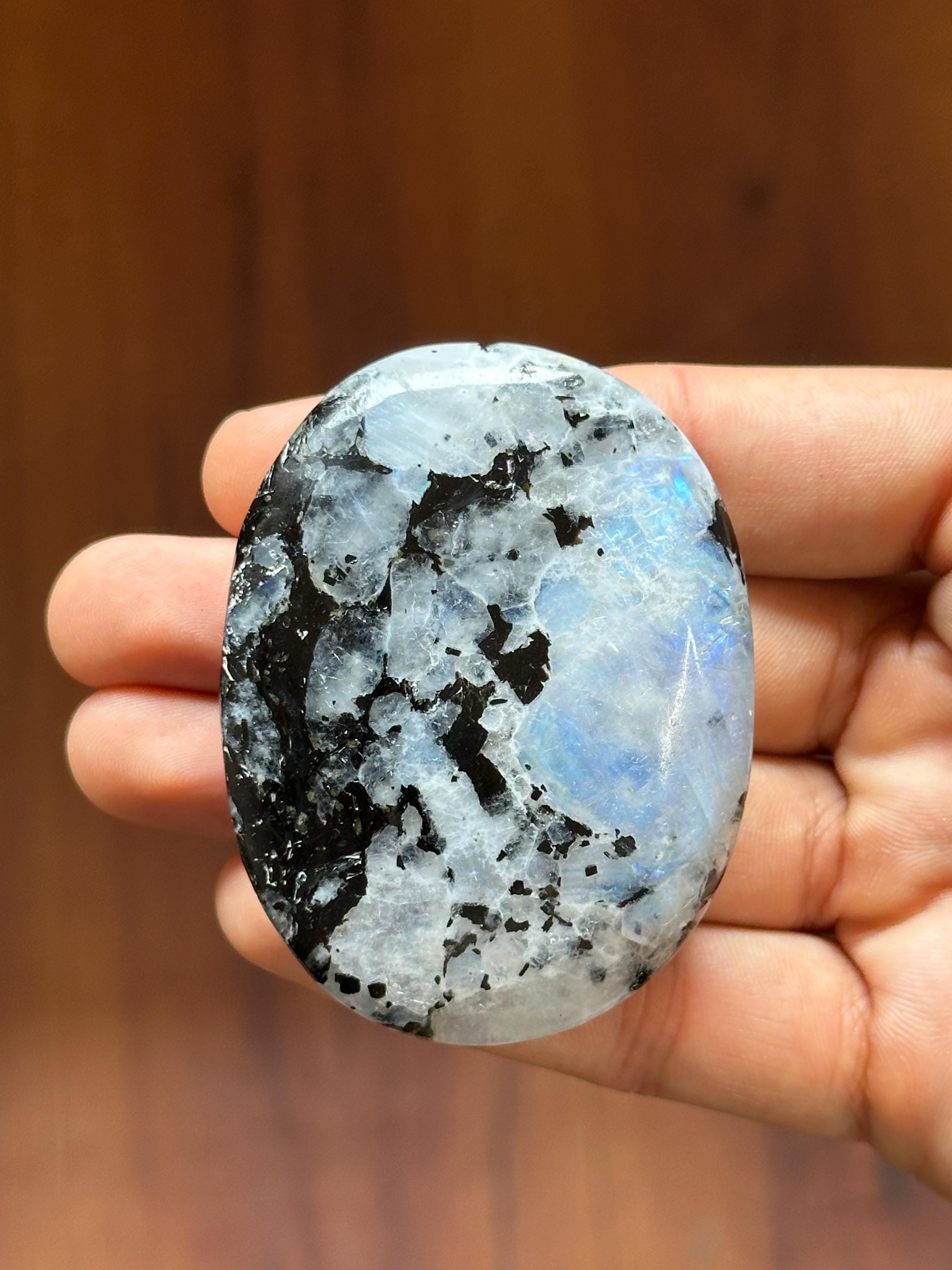
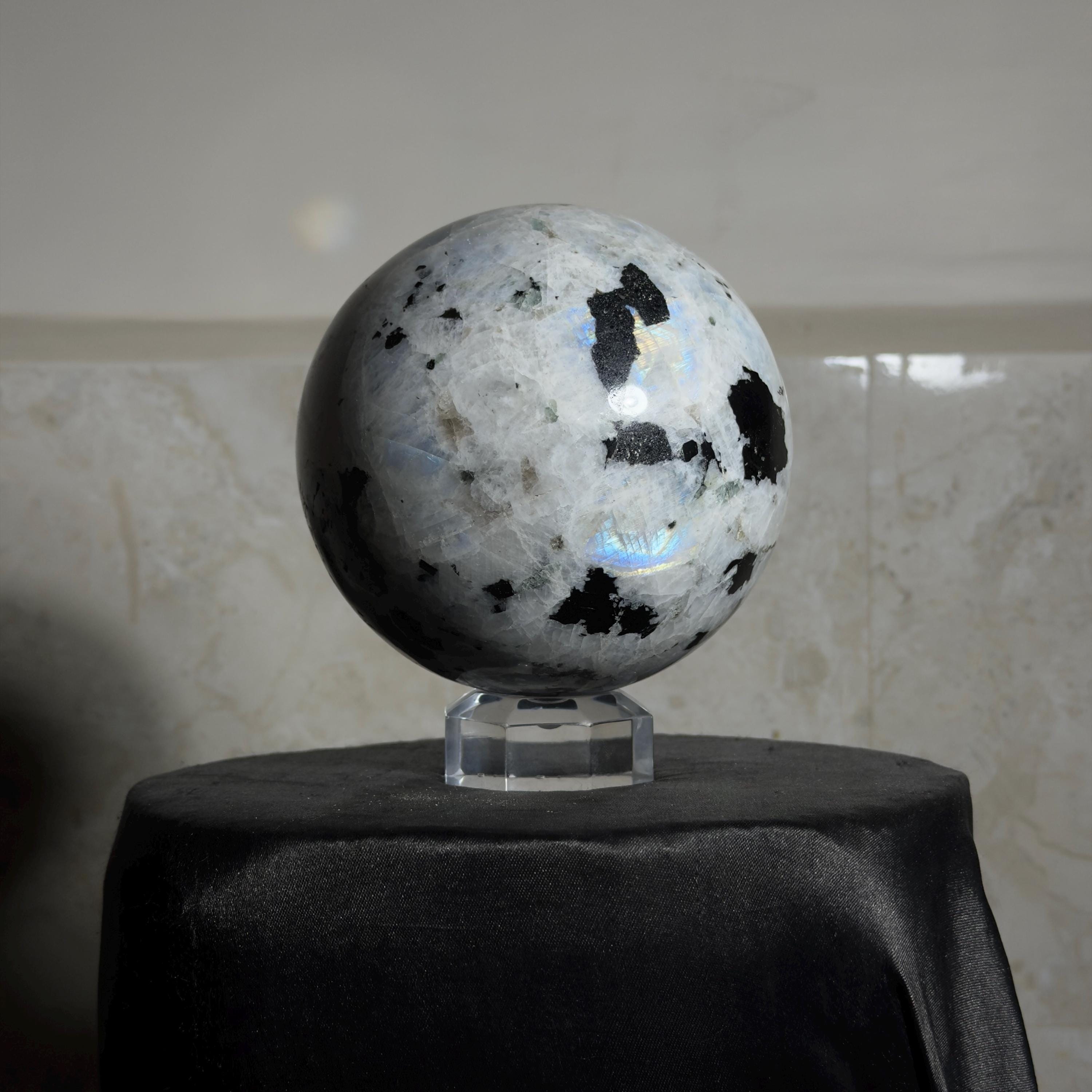
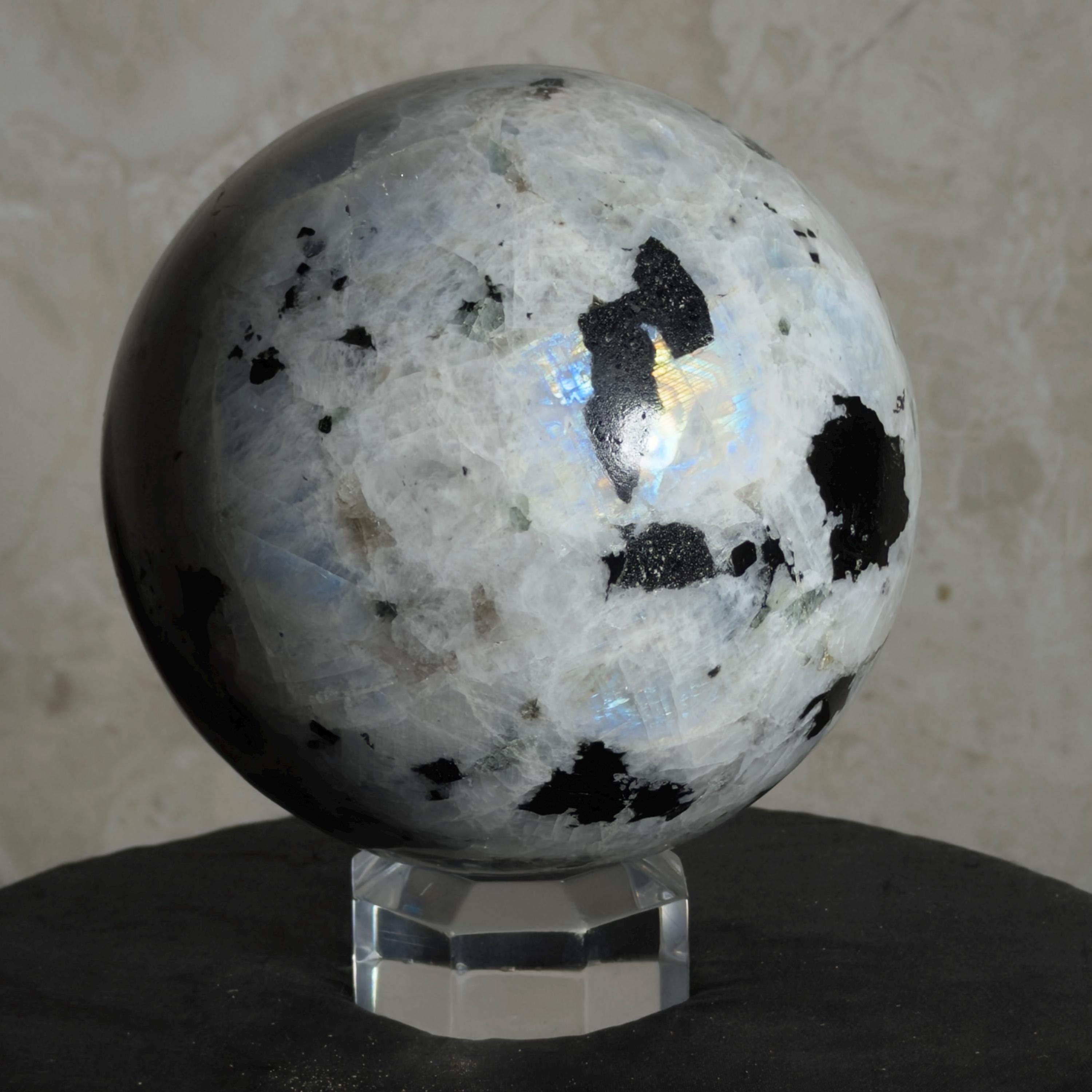
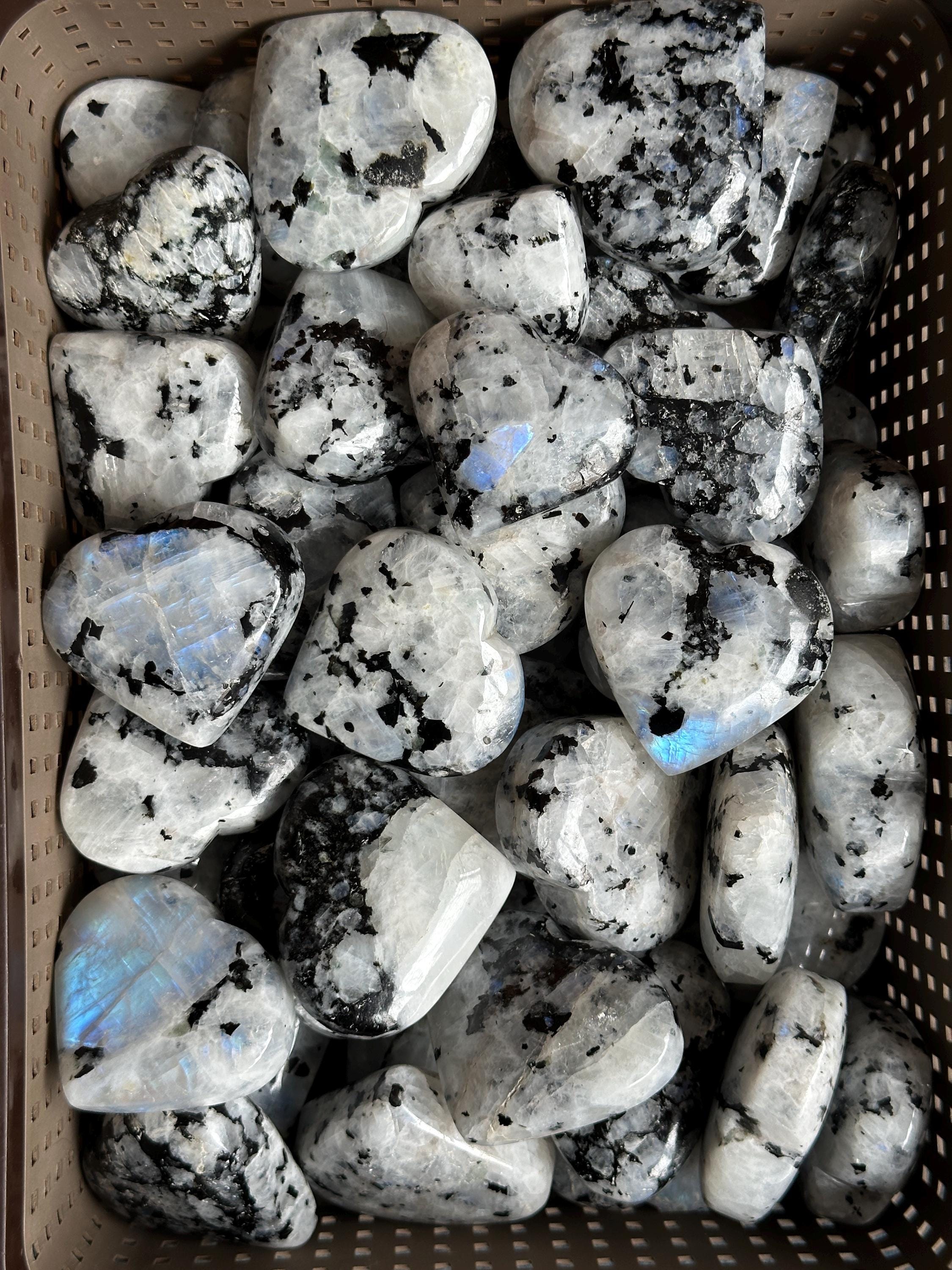
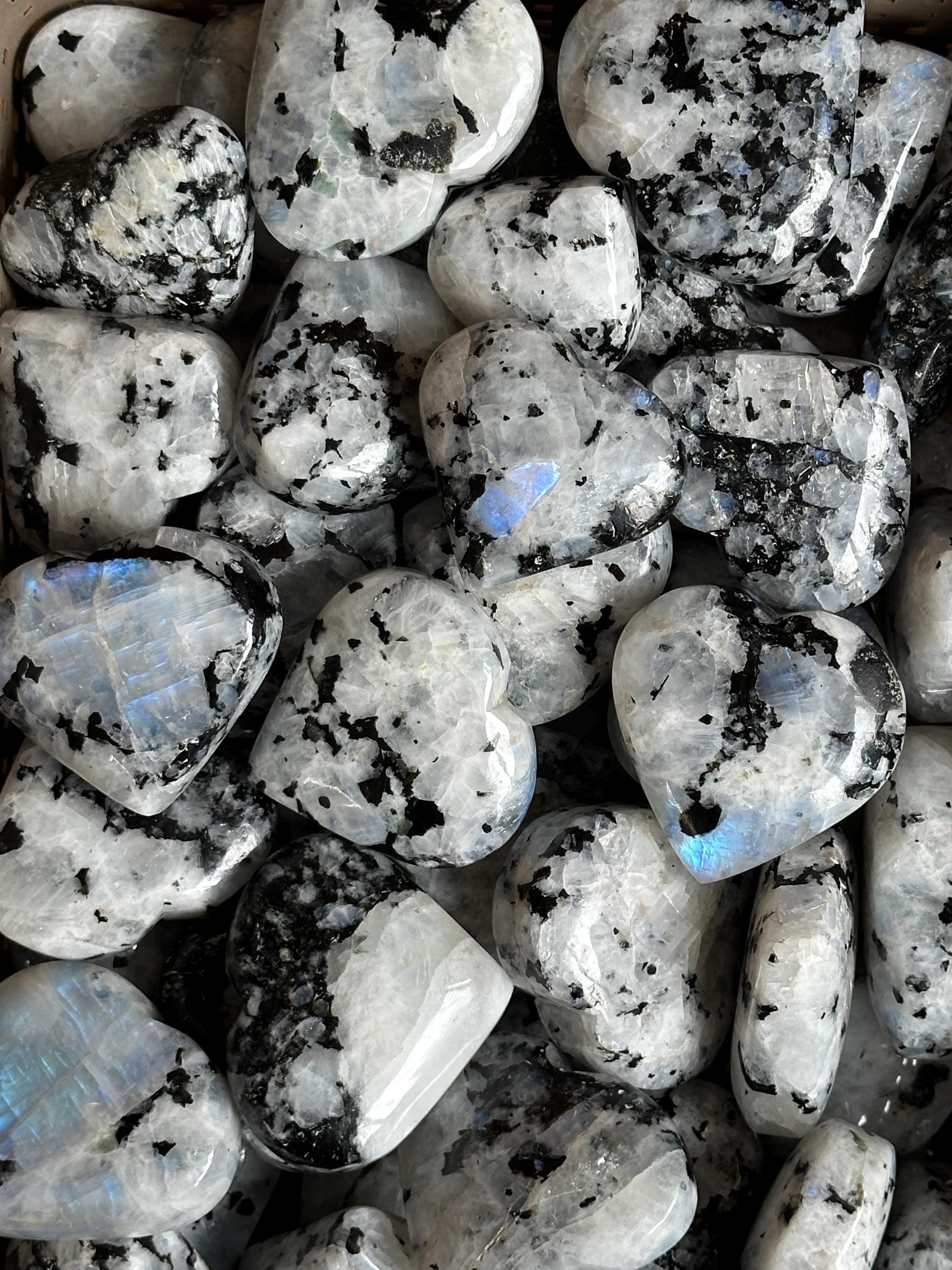
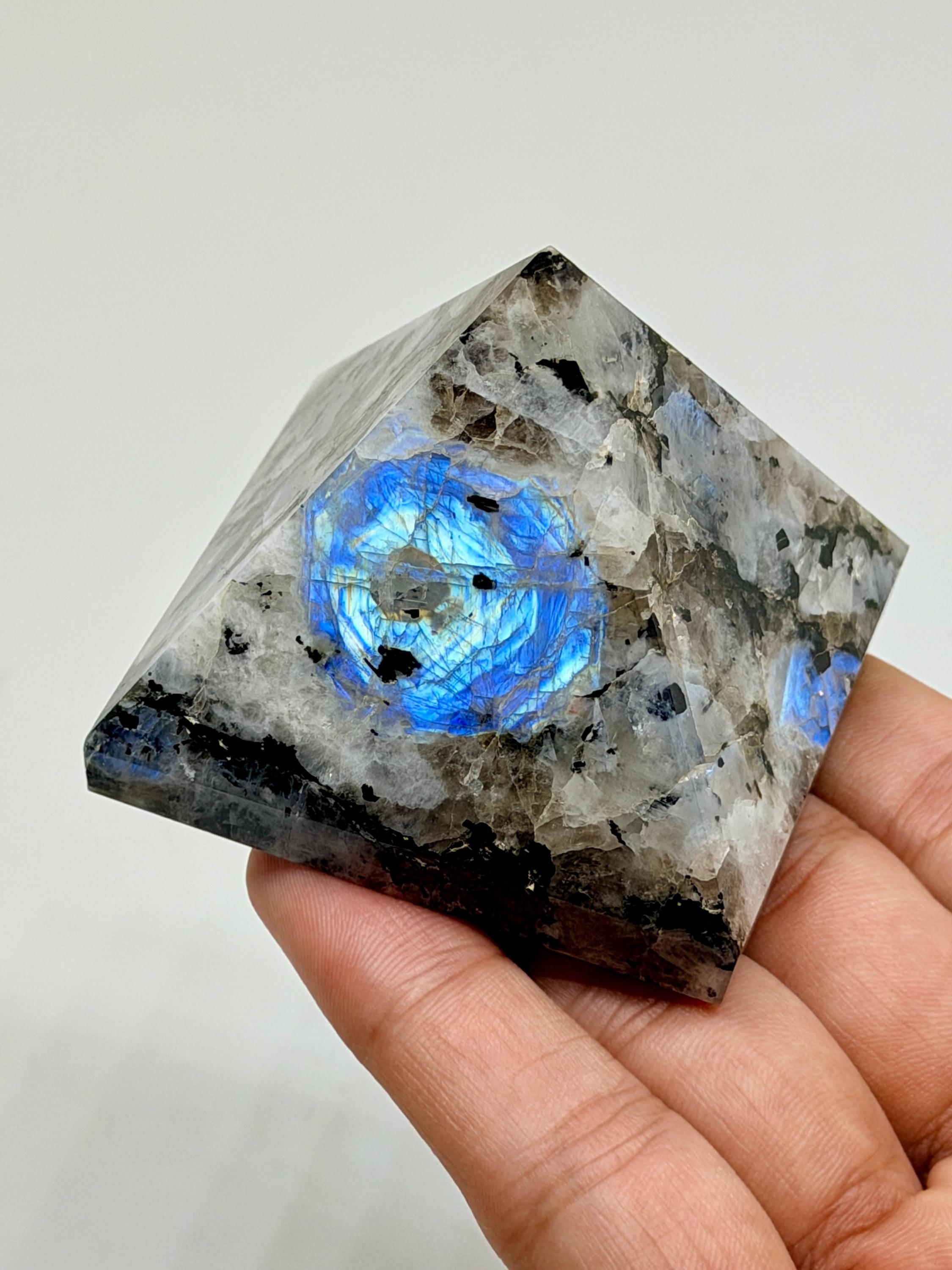
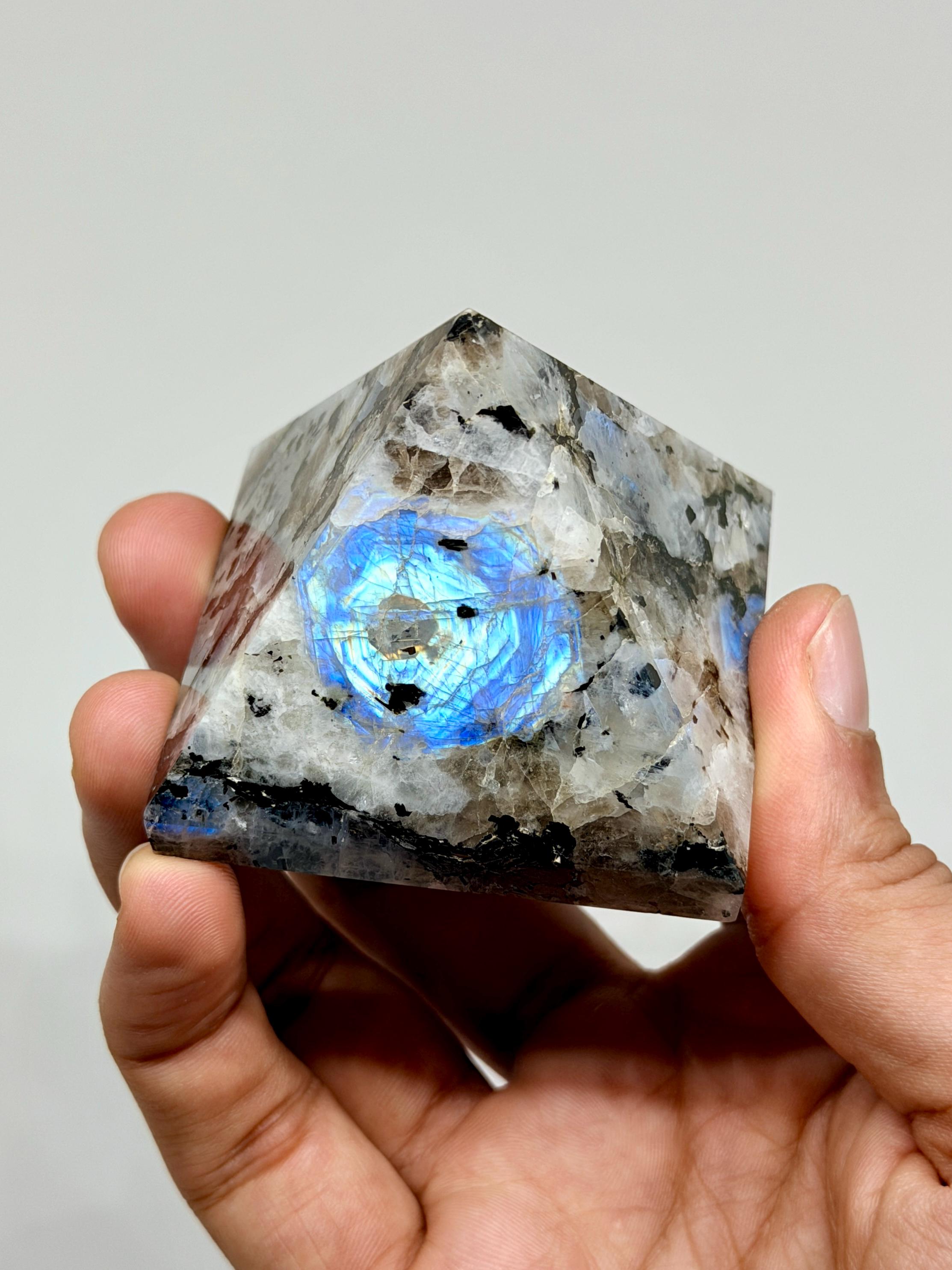
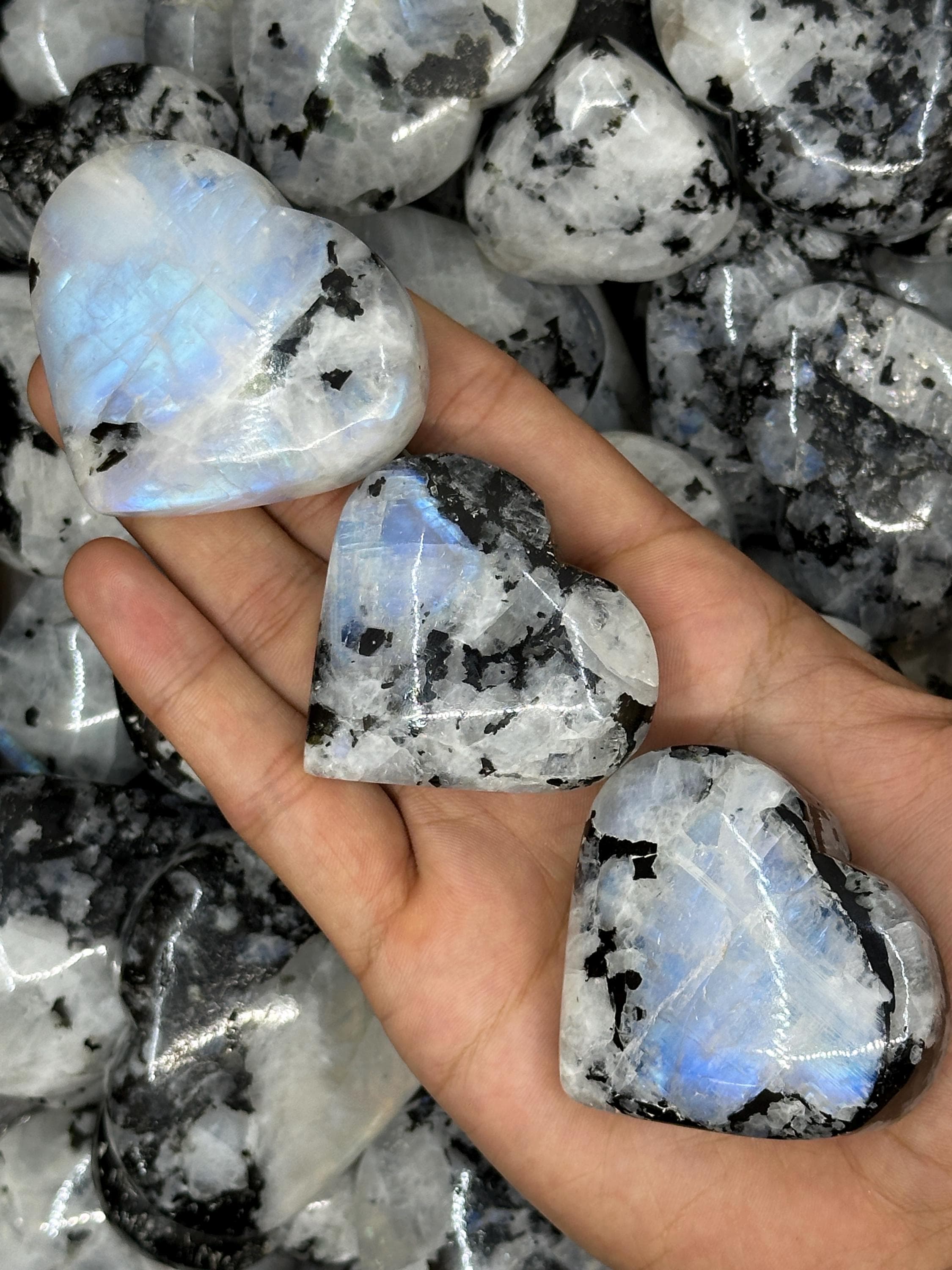
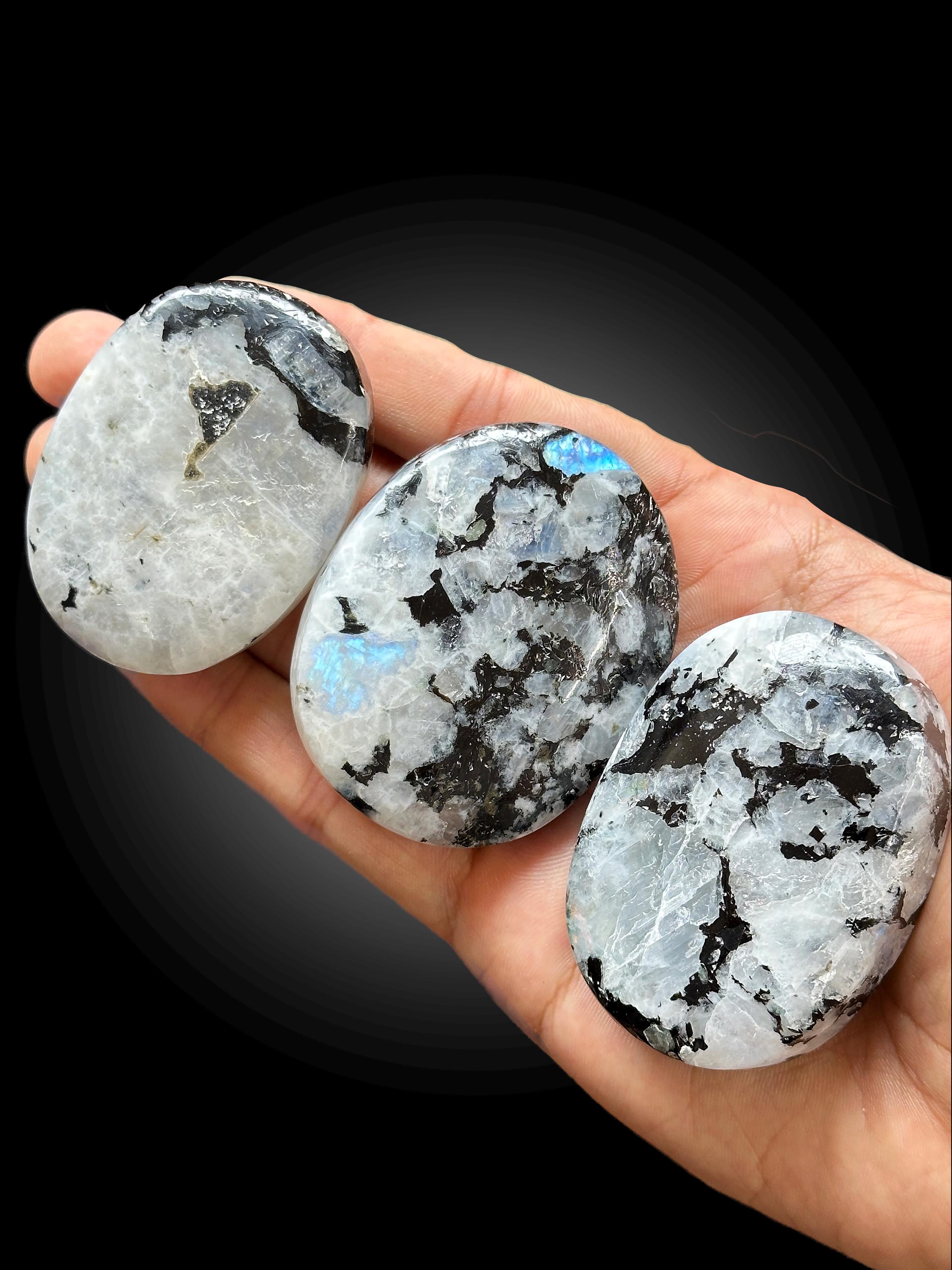
Rainbow moonstone is a nearly colourless, white variety of labradorite. Its flash is blue, often with purple, gold or pink at the edges, and because the body is white and translucent rather than dark grey, it looks more like moonstone than like the dark labradorite most people know. The trade name stuck long before anyone was checking.
It's no less natural or valuable for the name. It just means that if you compare it with a classic peach or white moonstone, you'll notice the rainbow version flashes where the moonstone glows.
Black lines are a good sign
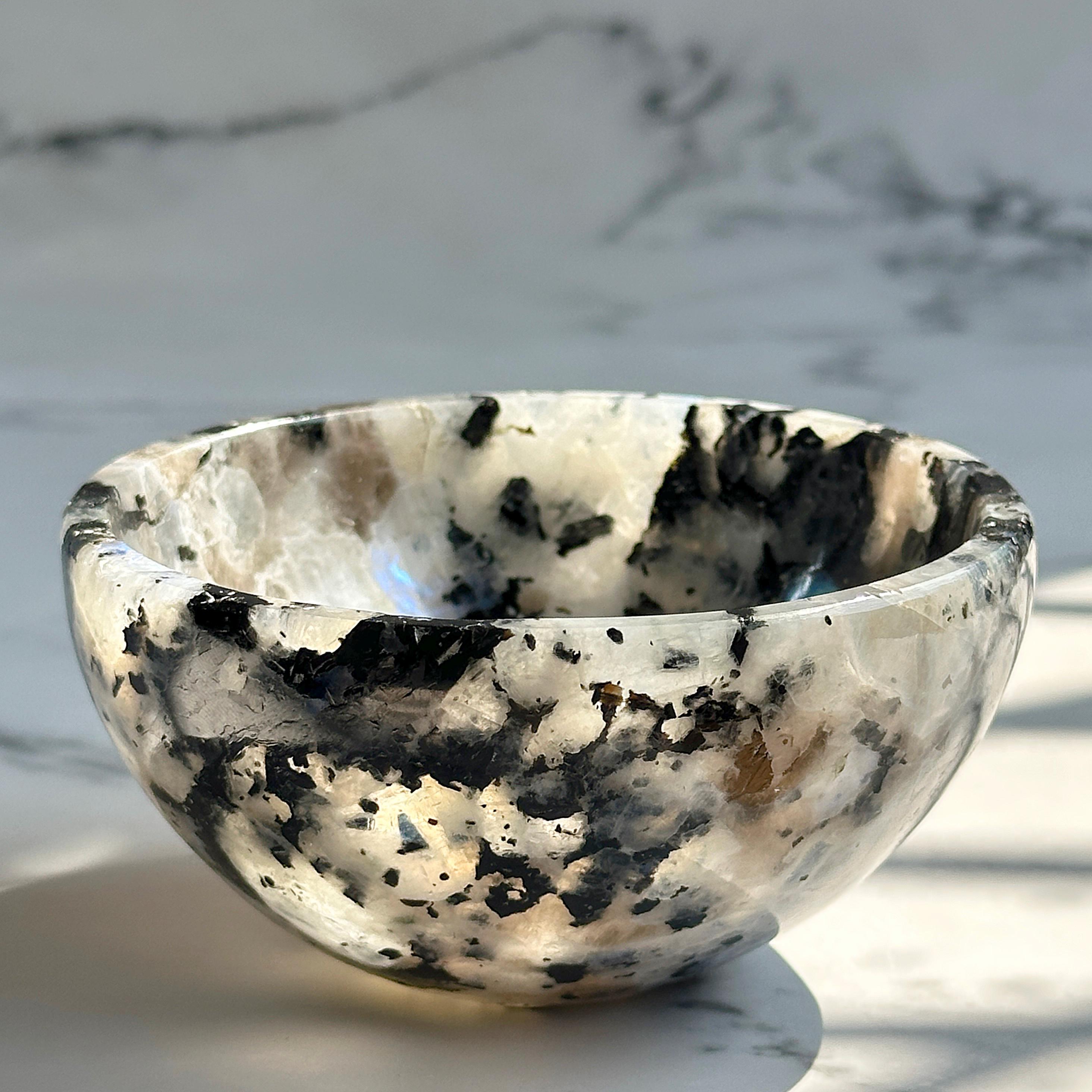
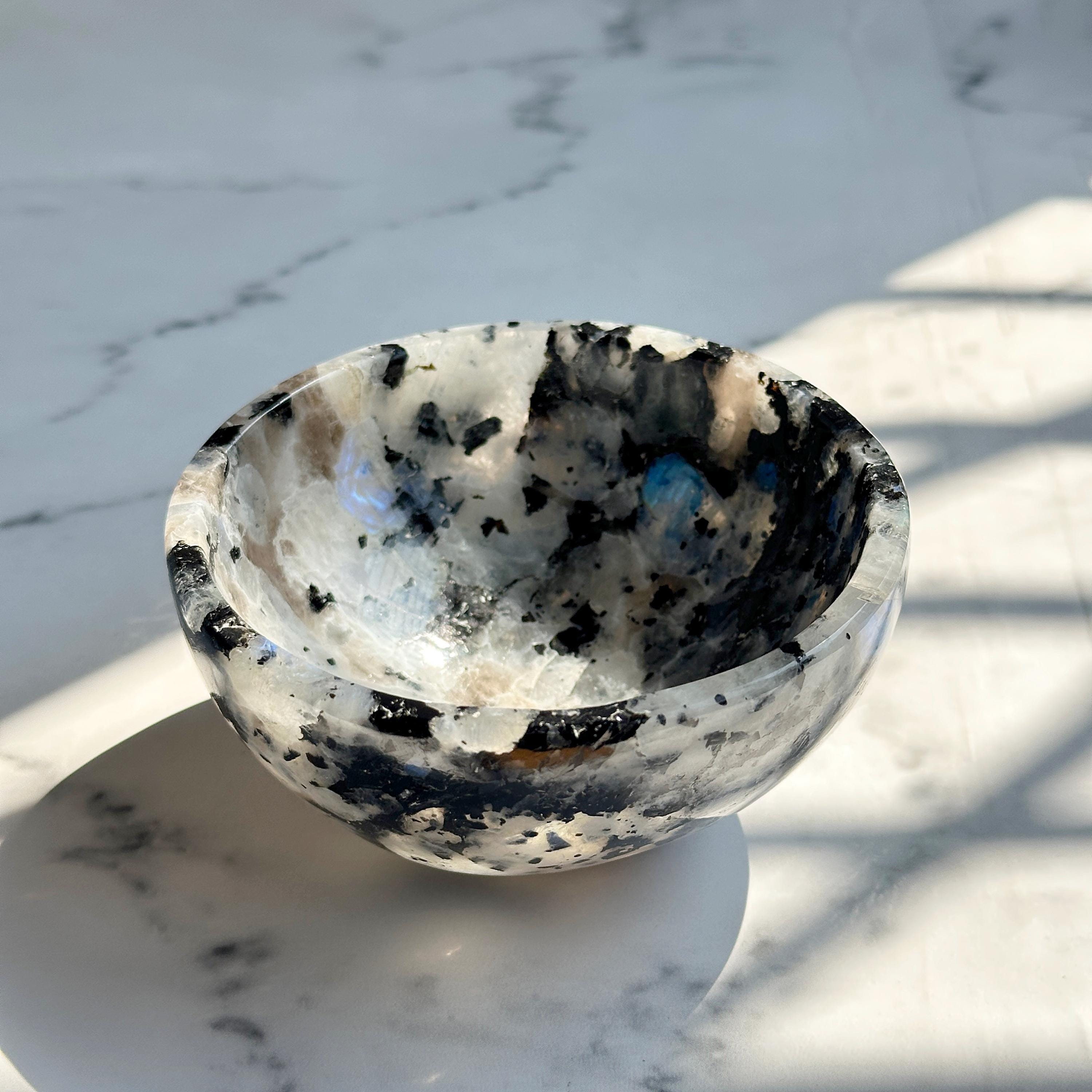
Many rainbow moonstones have thin black needles or streaks inside. They're small crystals of black tourmaline, trapped as the feldspar grew. They're a natural inclusion, and because glass imitations don't have them, they're one of the easier signs that a stone is real.
Where it comes from
Most rainbow moonstone comes from India, with some from Madagascar and Sri Lanka. It's cut into palmstones, hearts, spheres and cabochons, always oriented so that the flash faces up. The same stone turned the wrong way can look almost plain, which is why the photos of each piece matter.
A close cousin is sunstone, also a feldspar, whose sparkle comes from tiny flat plates of copper or hematite reflecting light like glitter.