Ruby in kyanite, fuchsite or zoisite: how to tell them apart
Three rocks with ruby in them: what each one is, where it comes from, and how to tell ruby in kyanite, ruby in fuchsite and ruby in zoisite apart at a glance.
Ruby is the red variety of corundum, aluminium oxide coloured by a little chromium. Clean, transparent ruby is one of the most expensive gems there is. Most ruby, though, grows cloudy and opaque, locked into the rock it formed in. Cut and polished together with that rock, it makes some of the most striking stones we sell. Three of them turn up again and again, and they're easy to mix up.
Ruby in kyanite
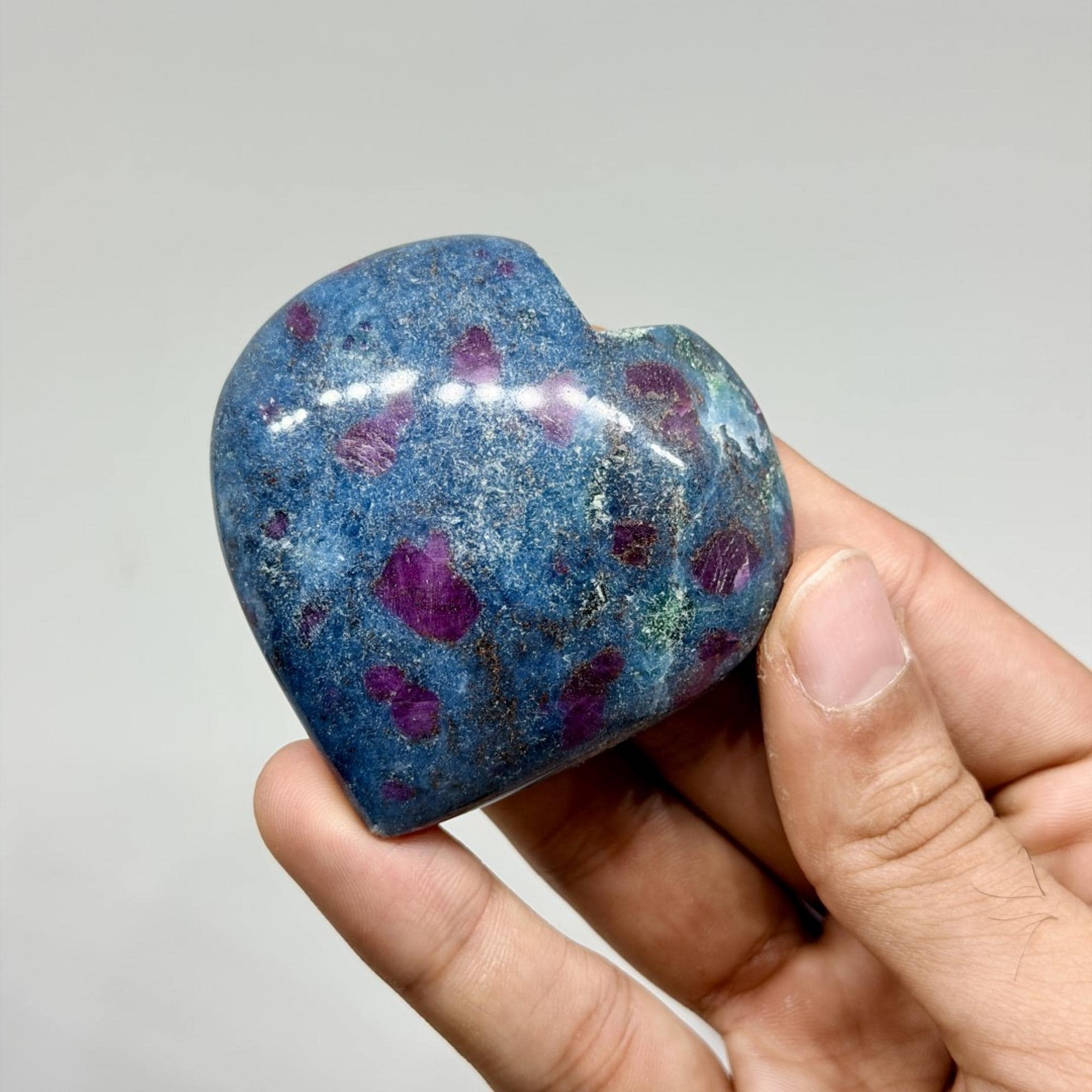
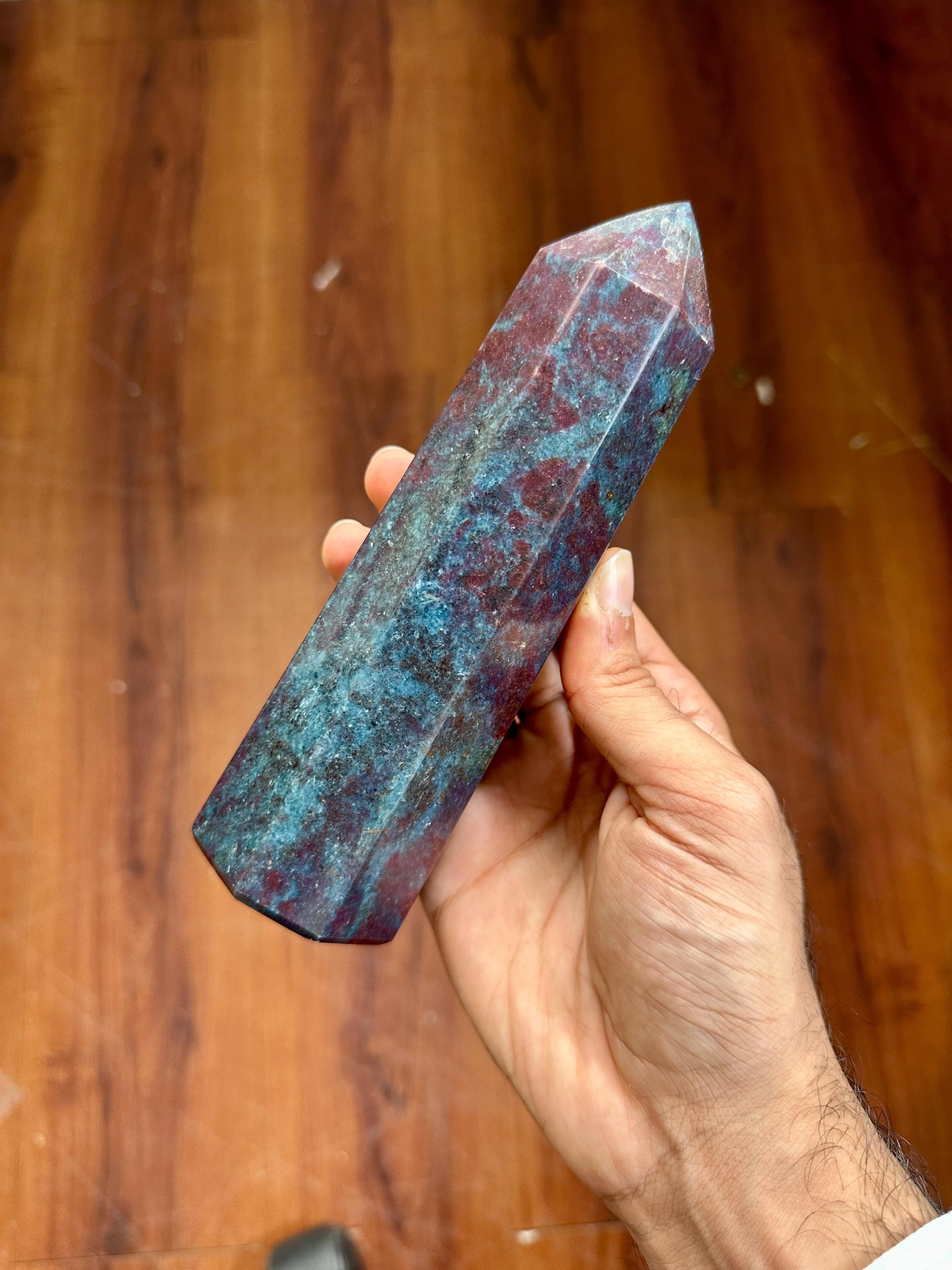
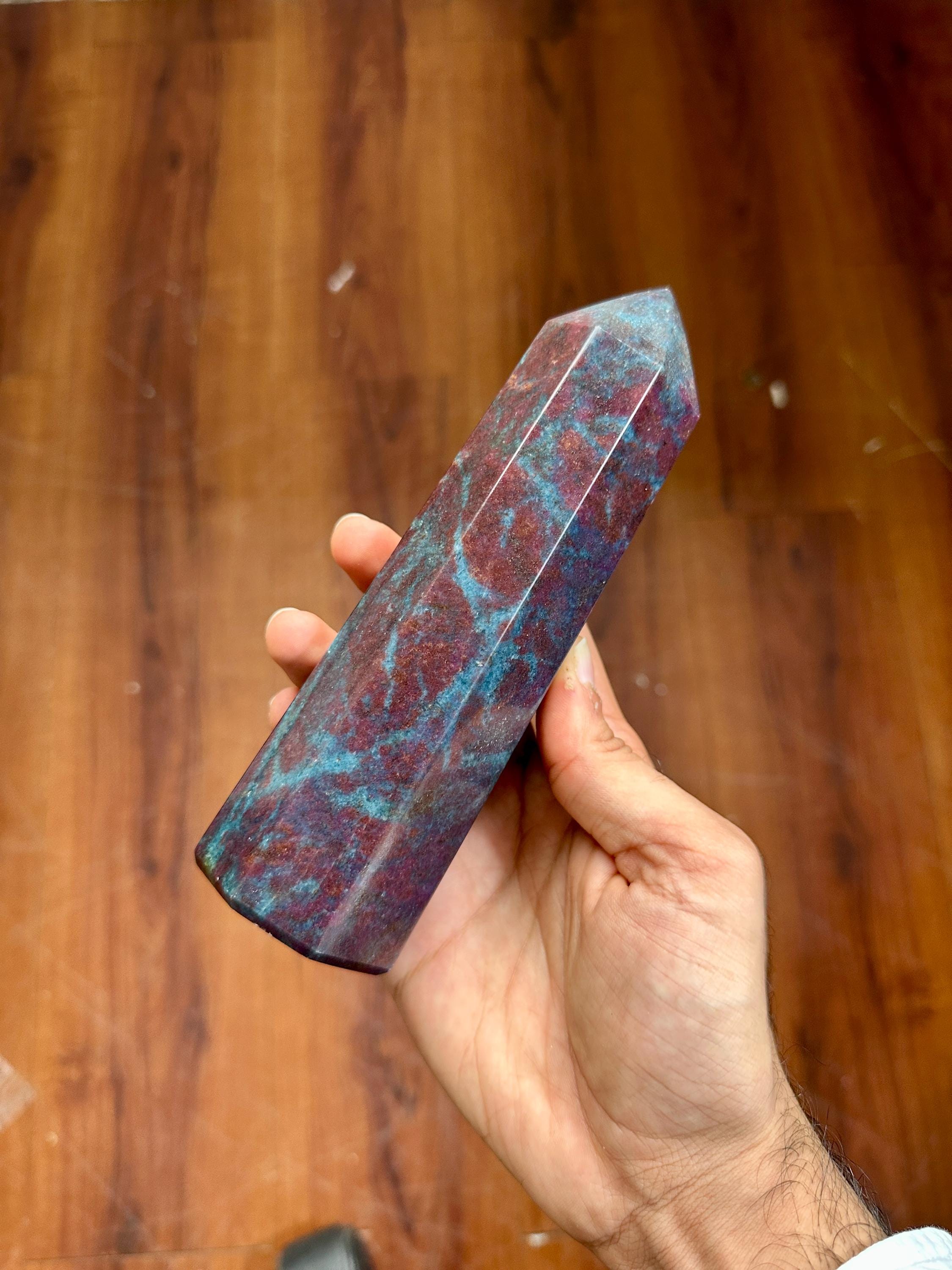
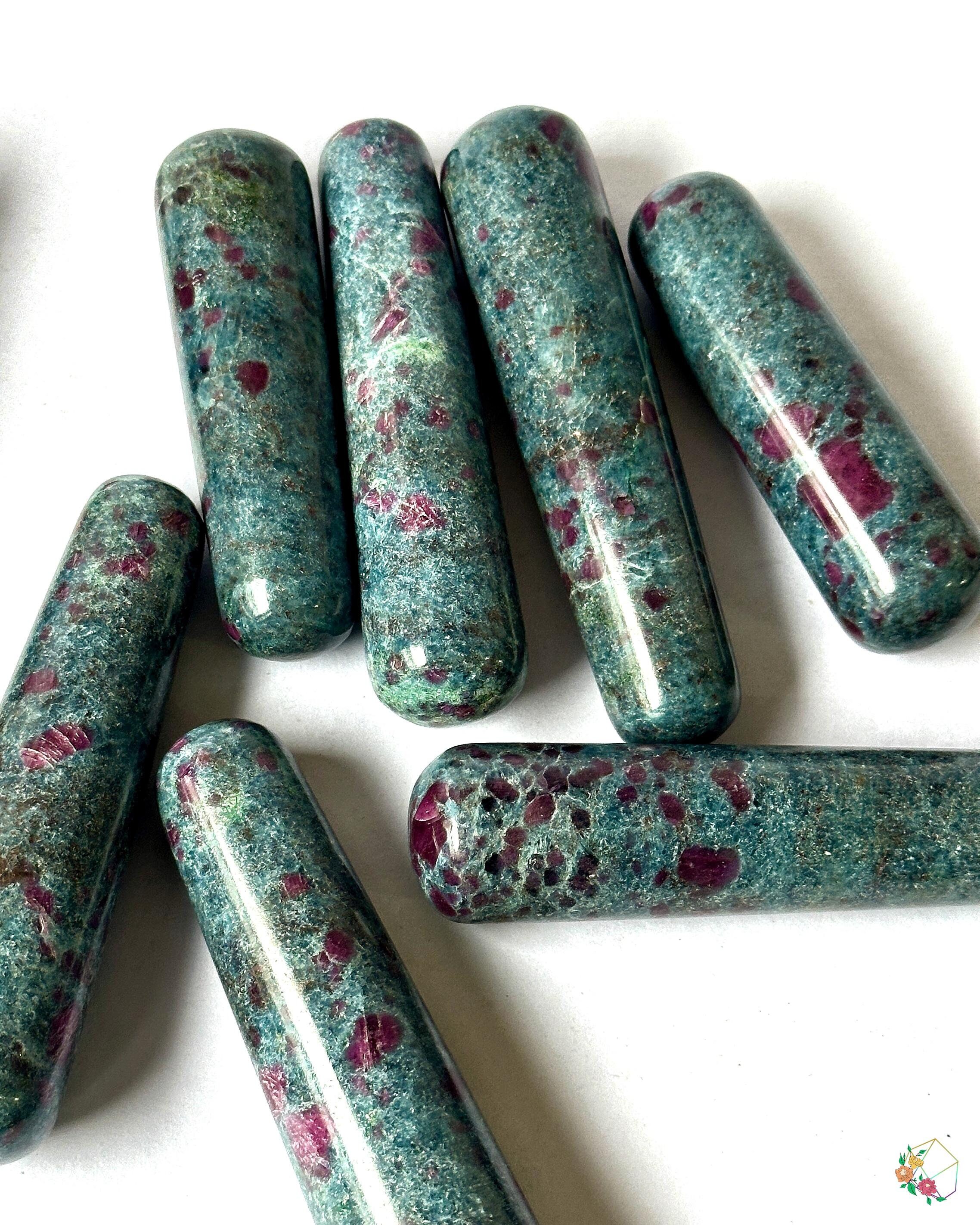
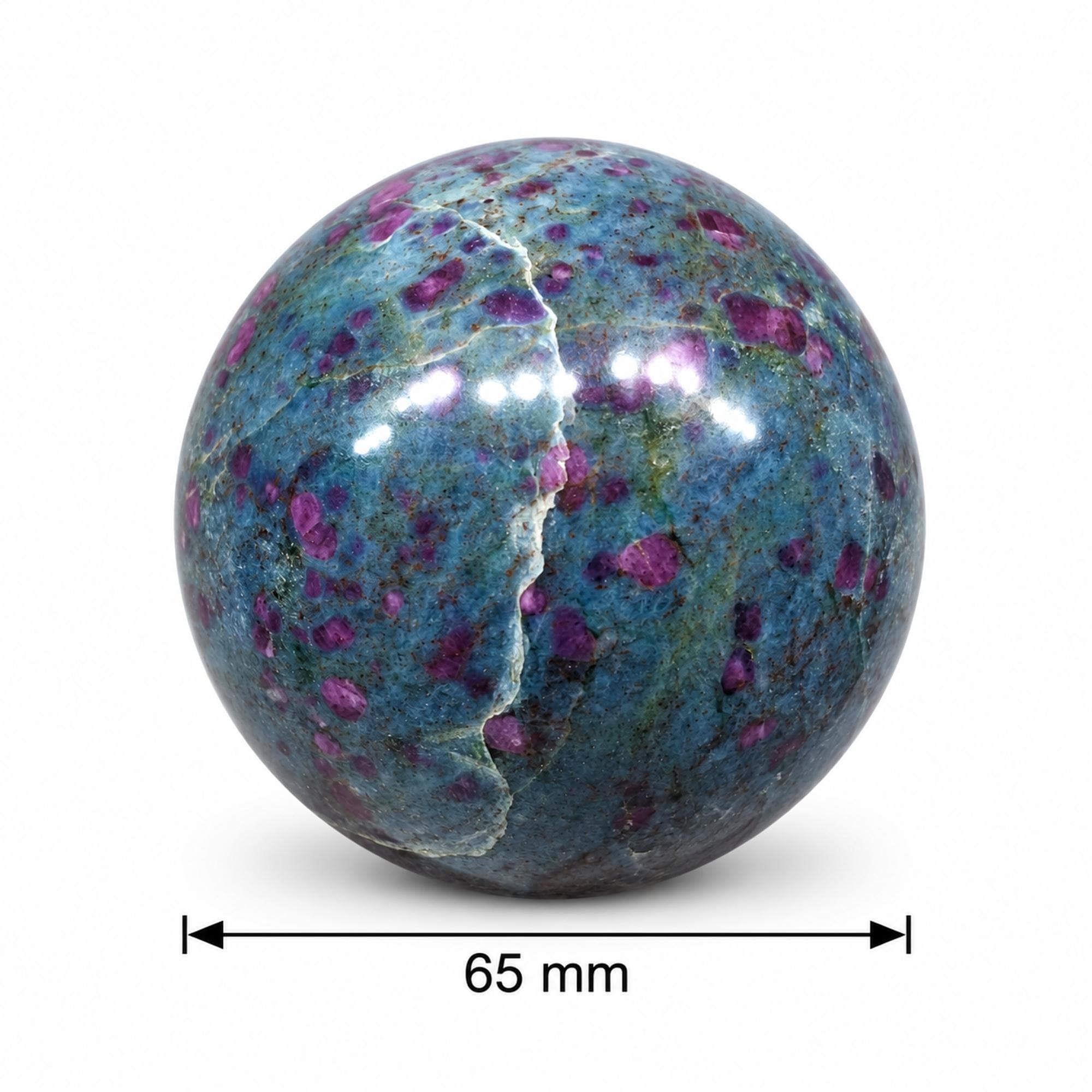
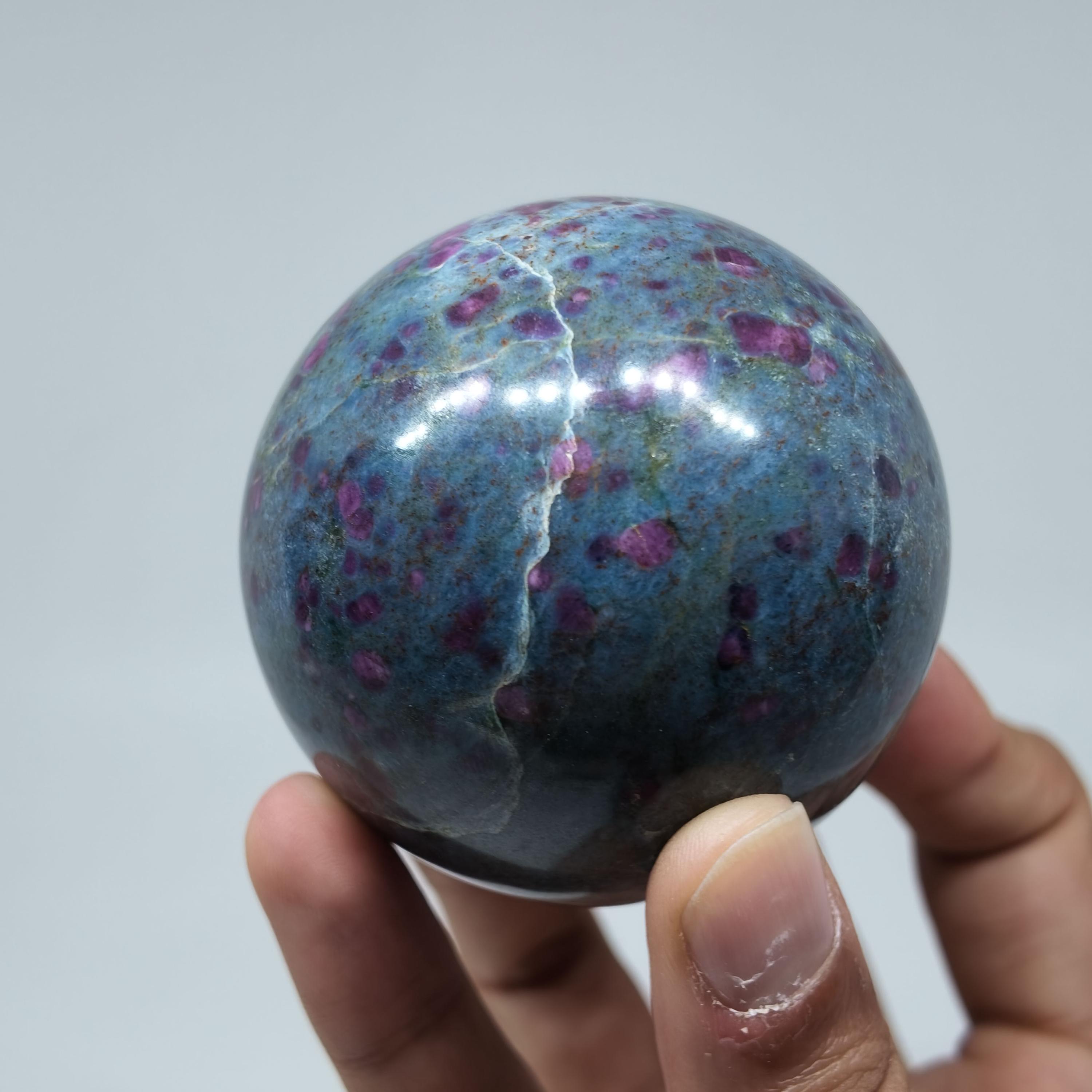
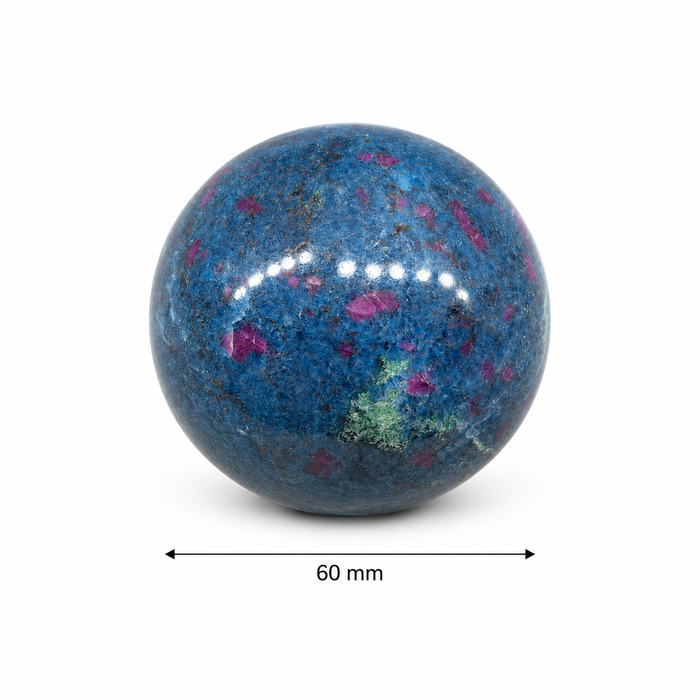
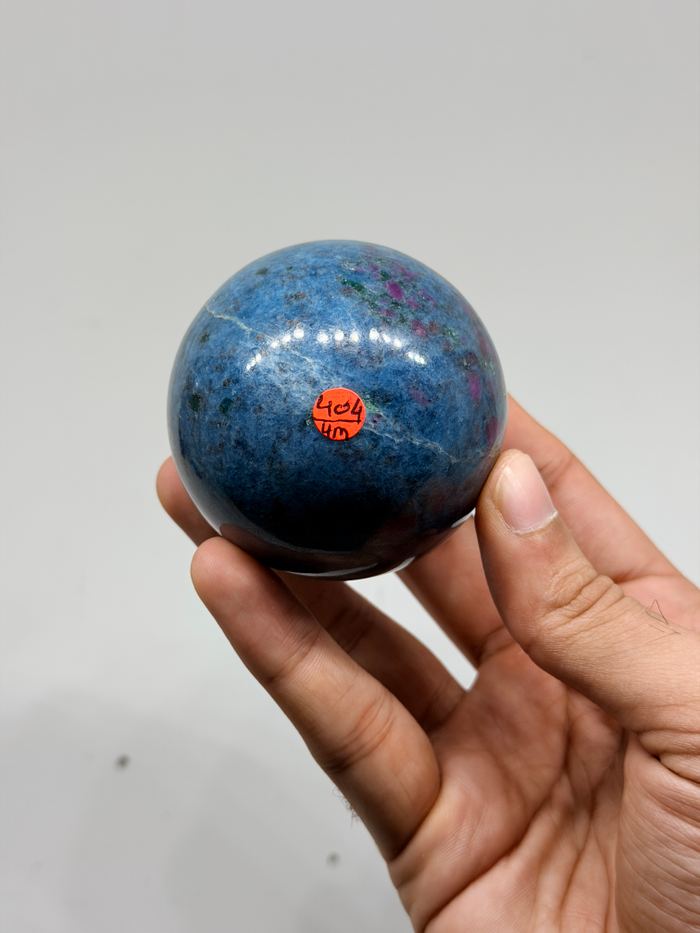
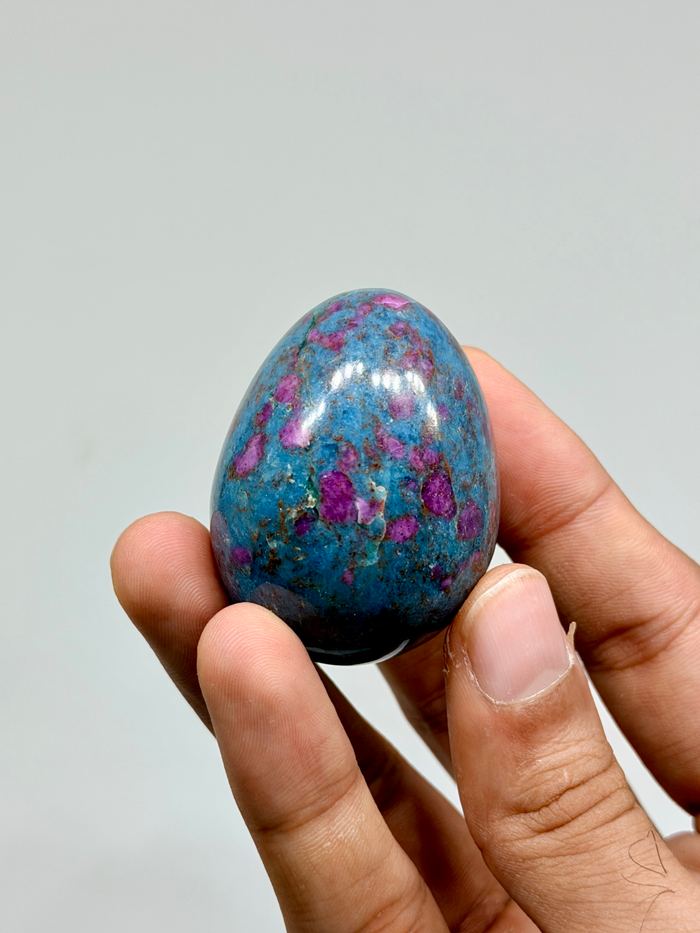
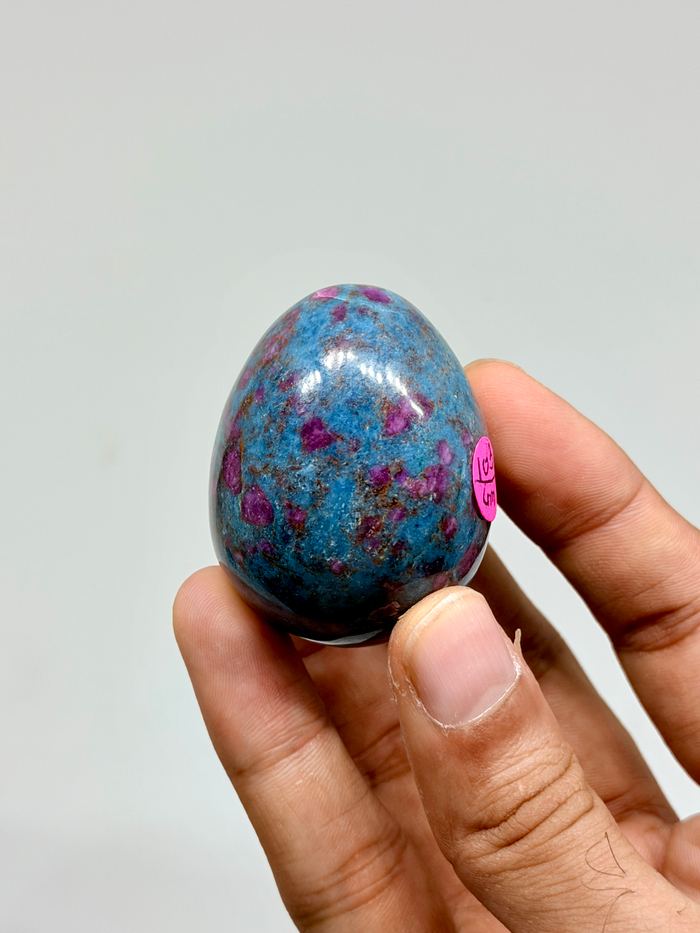
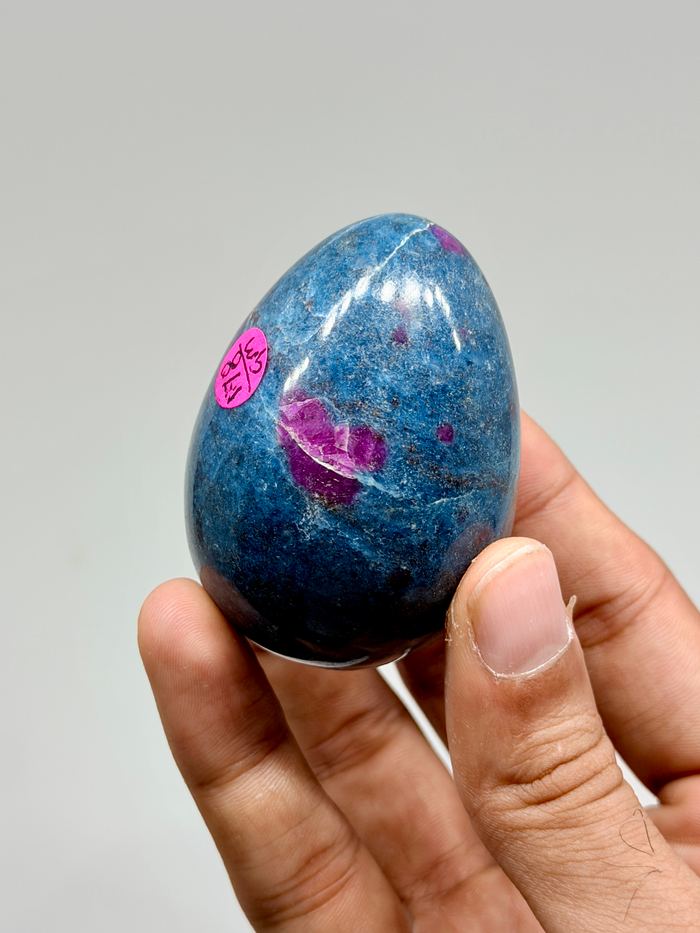
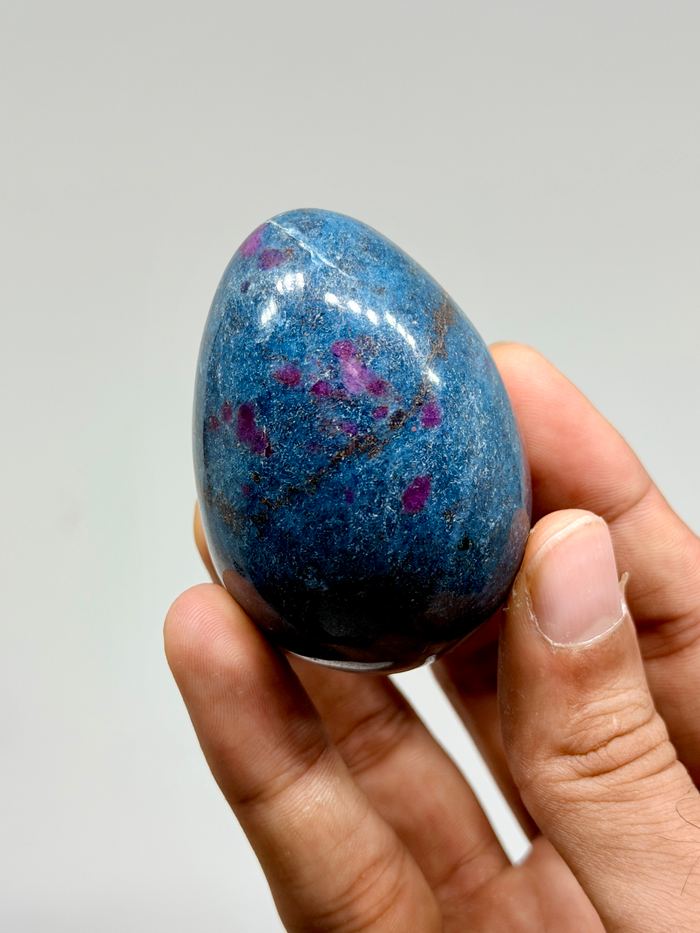
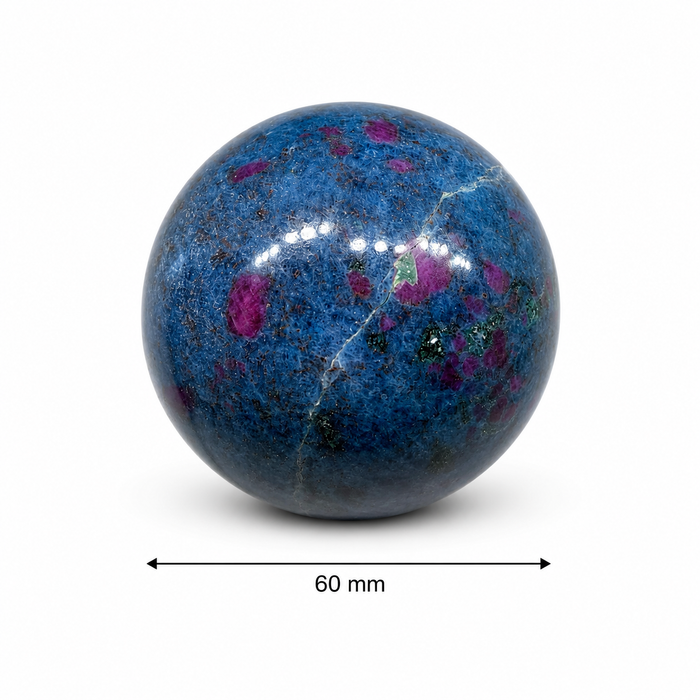
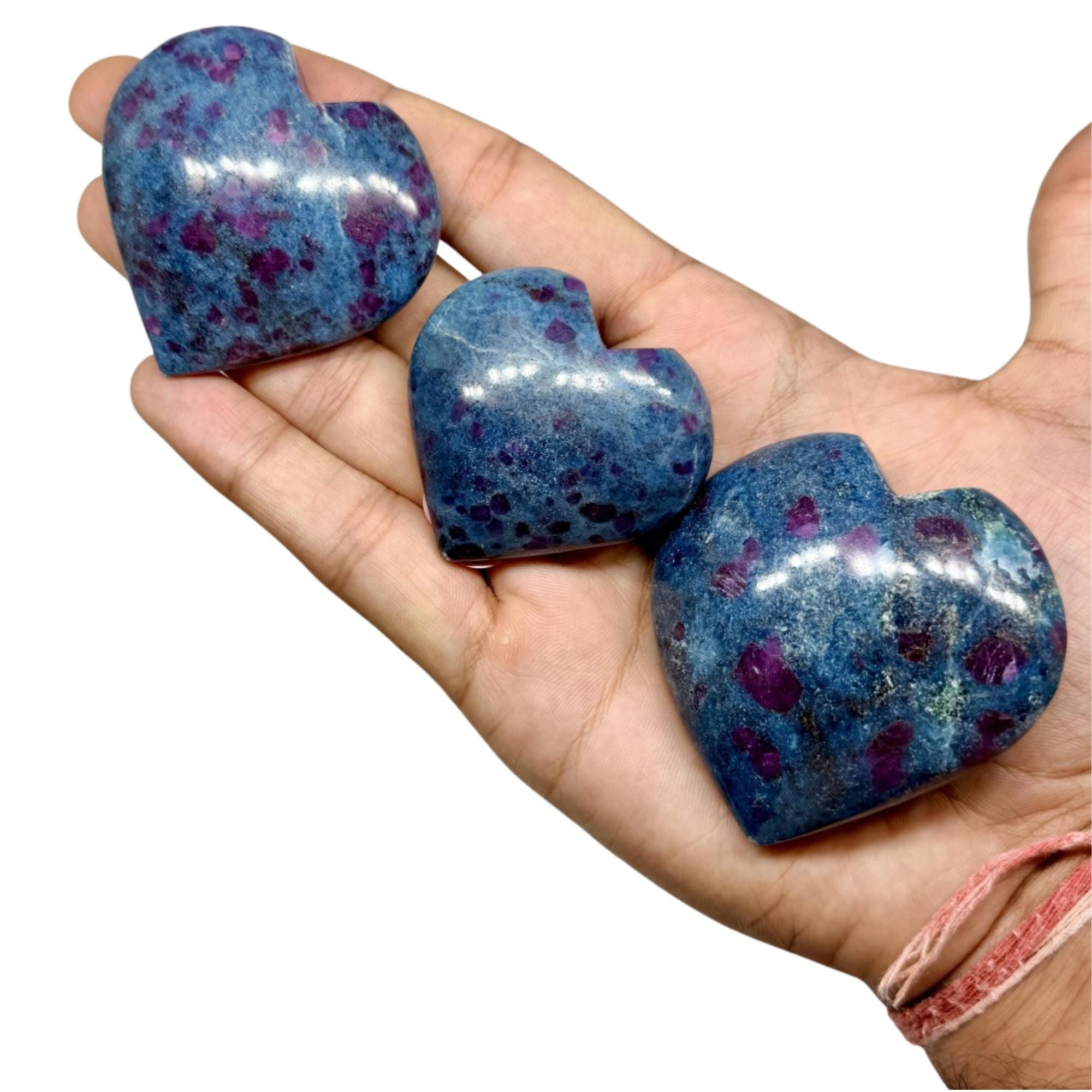
The rock here is kyanite, a mineral that forms long, bladed crystals, usually some shade of blue. In ruby in kyanite the ruby sits as rounded, raspberry-red to purplish crystals inside a blue to blue-grey body, often with white or black patches of other minerals too. Most of it comes from southern India.
How to spot it: red on blue. If the background colour is anything between denim and slate, it's ruby in kyanite. Turn it in the light and the kyanite often shows a faint, fibrous shimmer running one way.
Ruby in fuchsite
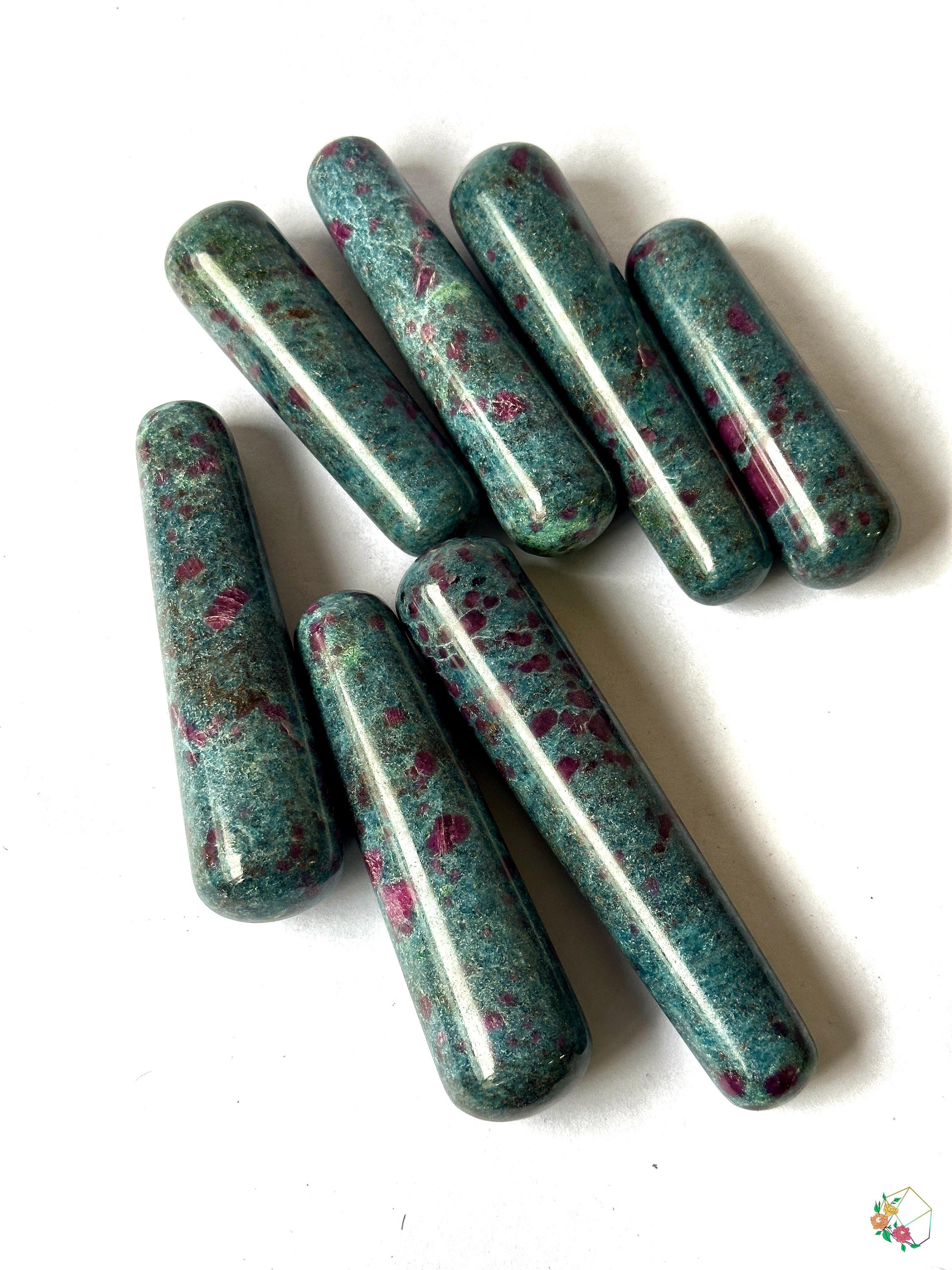
Fuchsite is a mica: it's green because of chromium, the same element that makes ruby red. That shared chromium is why the two grow together. Ruby in fuchsite is green, with pink-red to purplish ruby crystals, and often thin blue kyanite blades as well. Polished, the mica gives it a soft, glittery sheen. It's an Indian stone, from Karnataka, around Mysore.
How to spot it: green that sparkles. Tilt it under a lamp and the fuchsite flashes with tiny mica flakes. Because mica is soft, the green parts are softer than the ruby, so a polished surface can feel very slightly uneven when you run a finger over it.
Ruby in zoisite
Ruby in zoisite, also called anyolite, is green too, but a deeper, more solid green with no glitter, and the ruby crystals are usually outlined in black hornblende. This one isn't Indian: it's from Tanzania, around Longido, where it was found in the early twentieth century. The name anyolite comes from the Maasai word for green.
How to spot it: green with black rims around the red. The green is opaque and even, not shimmery, and the stone feels harder and smoother under the finger than ruby in fuchsite.
The short version
- Red on blue: ruby in kyanite.
- Red on sparkly green: ruby in fuchsite.
- Red on solid green, with black edges: ruby in zoisite.
Is it real ruby?
Yes. It's the same mineral as a gem ruby, just in a form too included and too mixed with other minerals to be faceted. That's also why these stones cost a fraction of a gem: they're valued as a rock and for how they look, not for the ruby's clarity. If you want the ruby on its own, our ruby page has polished ruby spheres, hearts and rough.