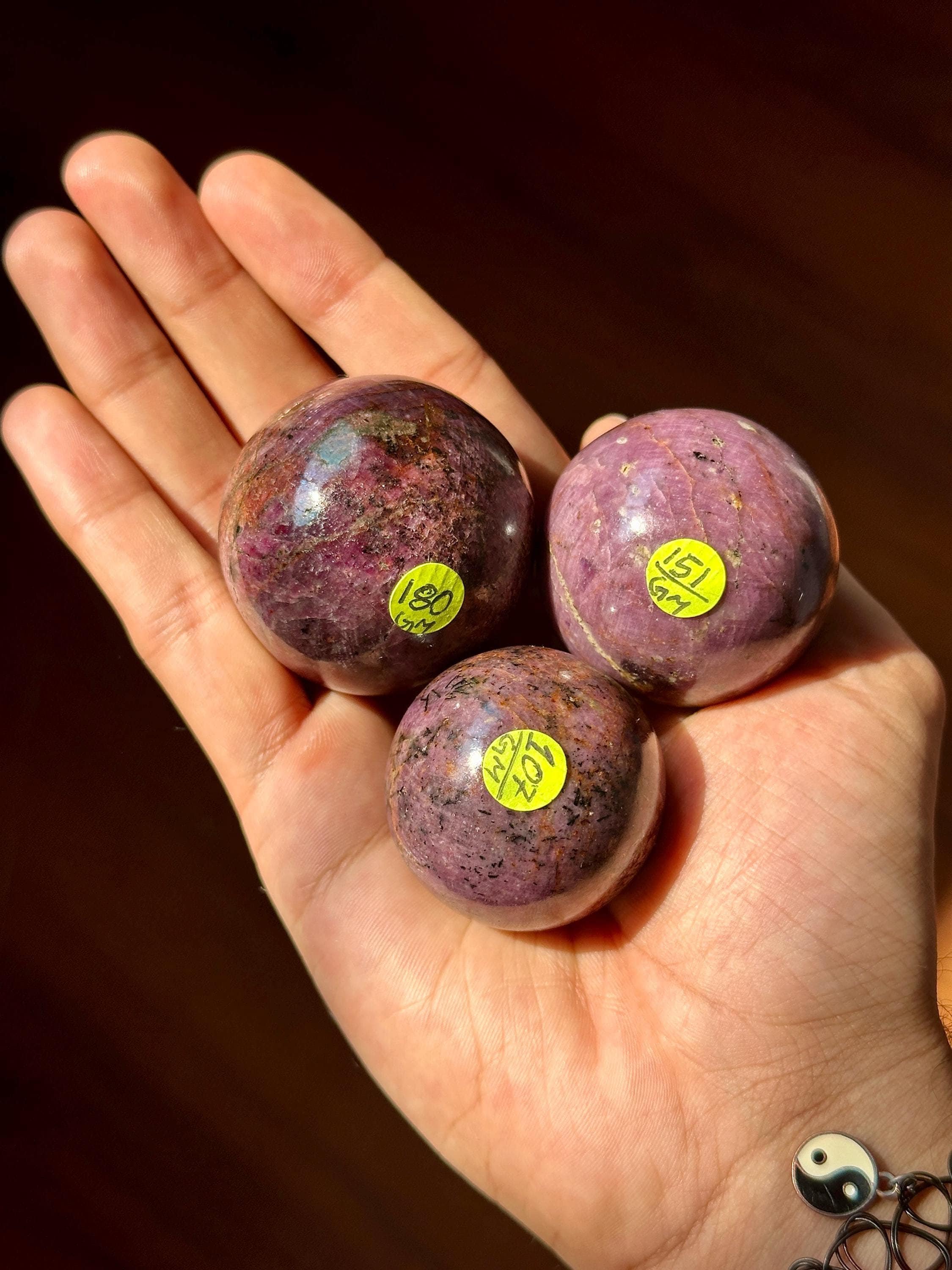
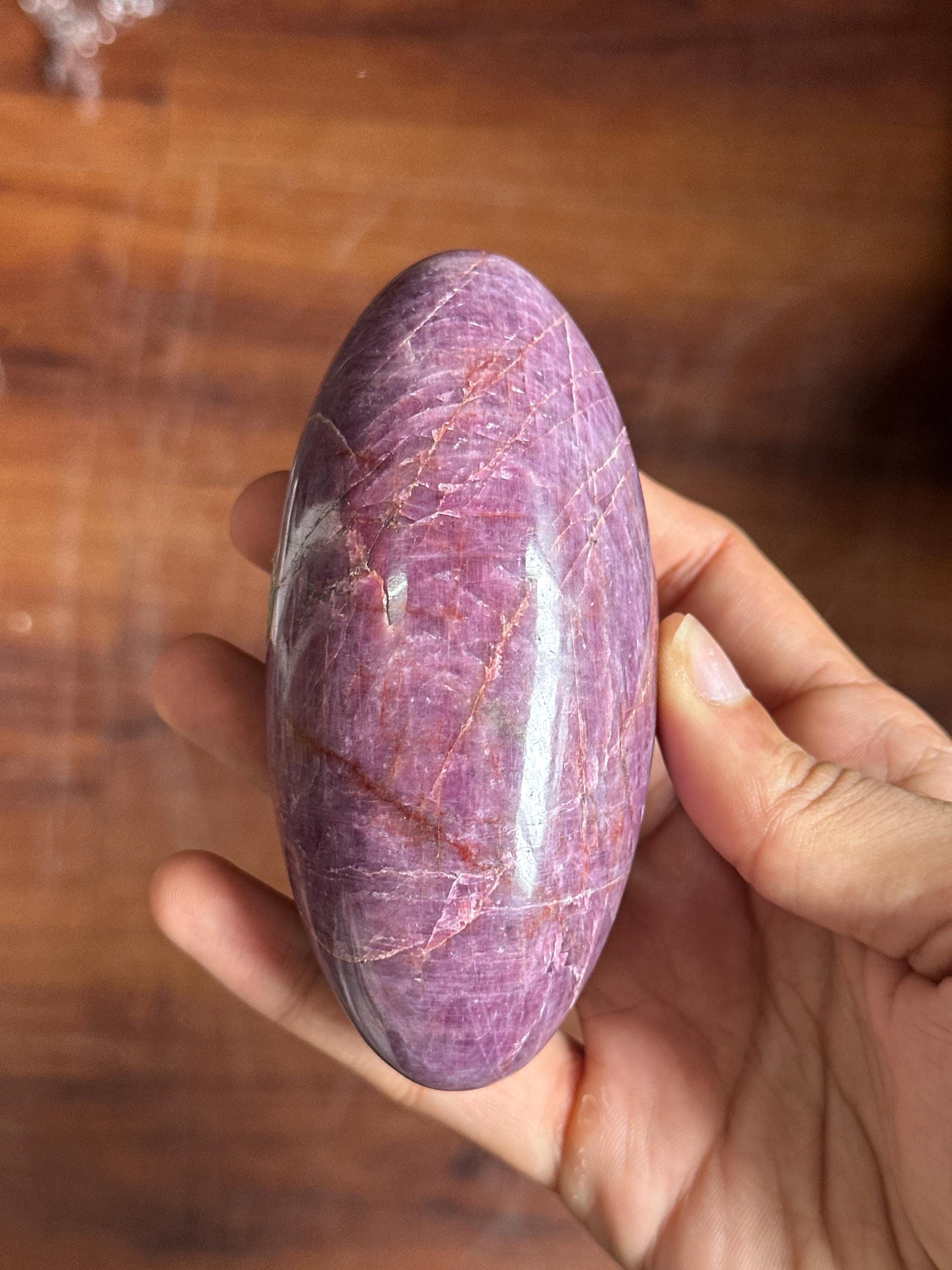
How a star gets into a ruby
Asterism explained: the rutile needles that put a six-rayed star in star ruby and star sapphire, how the stones are cut to show it, and how to see it best.
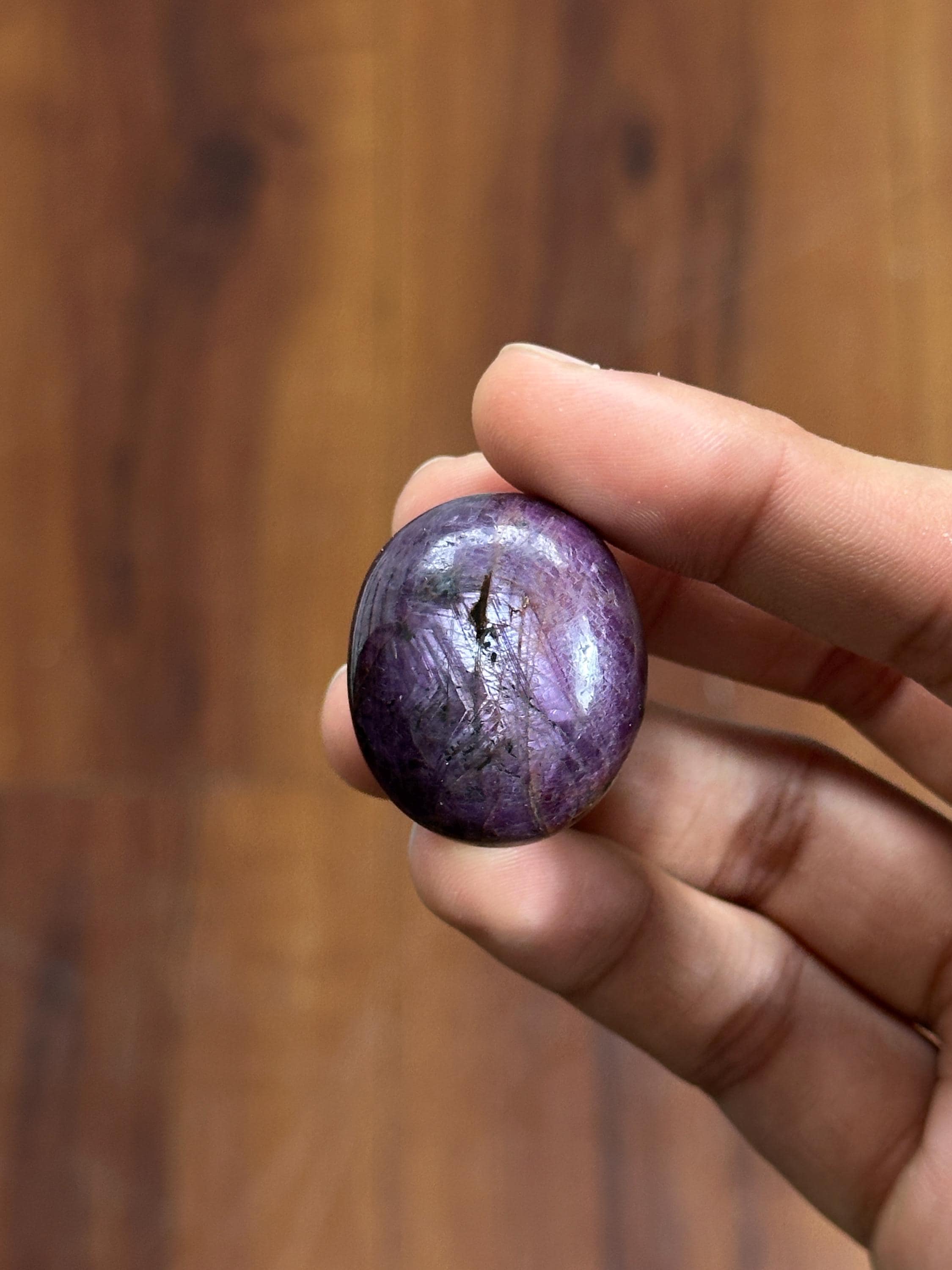
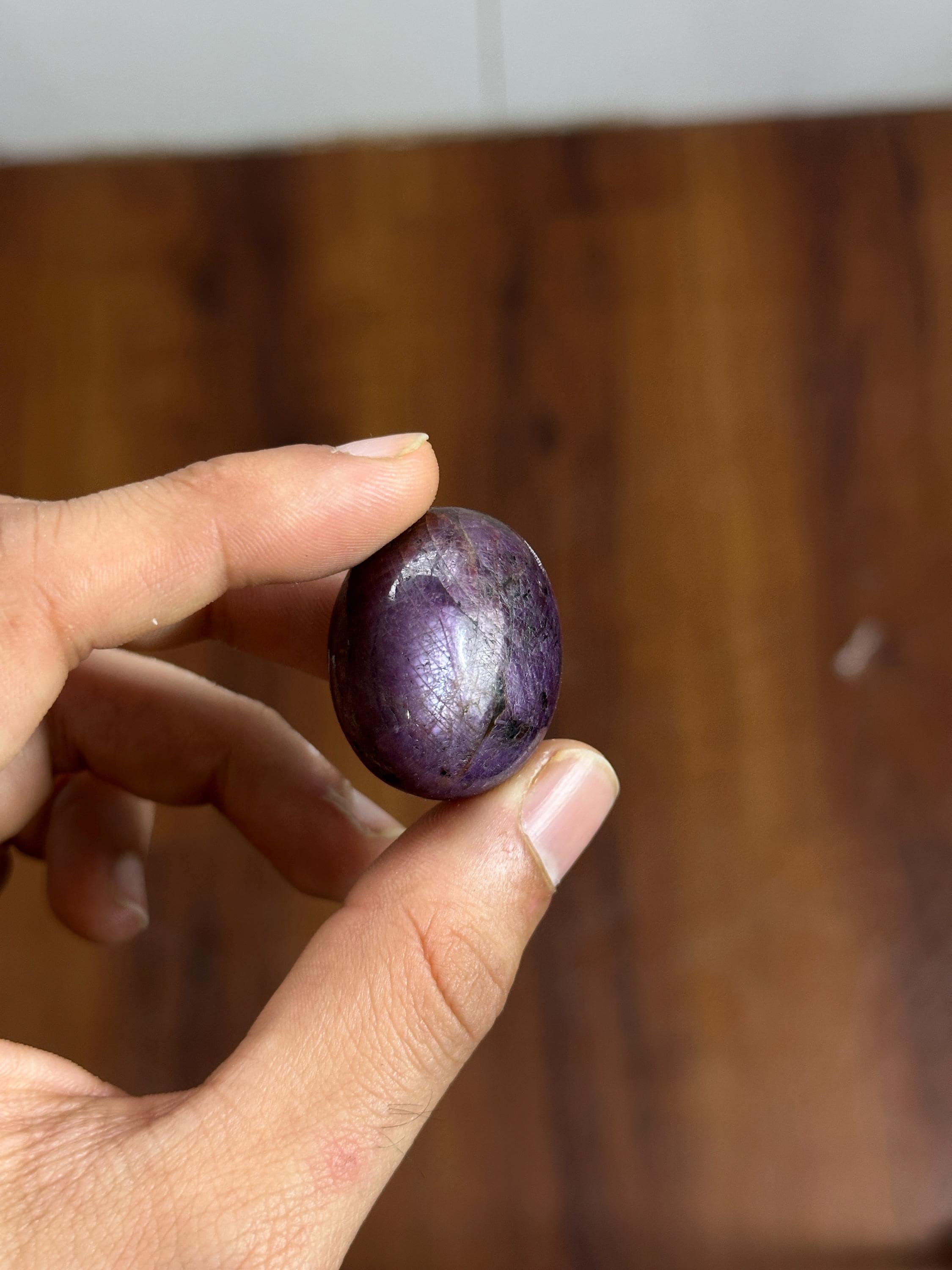
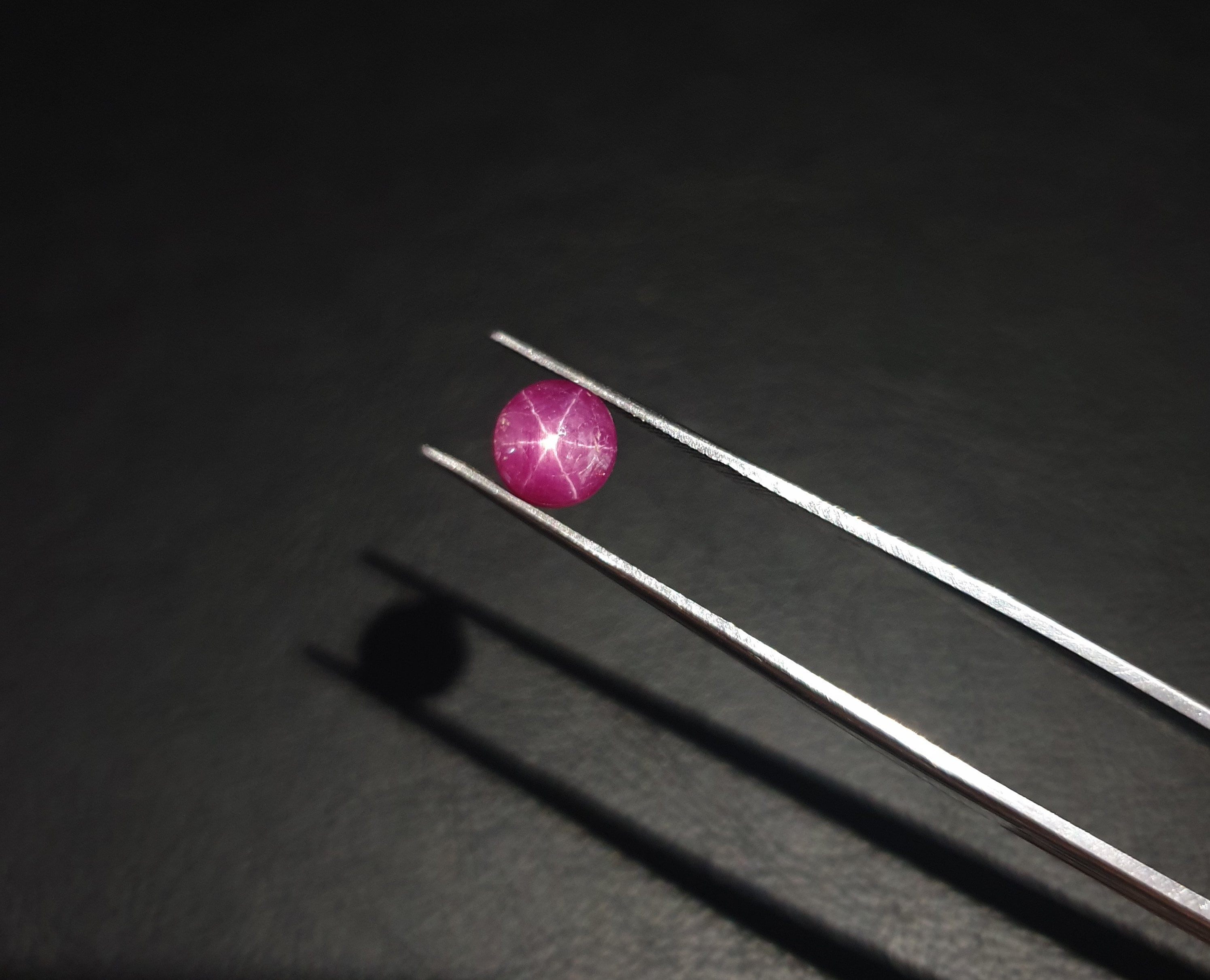
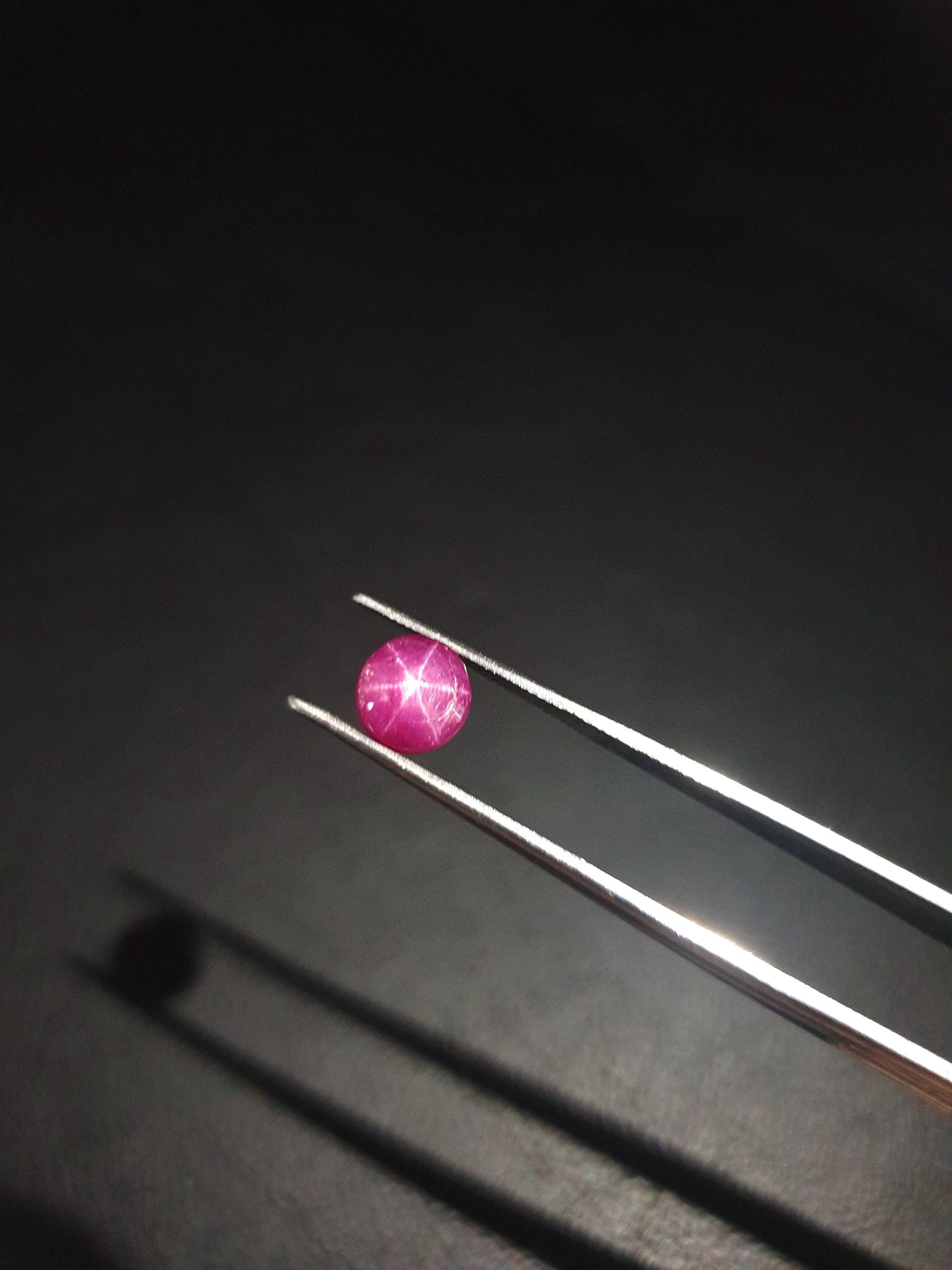
Hold a star ruby under a single light, a bare bulb, a phone torch or the sun, and a six-rayed star slides across its surface as you move it. It isn't carved or painted. It's light bouncing off something inside.
Needles inside the crystal
Ruby and sapphire are both corundum. As a corundum crystal grows, it can take in a little titanium. Later, as the crystal cools, the titanium comes out of solution as tiny needles of rutile, far too fine to see one by one. Because they grow along the crystal's own structure, the needles all line up in three directions, 120 degrees apart, like the spokes of a wheel seen from above.
Each set of needles reflects light in a thin line at right angles to itself. Three sets, three lines, crossing at the centre: a six-rayed star. The effect is called asterism, from the Greek for star.
Cut to show it
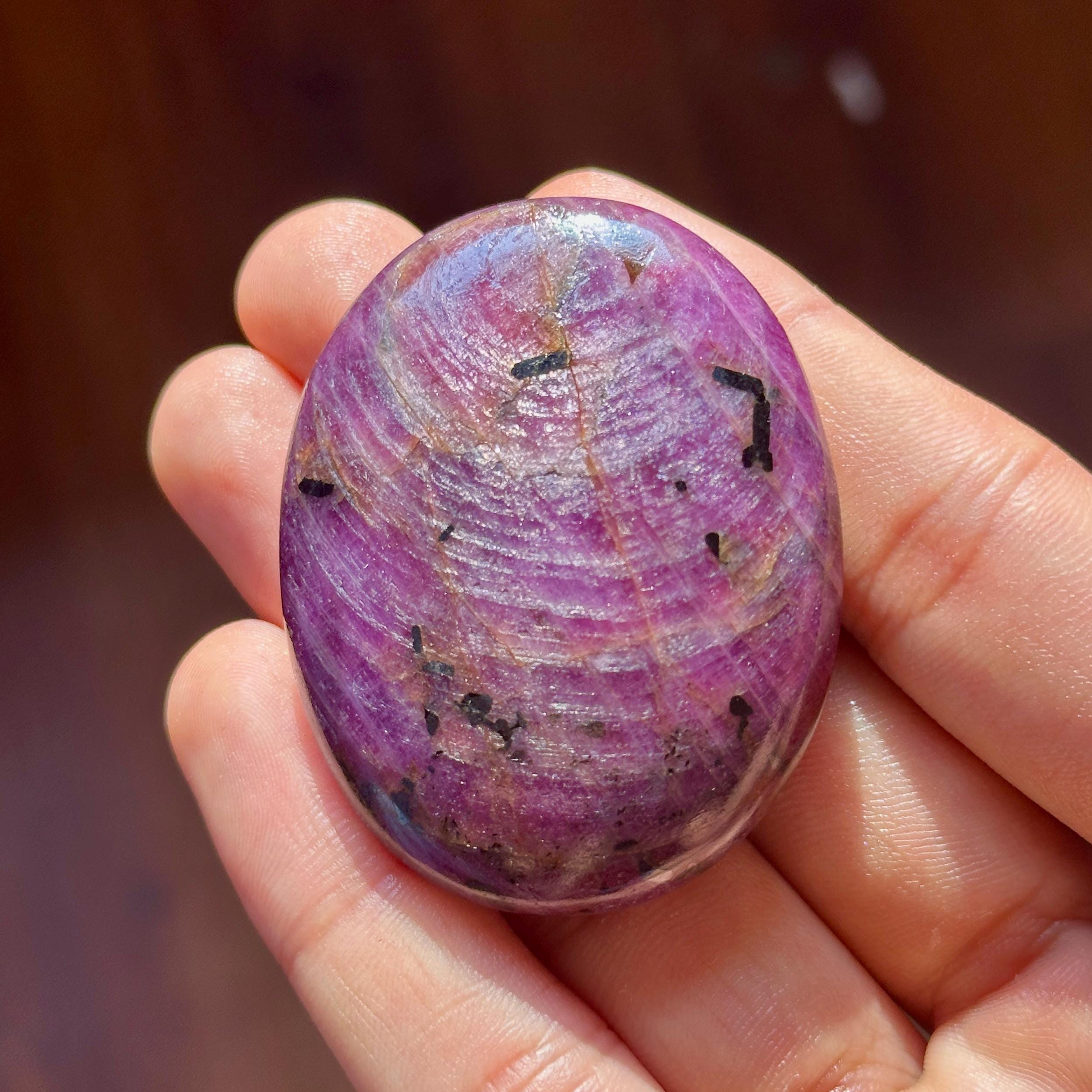
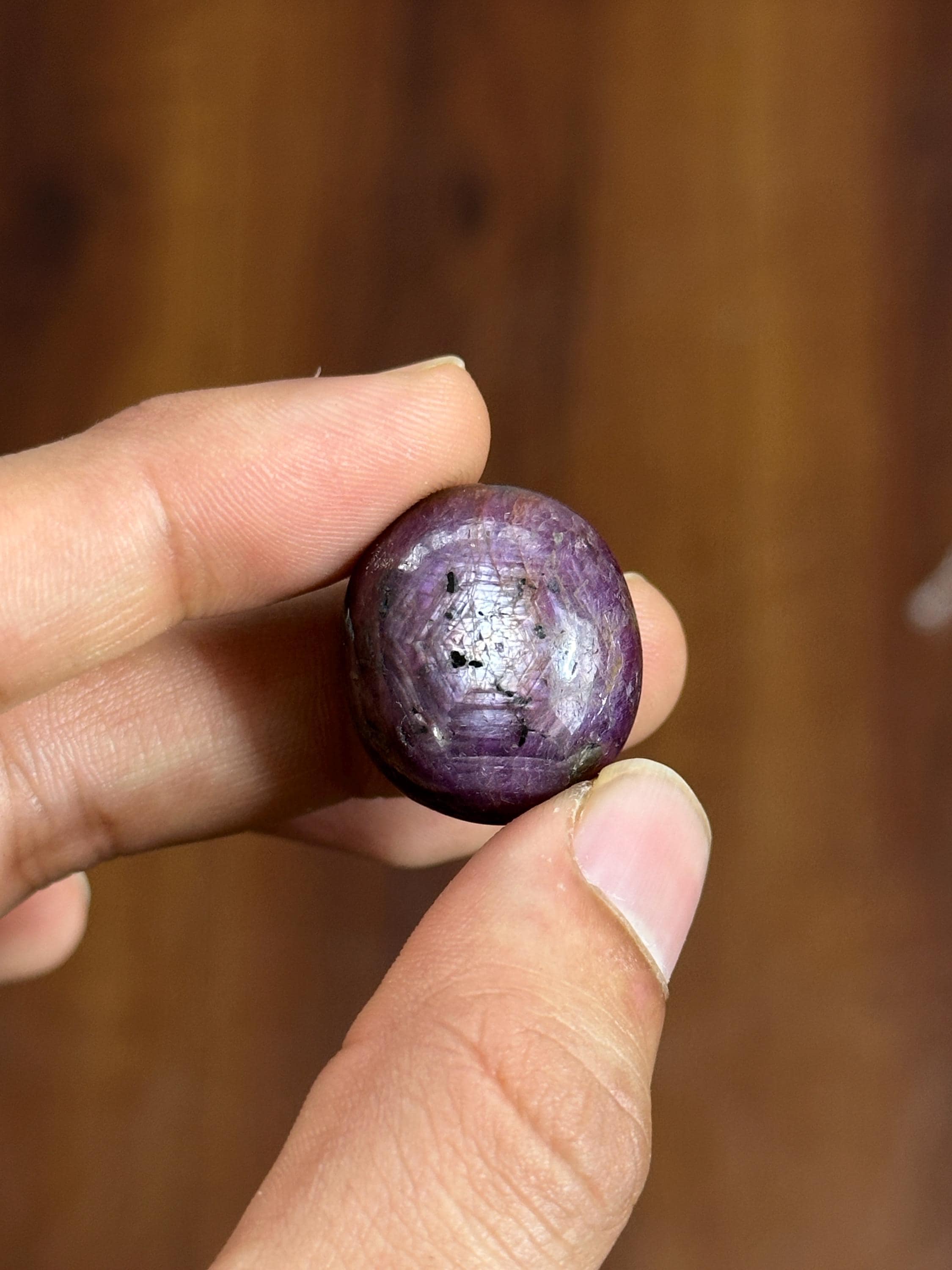
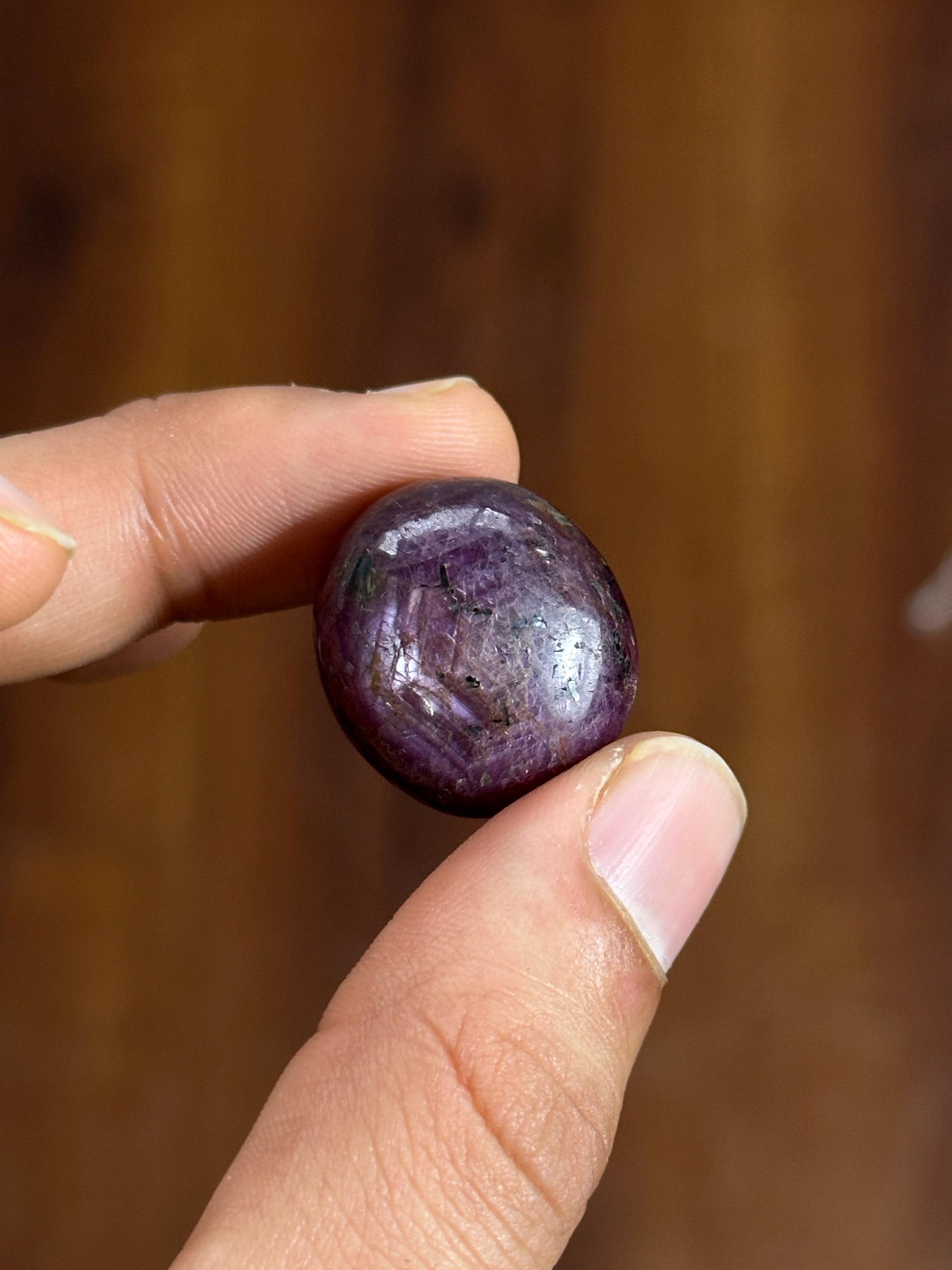
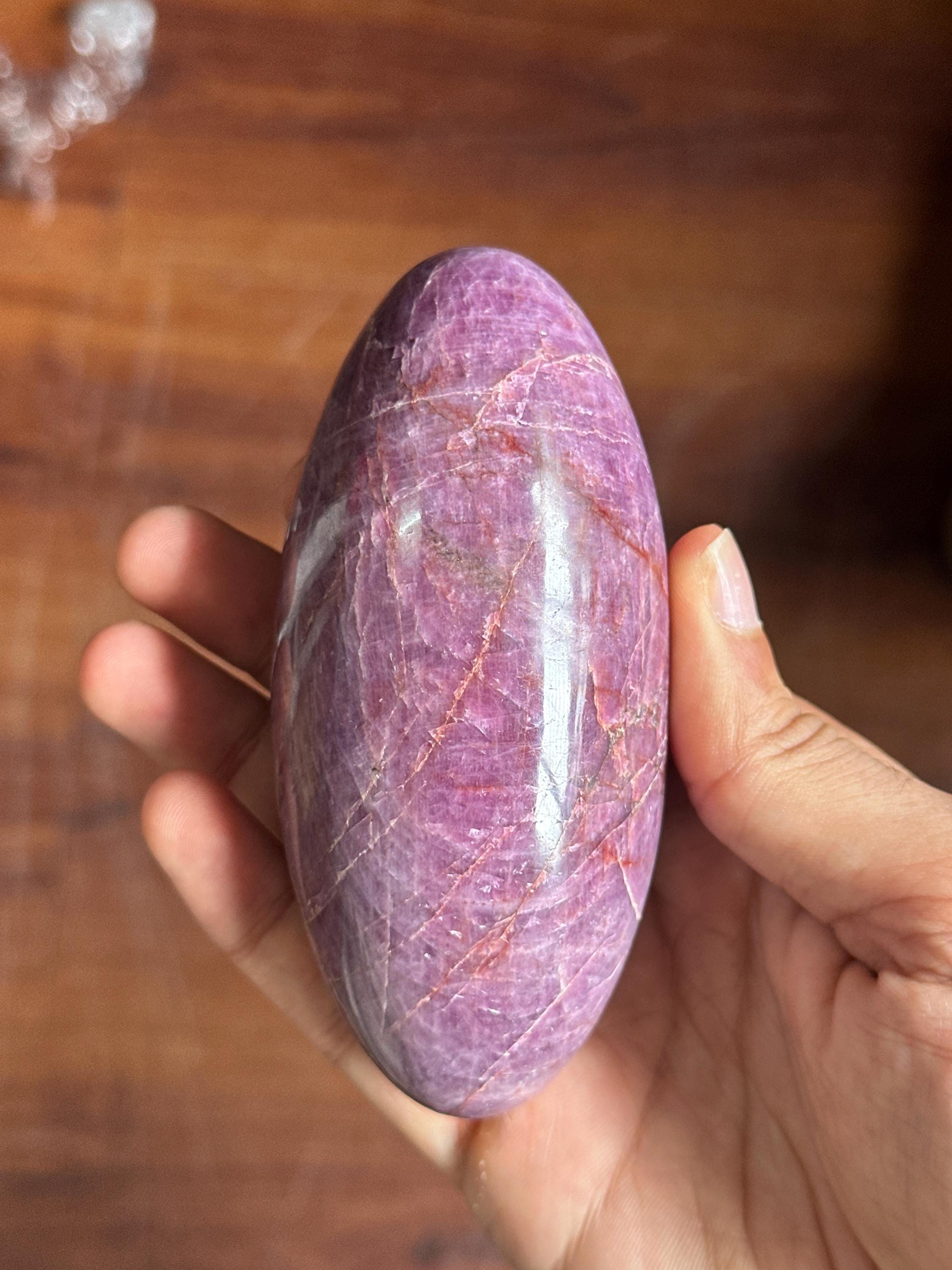
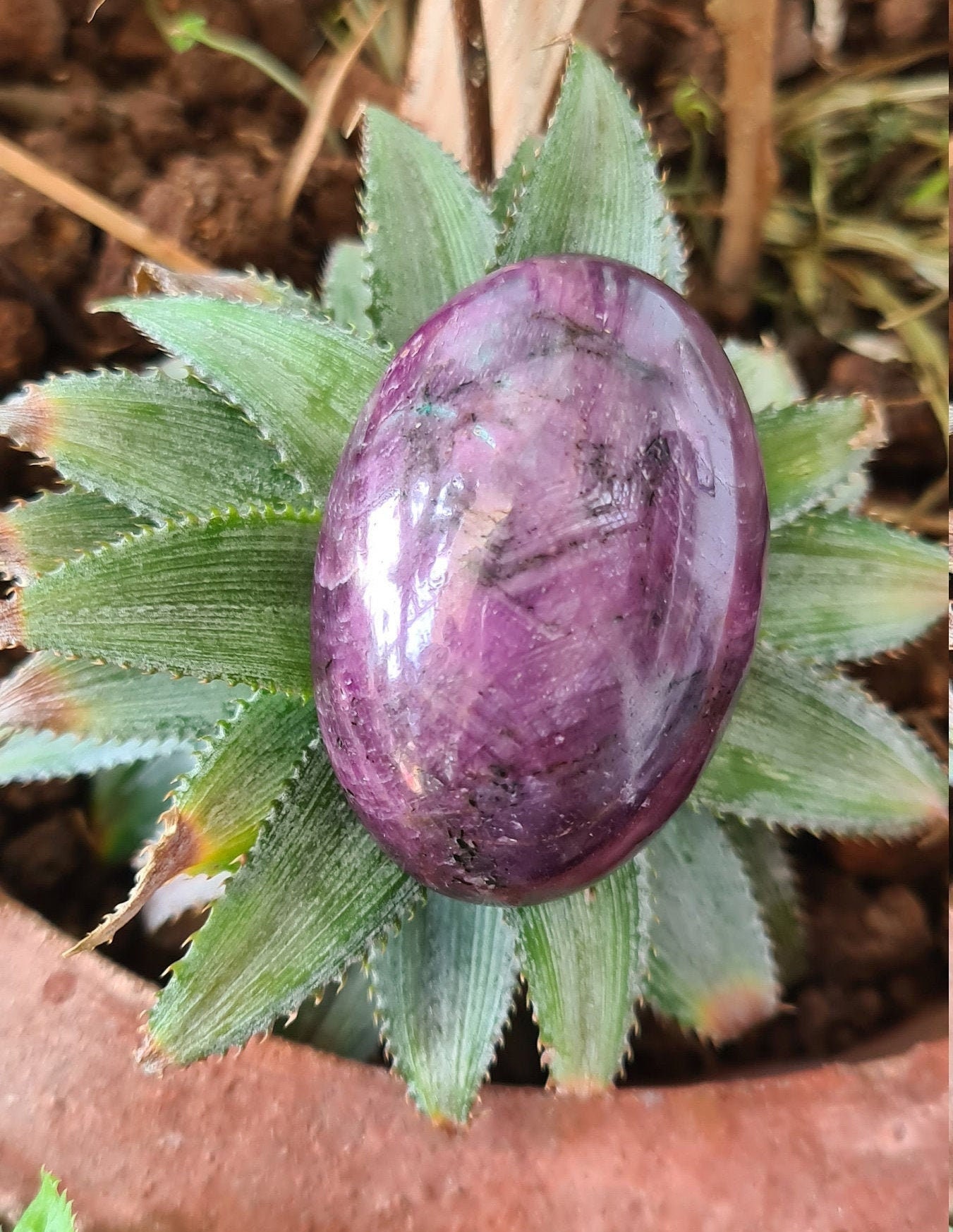
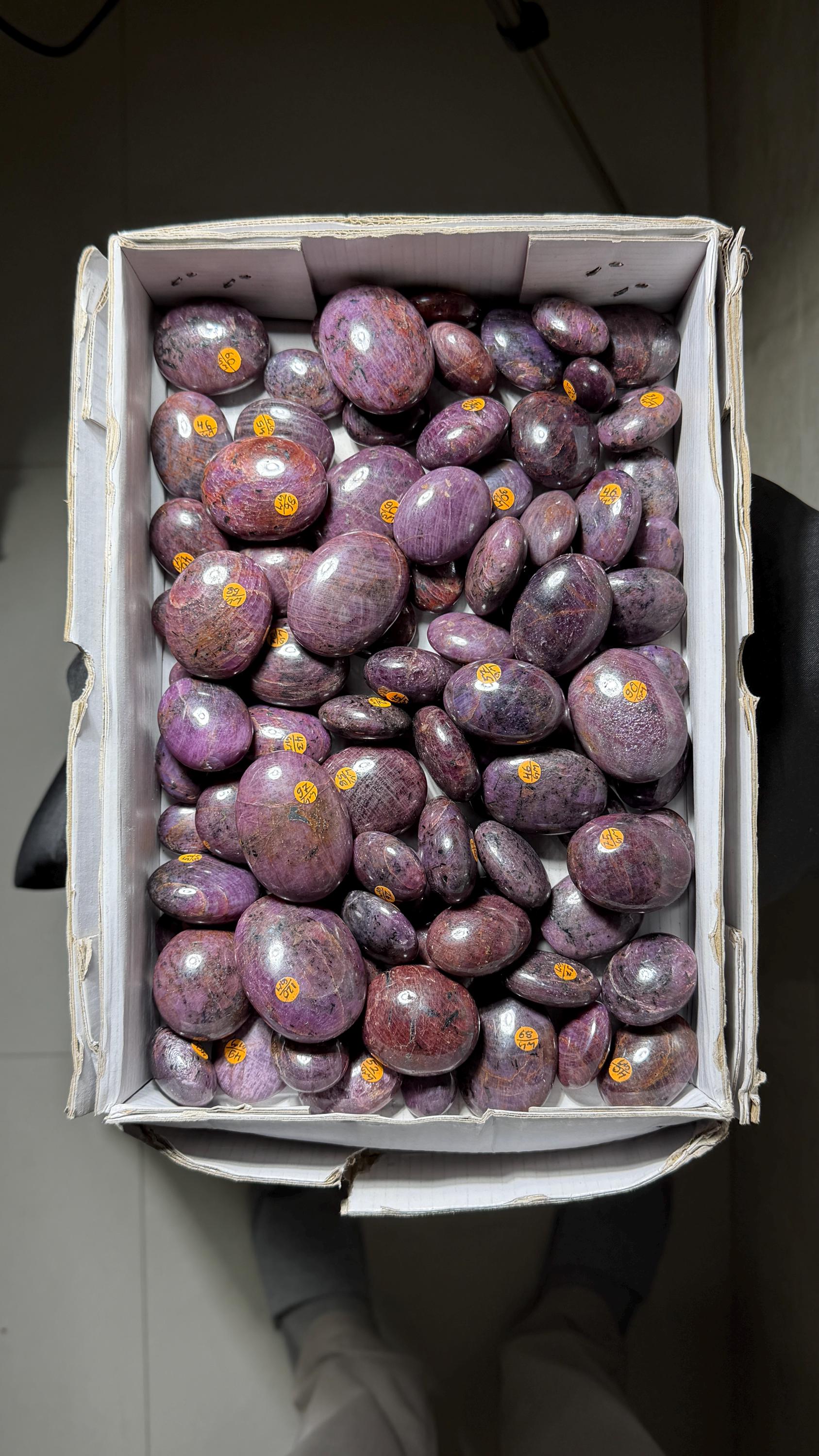
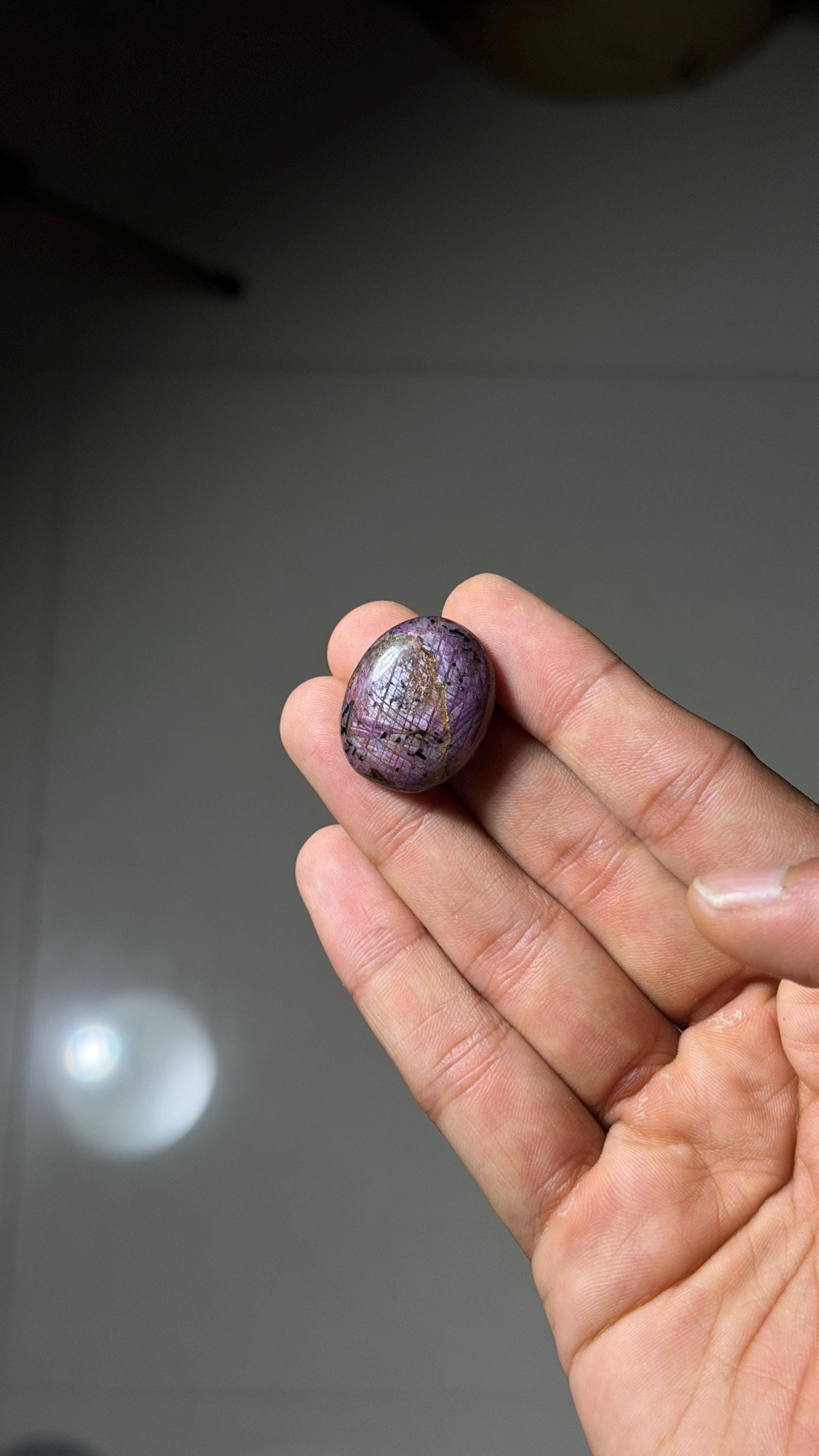
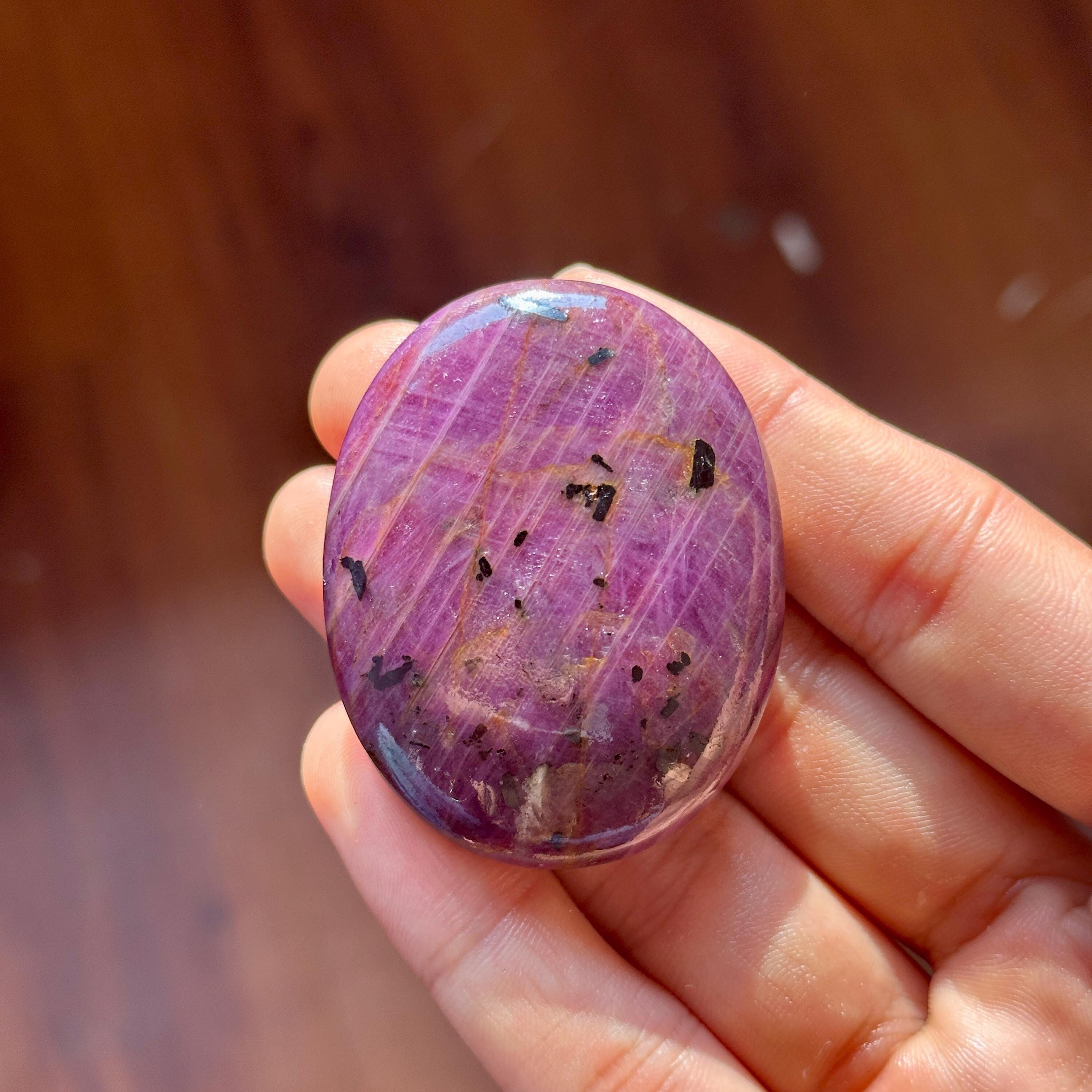
A star only appears if the stone is cut the right way. It has to be a domed cabochon, not faceted, and the dome has to sit square to the crystal's main axis, so that all three sets of needles lie flat under the curve. Cut it at an angle and the star slides off to one side, or one of its legs goes missing. A cutter reads the rough carefully before shaping it, and with Indian star ruby, which is usually opaque and purplish red, much of the skill is in finding the orientation that gives the sharpest, straightest star.
Seeing the star
- Use one light, not several. A single bulb or sunlight shows a sharp star; diffuse light or daylight from a window makes it blurry or invisible.
- Tilt the stone slowly. The star moves across the dome as you do.
- Look for straight legs that meet in the middle. That's the mark of a well-oriented cut.
Star sapphire
Star sapphire is the same effect in corundum of any colour other than red: blue, grey, black, and in some Indian material a bronze-brown. Black star sapphire, with a golden star, comes from the same needle trick, with some of the rutile's glow tinted by iron.
Is it natural?
The Indian star ruby and star sapphire we sell are natural. Lab-grown star stones exist and usually have a very sharp, perfectly even star on a flawless, uniform body, which is often how you can tell them apart. Natural stars are rarely perfect, and that's fine. It means a real crystal grew them.