Why amethyst is purple, and what turns it yellow
Iron, natural radiation and heat: the science of amethyst's colour, why it can fade in sunlight, how amethyst becomes citrine, and where the name comes from.
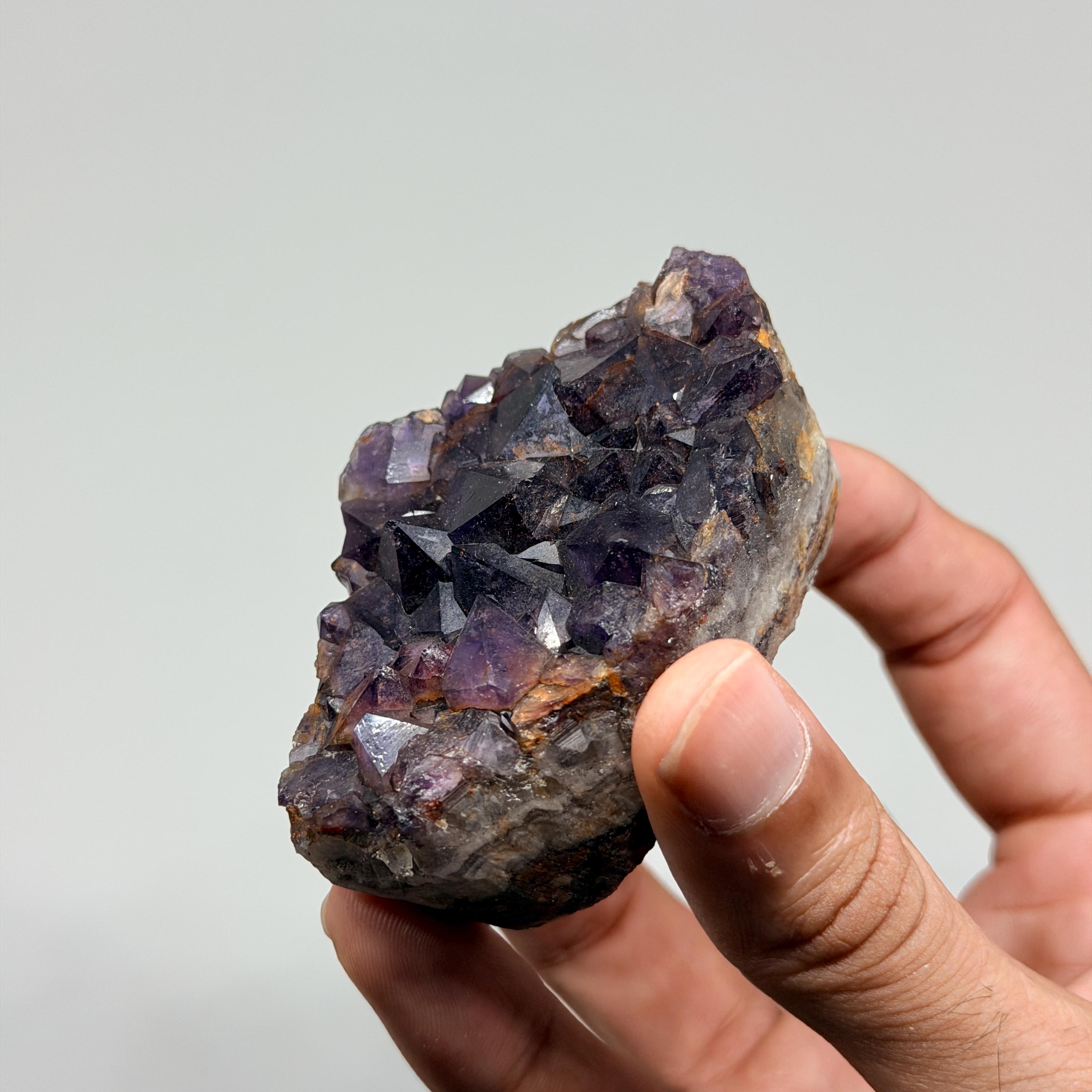
Amethyst is quartz, the same silicon dioxide as a clear rock crystal or the sand on a beach. Pure quartz has no colour at all. So where does the purple come from?
Iron, and a little radiation
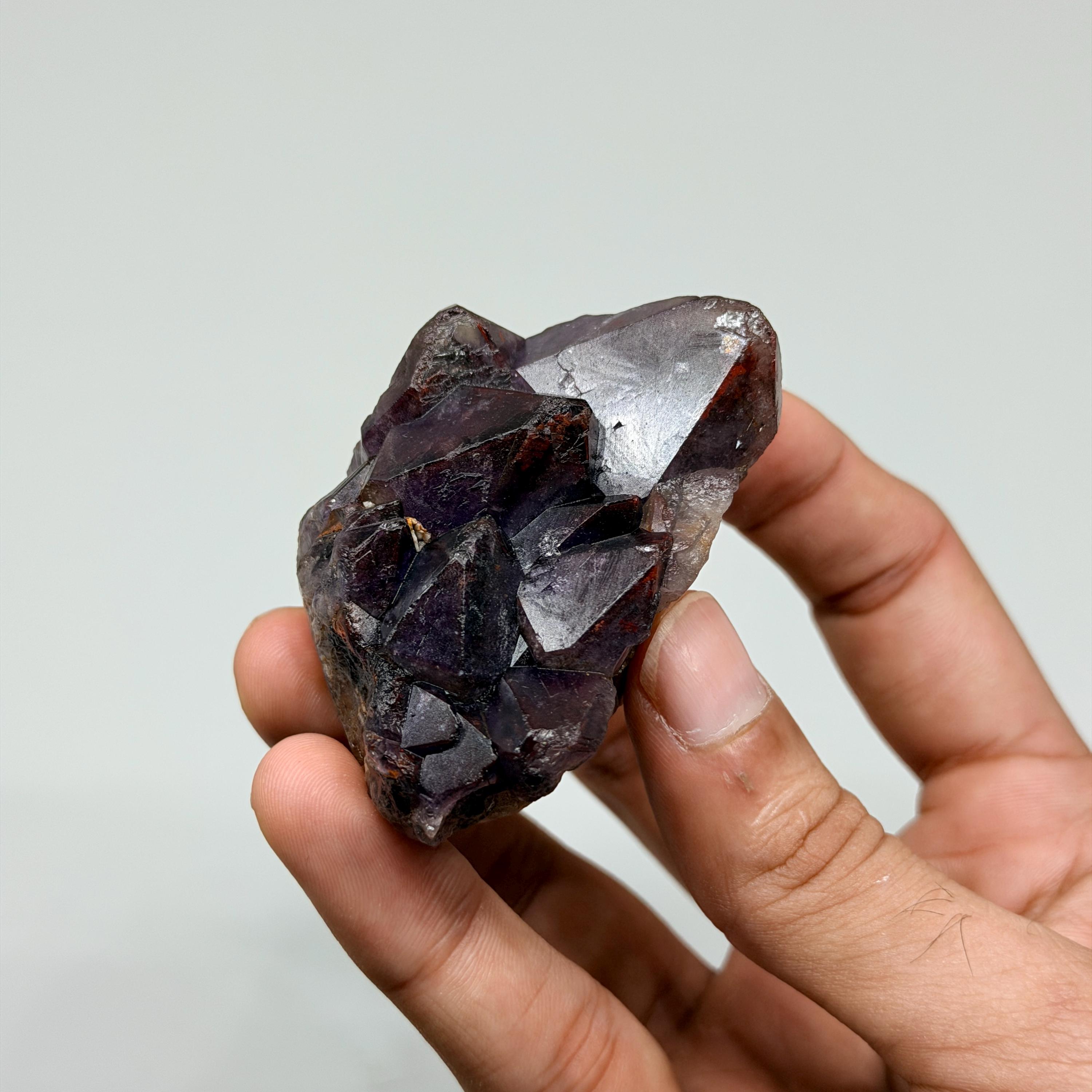
As amethyst grows, a small amount of iron, a few parts in ten thousand, gets built into the crystal in place of silicon. On its own that iron doesn't make the stone purple. What does is radiation: over thousands of years, natural gamma rays from the surrounding rock knock electrons around inside the crystal, and the iron ends up in a slightly different state that absorbs yellow-green light. Take yellow-green away from white light, and what's left looks purple.
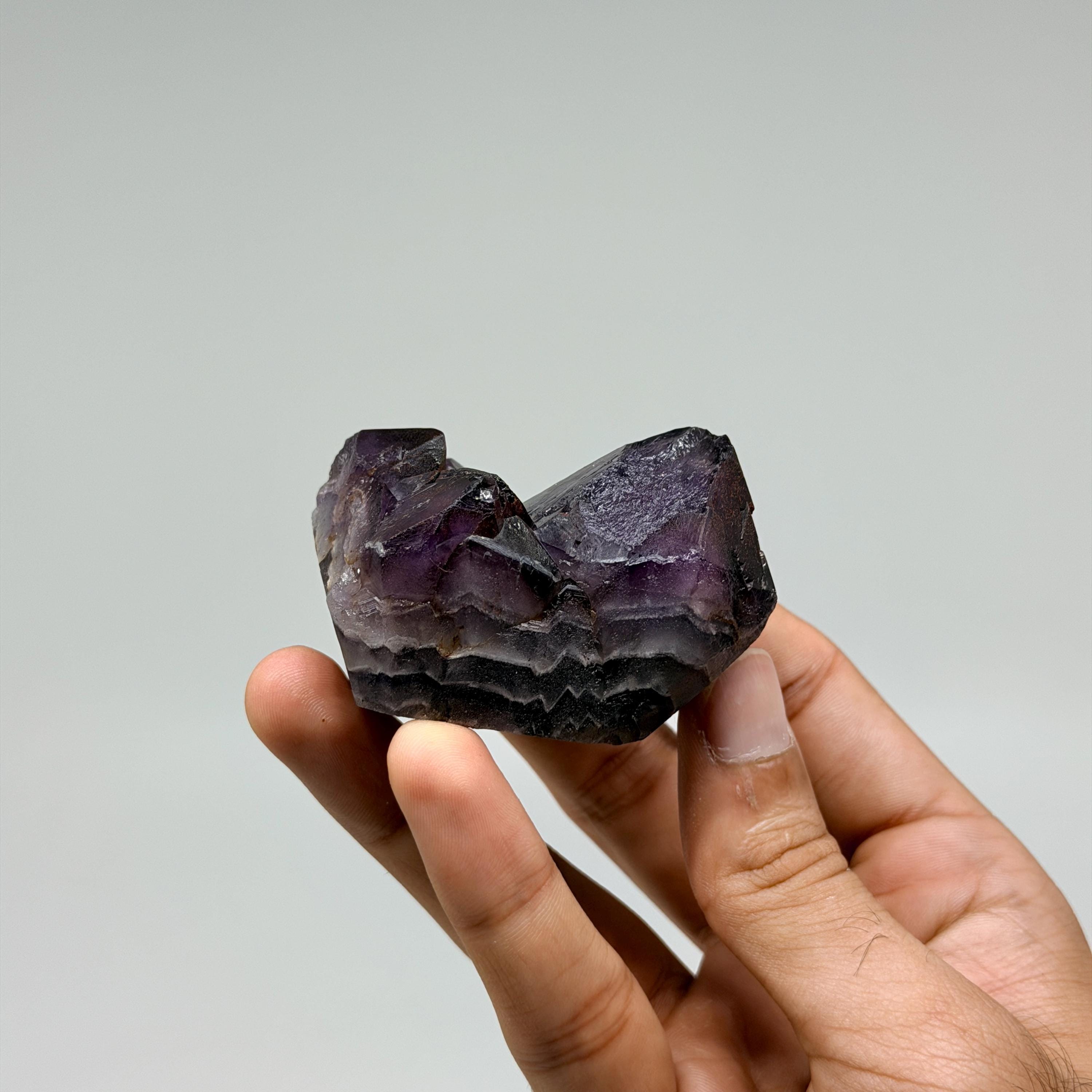
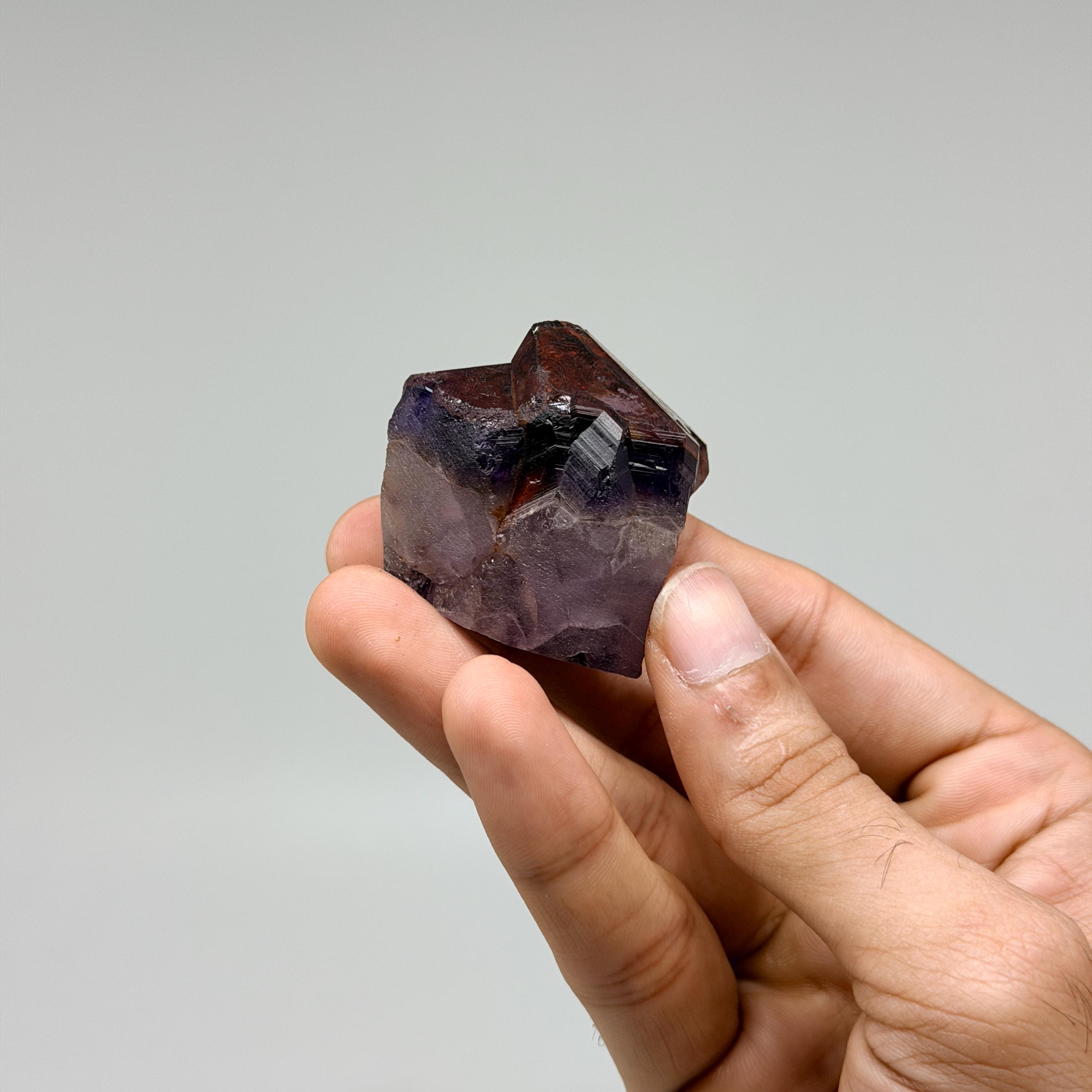
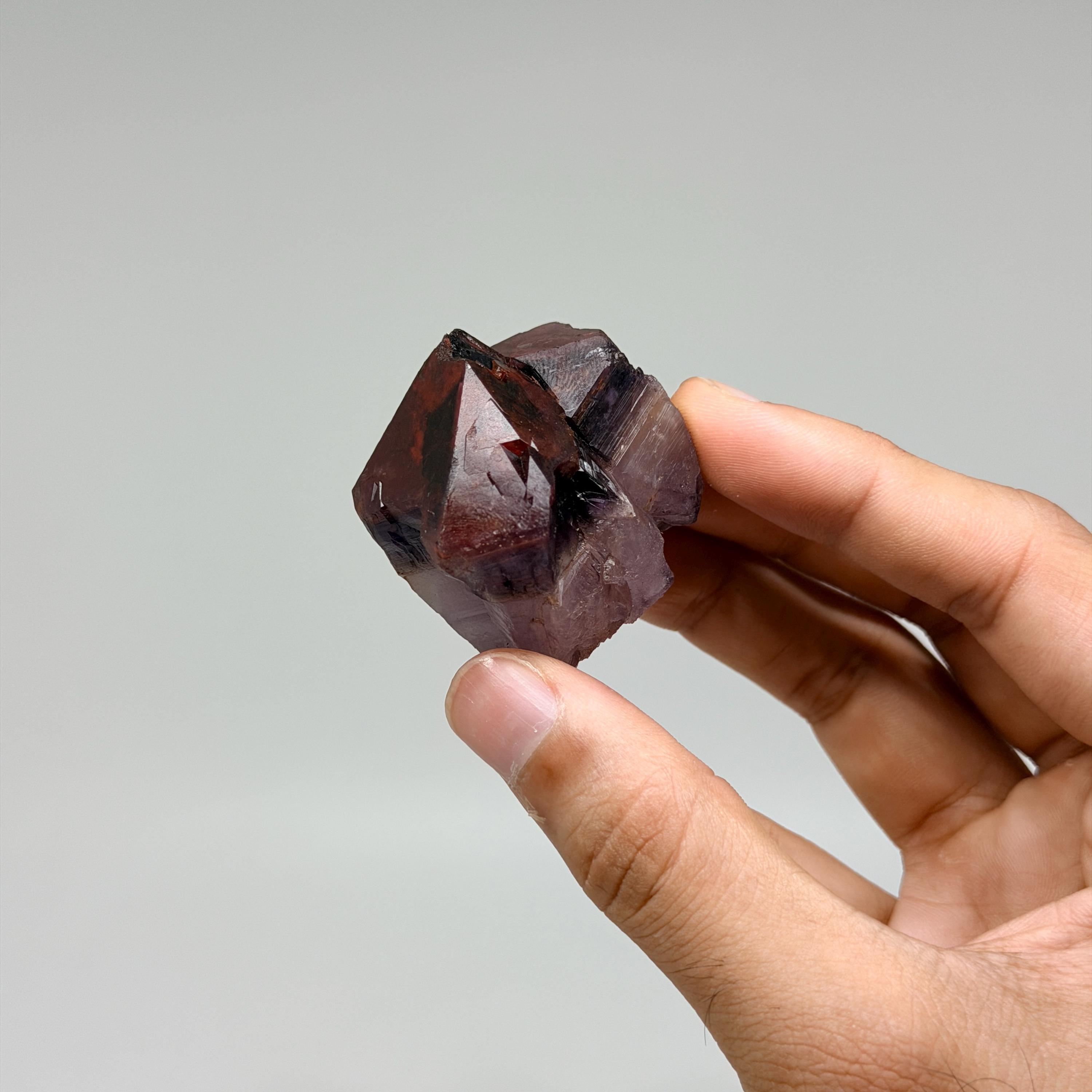
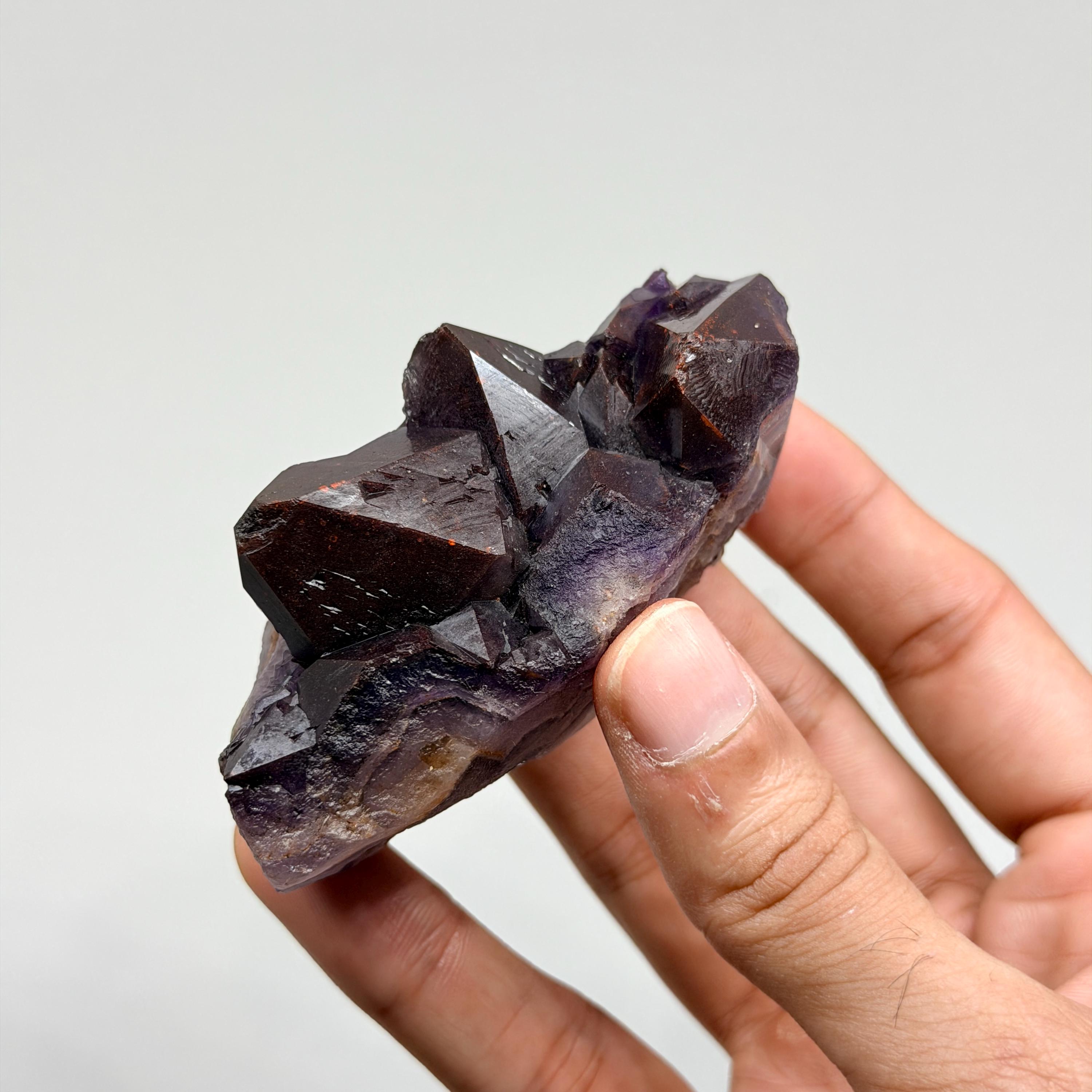
This is why colour in amethyst is often uneven. Iron goes into the crystal more readily on some faces than others, so many points are deep purple at the tip and nearly clear lower down, or show zones of colour when you look through them.
Heat turns it yellow
Heat undoes the effect. Warm amethyst to four or five hundred degrees Celsius and the purple fades, then turns yellow, orange or brown. This is how almost all the deep orange "citrine" on the market is made: it's heated amethyst. Natural citrine exists, but it's a pale, smoky yellow and much rarer.
Nature does it too. In a few places, most famously one mine in Bolivia, the same crystal has been partly heated or grown under changing conditions, and ends up purple at one end and gold at the other. That's ametrine.
Strong sunlight does it slowly. A few years in a south-facing window can noticeably pale an amethyst, so if you have a deep purple piece, a shelf out of direct sun keeps it that way.
Geodes and basalt
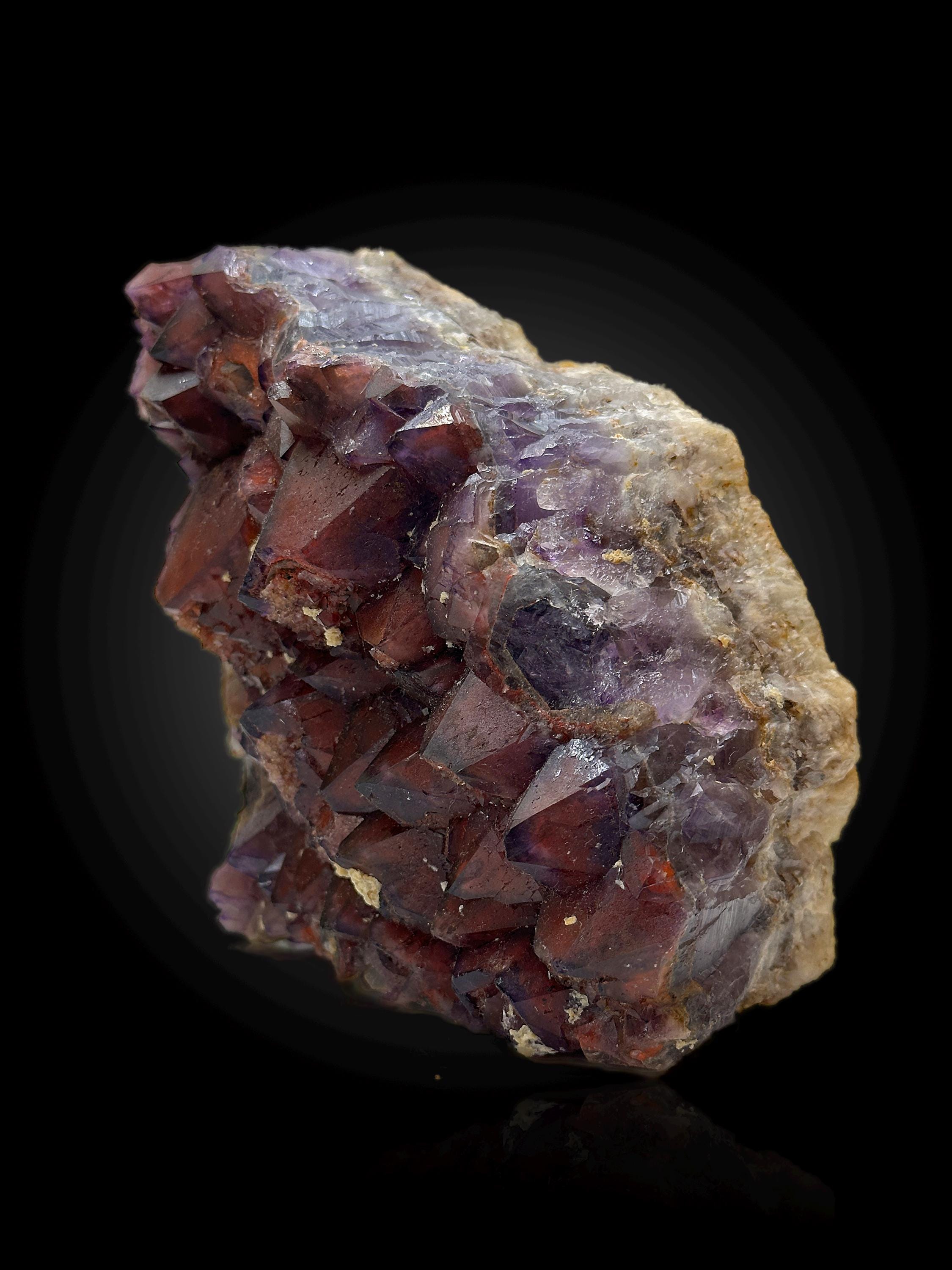
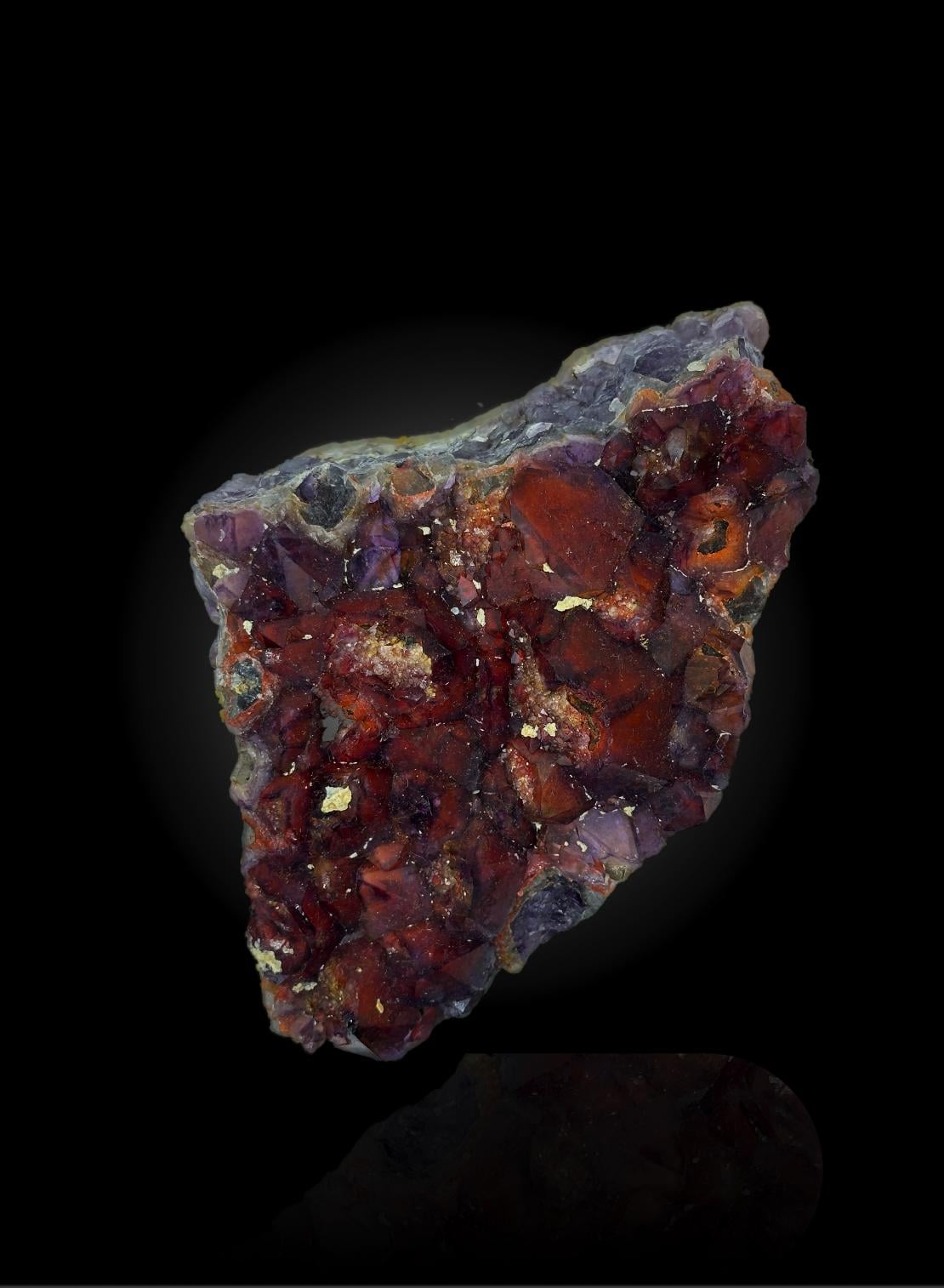
Most amethyst grows in the same place as India's zeolites: in gas bubbles in old lava flows. Water carrying silica fills the cavity, and quartz grows inward from the walls, becoming amethyst as the chemistry allows. When the pocket is broken open, you have a geode, and cutting off the rough outside and polishing the edge gives the cathedral and geode pieces on our amethyst page.
The biggest geodes come from Brazil and Uruguay. India produces amethyst from the Deccan basalt as well, often as smaller geodes and clusters with calcite and zeolites growing on top.
Not drunk
The name is Greek, amethystos, "not intoxicated". The ancient Greeks and Romans believed that amethyst kept you sober, and carved drinking cups from it, or set it into rings worn while drinking. It became a stone of bishops' rings in medieval Europe, and today it's the birthstone for February.
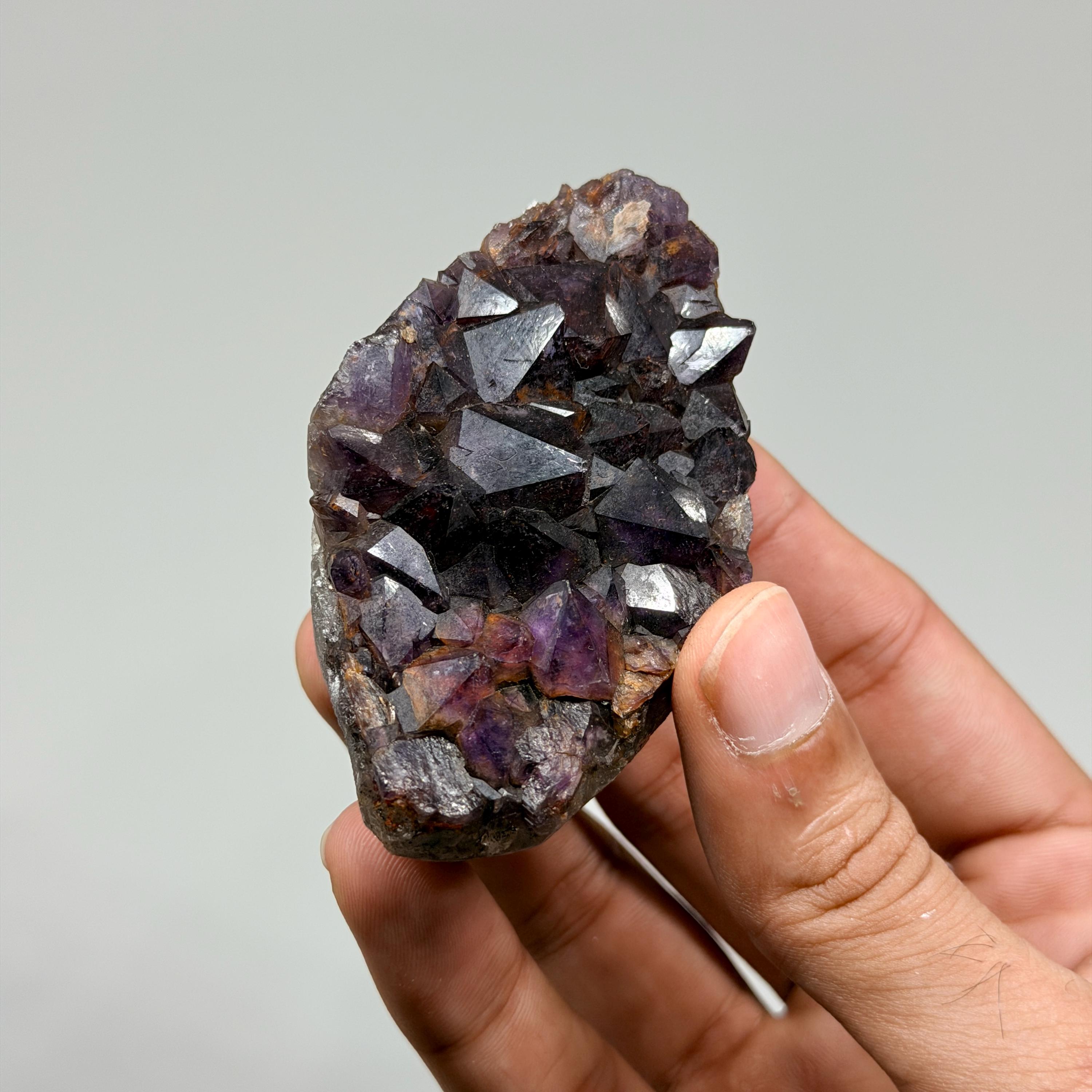
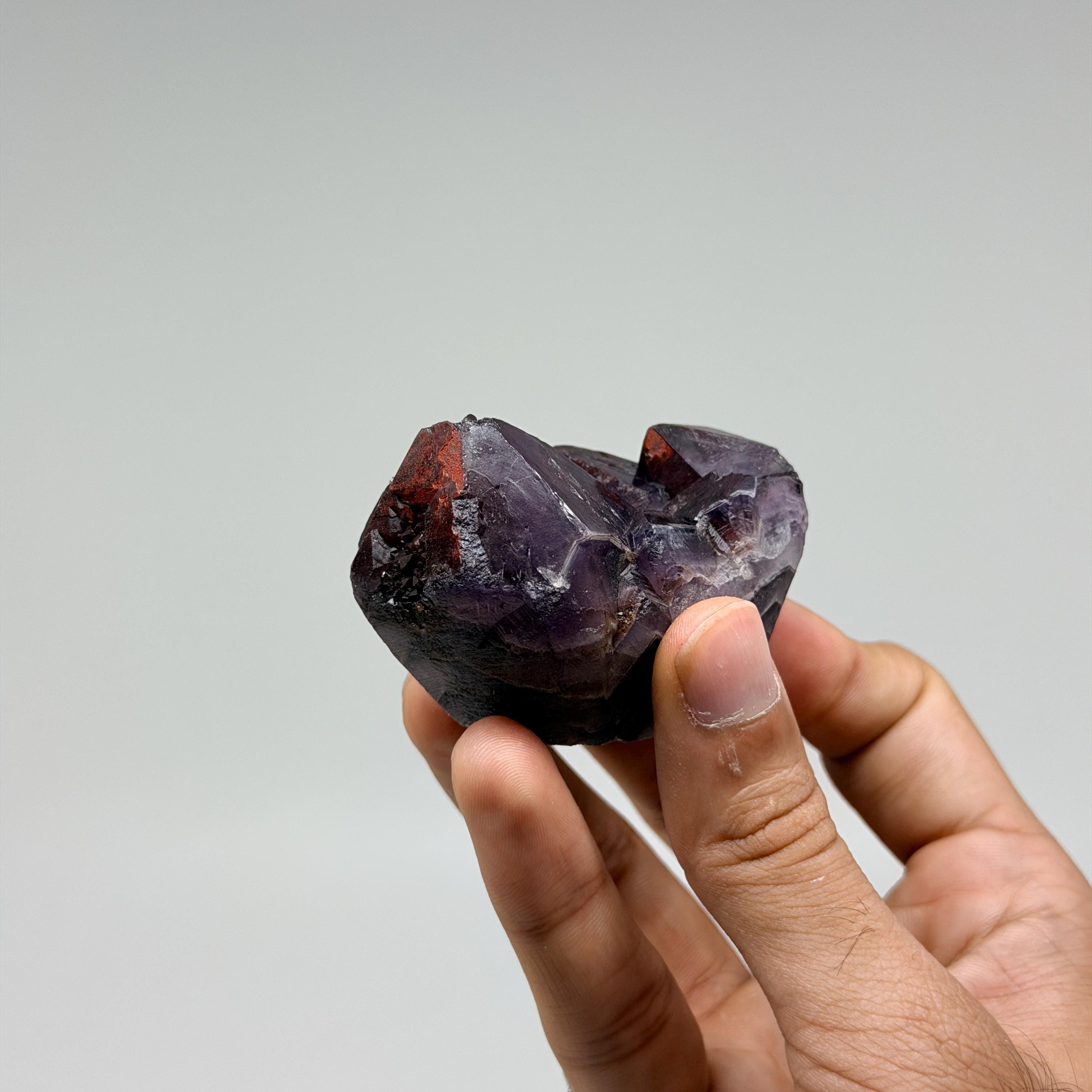
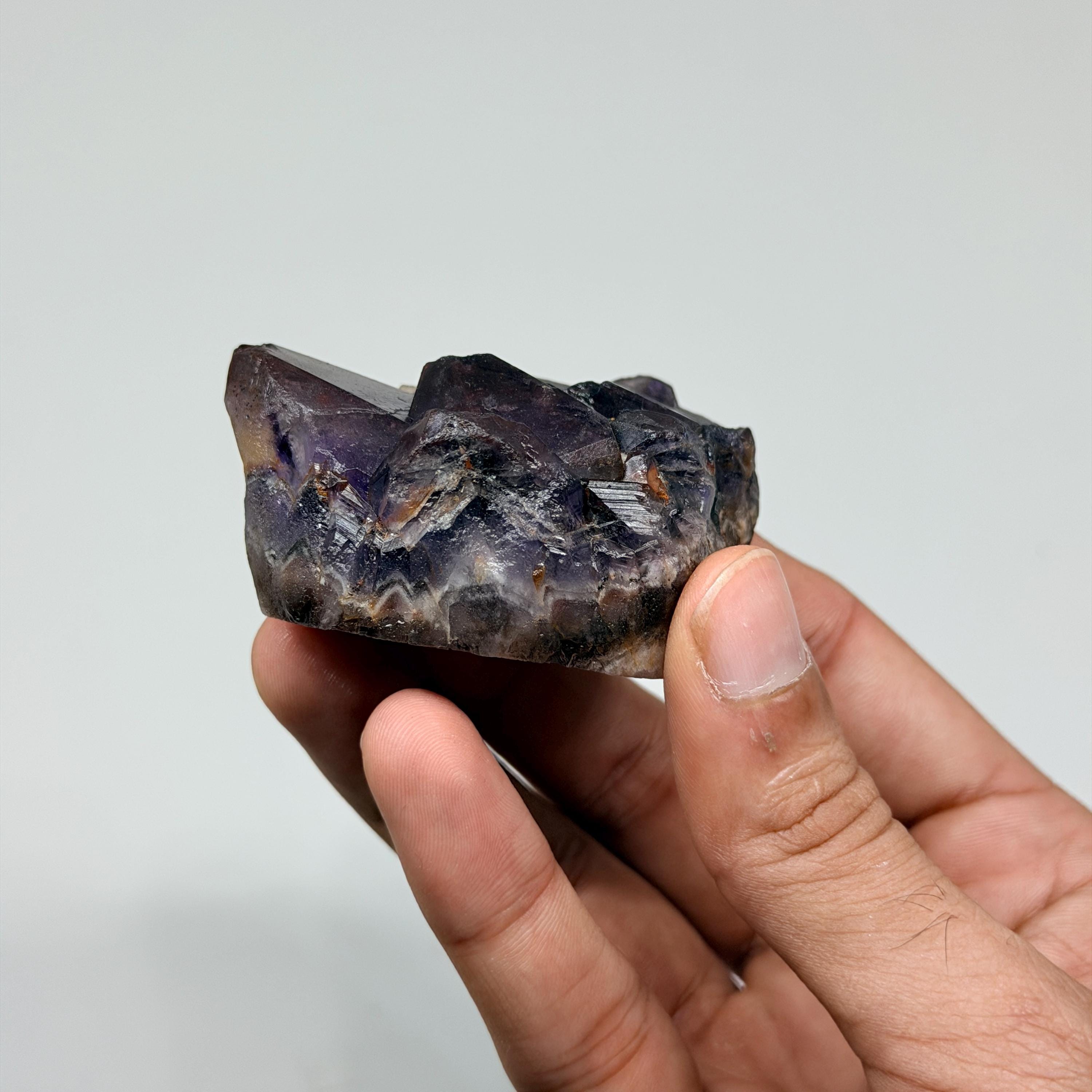
Alien amethyst
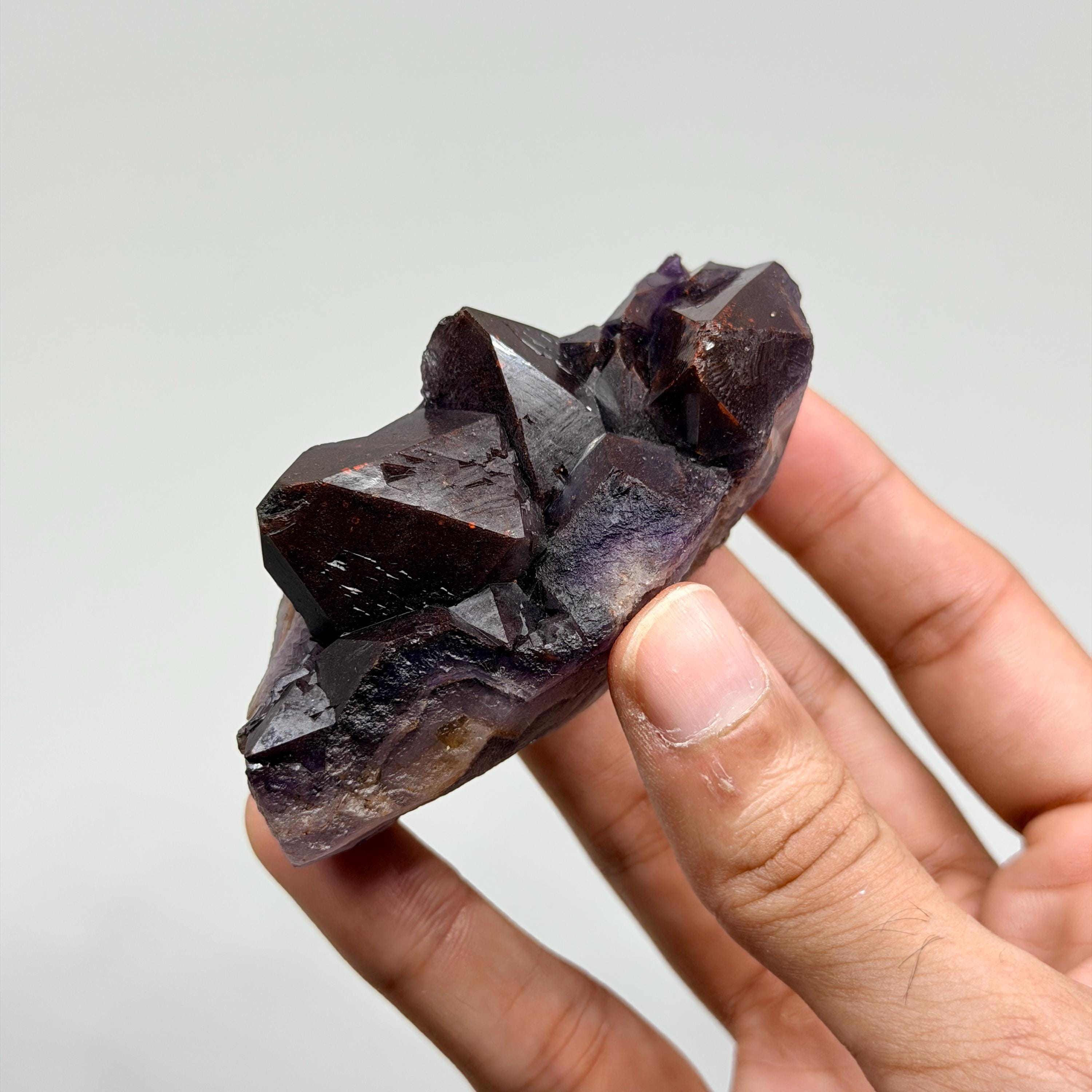
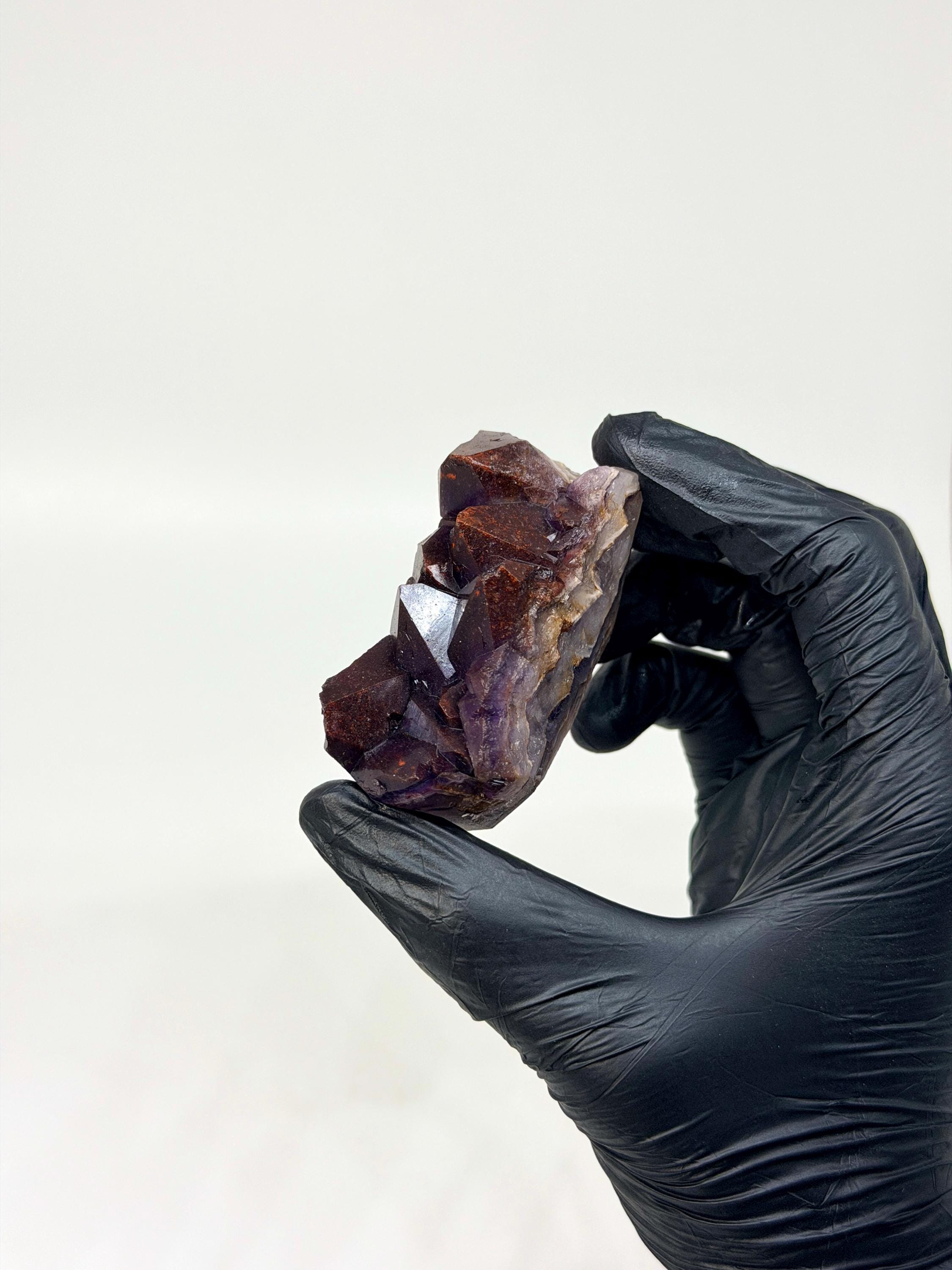
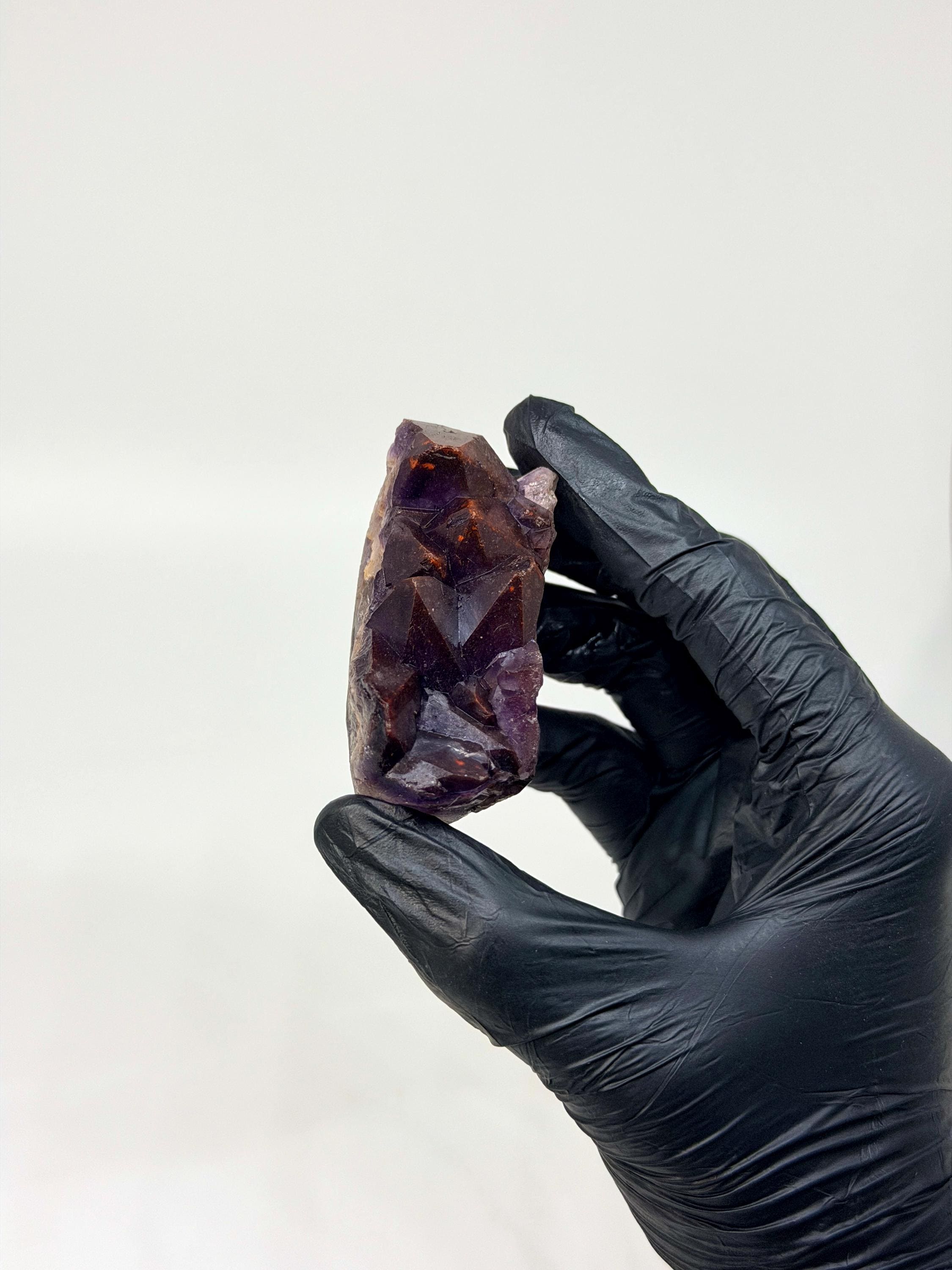
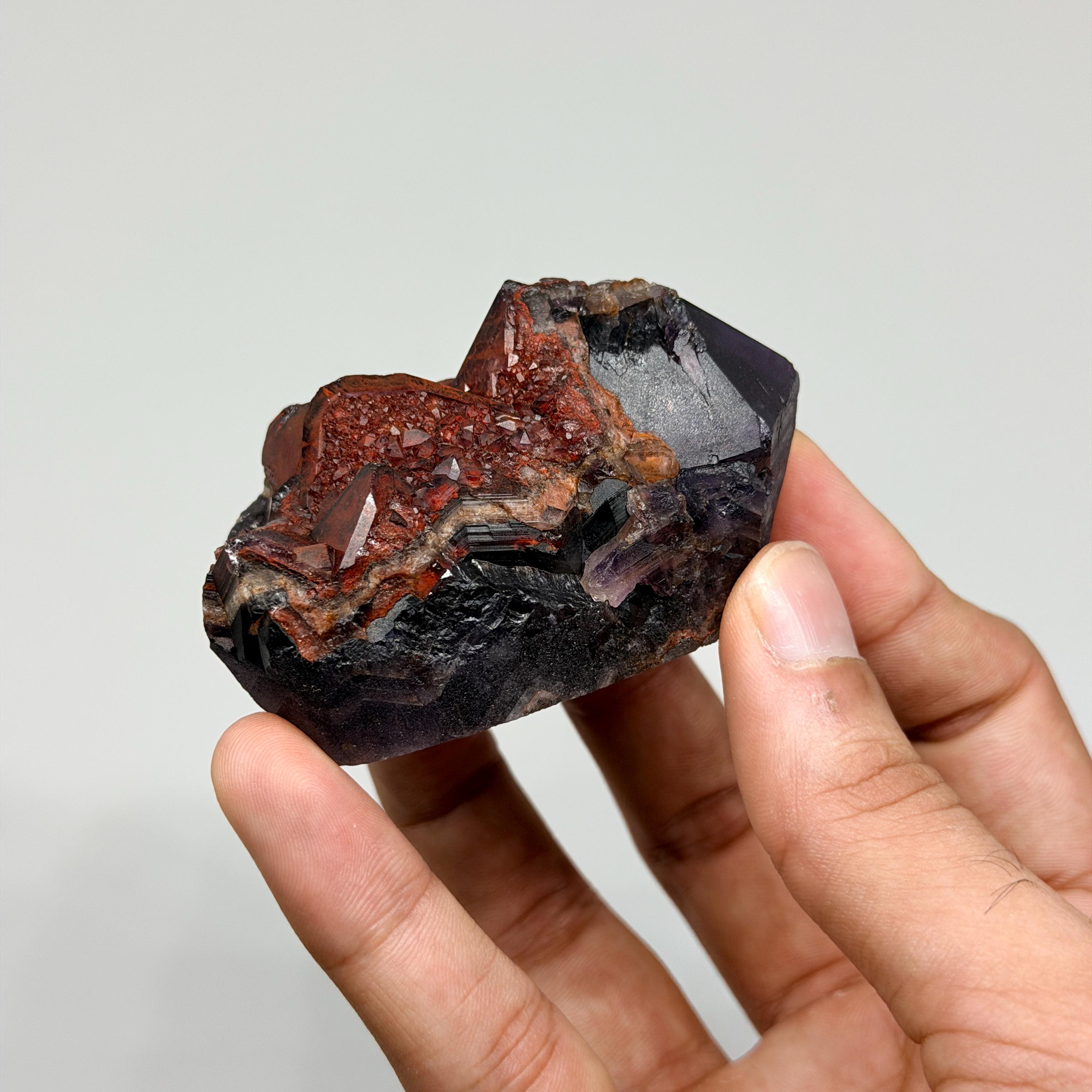
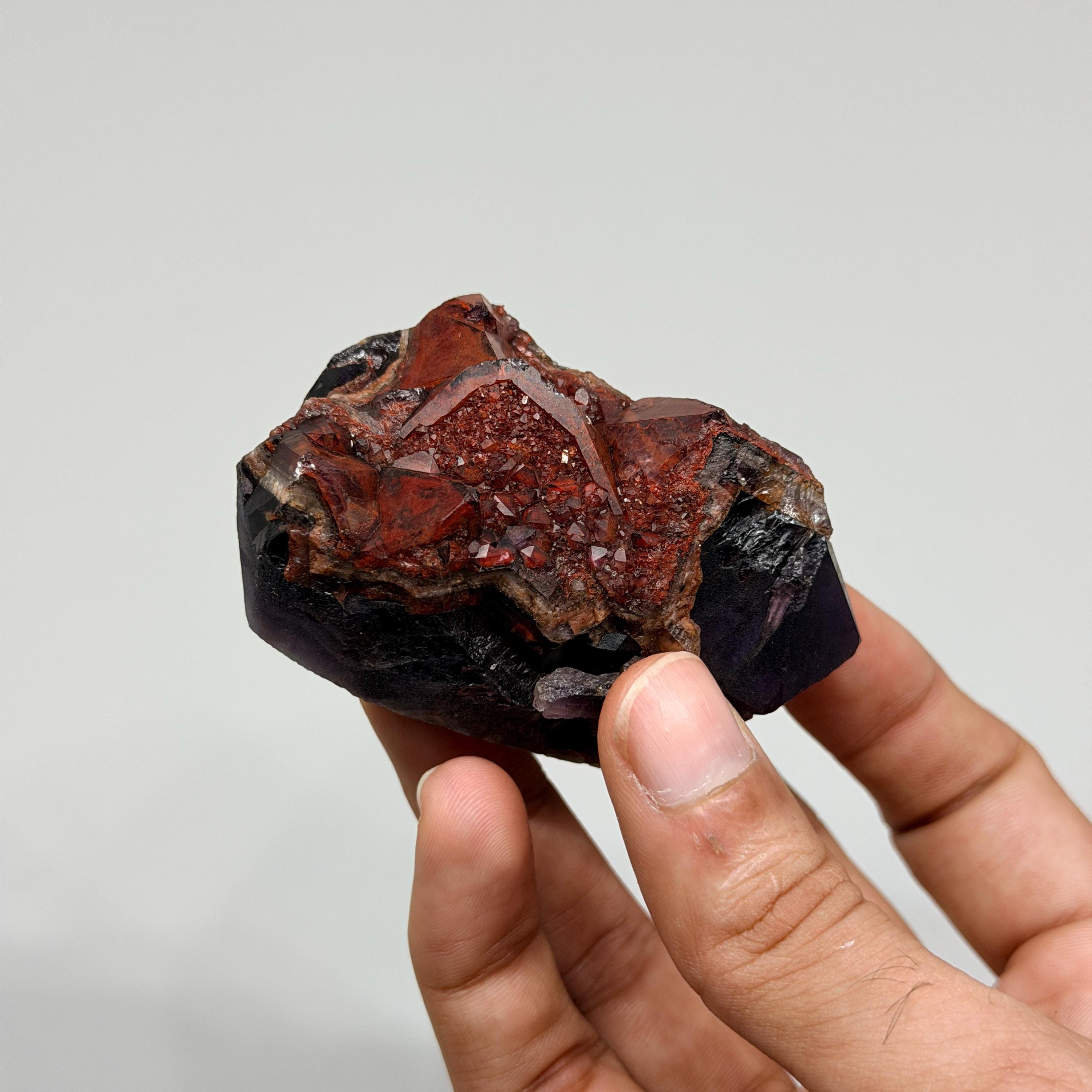
Not all amethyst grows as neat points. Some forms jagged shards, stacked terminations and dark, almost smoky zones, as if the crystal couldn't decide on a shape. Dealers sell this as alien amethyst. It's still amethyst, just amethyst that grew in stops and starts.