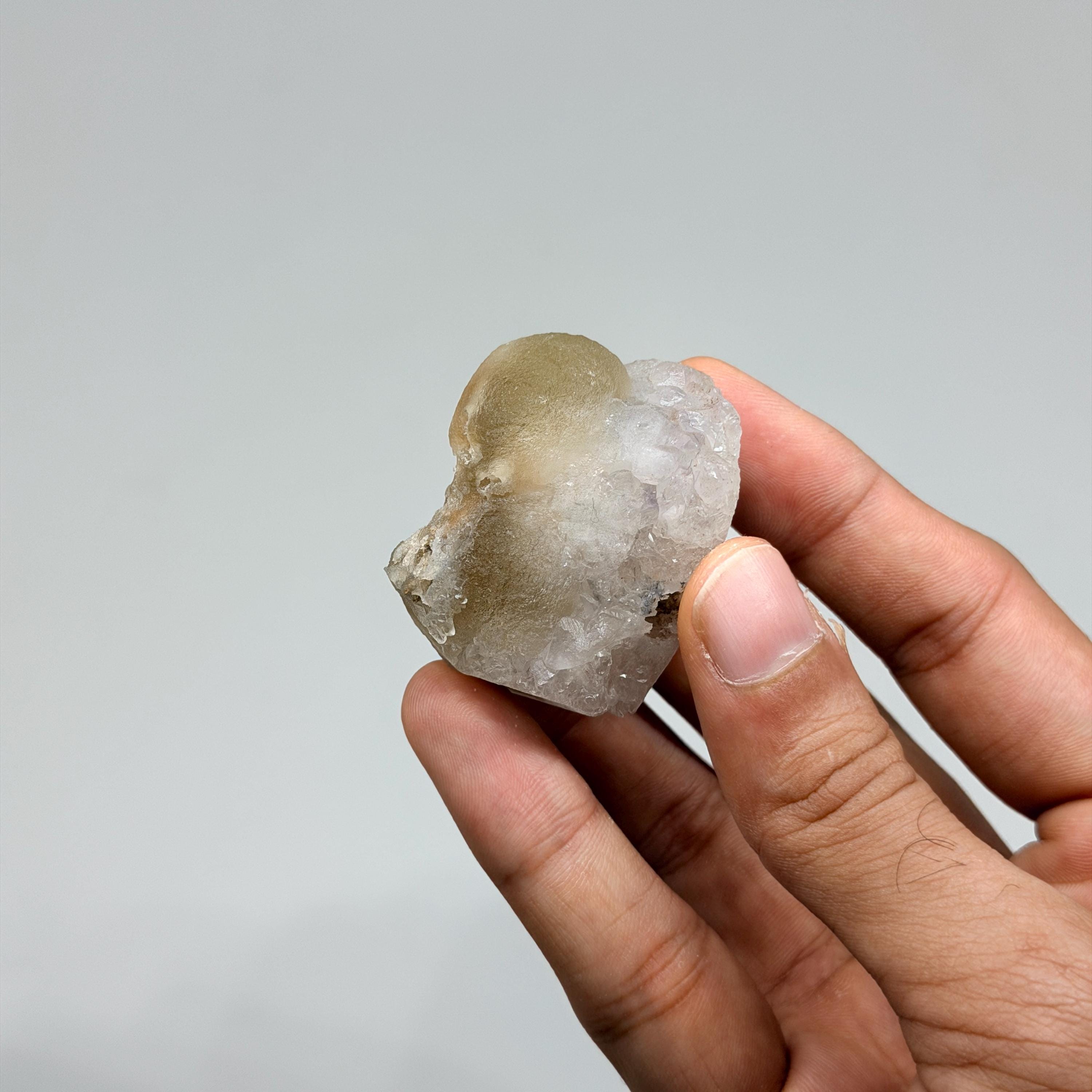
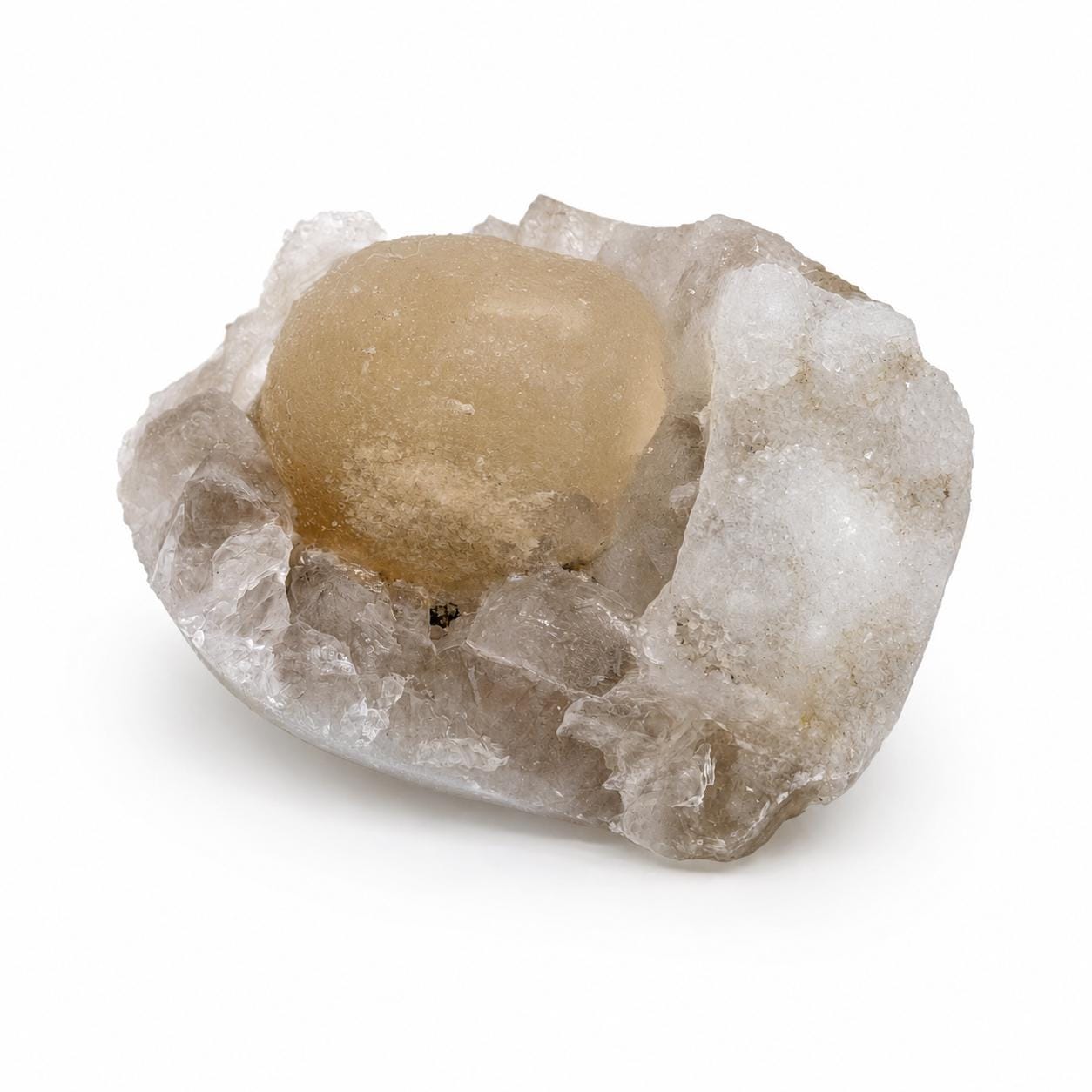
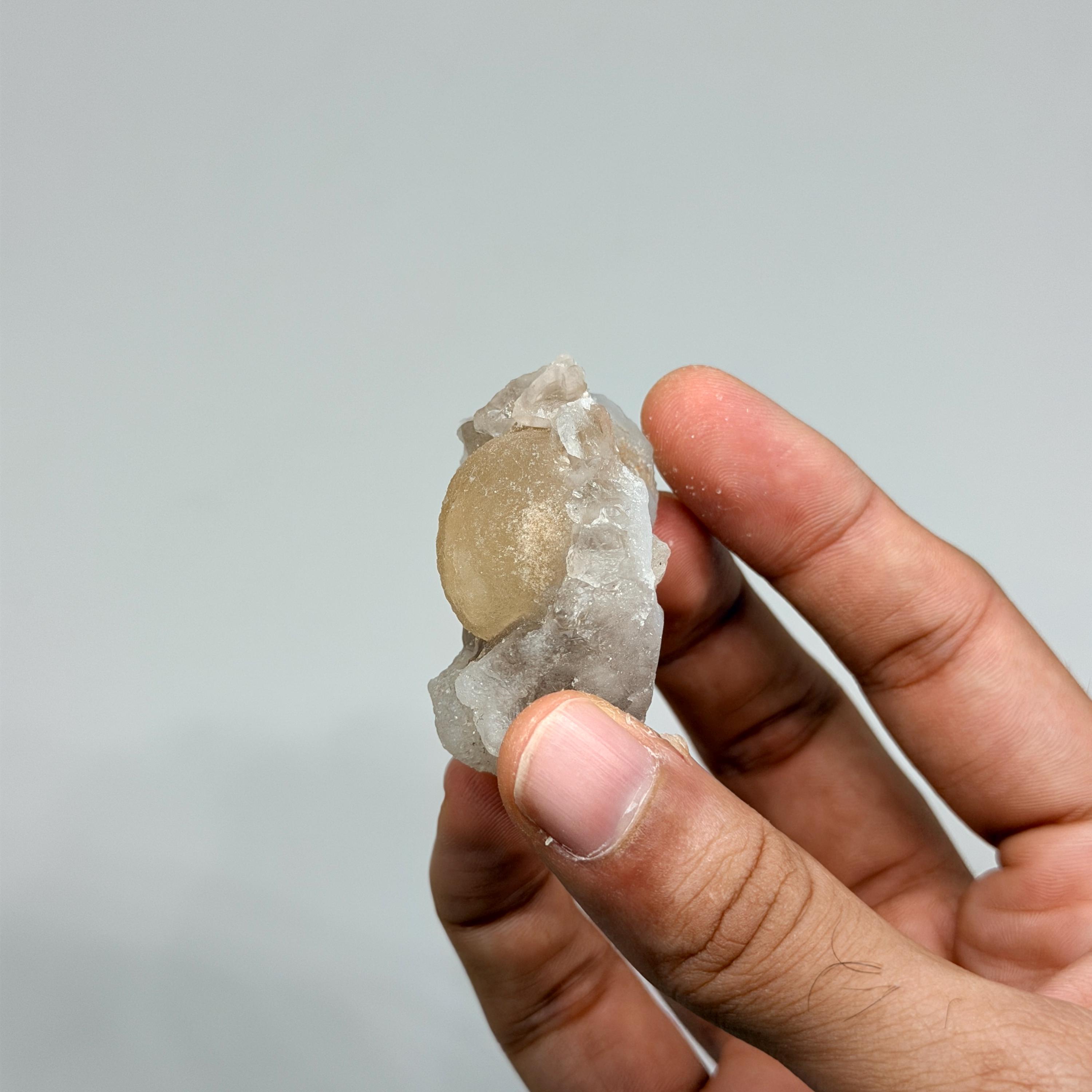
How to tell real fluorite
Fluorite gave the word 'fluorescence' to science. What makes it glow under UV, why it cleaves into octahedrons, and how to spot dyed glass sold as it.
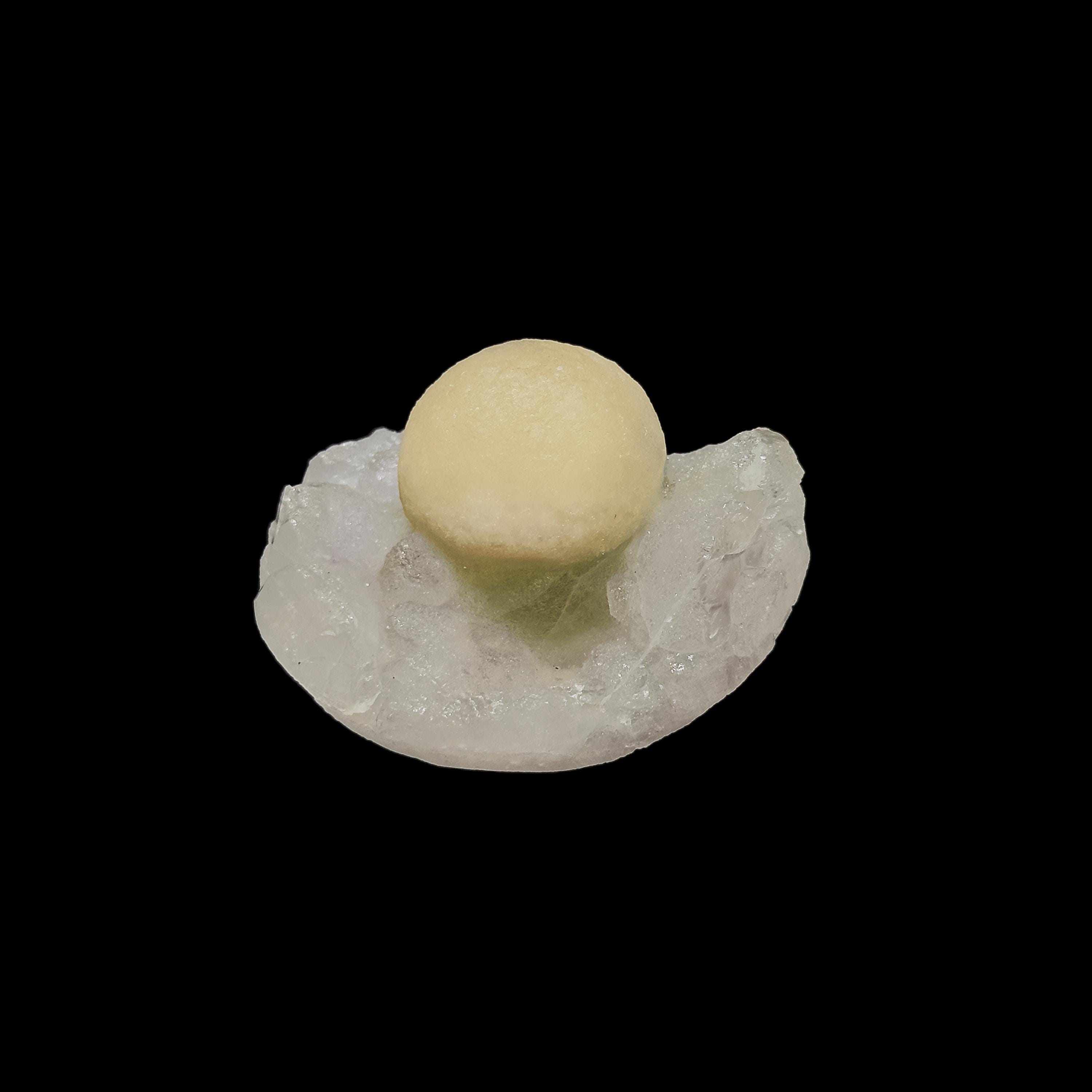
Pick up a piece of banded purple and green fluorite and you're holding the mineral that gave science one of its most useful words. In 1852 the physicist George Gabriel Stokes was studying how certain minerals glowed blue-violet under invisible light, and he needed a name for the effect. He borrowed it from the stone he'd used to study it: fluorite. That's where "fluorescence" comes from, and it's as good a place as any to start when you're trying to work out whether a piece in front of you is the real thing.
Why it glows
Fluorite is calcium fluoride, CaF2, and most of it contains tiny traces of other elements, usually rare earths like yttrium and europium, trapped in the crystal lattice as it grew. Shine a UV lamp on the right piece and those trace atoms absorb the invisible ultraviolet light and re-emit it as visible light, usually a rich blue-violet. Not every piece of fluorite fluoresces strongly, and plenty of other minerals fluoresce too, calcite among them, so a glow under UV is a nice party trick rather than proof of anything on its own. It's a genuine, well-documented property of the mineral's chemistry, and a good reminder that fluorite's real story is physics, not folklore.
An easy break, in a particular direction
The more reliable test doesn't need a lamp. Fluorite has perfect octahedral cleavage, meaning that if you strike it along the right planes it splits cleanly into eight-sided shapes with flat, mirror-like faces. You can sometimes see this on the corners of a rough or tumbled piece, where a small triangular facet interrupts the cube's edge. Cut and polished fluorite crystals, points and clusters often show these clean internal planes as faint lines inside the stone even when the surface is smooth. Glass never breaks this way. It fractures unevenly, in curved shell-like chips (conchoidal fracture), because glass has no crystal structure to break along. If a "fluorite" piece has a rounded, glassy chip out of it rather than a flat triangular one, be suspicious.
Soft enough to scratch
Fluorite sits at 4 on the Mohs hardness scale, which is genuinely soft for a stone this popular; it's the fixed reference point that defines "4" on that ten-point scale, the way talc defines 1 and diamond defines 10. A steel knife blade (about 5.5) will scratch it easily, and even a copper coin can mark it. Quartz-based imitations, and dyed agate or chalcedony sometimes sold as fluorite for their similar banding, are much harder and won't scratch nearly as easily. This also means real fluorite needs gentler care than most of the stone in the shop: keep it away from hard knocks, don't clean it with anything abrasive, and keep it out of strong, constant sunlight, which can fade the colour over years.
Colour that shifts inside one piece
Fluorite is famous for showing several colours in a single crystal, purple, green, blue, yellow and clear, sometimes four of them banded through one specimen as the mineral's composition changed slightly during growth. That internal banding tends to follow the crystal's straight faces and zones, not a random scatter. Dyed material, whether glass or a softer stone dyed to imitate fluorite, tends to show colour that's more uniform, or that pools unnaturally in cracks and pits where the dye collected. A loupe is worth the ten seconds it takes: natural colour zoning in fluorite usually has sharp, geometric edges, while dye bleeds.
Where it comes from, and what "Blue John" is
Most fluorite on the market today comes from China, followed by Mexico and a handful of European deposits. One name worth knowing is Blue John, a banded purple-blue-and-white fluorite mined for centuries at Castleton in Derbyshire, England, and carved into vases and ornaments since the eighteenth century; genuine Blue John is now scarce and mostly historical, so modern "Blue John" jewellery is worth asking about. Fluorite also occurs as a common accessory mineral in ore veins worldwide, which is one reason it's inexpensive relative to how striking it looks: it isn't rare, it's just soft, so large flawless pieces that have survived cutting and polishing without chips are the ones that cost more.
Buying it
Because it's soft and cleaves so readily, fluorite is cut into spheres, points, towers and clusters more often than faceted jewellery, and a good polisher works with the cleavage rather than against it to avoid pitting. If you're choosing between pieces, look for the interior banding rather than judging by surface colour alone, since a thin dyed coating can hide plain material underneath. We've written more generally about spotting glass, dye and heat treatment across different stones in an honest guide to what's natural, and the same checks, hardness, fracture pattern, and colour that follows the stone's own structure rather than the surface, work here too. Calcite is fluorite's closest look-alike in softness and in sometimes glowing under UV, but calcite cleaves into rhombs rather than octahedrons, which is usually the quickest way to tell the two apart with nothing but a broken edge to look at.