Why optical calcite makes everything look doubled
Look through clear calcite and letters underneath split in two. The physics of double refraction, a 1669 discovery, and a vinegar test for real calcite.
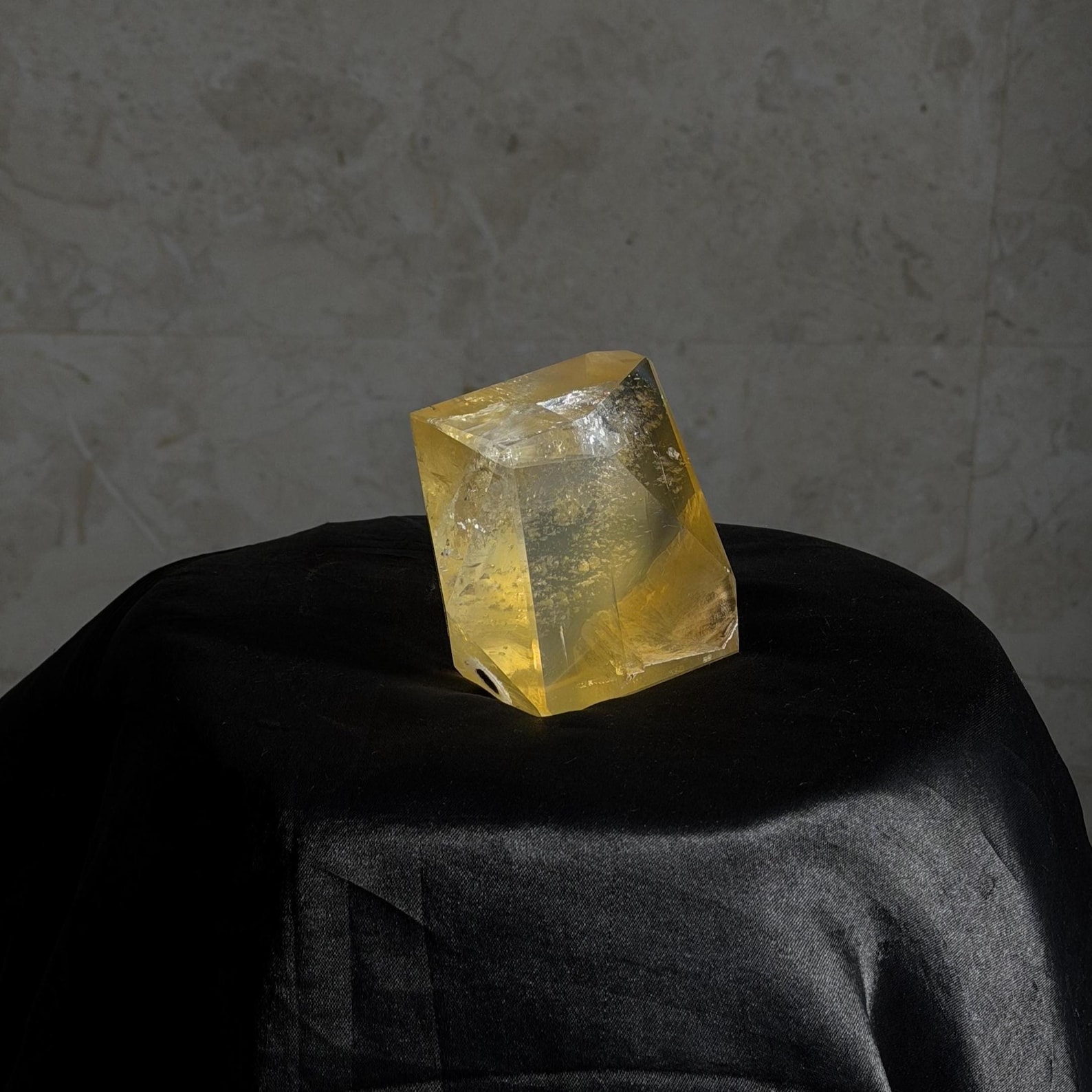
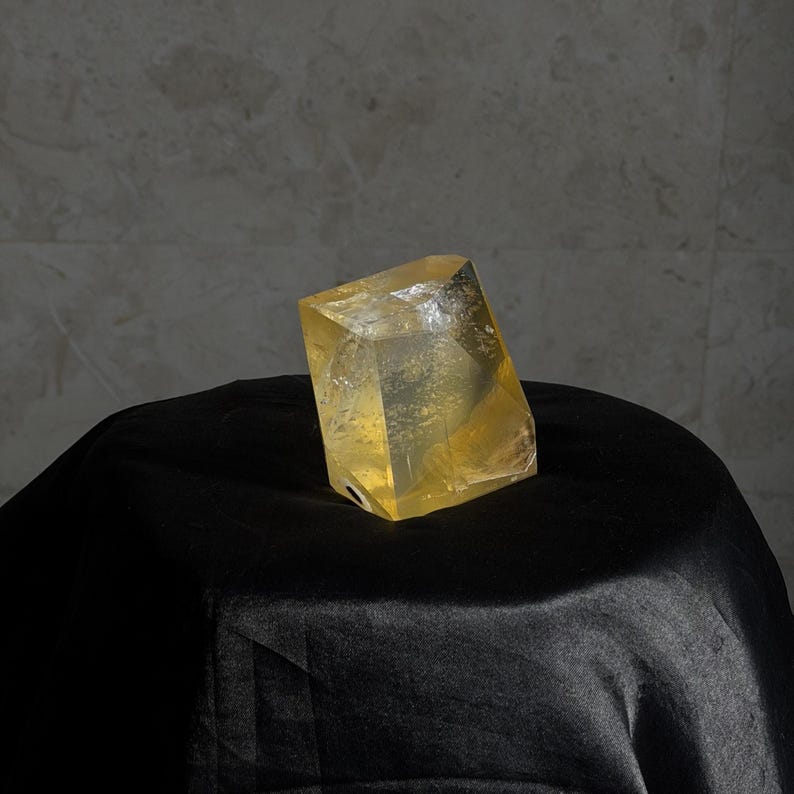
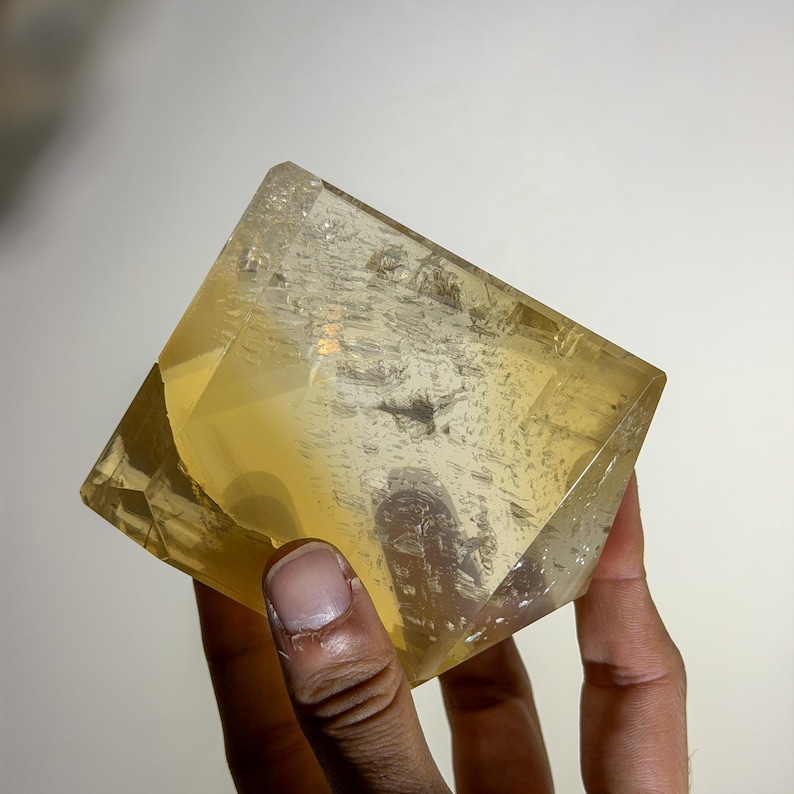
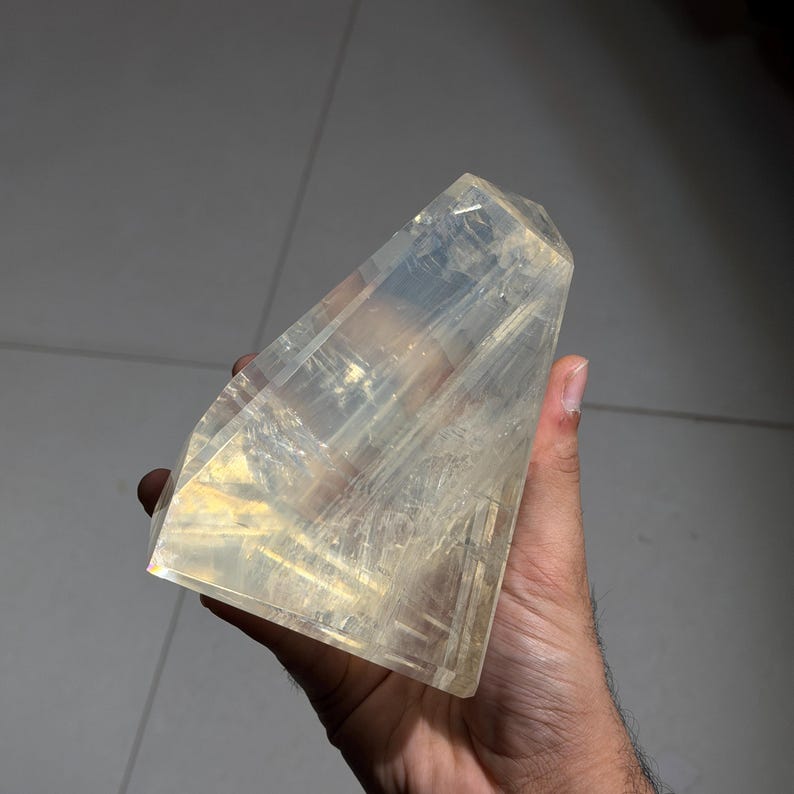
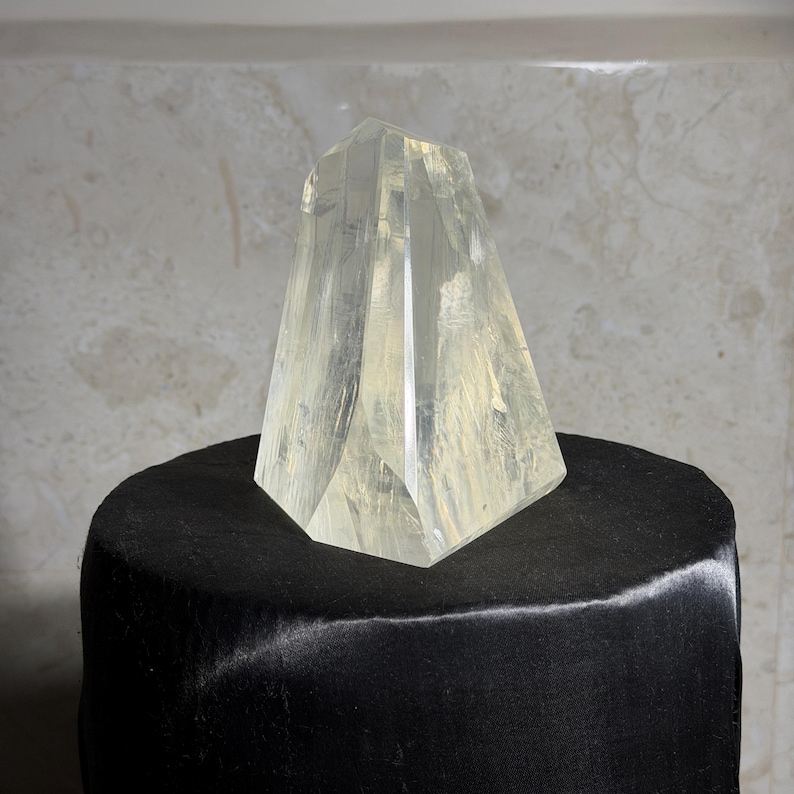
Lay a clear, rhomb-shaped piece of calcite over a line of print and the letters underneath don't just look bigger. They look doubled: two faint, slightly offset copies of every line, like a cheap 3D film still wearing its glasses. That isn't a crack or a flaw in the crystal. It's one mineral doing something almost nothing else does so clearly: splitting a single ray of light into two.
A rock that bends light two ways at once
Calcite is calcium carbonate, one of the commonest minerals in the earth's crust, found in everything from chalk and limestone to the stalactites in a cave. What makes a clear, gem-quality piece special is the way its atoms are arranged: the flat carbonate groups inside the crystal all line up one way, which makes the mineral behave differently to light travelling along that direction than to light crossing it. A single ray entering the crystal splits into two rays, moving at different speeds and polarised at right angles to each other. They leave the far side of the crystal slightly apart, which is why anything seen through a decent-sized piece appears twice, doubled rather than simply magnified.
Discovered properly in Iceland
Clear calcite this good is often called Iceland spar, after the deposit at Helgustadir in eastern Iceland that supplied most of the world's optical-quality material for centuries. In 1669 the Danish scientist Rasmus Bartholin used crystals from that deposit to describe double refraction properly for the first time, and the Dutch physicist Christiaan Huygens studied the same crystals a few years later while working out his wave theory of light. Ground and mounted, Iceland spar later became the Nicol prism, one of the first tools able to produce and measure polarised light, decades before any synthetic filter existed.
A few Norse sagas mention a "sunstone" used to find the sun's position through cloud, and because a birefringent crystal can reveal the direction of polarised skylight even on an overcast day, some researchers have proposed the Vikings used calcite, or a similar clear crystal, for exactly that. It's a debated theory rather than settled history, with no confirmed sunstone ever recovered from a Viking wreck, but the physics behind the idea is the same physics sitting in a piece of calcite on a windowsill today.
Not always clear
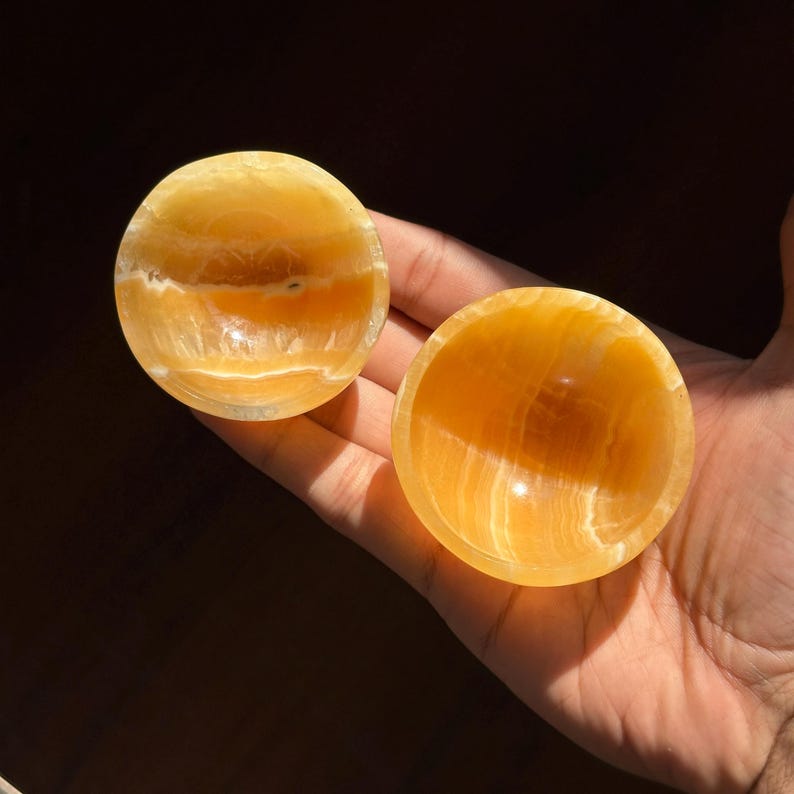
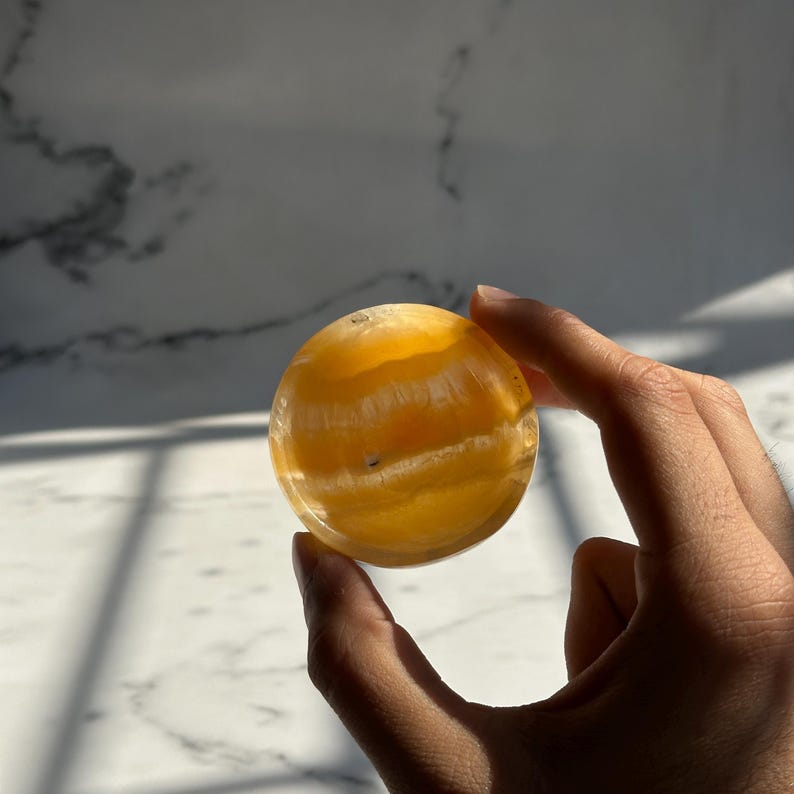
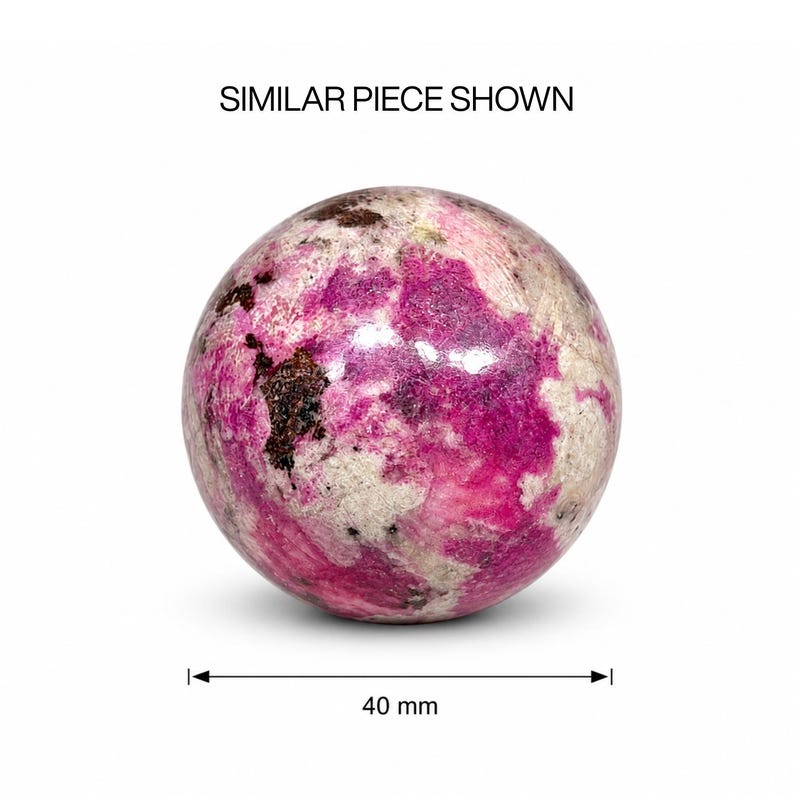
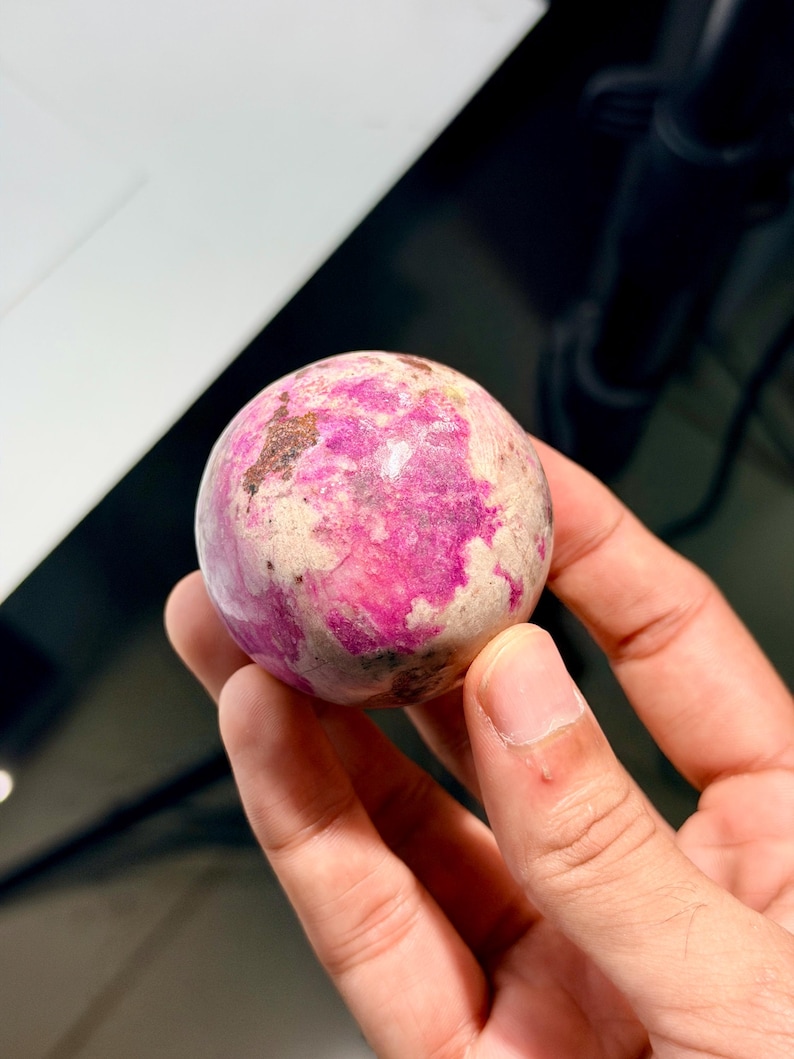
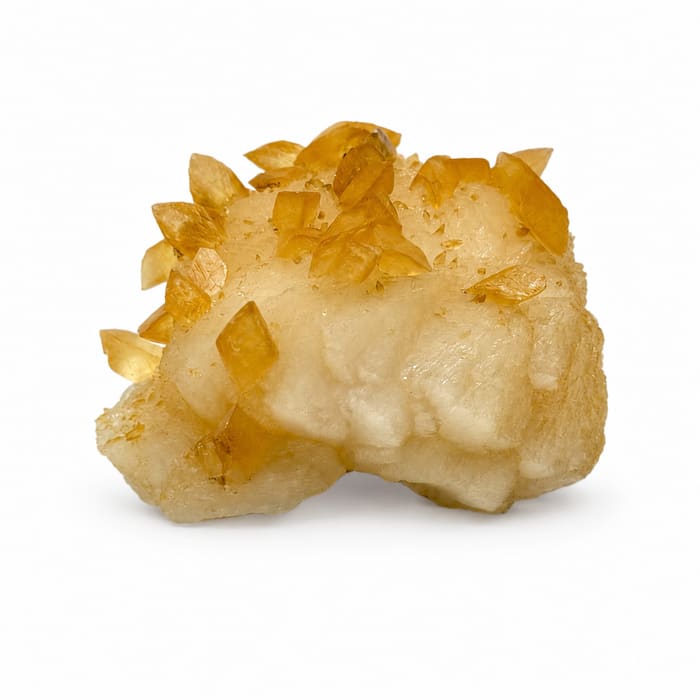
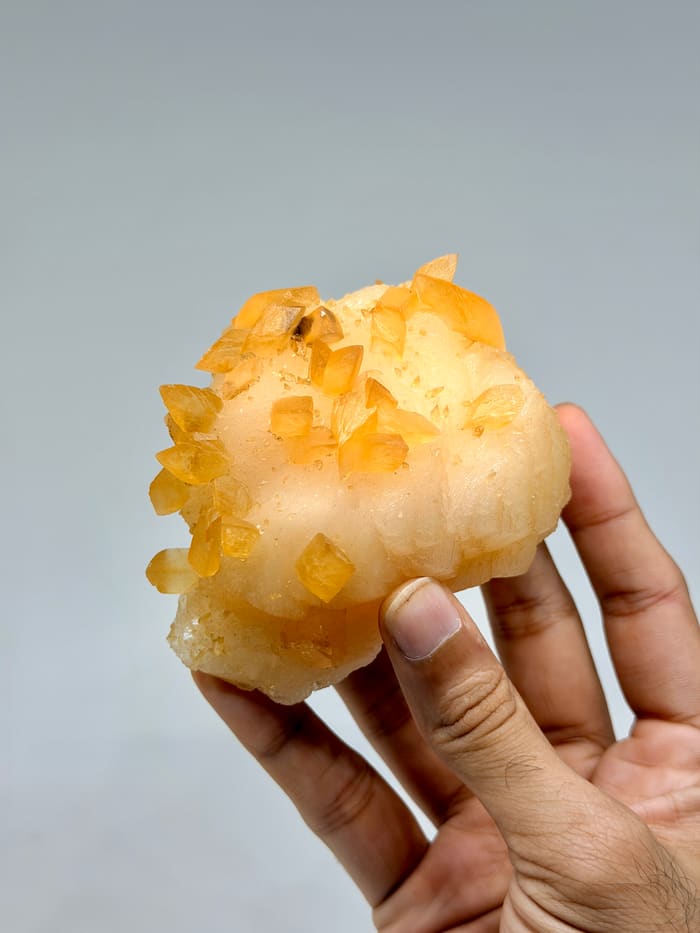
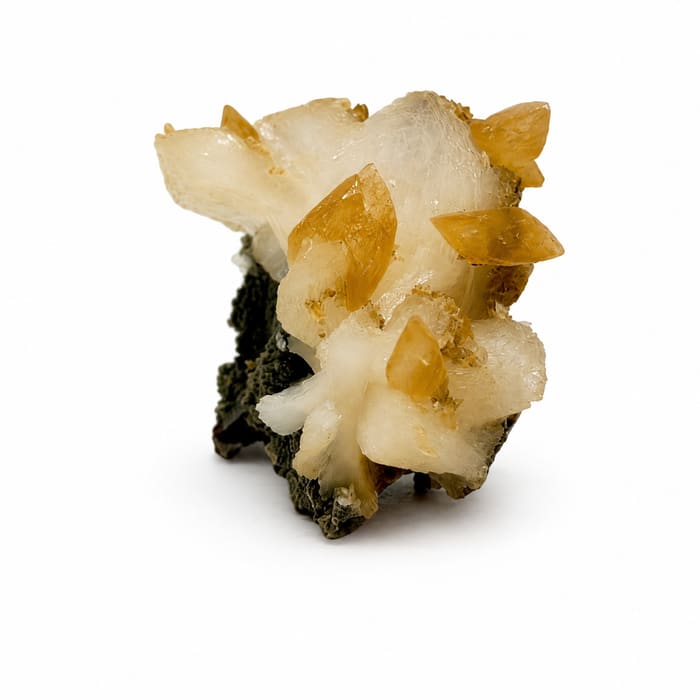
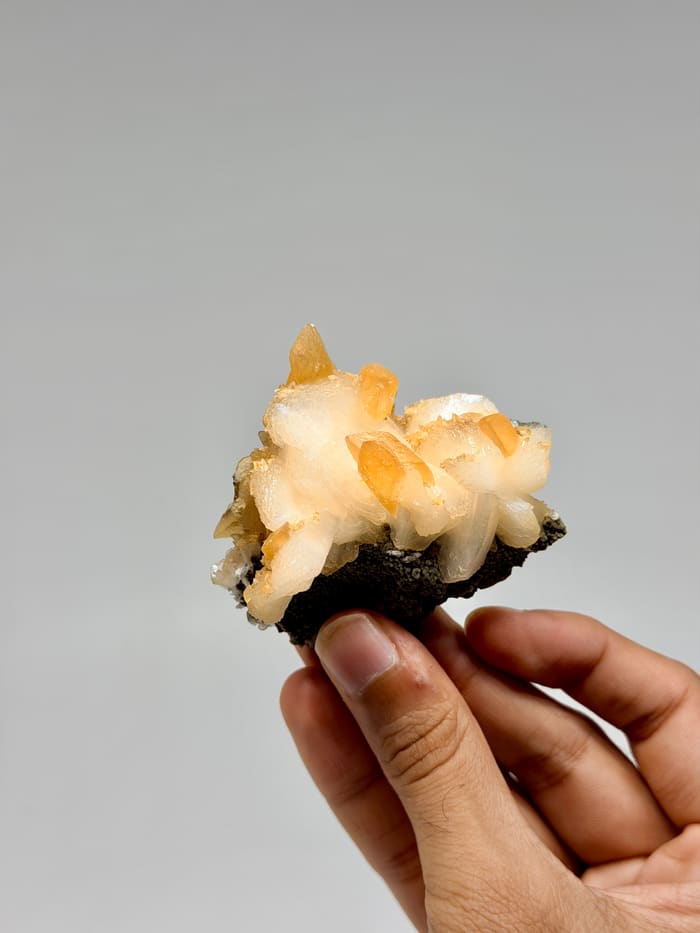
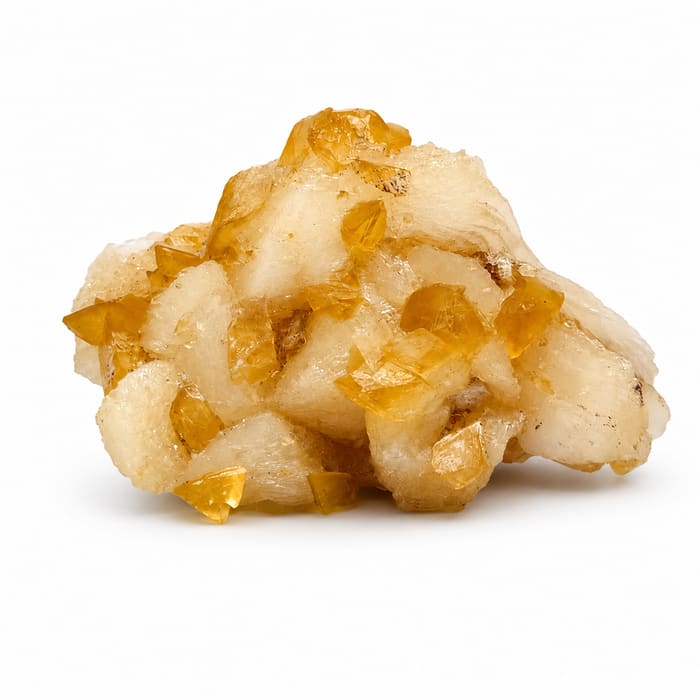
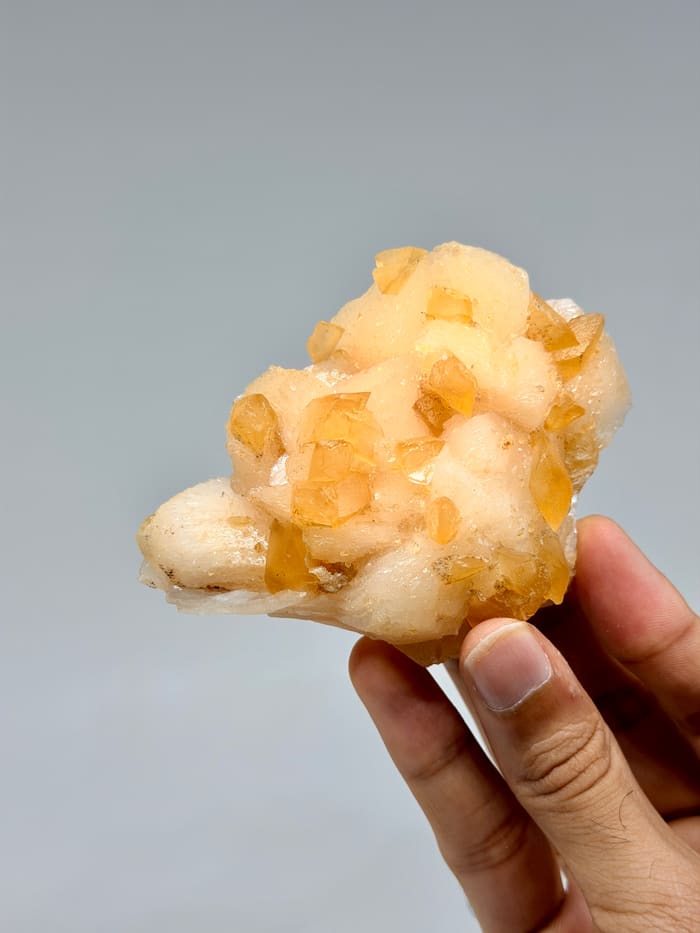
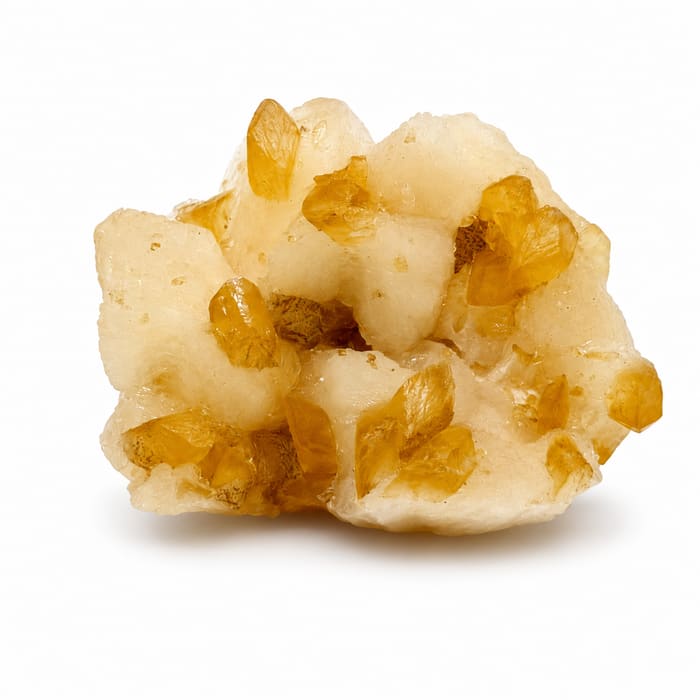
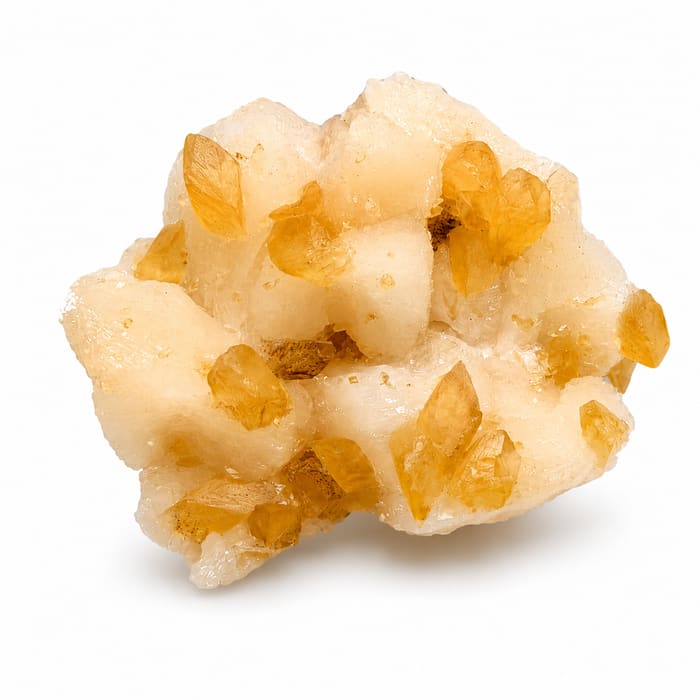
Calcite isn't only the glassy, colourless kind. It's one of the most colour-variable minerals there is: the same chemistry turns up as the deep blue-green bands of Caribbean calcite, the warm amber of honey calcite, bright orange calcite, and pink cobaltoan calcite, among others. The colour comes from trace elements and tiny mineral inclusions rather than anything in the calcite itself, which is why pieces that look like entirely different stones can share a single page. Only the clearest, cleanest pieces show the double-image effect strongly, because the light needs a clear run through the crystal to split visibly; most coloured calcite doesn't show it at all. Browse the range as calcite specimens to see how different the same mineral can look from piece to piece.
Telling it from its carbonate cousins
Calcite shares its basic chemistry, calcium carbonate, with two other minerals that can look similar at a glance: aragonite, which has the same formula but a different crystal structure, and dolomite, which swaps in magnesium for part of the calcium. Geologists use a simple field test to sort them: a drop of dilute acid, even ordinary vinegar, makes solid calcite fizz straightaway as the carbonate reacts and gives off carbon dioxide. Dolomite barely reacts as a solid piece and only fizzes once it's been powdered, which usually settles the question on its own. Aragonite fizzes just as readily as calcite, so the acid test won't separate those two, but aragonite tends to grow as slender, needle-like sprays rather than calcite's blockier rhombs and scalenohedrons. We've written before about simple ways to tell real stone from fakes; this is the same approach, a quick, repeatable test, aimed at a family of genuine look-alike minerals instead.
Looking after it
Calcite is soft, about 3 on the Mohs scale, easily scratched by grit, by harder stones stored alongside it, or even by a rough tabletop. Because it's a carbonate, it's also sensitive to acids: lemon juice, vinegar and some cleaning products will etch or dull its surface, the same reaction that makes the field test work in the first place. Keep it away from both, store it apart from harder material, and a soft, dry cloth is all the cleaning it needs. A piece where calcite turns up as veining inside another stone, the white streaks running through lapis lazuli, which we touched on in lapis lazuli vs sodalite, needs nothing different: just the same gentle handling as the stone around it.