What is chrysocolla? The blue-green copper mineral explained
Chrysocolla is a soft, blue-green copper silicate often mistaken for turquoise. How it forms, why it's usually found with malachite, and how to tell them apart.
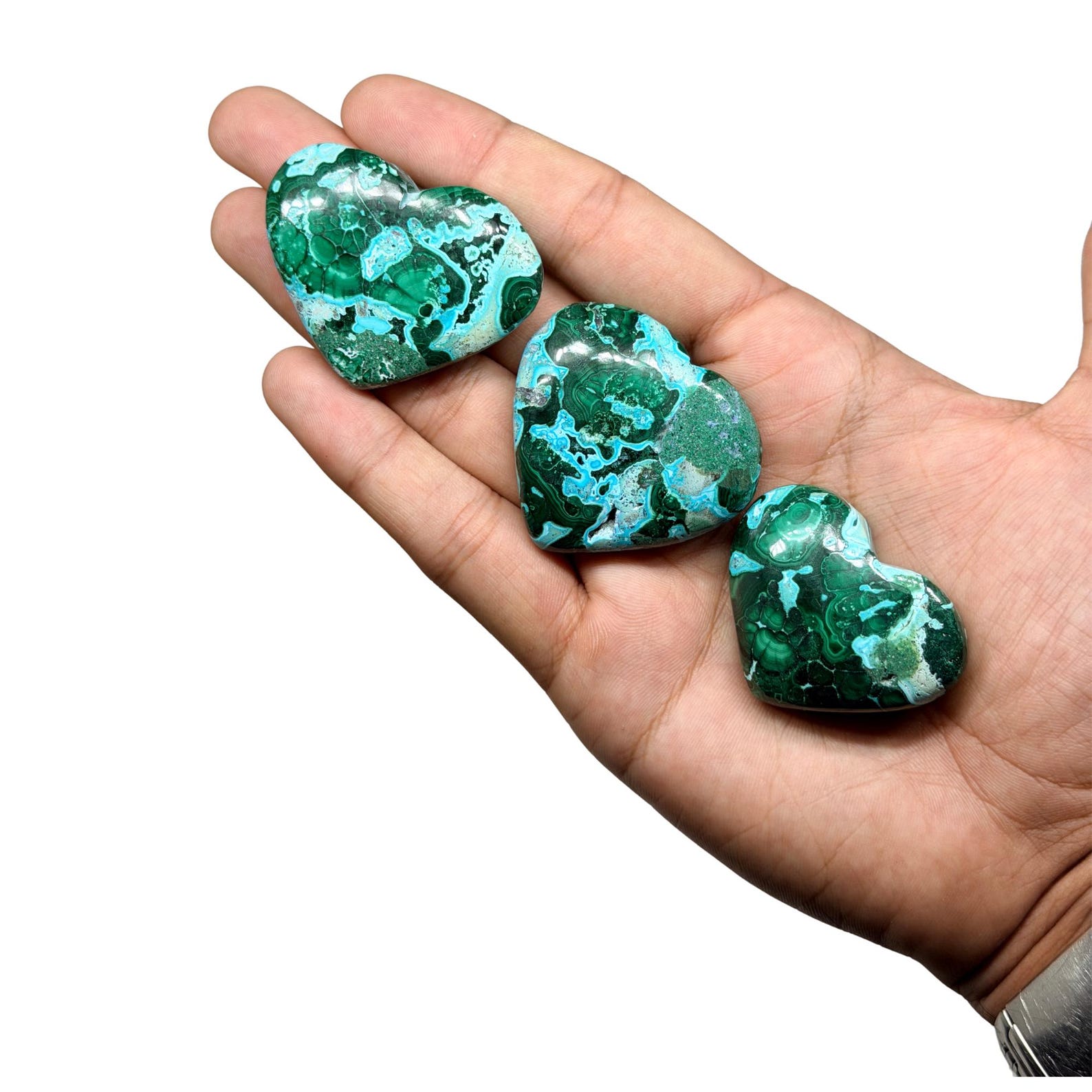
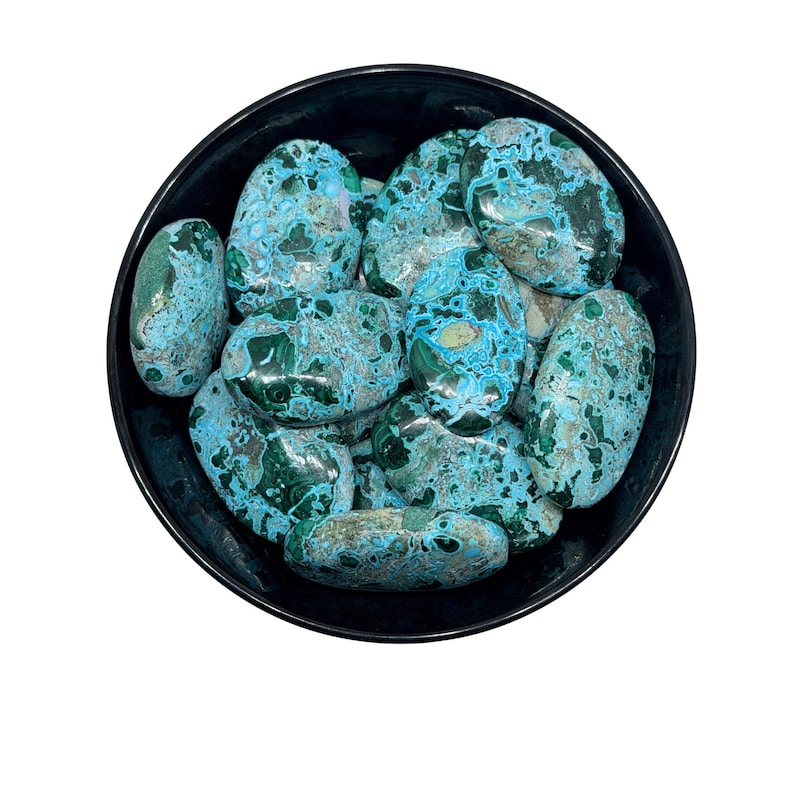
A polished slab in swirling blue and green, patched like a map, gets called turquoise more often than not. Most of the time it isn't. It's chrysocolla, a different mineral that shares turquoise's colours and even some of its history, but forms in a different way and behaves quite differently once it's in your hand.
A mineral that forms after the ore body is already spent
Chrysocolla is a hydrous copper silicate, built from copper, silicon, oxygen and water bound loosely together. It isn't found in fresh copper ore. It forms afterwards, when a copper deposit near the surface is weathered by air and groundwater over a long stretch of time. Rain percolating through a copper-bearing rock dissolves copper out of the primary ore minerals and carries it a short distance before redepositing it as a new, secondary mineral once the water's chemistry shifts. Chrysocolla is one of several minerals that crystallises out of that process, usually filling cracks and cavities as a soft, often botryoidal (bubbly) crust rather than as individual crystals you could point to under a lens.
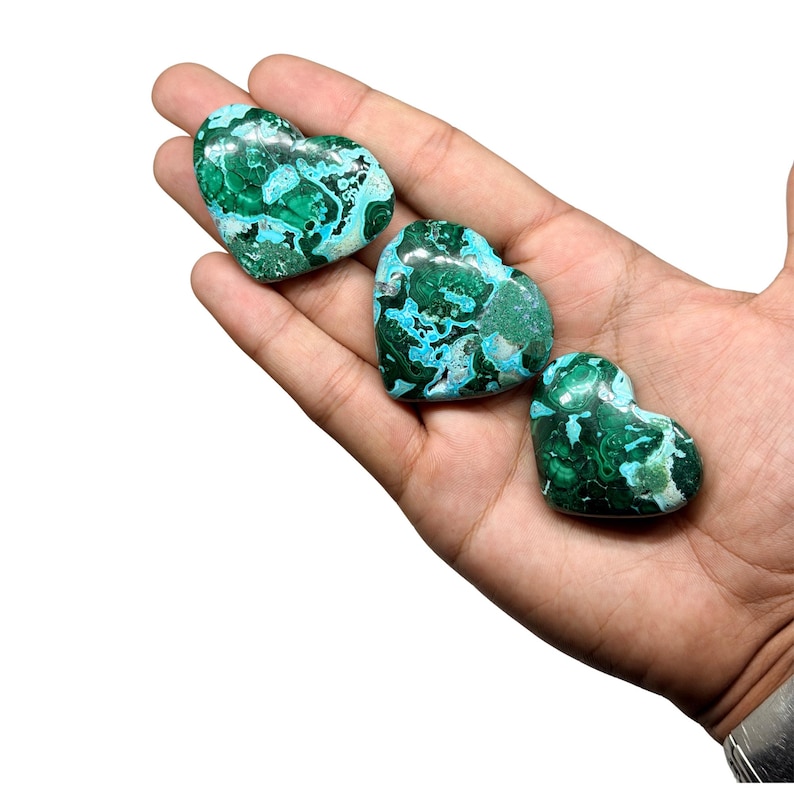
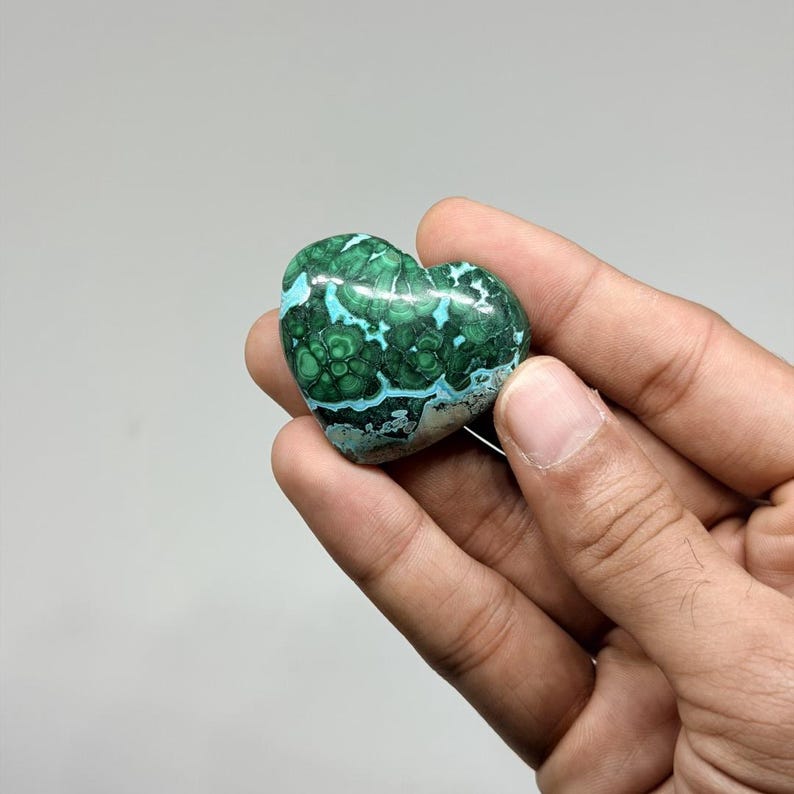
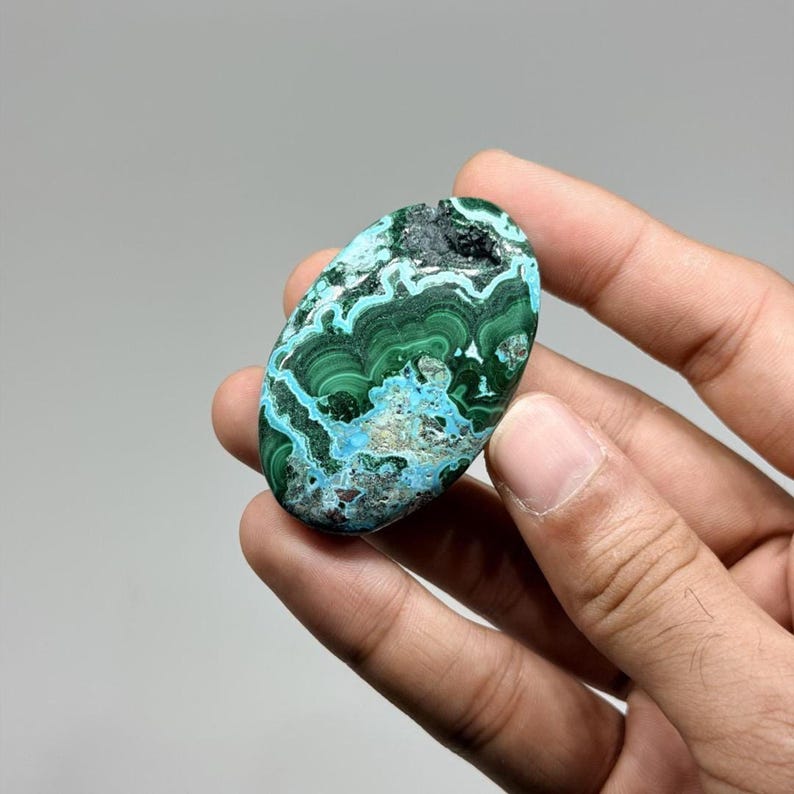
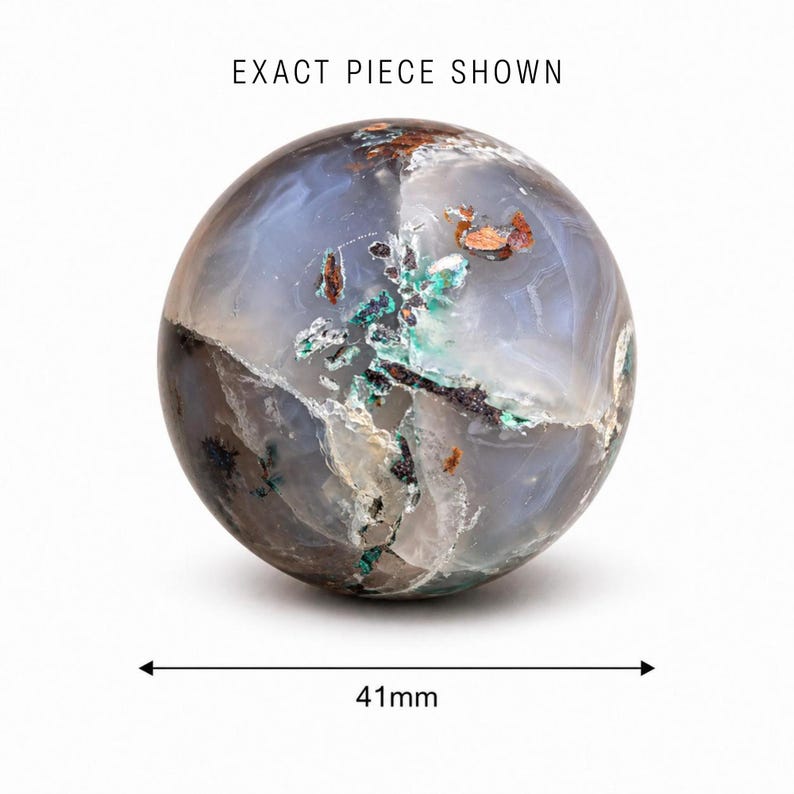
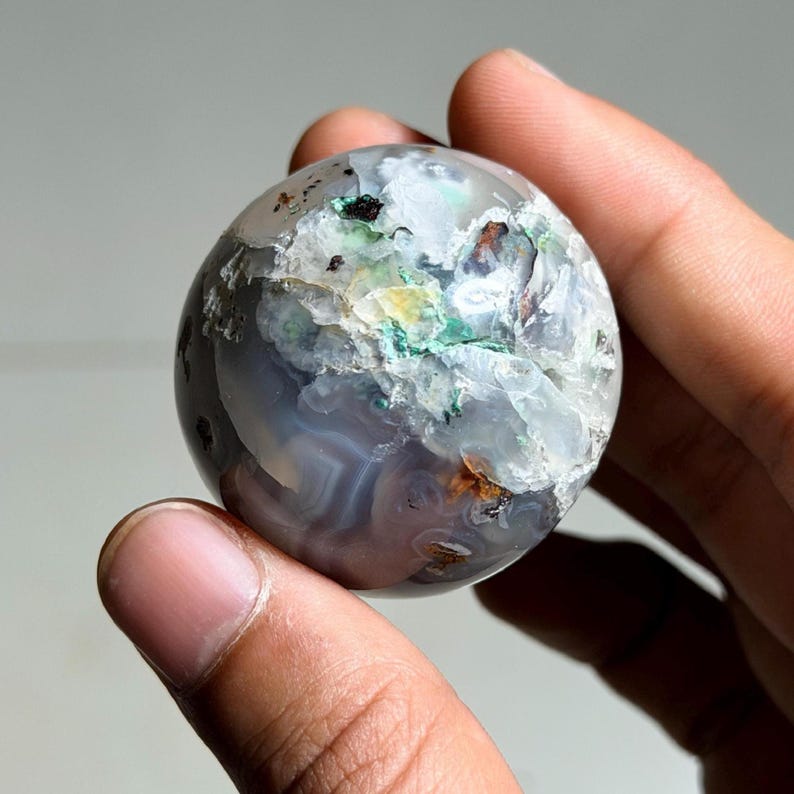
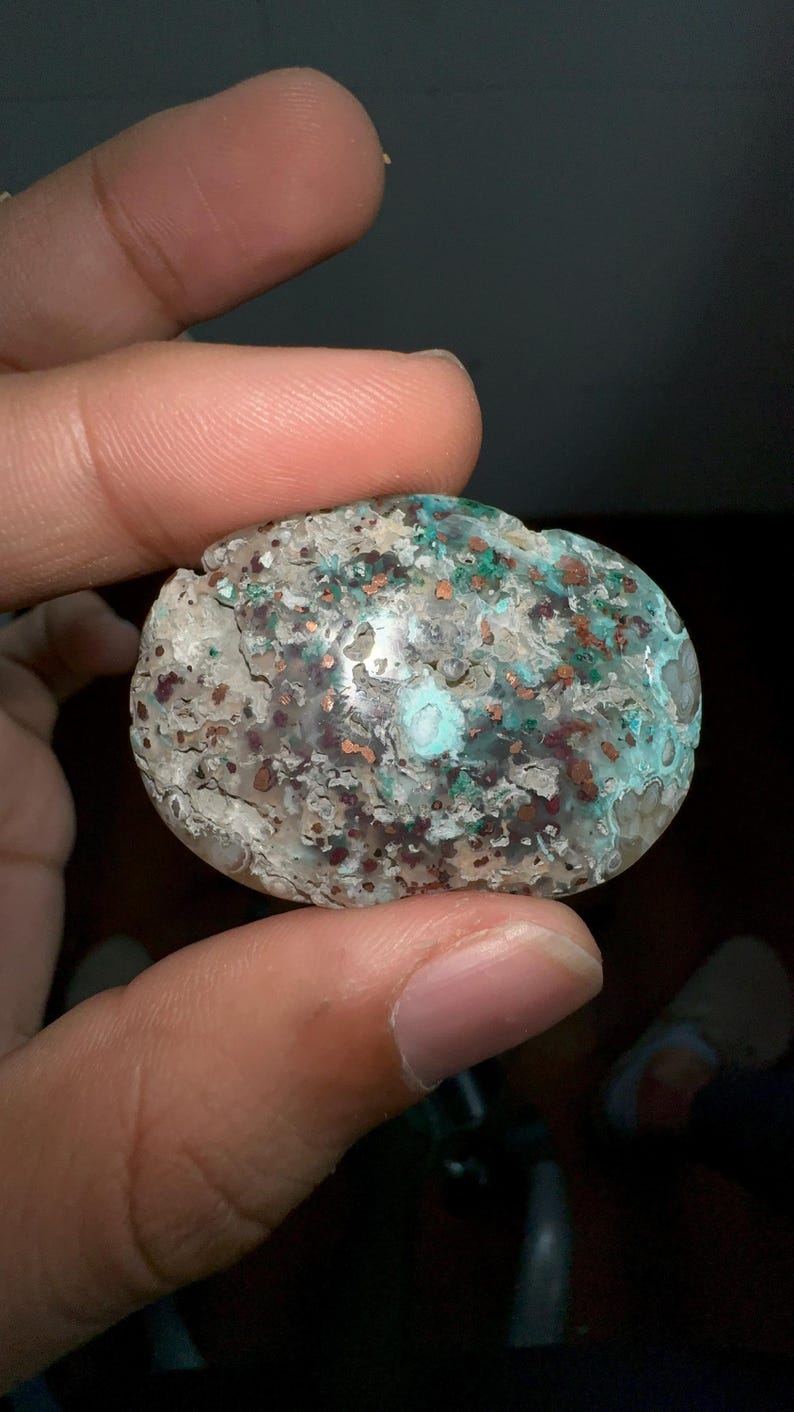
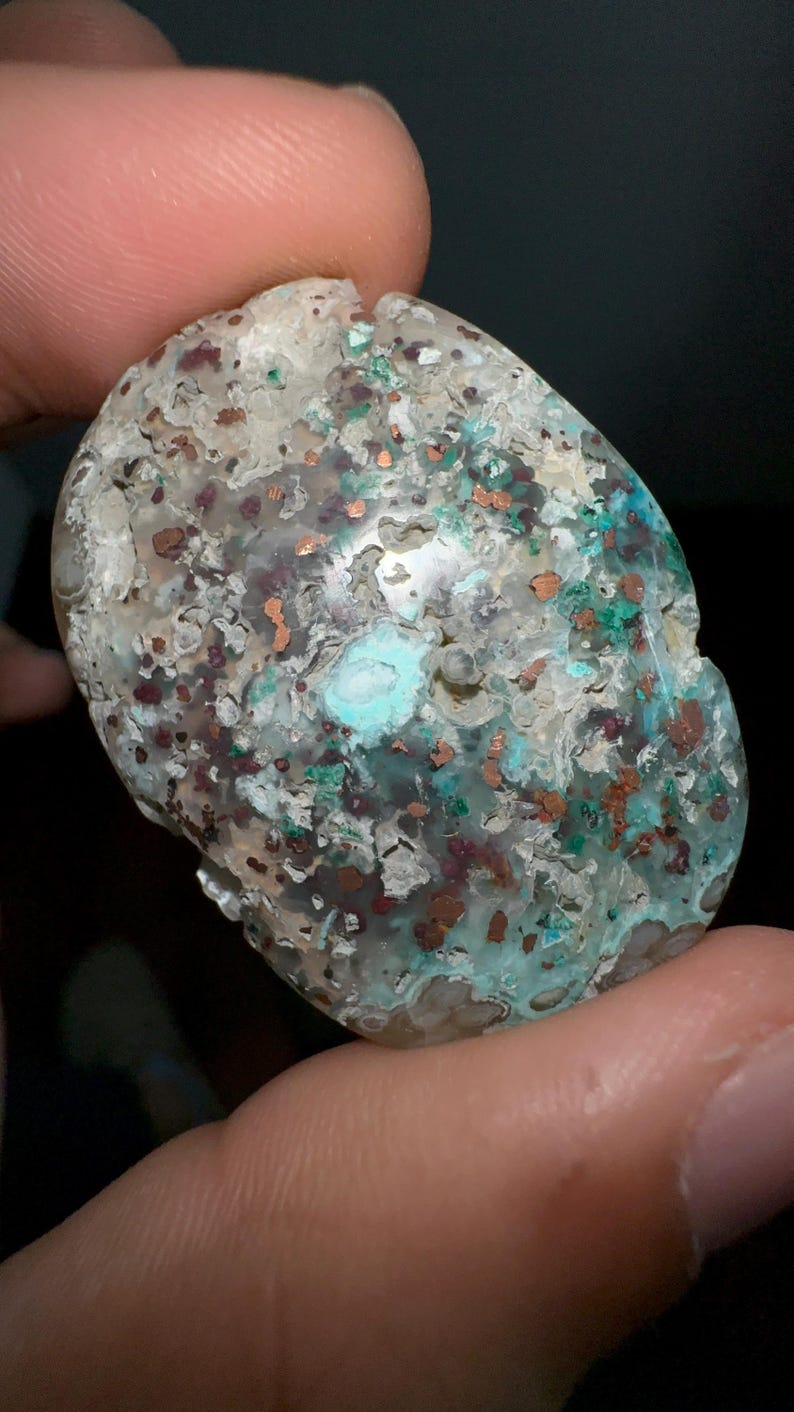
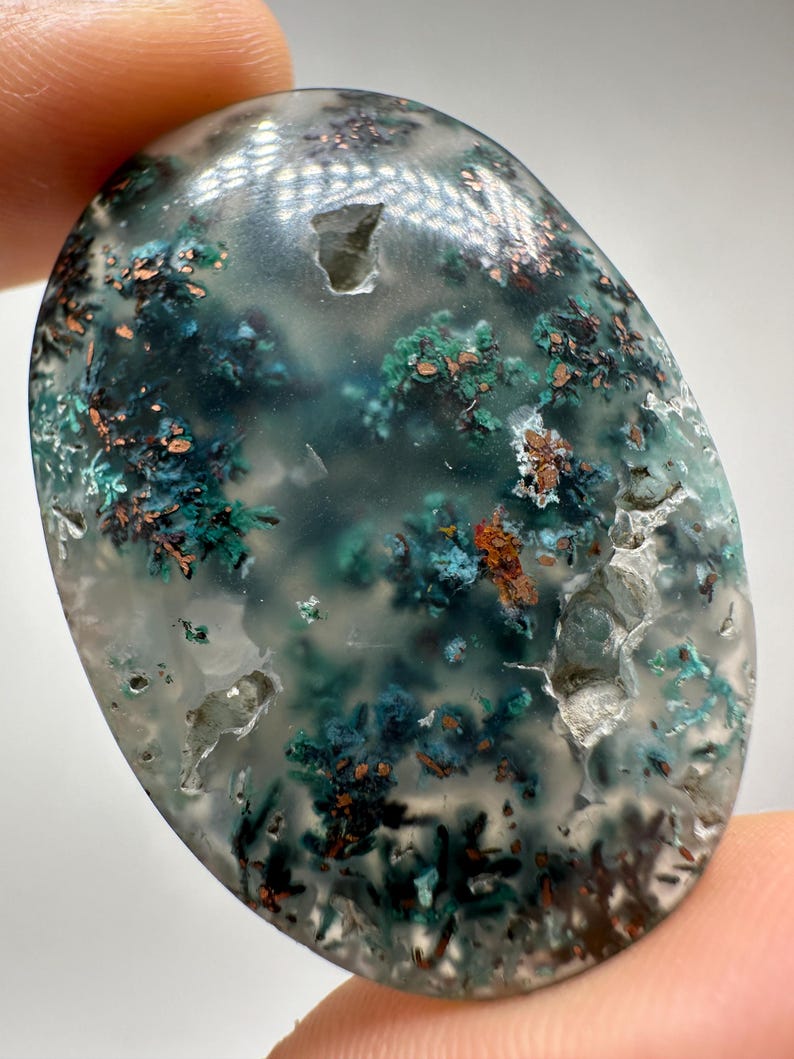
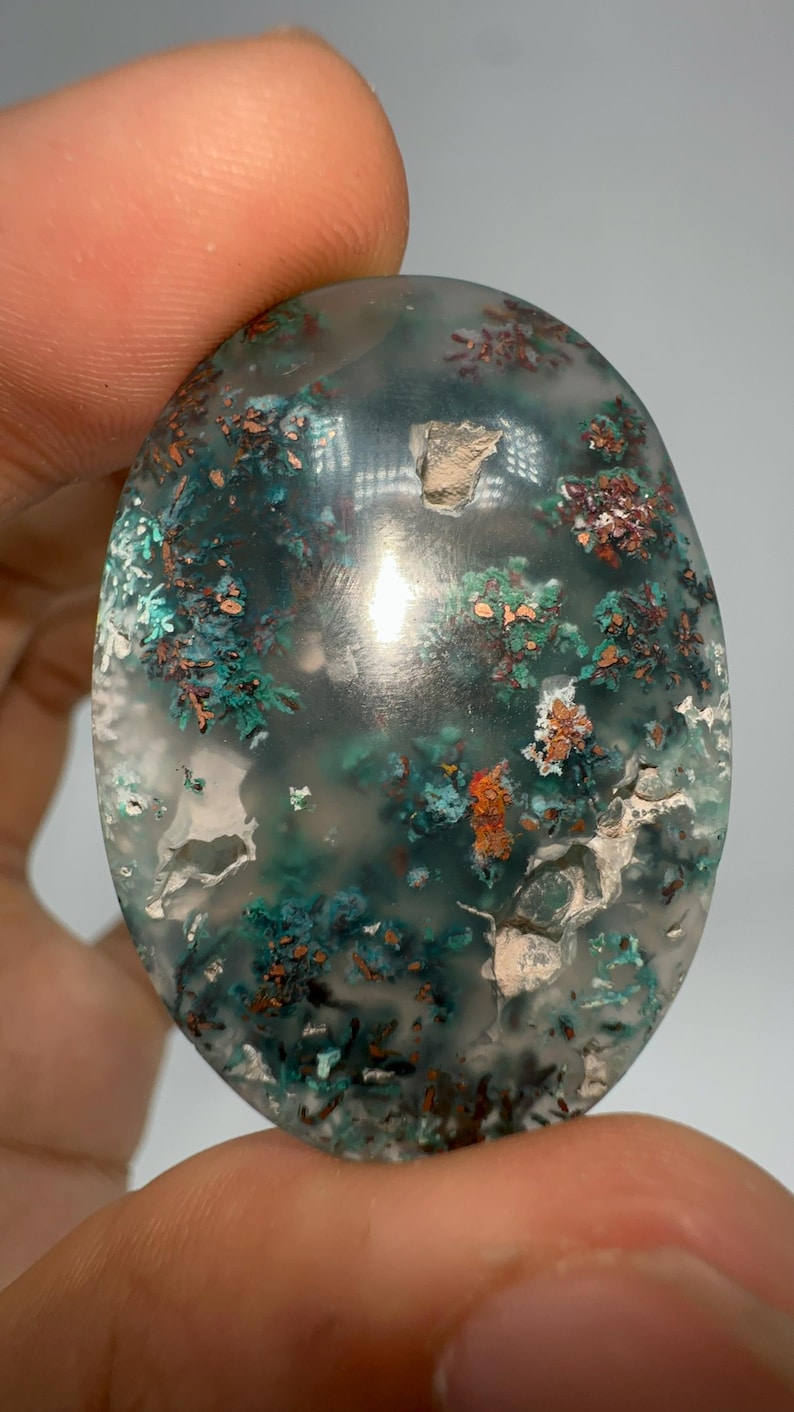
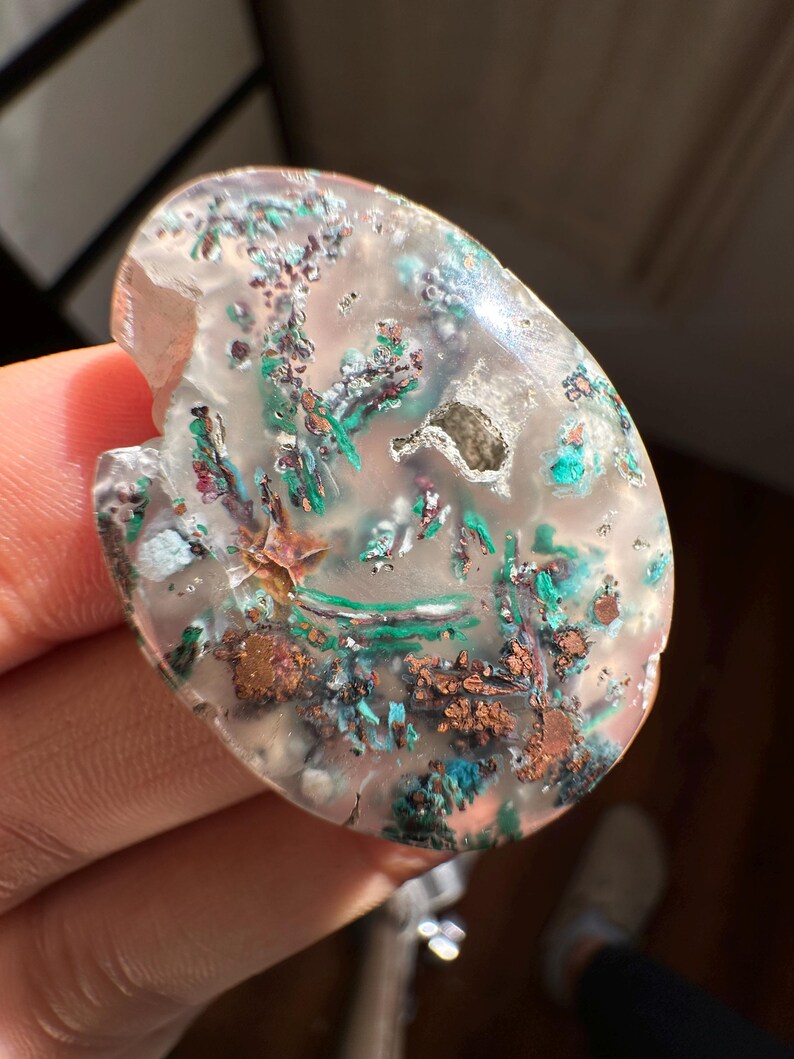
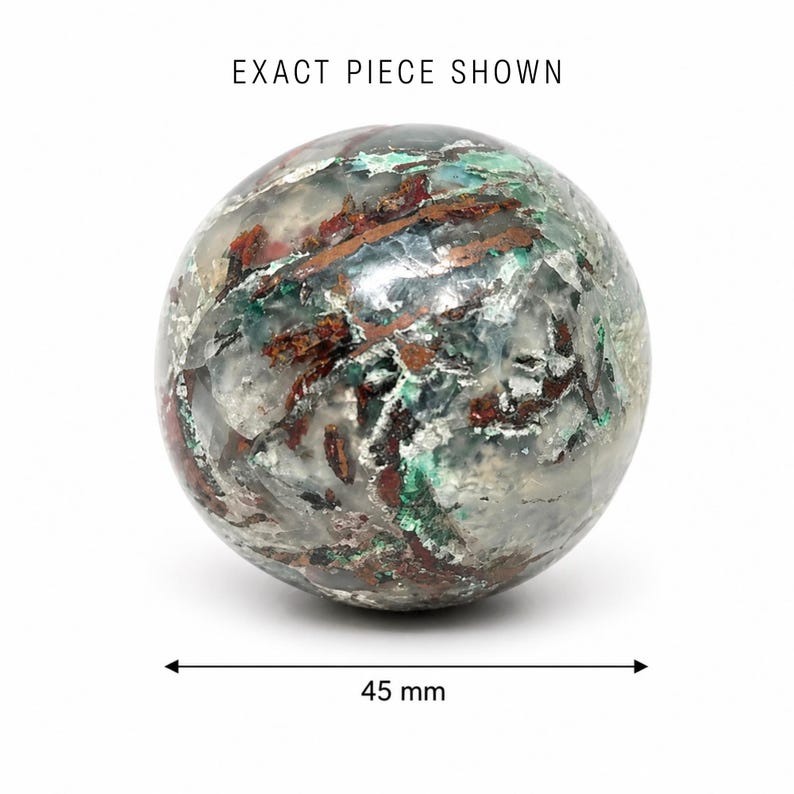
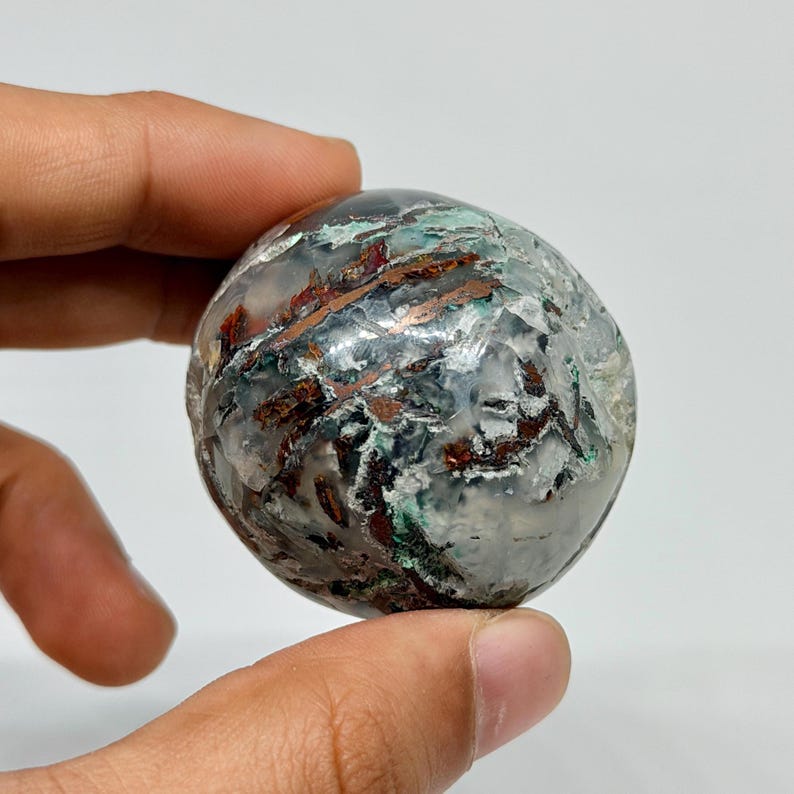
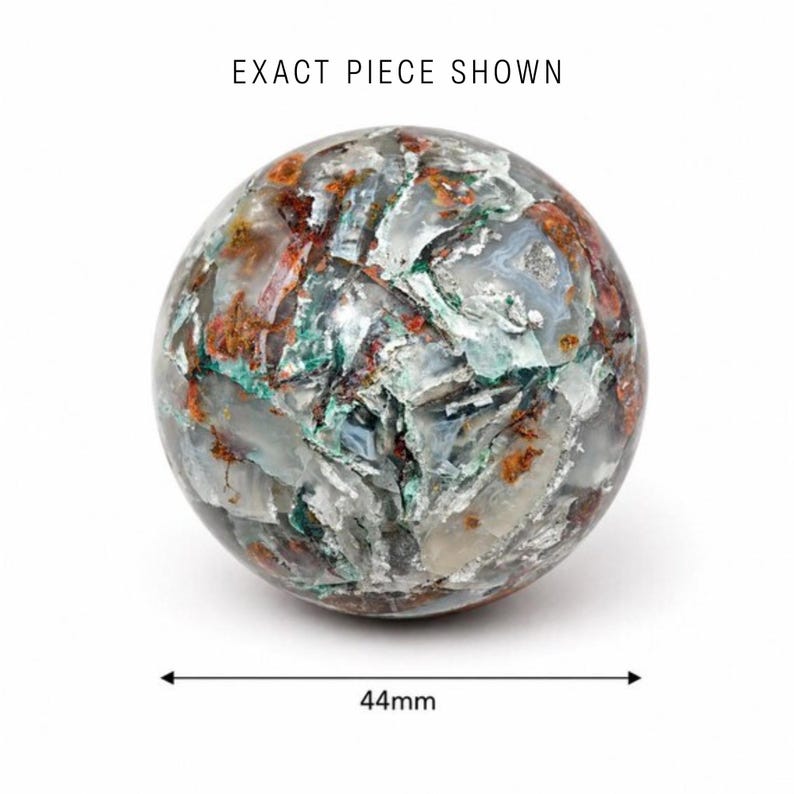
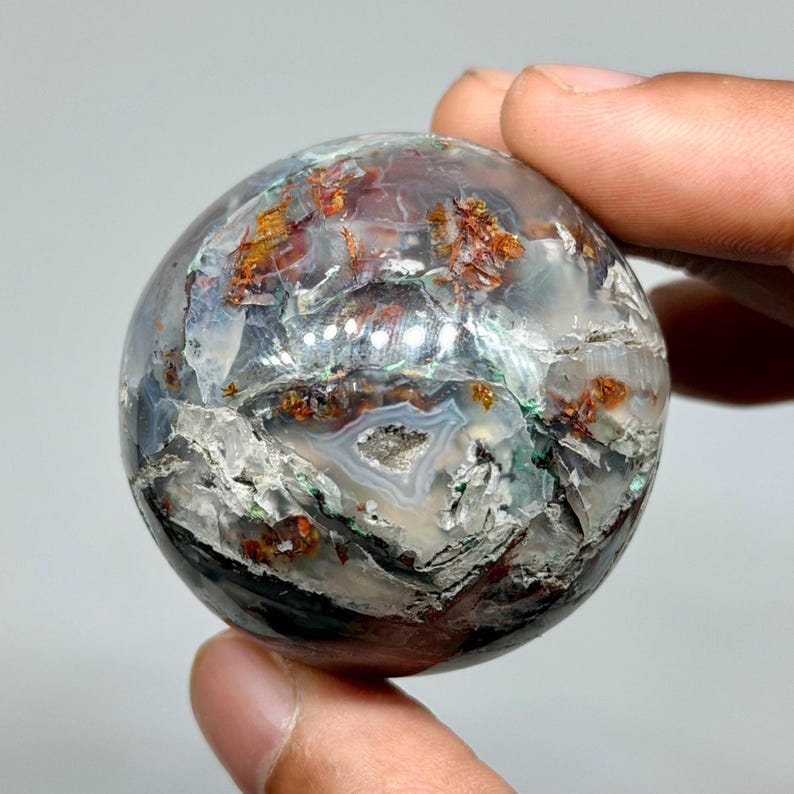
That same oxidised, weathered zone is where malachite, azurite and turquoise all form too, which is why chrysocolla so rarely turns up alone. A single piece of rough often carries patches of two or three of these minerals grown into and around each other, which is exactly what gives chrysocolla its mottled, map-like look: each colour is a slightly different copper mineral, not a variation within one.
Malachite, azurite and chrysocolla: cousins from the same process
Malachite is a copper carbonate, and its concentric, light-and-dark banding comes from rhythmic changes in the fluid it grew from, somewhat like the layered growth we describe in how geodes form, just carbonate rather than silica. Azurite is also a copper carbonate, a deeper, more saturated blue, and it's the least stable of the group: given enough exposure to air and moisture, azurite slowly converts into malachite, molecule by molecule, which is why old azurite specimens are sometimes found with a green malachite skin already forming over the blue. Chrysocolla doesn't share that carbonate chemistry, being a silicate instead, but it crystallises in the same cavities at the same stage of weathering, so veins of blue-green chrysocolla through a field of green malachite, or small dark-blue azurite patches sitting in both, are a completely ordinary thing to see in one piece of rock.
Chrysocolla or turquoise: a quick way to tell
Turquoise is a copper aluminium phosphate, chemically closer to chrysocolla than you'd guess from how differently the two are usually sold, but a phosphate rather than a silicate, and it forms in drier, more arid weathering conditions than chrysocolla typically needs. There are a few practical differences worth knowing if you're trying to tell a piece apart by eye. Turquoise is noticeably harder, around 5 to 6 on the Mohs scale against chrysocolla's 2 to 4, so a genuine turquoise cabochon takes a much higher polish and resists a scratch that would mark chrysocolla easily. Turquoise is also more often a single, fairly even colour running through a dark brown or black matrix of host rock, while chrysocolla tends to carry its own internal colour variation, patches of deeper blue, paler green and sometimes near-white, within the stone itself rather than in a separate matrix. If a "turquoise" piece feels soft enough to scratch with a fingernail's edge or shows banding and mottling inside the blue rather than a vein pattern around it, it's much more likely to be chrysocolla, or possibly dyed howlite standing in for either; we go through that kind of substitution in an honest guide to what's natural.
Gem silica: chrysocolla's harder, rarer form
Occasionally chrysocolla grows intergrown with chalcedony, the same microcrystalline quartz behind agate, rather than on its own. The silica reinforces the soft copper mineral, producing a translucent blue-green material that takes a glassy polish and reaches roughly 7 on the Mohs scale, hard enough for everyday jewellery in a way ordinary chrysocolla never is. This combined material is known in the trade as gem silica, and it has long been one of the more sought-after and expensive forms of chrysocolla, historically associated with a handful of mines in Arizona and more recently also found in Peru. Most chrysocolla on the market, though, is the ordinary, softer kind, and it's worth knowing which you have before deciding how to wear or display it.
Buying and caring for chrysocolla
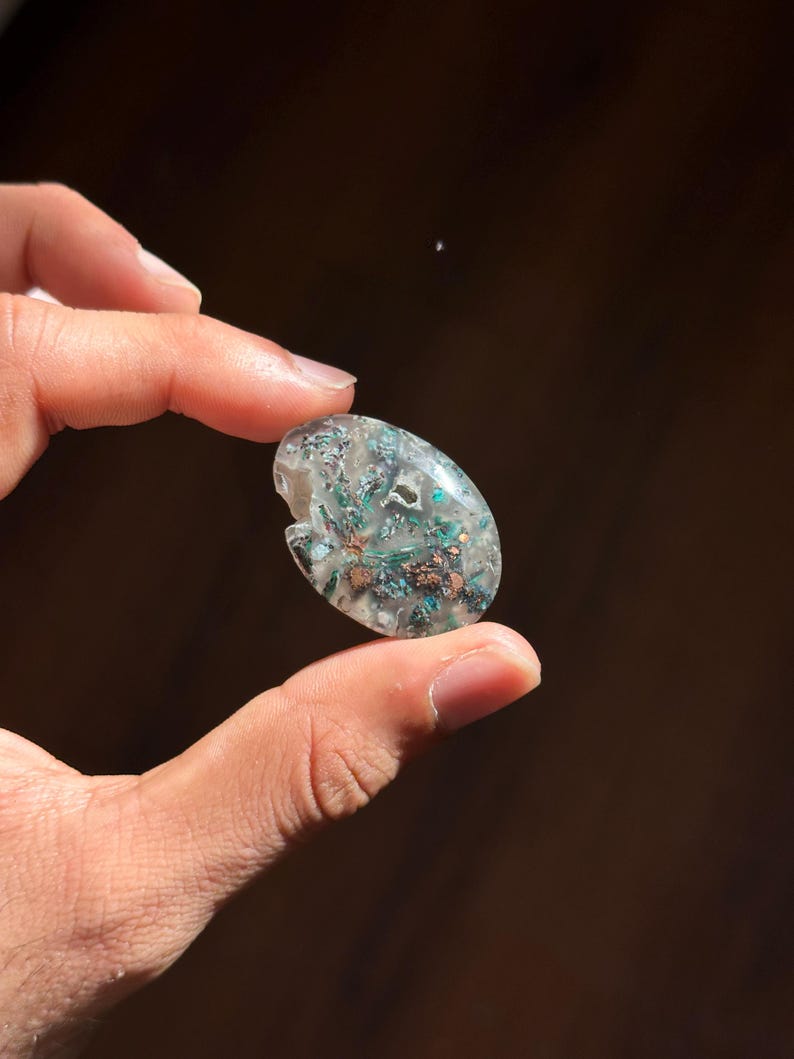
Because it's soft and often slightly porous, chrysocolla should be kept away from household chemicals, perfume and prolonged soaking, and stored apart from harder stones that could scratch its surface. It takes a good polish for a short while in the right hands, which is why it's cut into palmstones, cabochons and spheres more often than faceted or heavily carved pieces, letting the natural mottling of blue, green and sometimes brown or black show across a smooth, rounded surface. A piece with visible patches of two or three different copper minerals together isn't a flaw. It's a fairly direct record of the same weathering process working on the same copper deposit over however long it took to produce the rock in your hand.