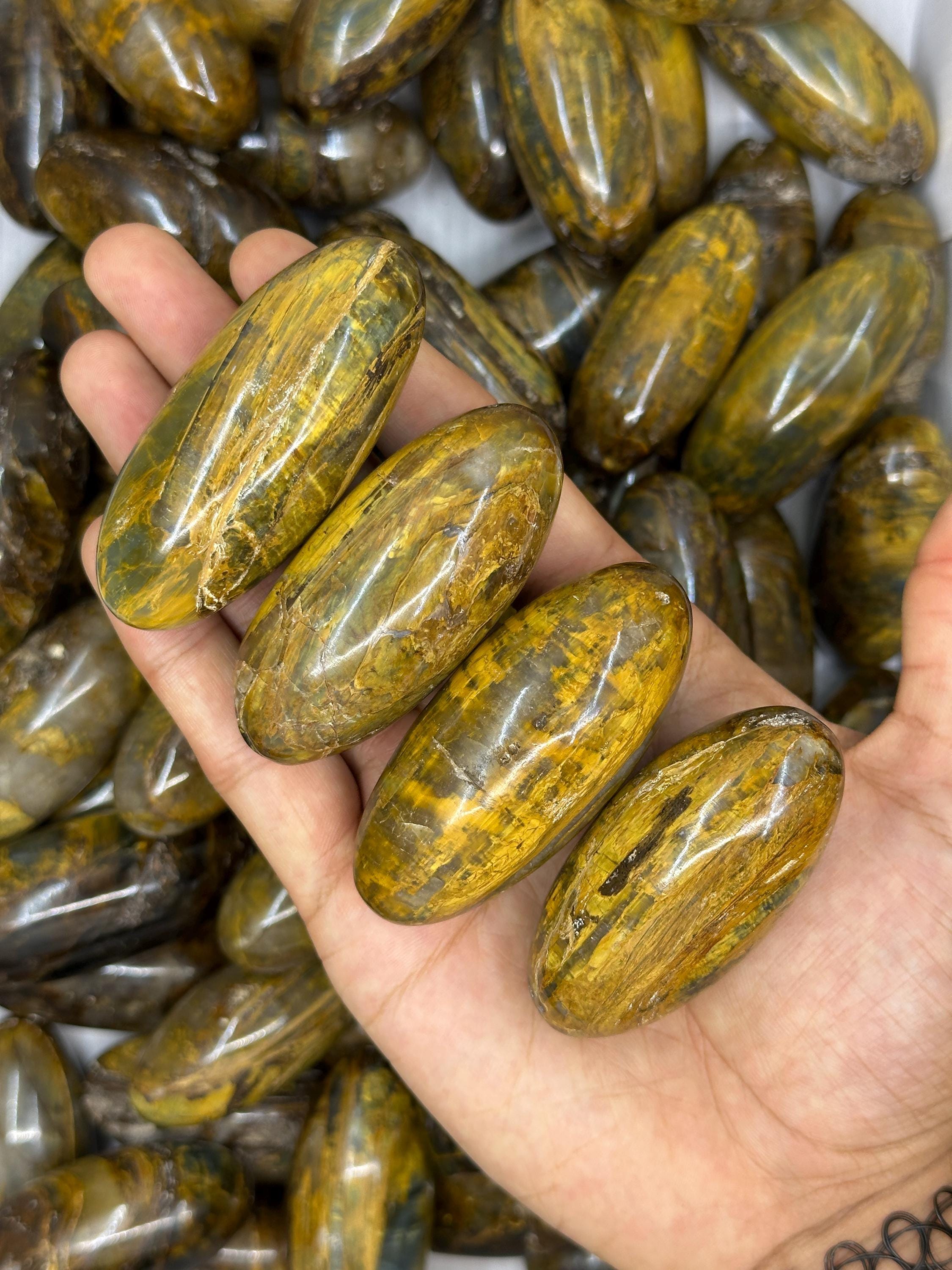
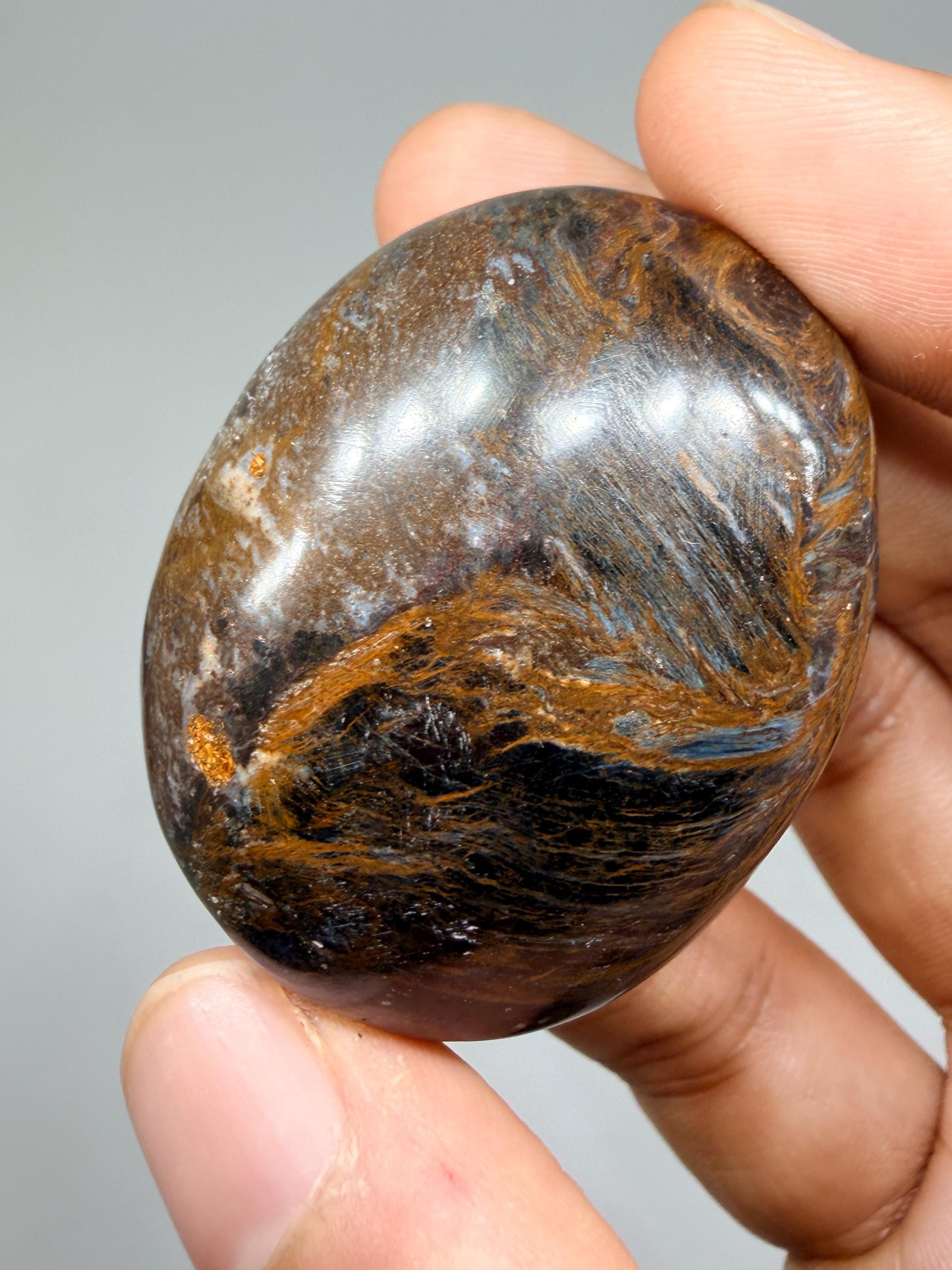
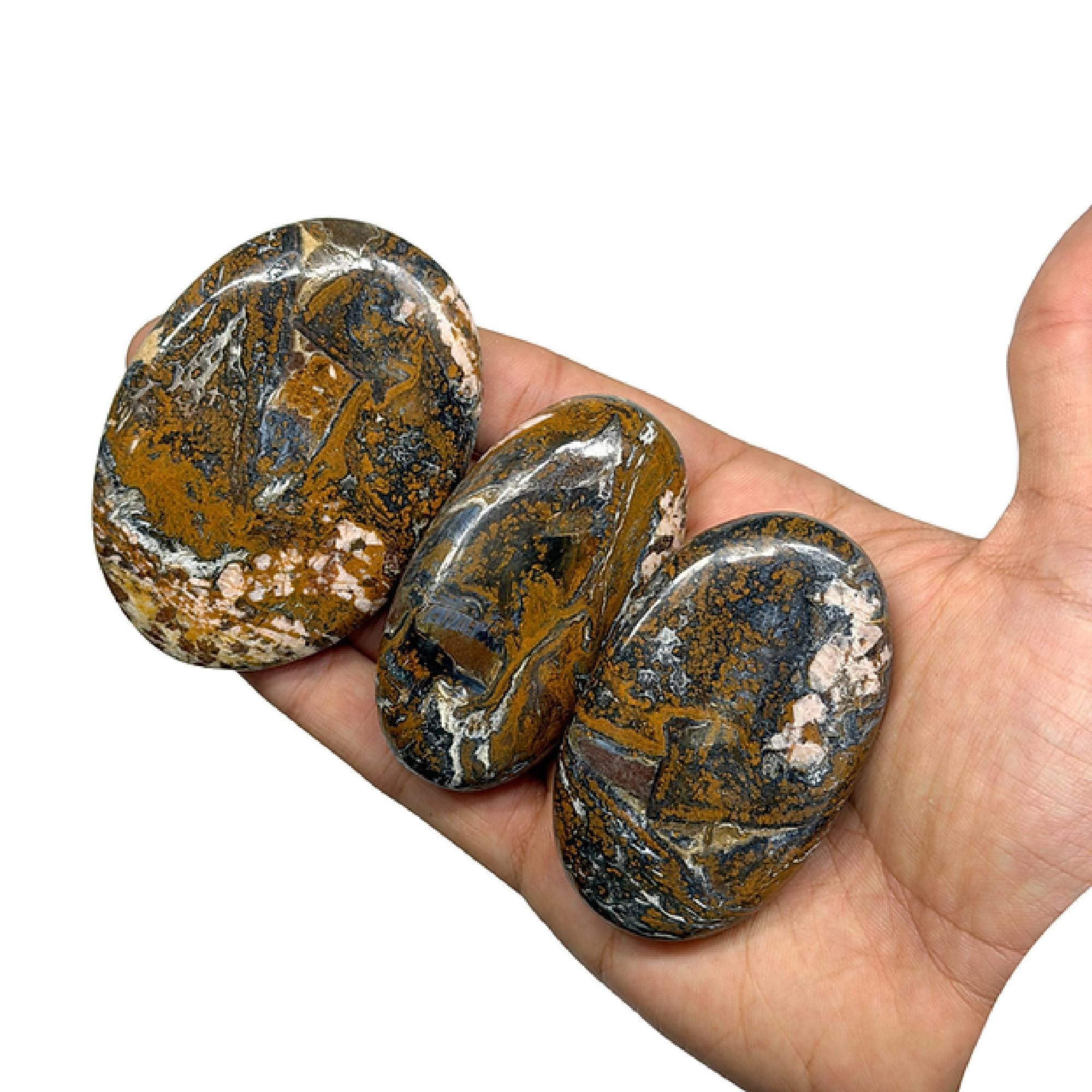
Why is pietersite called storm stone?
Pietersite is tiger's eye shattered and re-cemented by silica, so its chatoyant fibres swirl in every direction. Where the storm pattern and its colours come from.
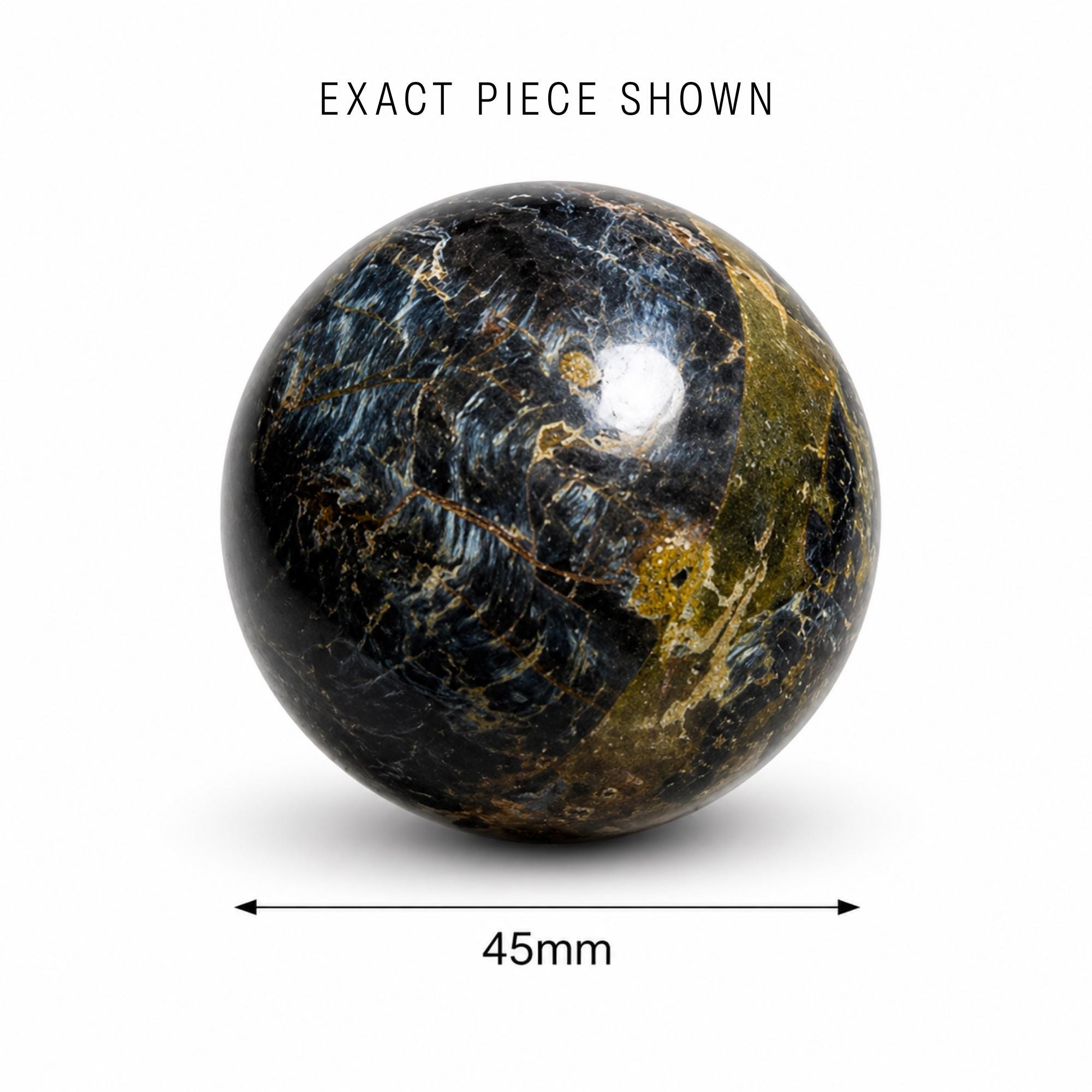
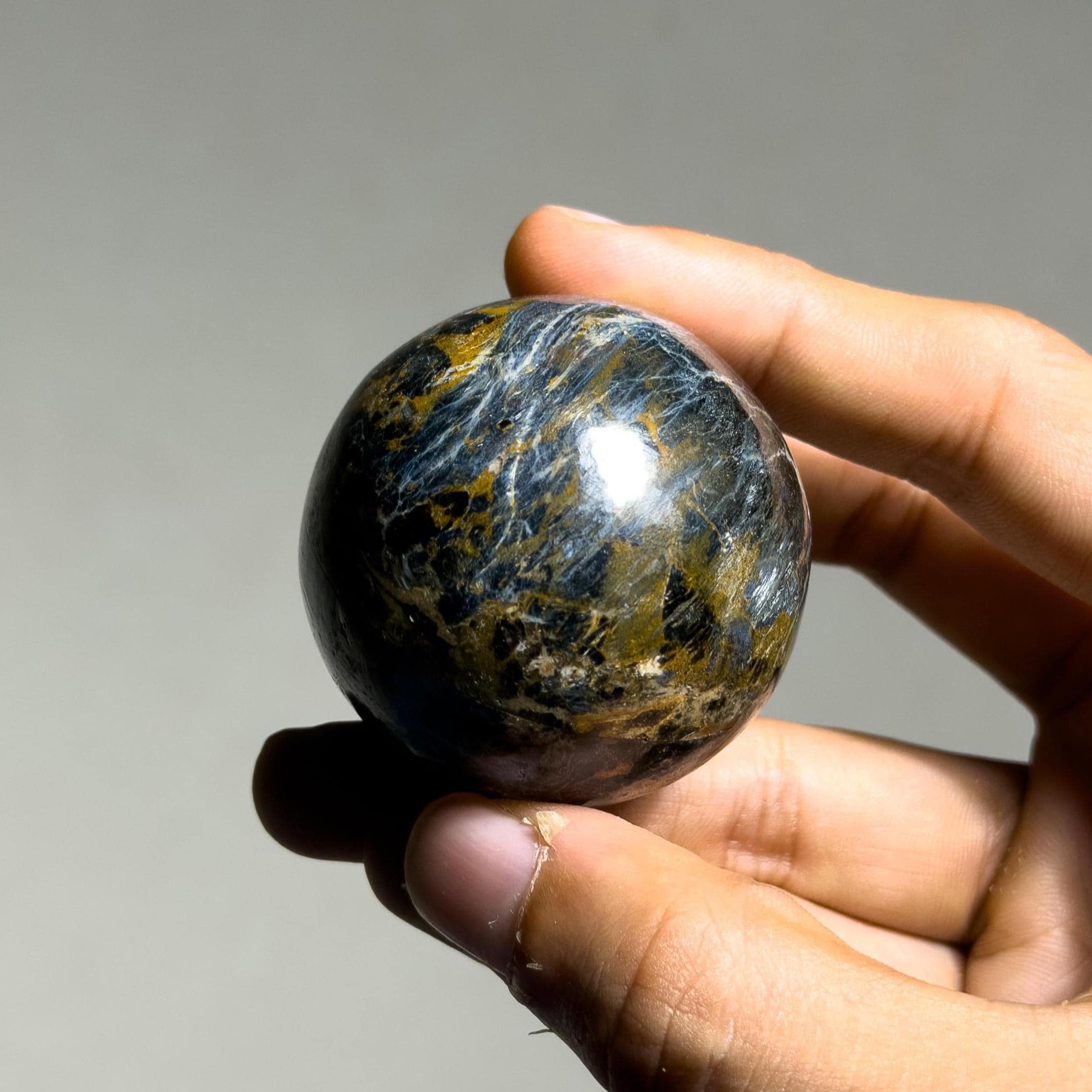
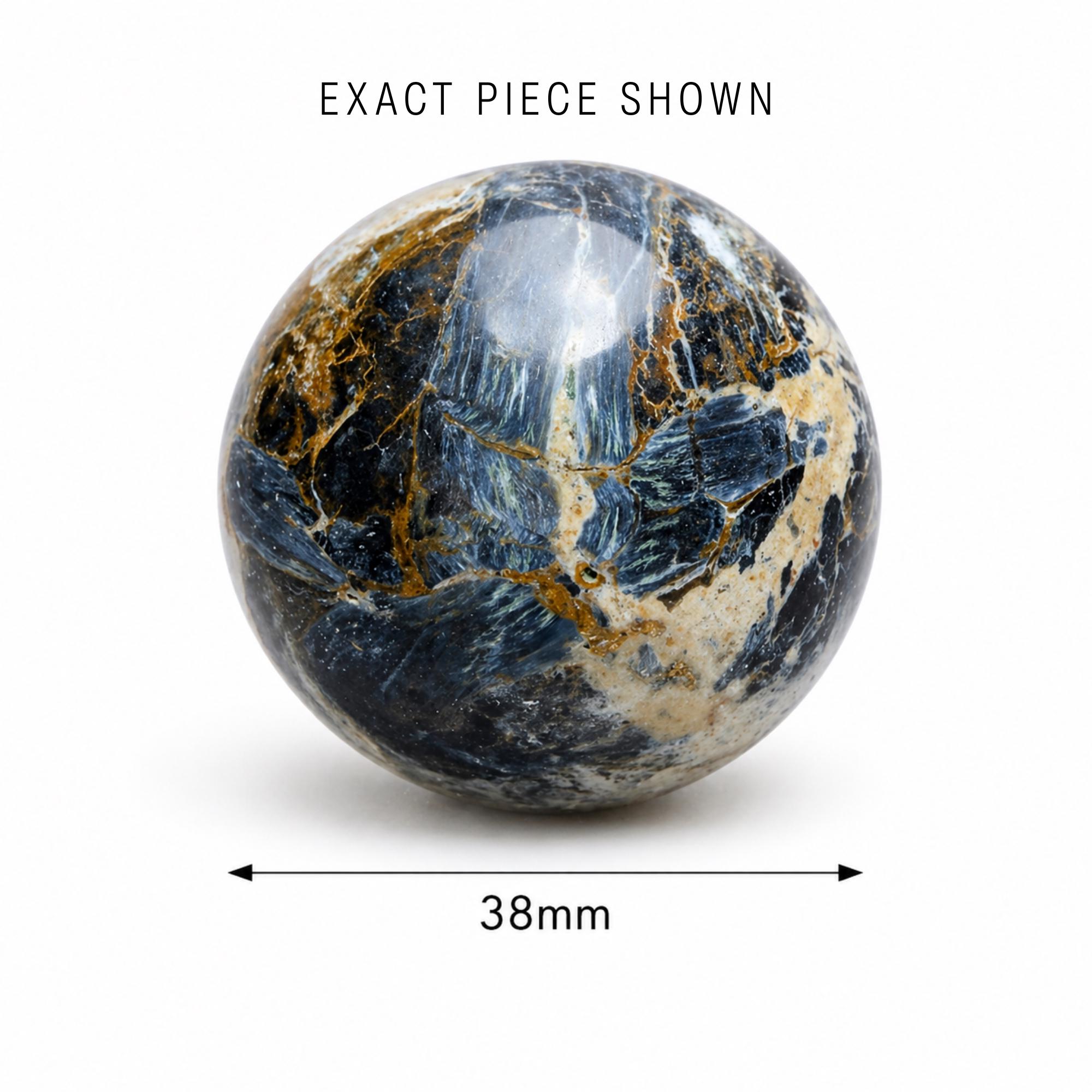
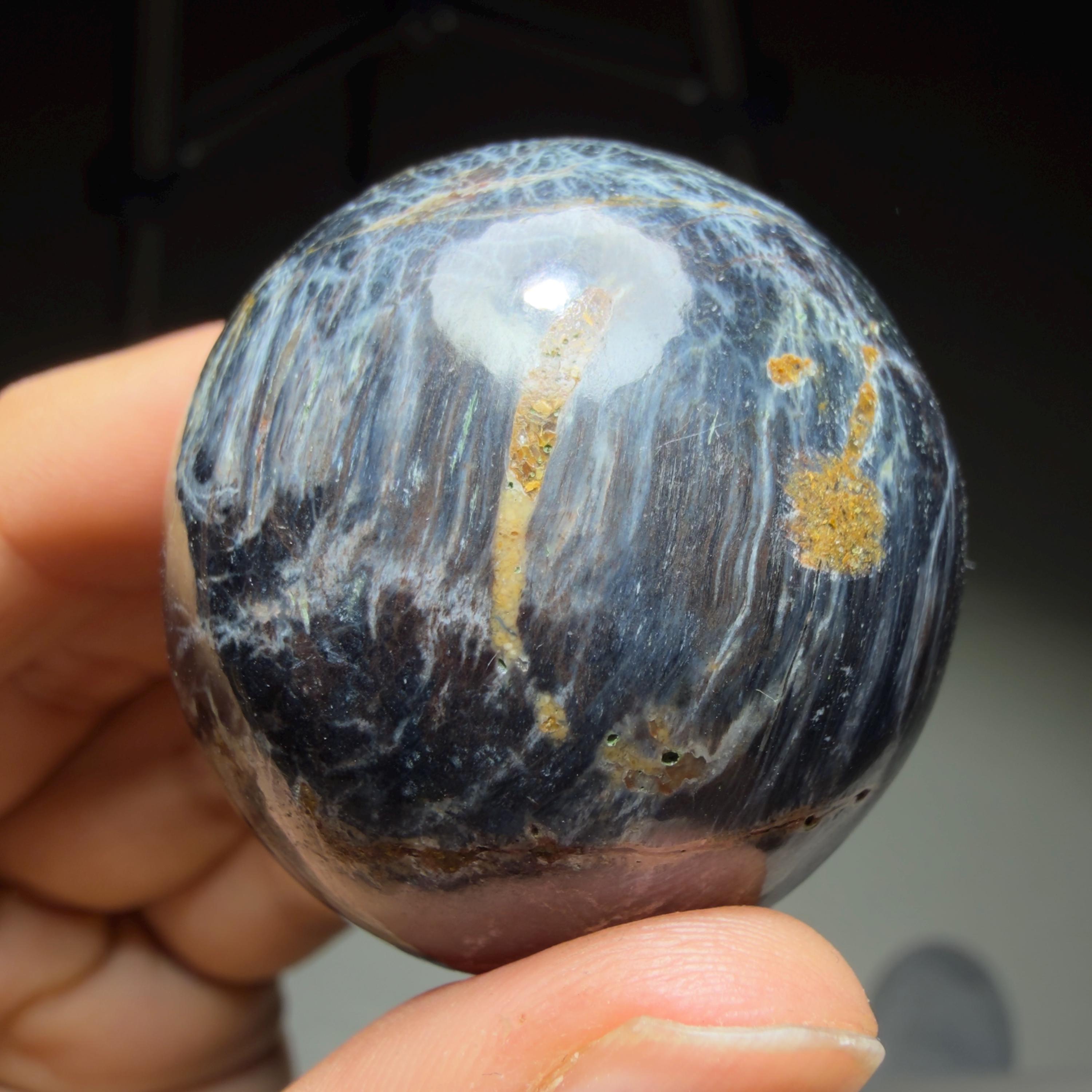
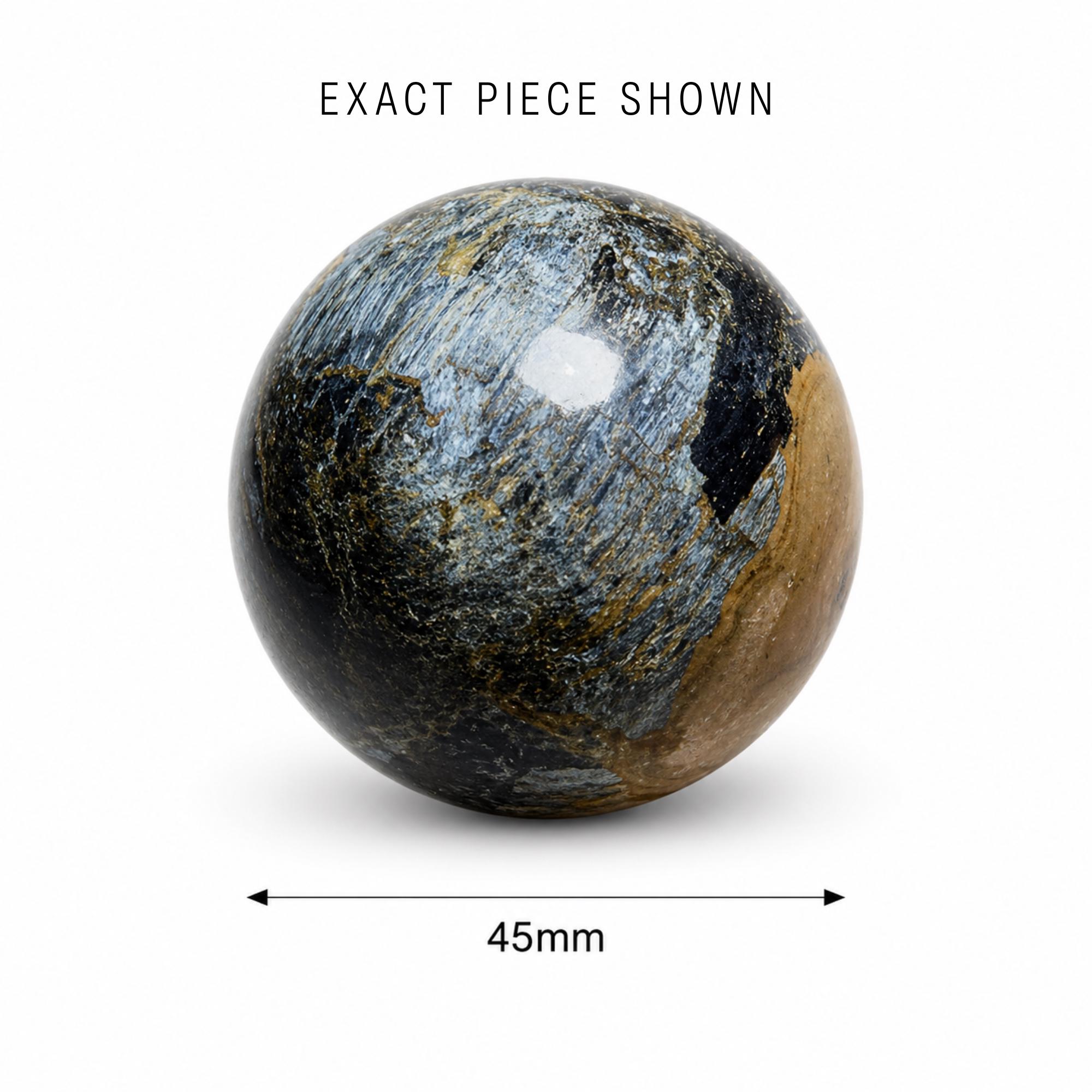
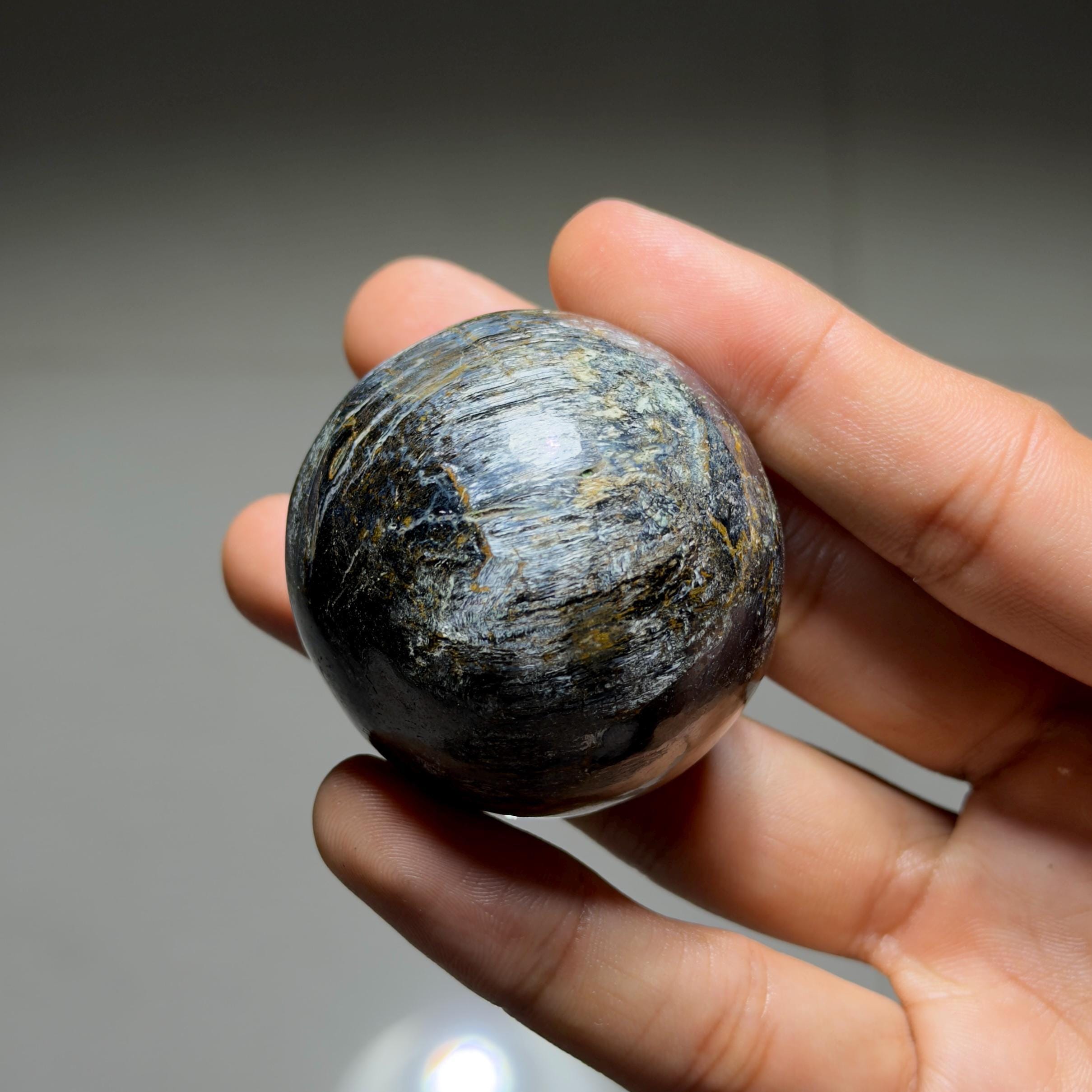
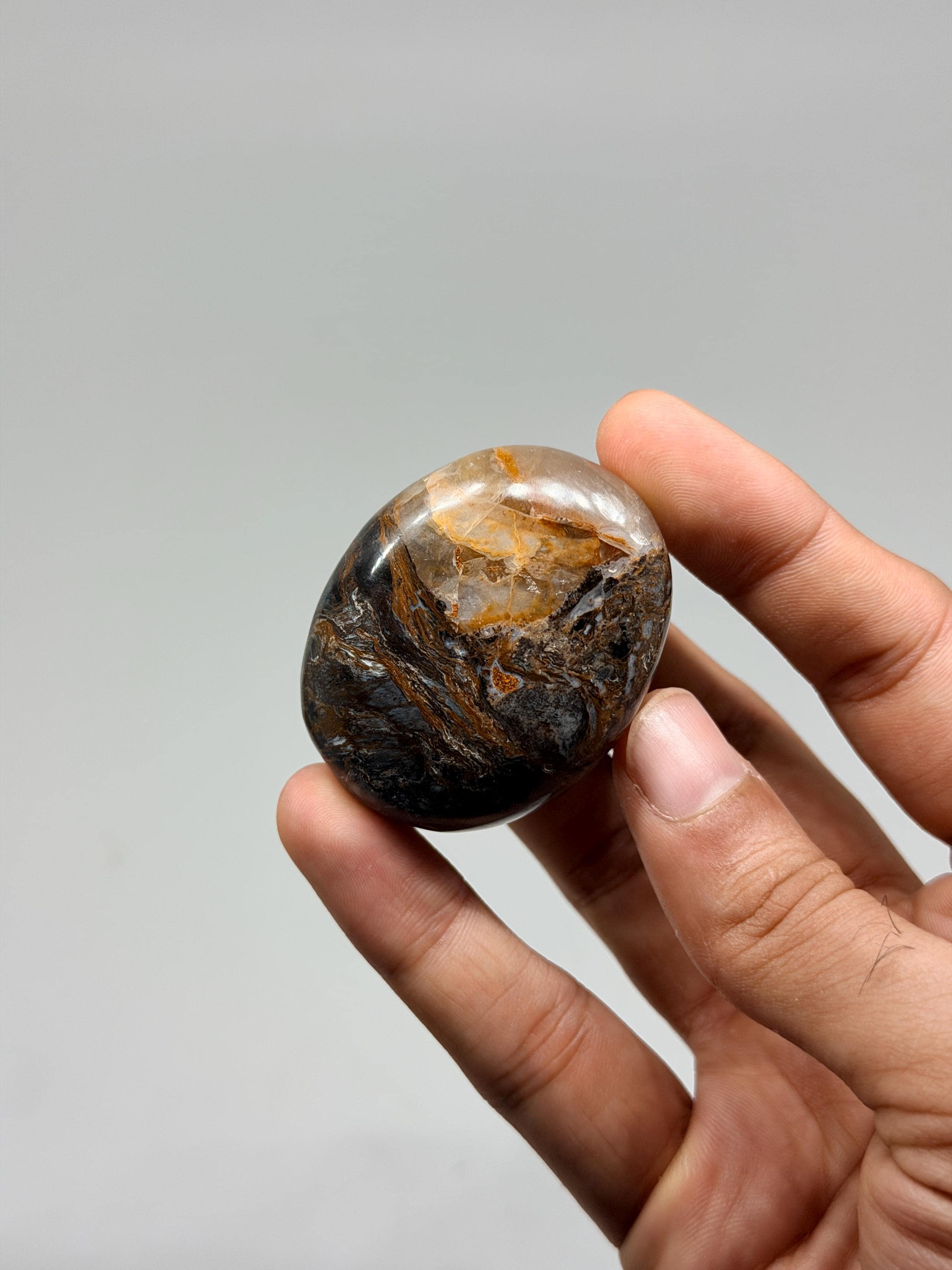
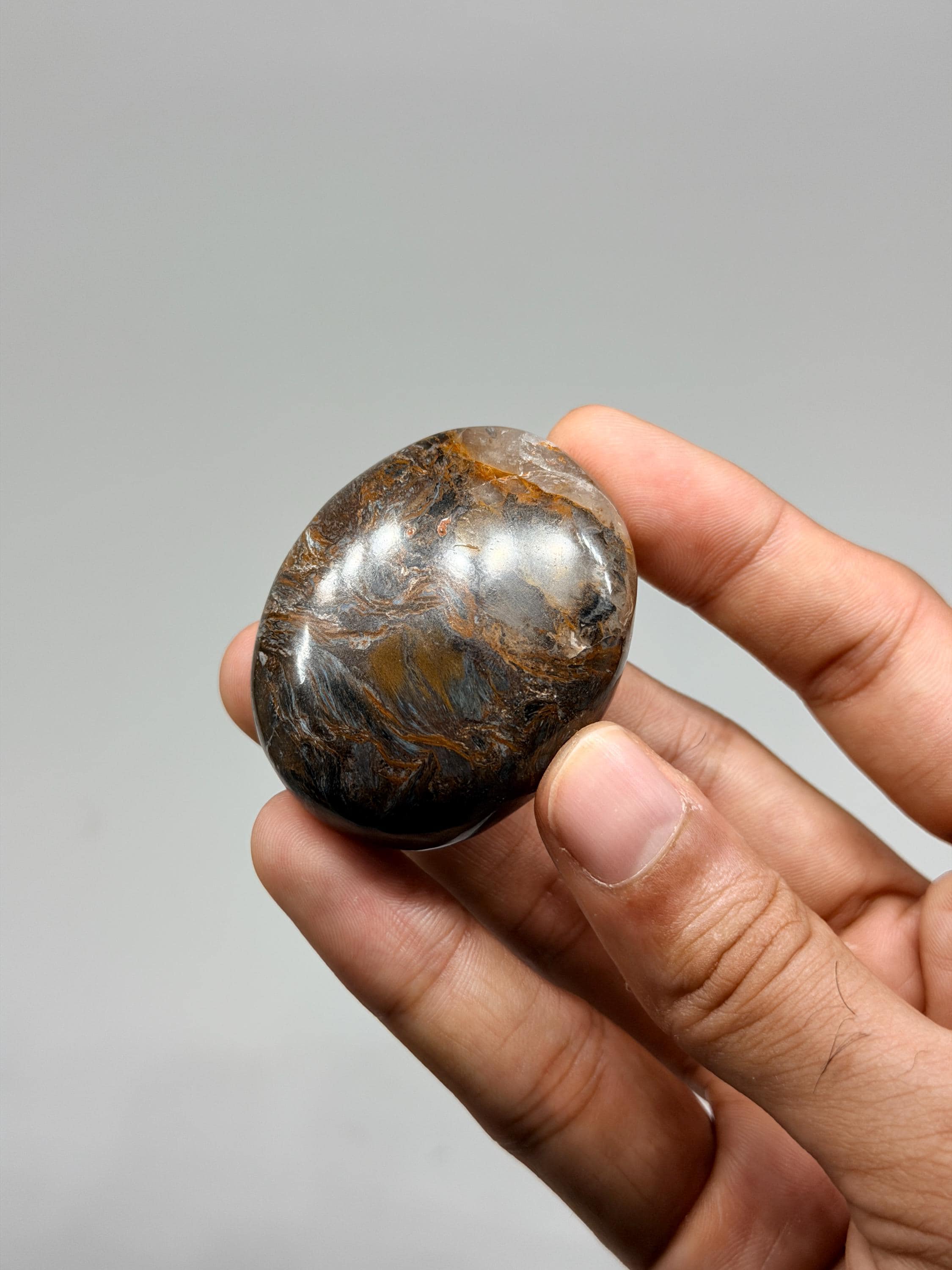
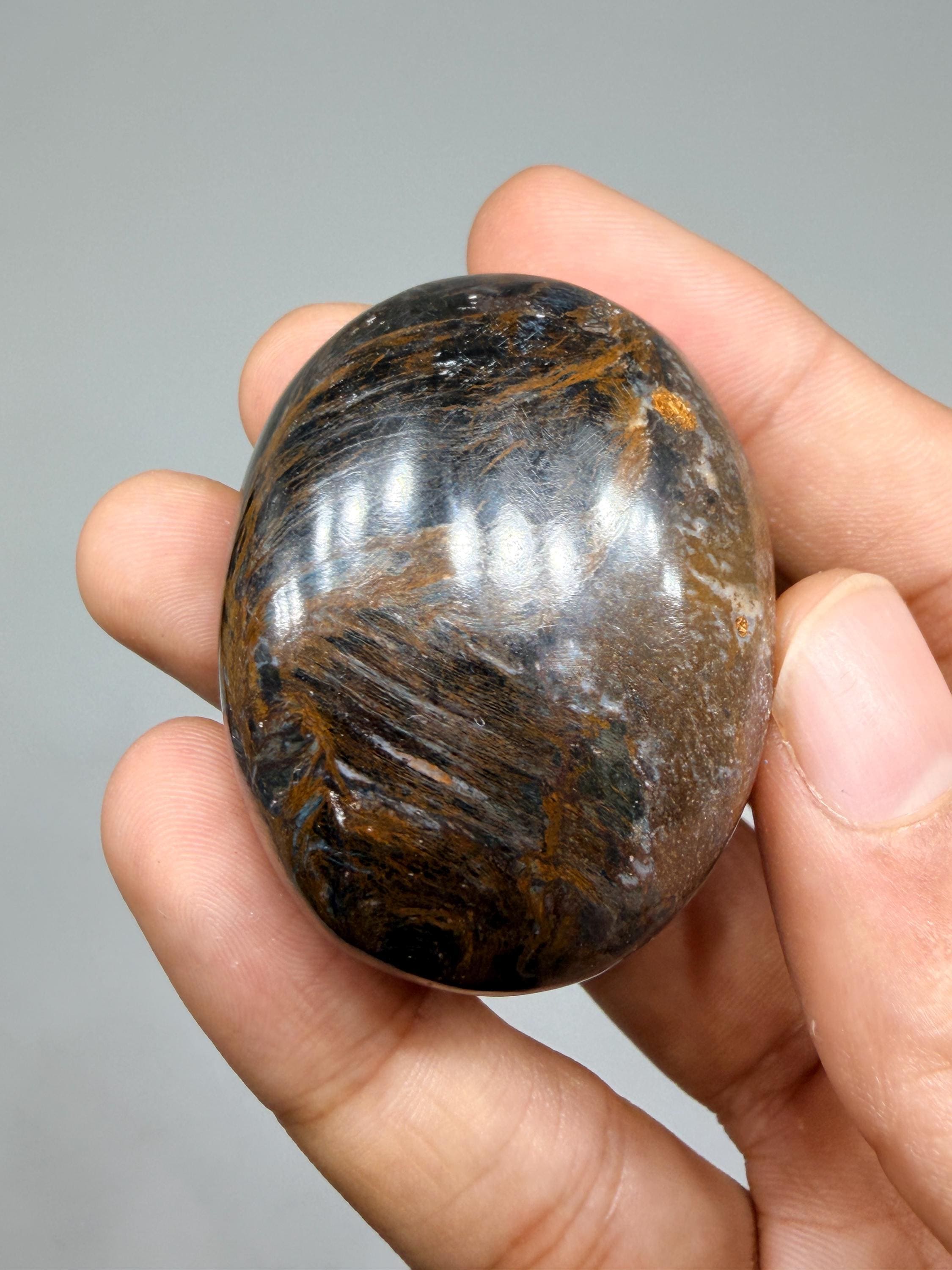
Hold a polished sphere of pietersite under a lamp and tilt it, and the light doesn't move in one clean band the way it does across tiger's eye. It breaks up into streaks that shift and swirl in several directions at once, gold against blue-grey, as if a small storm were trapped under the surface. That's exactly why the trade calls it storm stone, or sometimes tempest stone. The pattern isn't a trick of polishing. It's a record of the stone being broken and put back together.
Tiger's eye, taken apart
Pietersite starts life as the same material as tiger's eye: a fibrous blue asbestos mineral called crocidolite (riebeckite) that has been slowly replaced, fibre by fibre, with silica. The silica keeps the shape and alignment of the original fibres, so when you cut and polish across them, light bounces off the bundle as a single moving band. That's chatoyancy, the same "cat's eye" effect you see in tiger's eye and hawk's eye, just organised in one direction because the fibres in ordinary tiger's eye all grew roughly parallel.
Pietersite forms where that fibrous rock has since been broken up. Earth movements fractured the silicified crocidolite into angular fragments, and each fragment kept its own fibre orientation, tilted at a different angle to its neighbours. Later, more silica-rich fluid moved through the broken rock and cemented the pieces back together as one solid mass. Geologists call rock built this way a breccia. The result is a stone made of many small chatoyant fragments, each throwing its band of light in its own direction, so as you turn the polished piece the flashes seem to chase each other across the surface rather than sweeping in one line. It's the same underlying trick as asterism in star ruby and star sapphire: fine parallel fibres or needles reflecting light in a band, just scattered here across many small, jumbled fragments instead of aligned across one crystal.
Where the colours come from
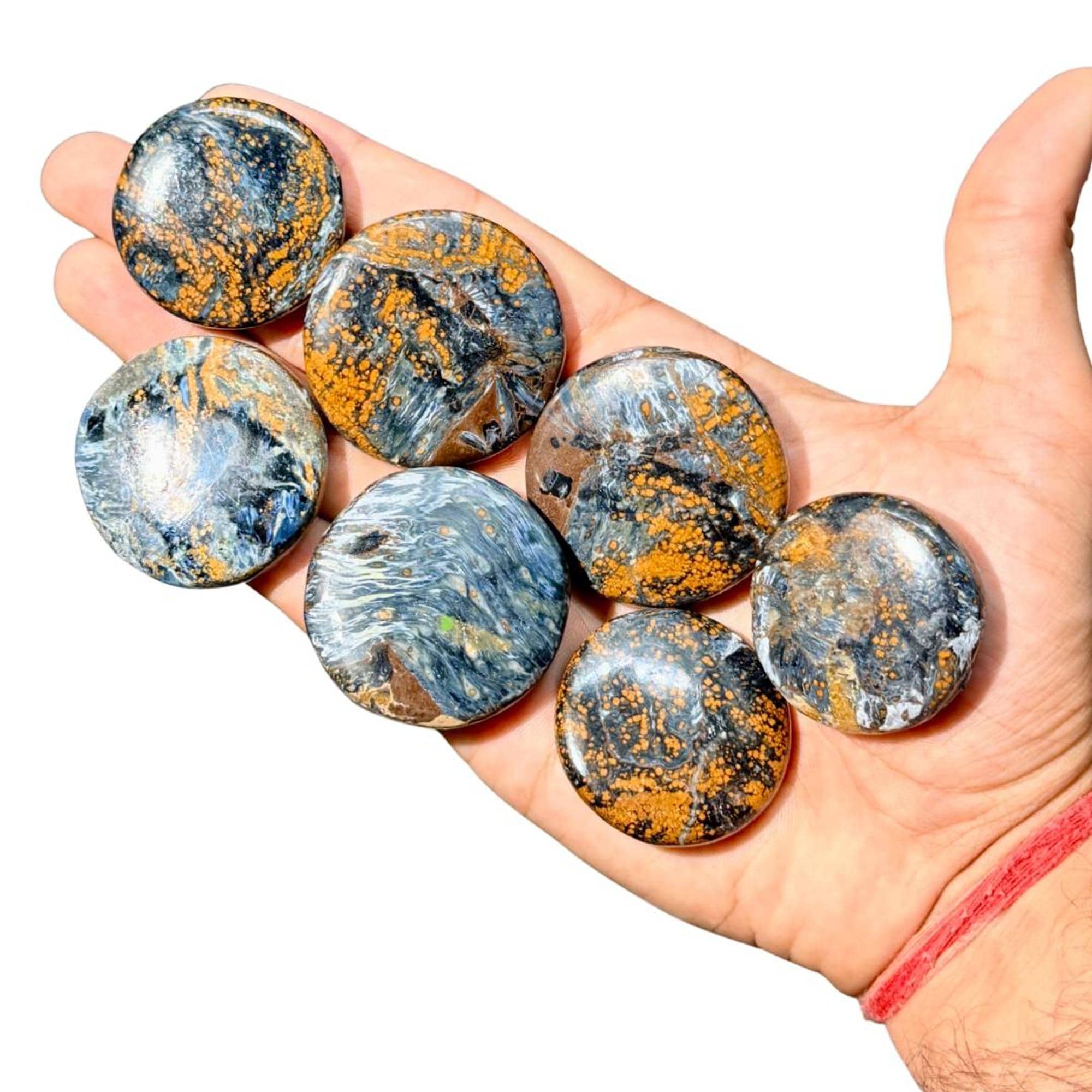
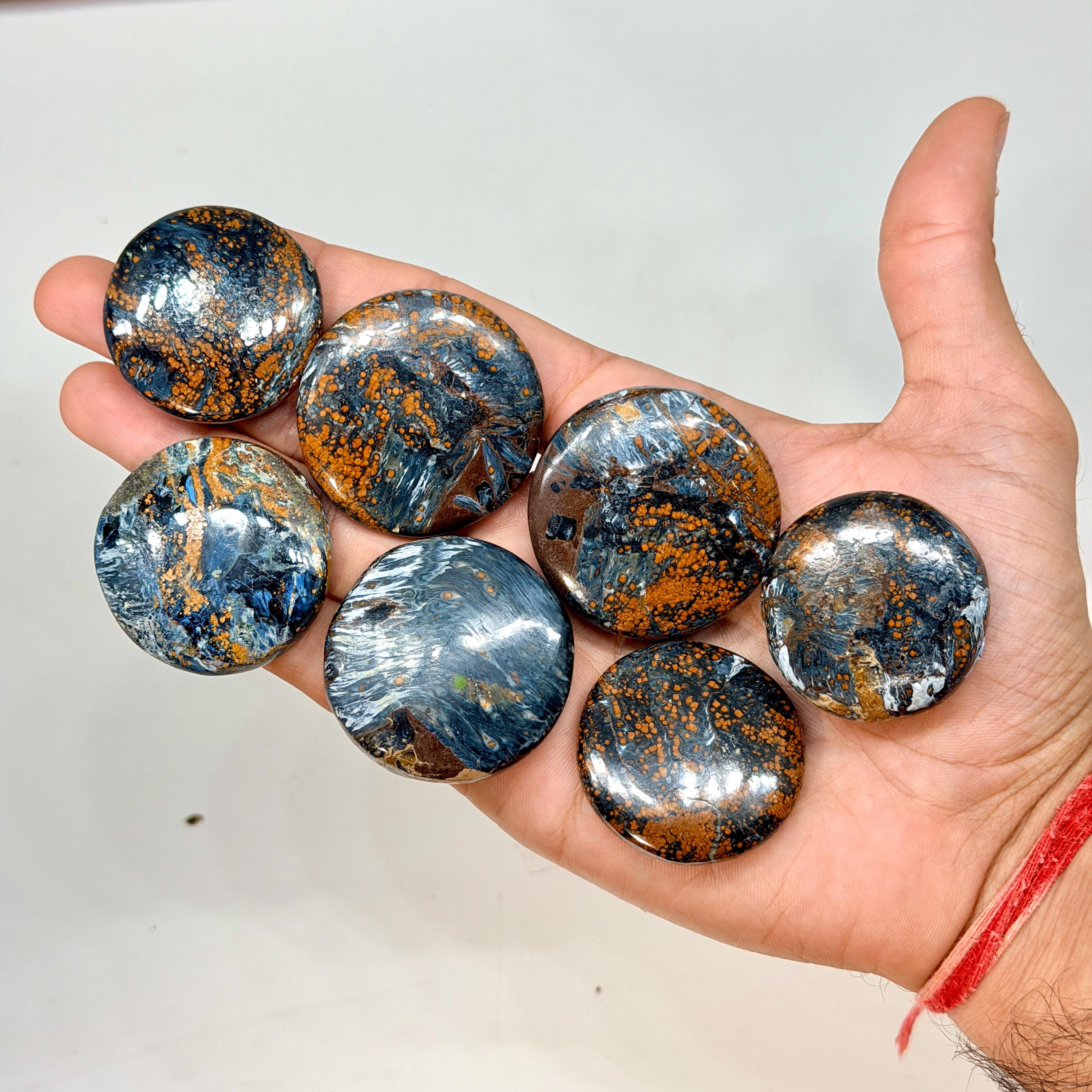
The blue-grey in pietersite is crocidolite that silica has replaced but iron in the fibres hasn't yet oxidised, the same chemistry that gives some tiger's eye a blue cast before it's called hawk's eye. The gold, red and brown streaks running through the same stone are iron oxides, limonite and hematite, that stained the fibres where groundwater carrying dissolved iron reached them as the rock cemented back together. Because the breccia mixes fragments unevenly, one piece can carry both colours in tight, swirling bands, which is part of why no two pieces of pietersite look quite alike.
A stone named after the man who found it
Pietersite is a young name as minerals go. It was found in Namibia (then South West Africa) in the early 1960s by a prospector named Sid Pieters, and the stone was named after him not long after. That original Namibian material, mined near the town of Outjo, tends toward blue and blue-grey with only patches of gold, and it's still considered the finer of the two sources by collectors. A second deposit was found later in Hunan province in China, which now supplies most of what reaches the market; Chinese pietersite runs warmer overall, with more gold and red against the blue. Both are the same mineral story, just with different balances of unoxidised and oxidised iron in the rock that got broken.
Buying it
Because pietersite is fundamentally quartz-replaced fibre, it takes a high polish and is durable enough for everyday jewellery and handling, much like tiger's eye. What varies piece to piece is how strong and directional the chatoyancy is: some material shows a tight, obvious swirl, while more fractured or fine-grained pieces give a softer, hazier shimmer. It's worth turning a piece slowly in good light before buying, the way you would with any chatoyant stone, since photographs rarely capture the movement. Spheres show the storm pattern especially well because the curved surface catches light from every fragment at once as it turns; we cover how that shape is cut and polished in how a crystal sphere is made. Pietersite is also cut into palmstones, cabochons and freeform tumbles, always oriented by eye so the strongest swirl faces up.
Not to be confused with
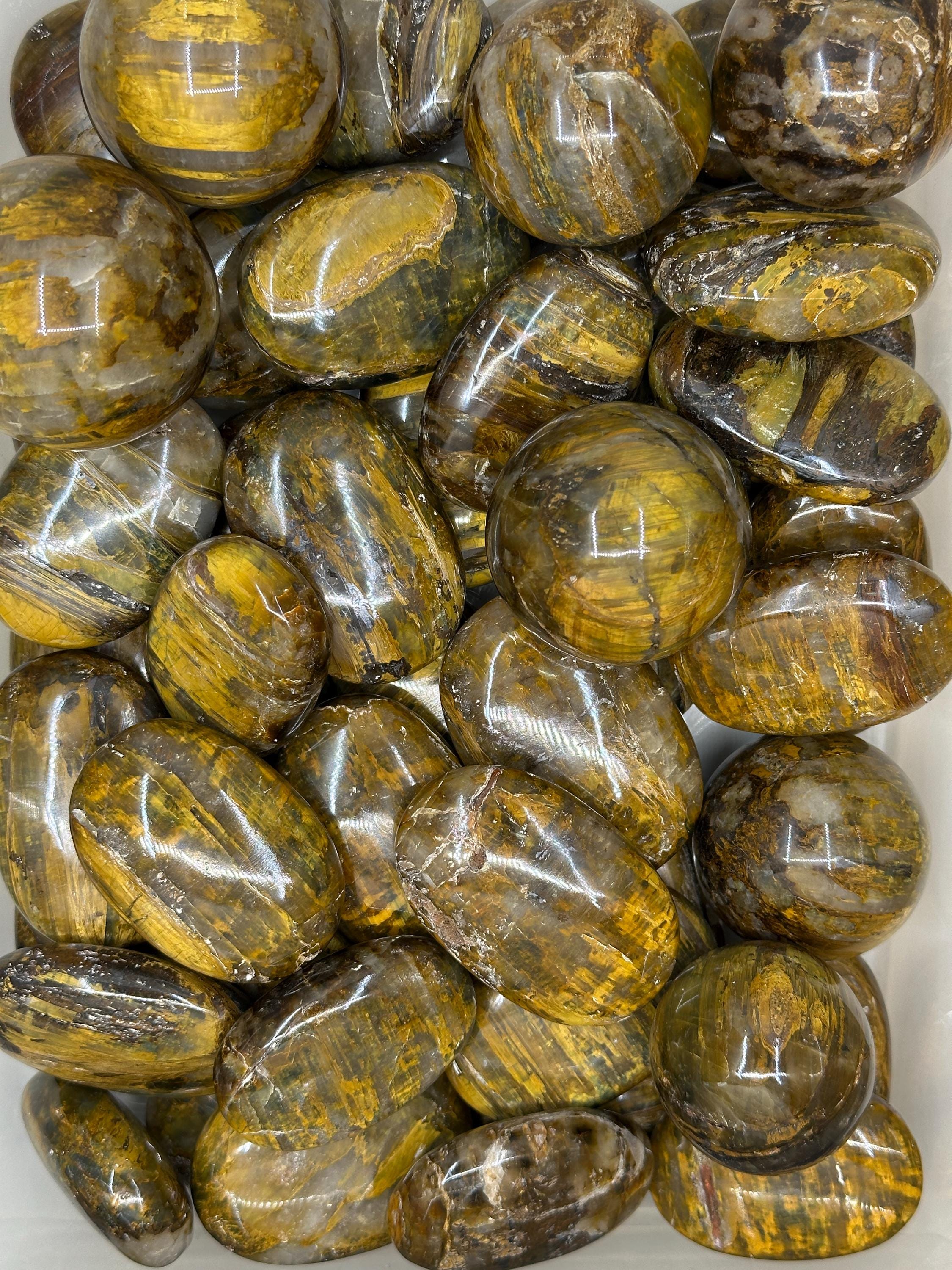
Pietersite is sometimes sold loosely as "blue tiger's eye" or muddled with ordinary hawk's eye, which is just unoxidised, unbroken crocidolite-quartz with a plain blue band rather than a multidirectional swirl. The giveaway is the pattern: if the chatoyancy moves as one straight band when you tilt the stone, it's tiger's eye or hawk's eye; if it breaks into separate streaks heading in different directions, with visible fragment boundaries under a loupe, it's pietersite.