Garnet vs ruby: how to tell two red stones apart
Garnet and ruby are both deep red and both used in jewellery for centuries, but one is corundum and the other a whole family of minerals. How to tell them apart.
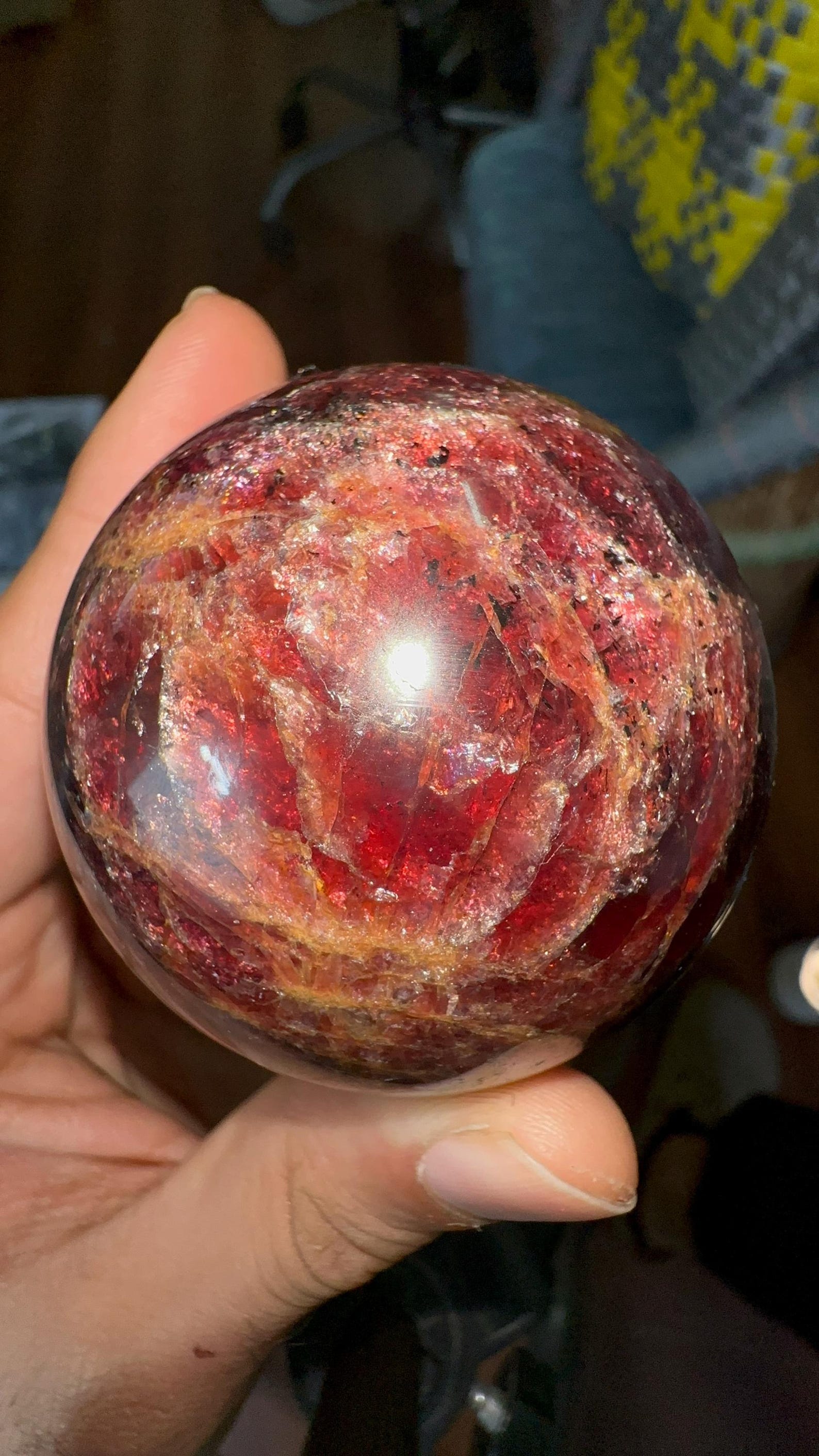
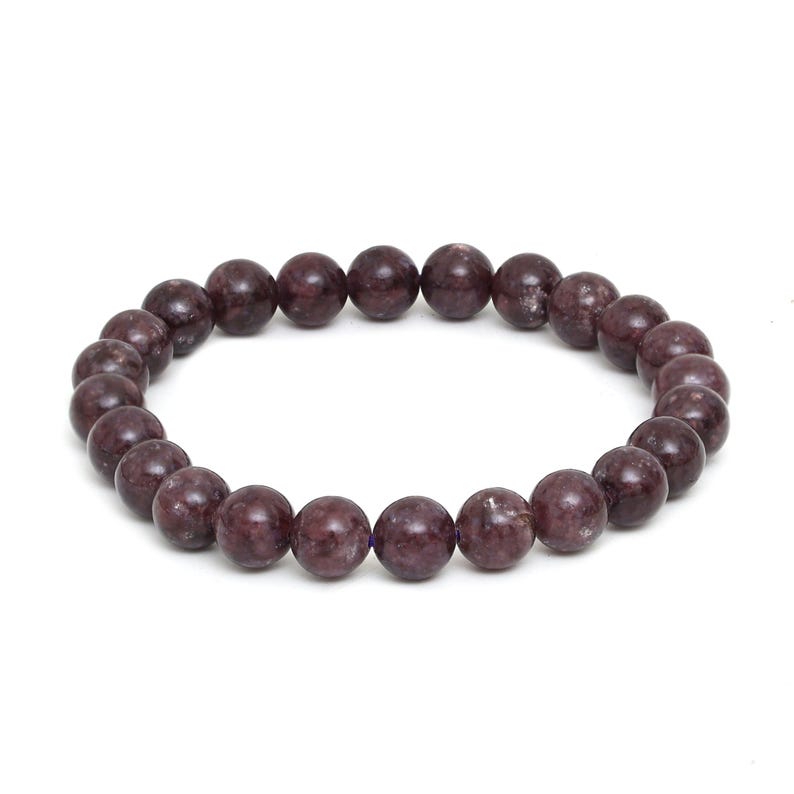
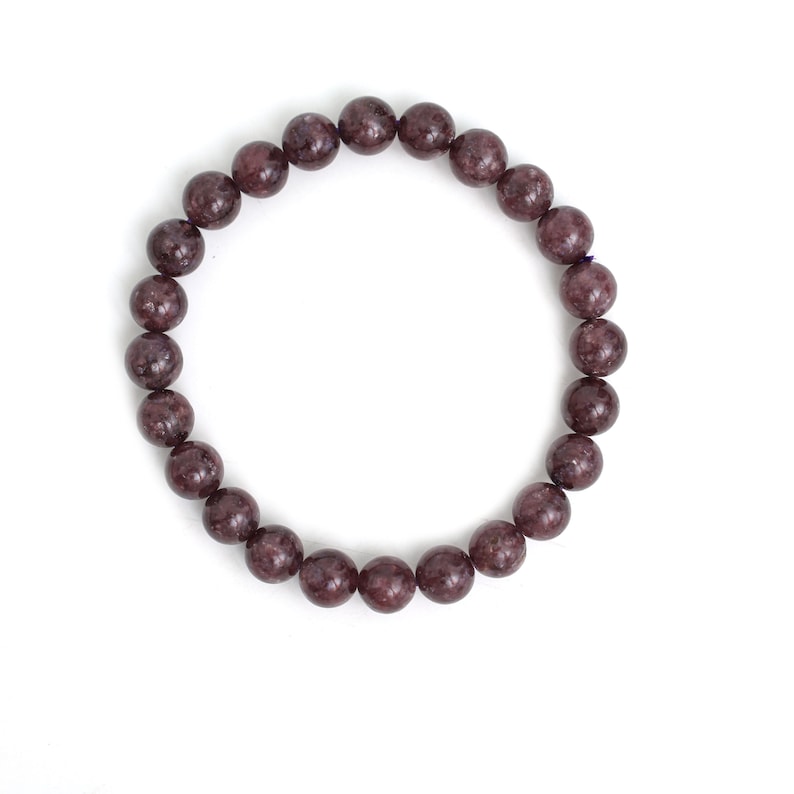
A dark red bead strung on an old necklace, or a rough red crystal pulled out of a parcel of mixed stone, gets called ruby more often than it deserves. Most of the time, especially when the piece is cheap, deeply coloured and plentiful, it's garnet. The two have been mistaken for each other for so long that garnet's own name comes from a word for pomegranate seed, chosen because the crystals looked like the little red grains inside the fruit, at a time when "ruby" was used loosely for almost any transparent red stone at all.
One is a mineral group, the other a single mineral
Ruby is the red variety of corundum, aluminium oxide, and nothing else. Every ruby on earth, however it's coloured or where it was mined, is the same mineral: corundum with a trace of chromium standing in for some of the aluminium atoms, which is what pushes its colour into red rather than the blues and yellows of ordinary sapphire (also corundum, just without the chromium, or with other trace elements instead).
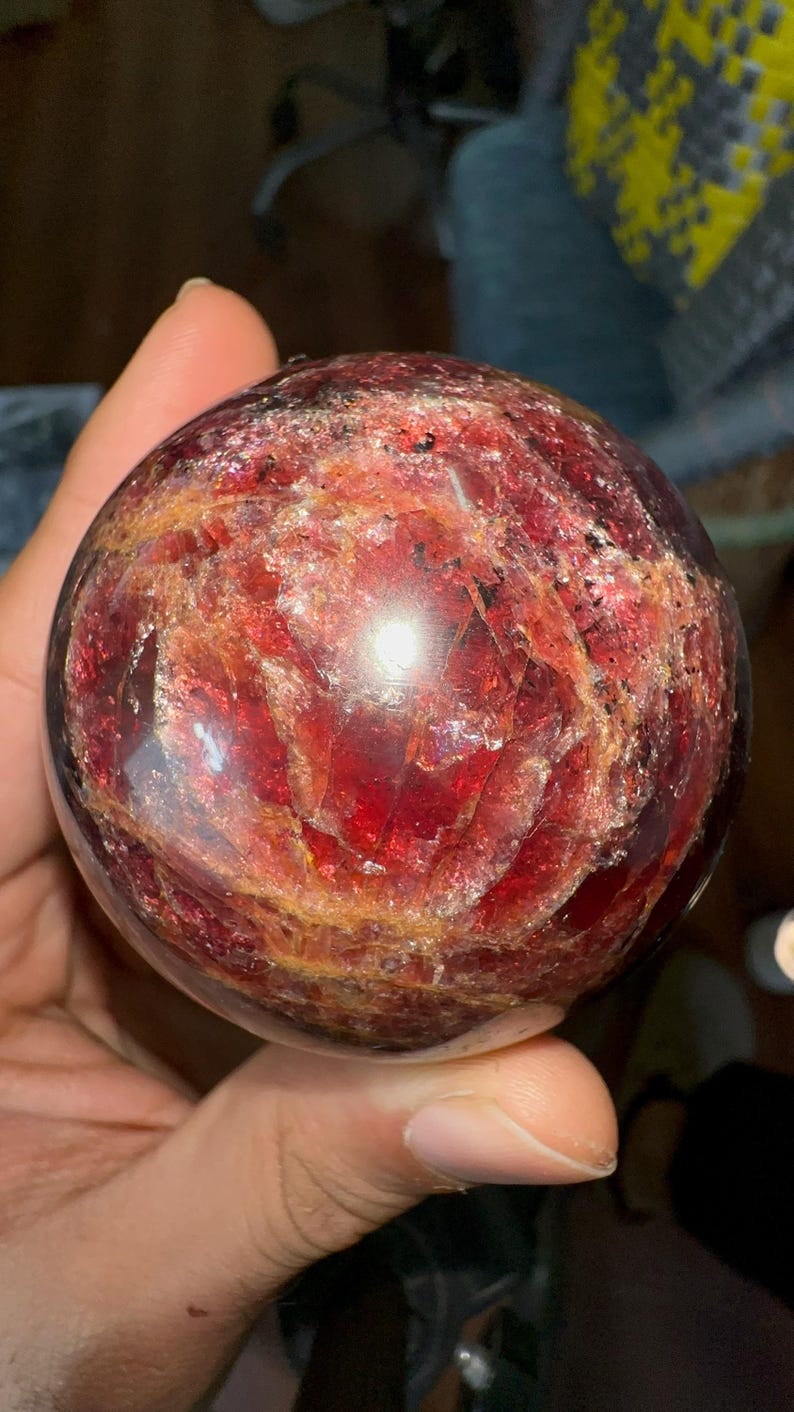
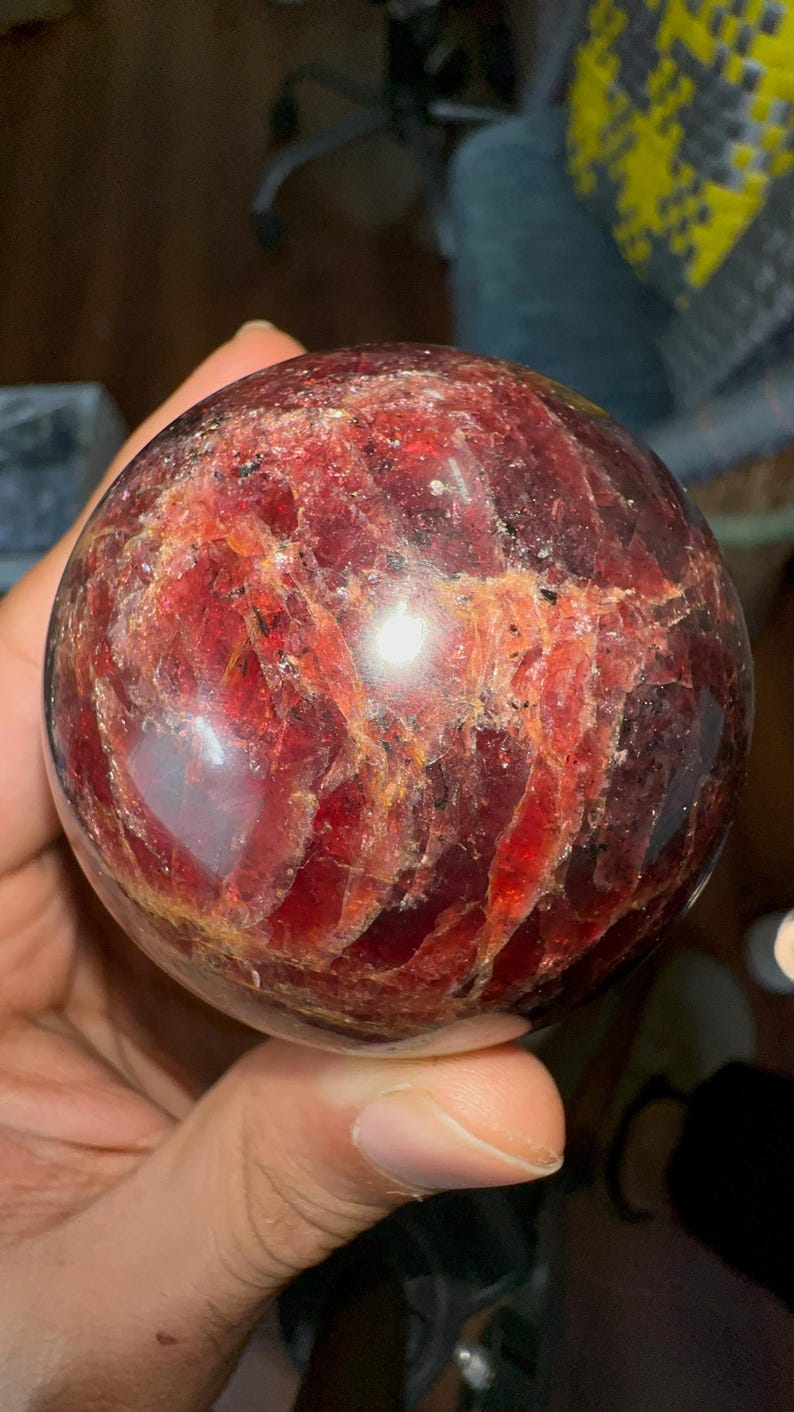
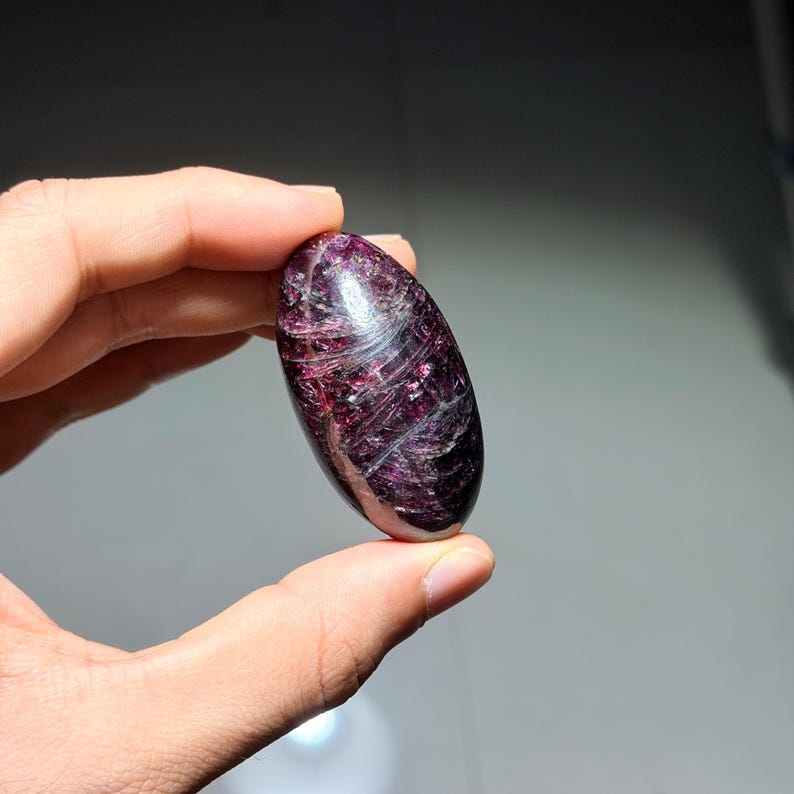
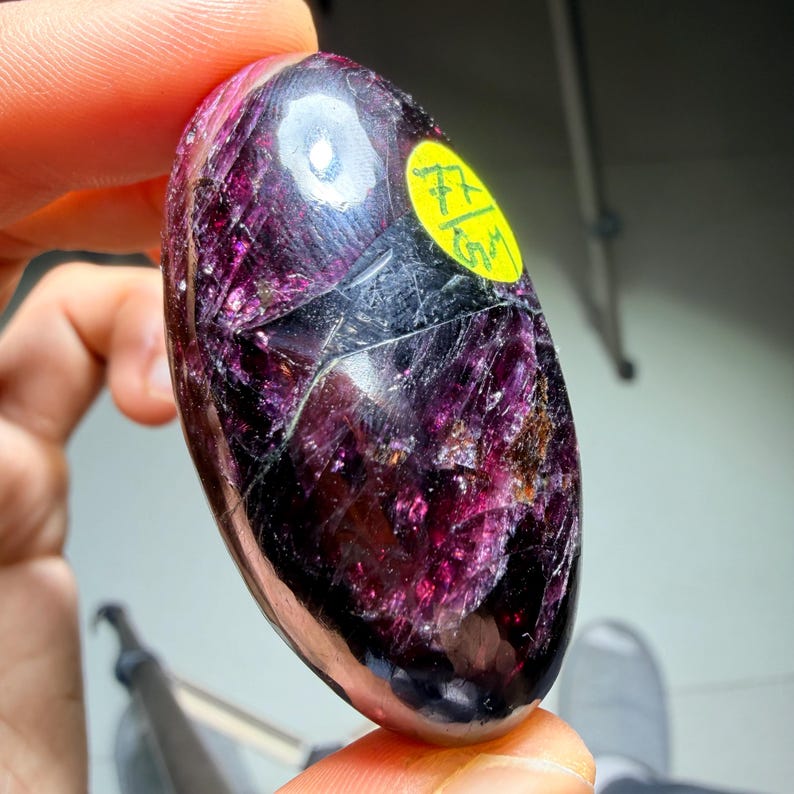
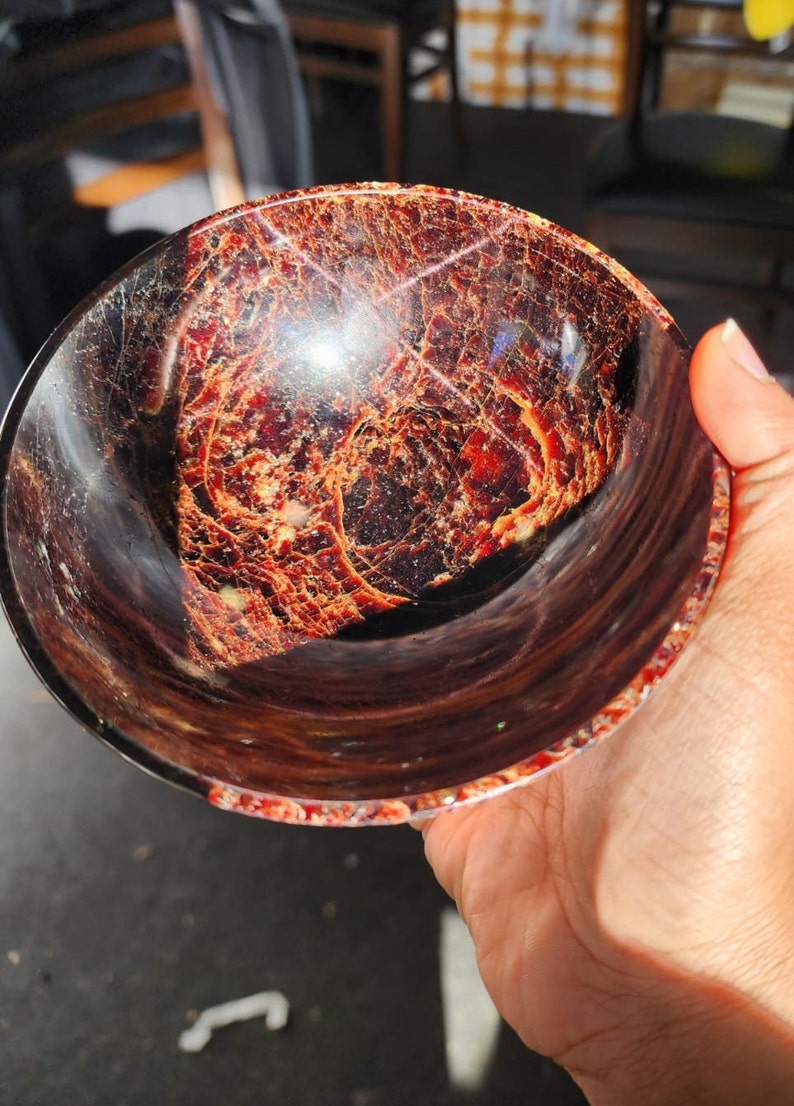
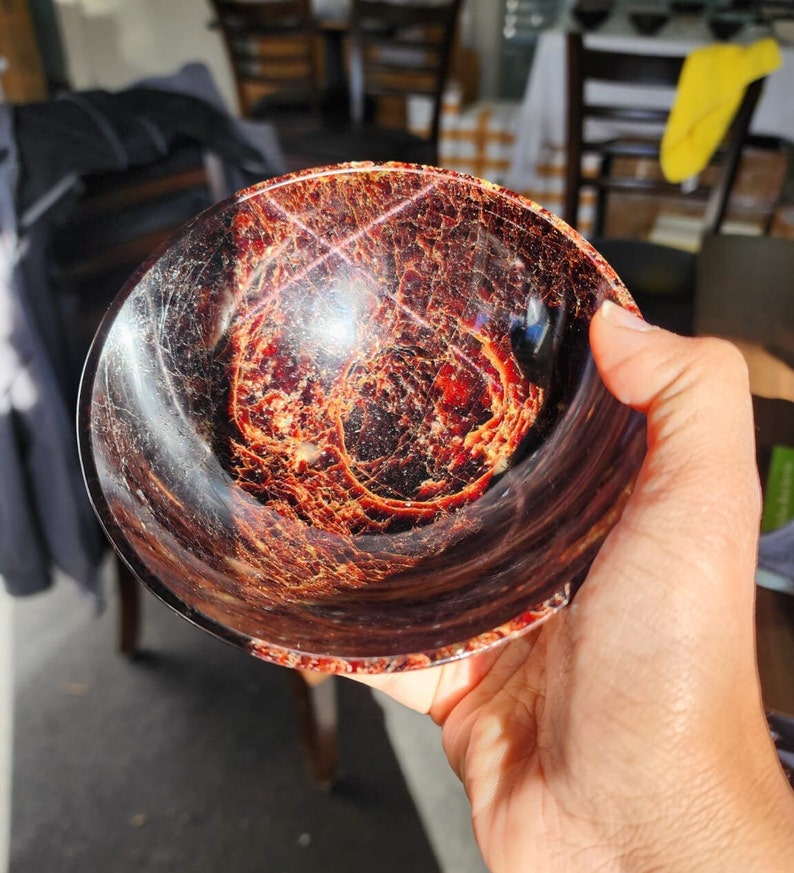
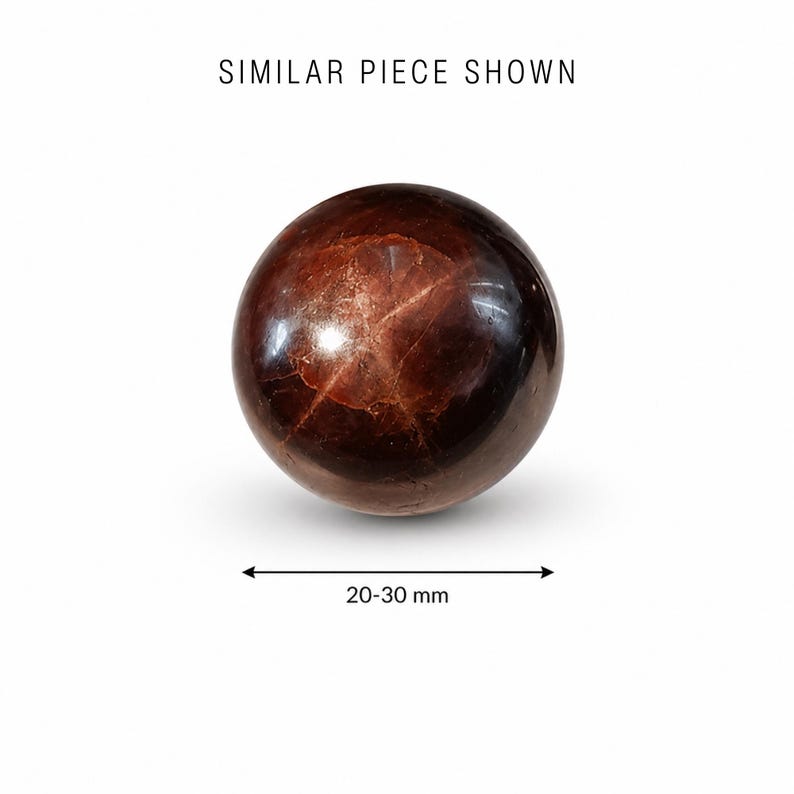
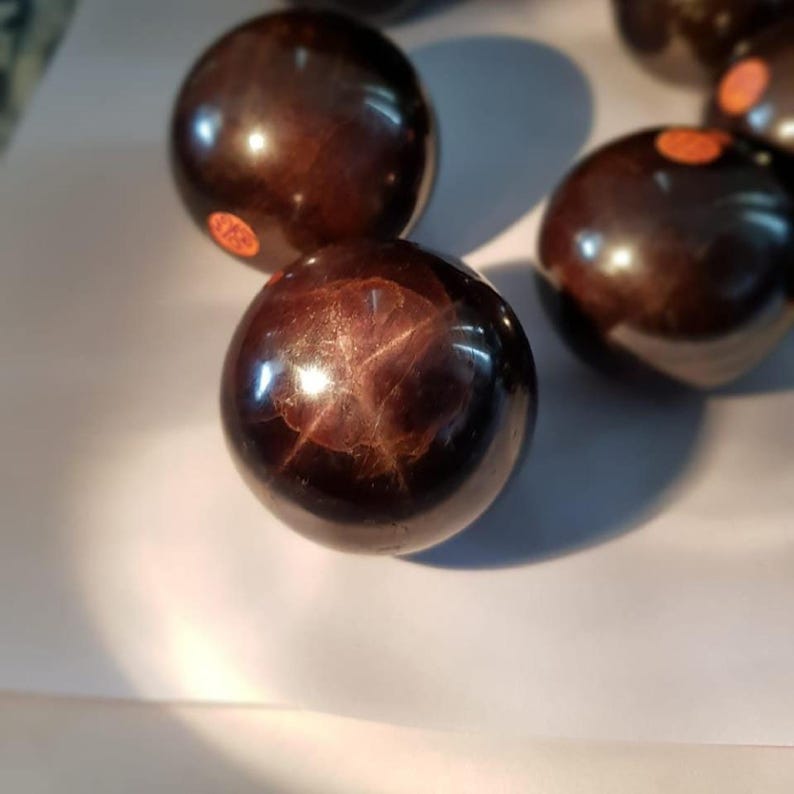
Garnet isn't one mineral. It's a family of silicates that all share the same crystal structure but differ in which metal sits inside it: iron gives almandine, magnesium gives pyrope, manganese gives spessartine, calcium and chromium give the rare green uvarovite, and so on. The deep red garnet sold as jewellery and rough is usually almandine, pyrope, or a mix of the two called rhodolite, and it's that red almandine-pyrope garnet that most often gets mistaken for ruby.
A quick hardness and weight check
Corundum is 9 on the Mohs scale, second only to diamond. Garnet sits at 6.5 to 7.5, hard enough for everyday jewellery but a clear step below ruby. If you have a loose stone and something to test with, a steel file (around 6.5) will just mark garnet but won't touch a genuine ruby.
Weight tells you something too. Ruby is noticeably dense for its size, close to 4 grams per cubic centimetre, while red garnet runs lighter, closer to 3.8 to 4.3 depending on which garnet it is. The difference is small enough that it's not a reliable test on its own, but combined with hardness and the checks below it adds up.
Crystal shape gives it away faster than colour
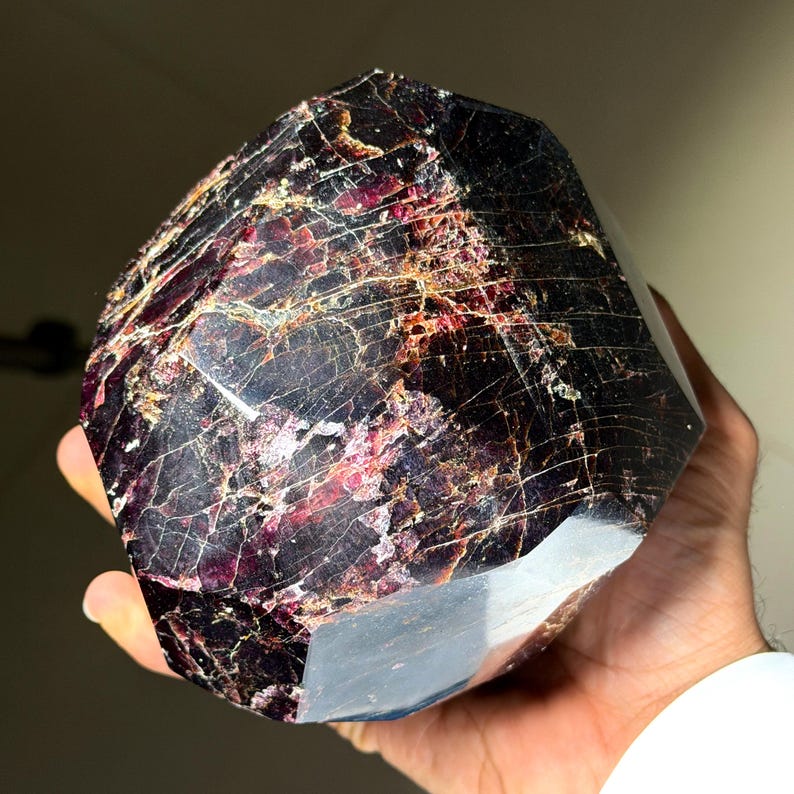
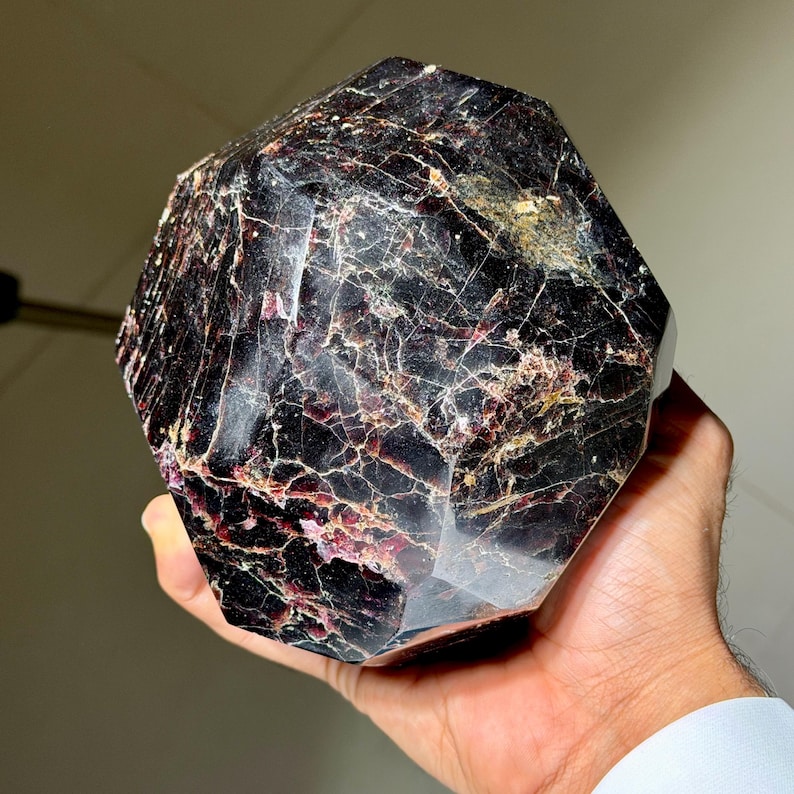
If you're looking at rough rather than a cut or tumbled stone, the crystal habit is usually the fastest tell. Ruby crystallises as six-sided, barrel-shaped or tabular hexagonal prisms, the same basic form corundum always takes. Garnet grows as rounded, many-sided crystals, classically a twelve-sided rhombic dodecahedron or a twenty-four-sided trapezohedron, shapes that look almost moulded compared to ruby's flatter, more angular prisms. A handful of rough garnet looks like a bag of small, rounded red balls with facet-like faces all over them; a parcel of ruby rough looks like flattened, hexagonal chips.
Colour and clarity aren't a reliable test
This is where most mix-ups happen, because both stones cover a lot of the same ground. Fine ruby is a pure, slightly purplish red, famously likened to pigeon's blood at its best, but plenty of ruby is a duller brownish or purplish red, and opaque, included material (which is most of what's sold as rough or in carvings, including ruby in fuchsite and the other ruby mixtures we've written about in ruby in kyanite, fuchsite or zoisite) can look almost identical in tone to a dark garnet. Almandine garnet is typically a brownish, slightly orange-tinted red, while pyrope leans toward a pure, saturated red that can look very close to a good ruby at a glance. Neither colour nor transparency separates the two reliably enough to trust on its own, which is exactly why garnet has stood in for ruby in jewellery, trade and folklore for thousands of years without most buyers knowing the difference.
Garnet isn't only red
One reason garnet confuses people less once they've seen more of it: red is just the most common colour, not the only one. Spessartine runs orange to a bright orange-red sometimes called mandarin garnet. Grossular ranges from honey-coloured to a vivid green called tsavorite. Andradite includes the black melanite and the rare, intensely green demantoid. Pyrope and almandine, the two garnet species that get mistaken for ruby, are the deep reds most people picture when they hear the word. All of them share the same rounded crystal habit and the same basic hardness range, whatever colour the particular metal inside happens to produce.
Where they come from
Garnet is mined widely, including in India, where almandine and other garnets turn up in the same metamorphic belts that produce much of the country's kyanite and other mica-schist minerals. Ruby's major sources are more concentrated: Myanmar has produced some of the world's finest for centuries, with Mozambique now a major modern source, and smaller amounts coming from Thailand, Sri Lanka and elsewhere, India included on a much smaller scale. That difference in how widely each is found is part of why garnet has always been the more affordable of the two, even though a fine, richly coloured garnet can still be a striking stone in its own right rather than a cheap substitute for anything.
Buying and caring for both
Both stones are hard enough for daily wear and don't need special handling beyond keeping them away from sharp knocks and harsh chemicals, ruby especially so given how hard and durable corundum is. If you're buying rough or an unfaceted carved piece rather than a certified cut stone, the crystal shape and a simple hardness check will tell you more than colour ever will. And if a deep red stone turns out to be garnet rather than ruby, that's not a disappointment so much as a different, equally real mineral with its own long history, one that just happens to have spent a few thousand years being mistaken for its harder, rarer cousin.