Why India's road quarries are full of crystals
How apophyllite, stilbite, scolecite and cavansite grow inside the Deccan Traps basalt of western India, and why the best specimens come out of ordinary stone quarries.
About 66 million years ago, around the time the dinosaurs died out, western India split open. For several hundred thousand years, lava poured out of long cracks in the ground, flow after flow, until it had buried an area larger than France under grey basalt more than two kilometres thick in places. Geologists call it the Deccan Traps, from the Swedish word for stairs: seen from the side, the stacked lava flows step down the hills of Maharashtra like a staircase.
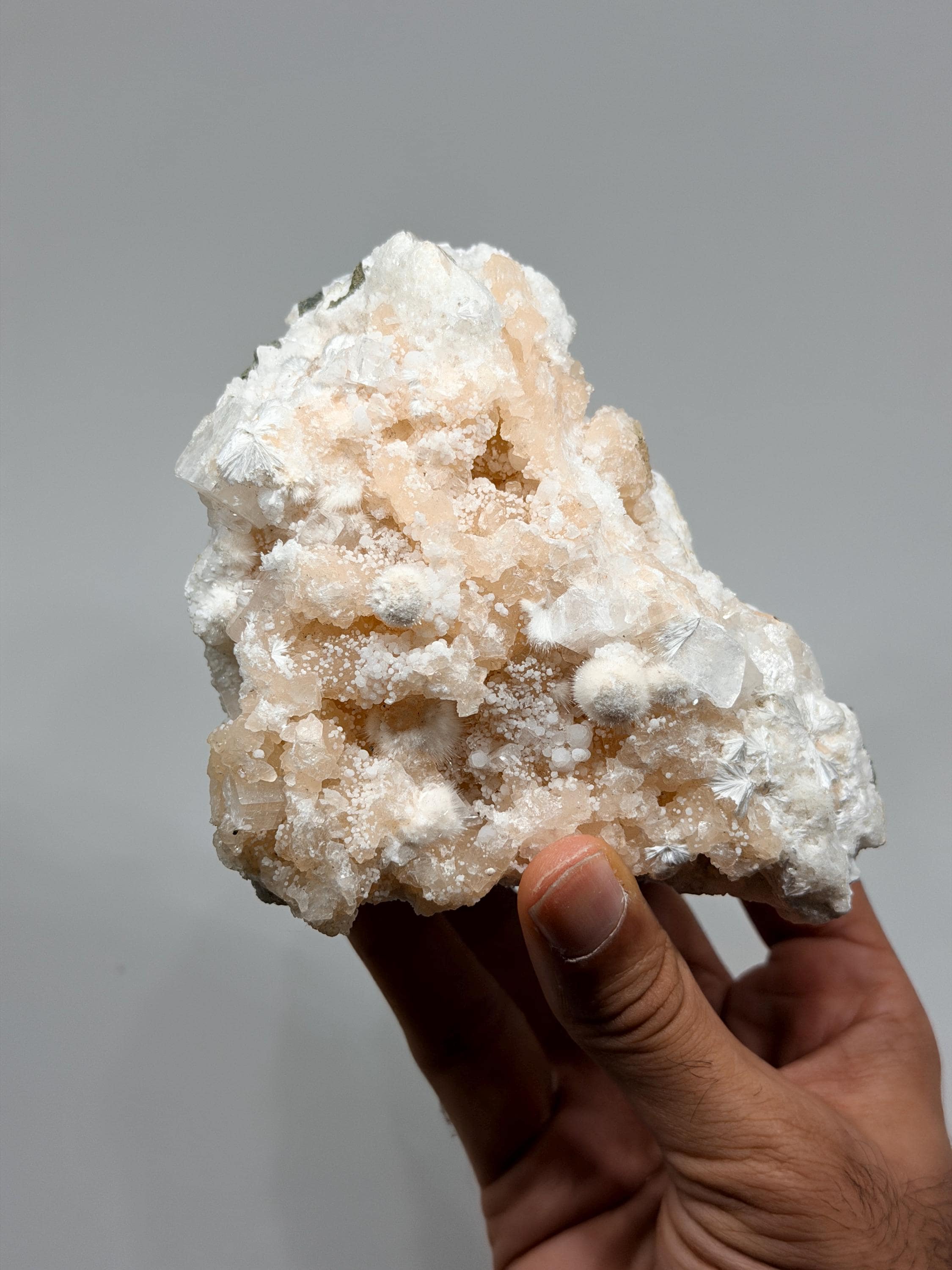
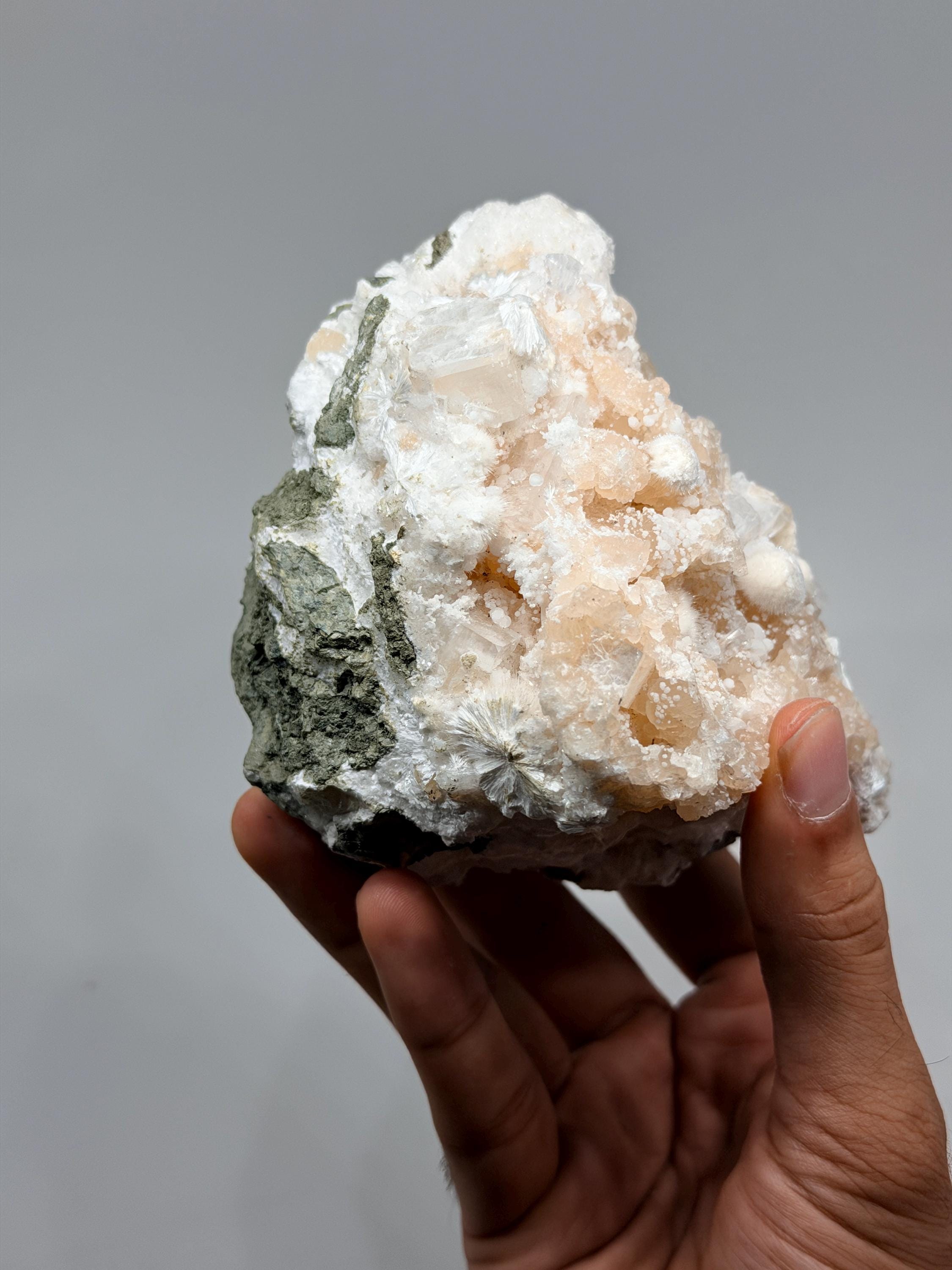
That basalt is the source of most of the apophyllite, stilbite, scolecite and cavansite you'll find anywhere in the world, including most of what's in our apophyllite and zeolite pages.
Bubbles in the lava
Lava is full of gas. As each flow cooled, the gas collected in bubbles and was trapped there, leaving the rock riddled with holes, from pinheads to caves you could stand in. For a long time they were simply empty.
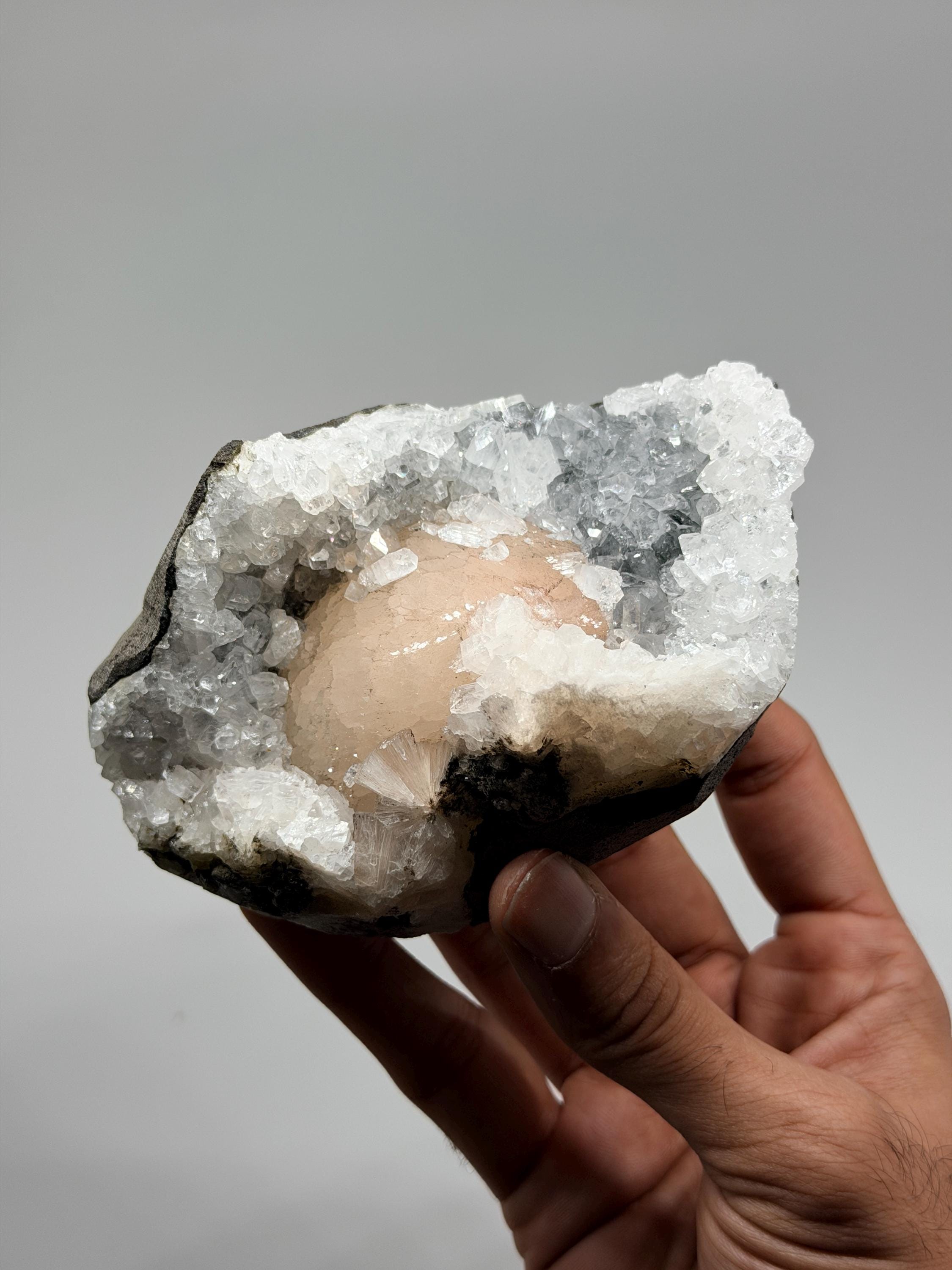
Then water got in. Rain and groundwater, warmed by the still-hot rock, moved slowly through the basalt and dissolved silica, calcium, sodium and potassium from it. Where that water sat in the old gas bubbles and cooled, it left those elements behind as crystals, layer by layer, over thousands of years. Because they grew into open space, with nothing pressing on them, the crystals could take their full shape: sharp, glassy and often perfect.
The minerals that grew this way are mostly zeolites, a family of water-bearing silicates, along with apophyllite, calcite, quartz and a few rarer guests. Which one grew in a given pocket depended on the water's chemistry and temperature at the time, so the same quarry can give very different pockets a few metres apart.
Who's who in a Deccan pocket
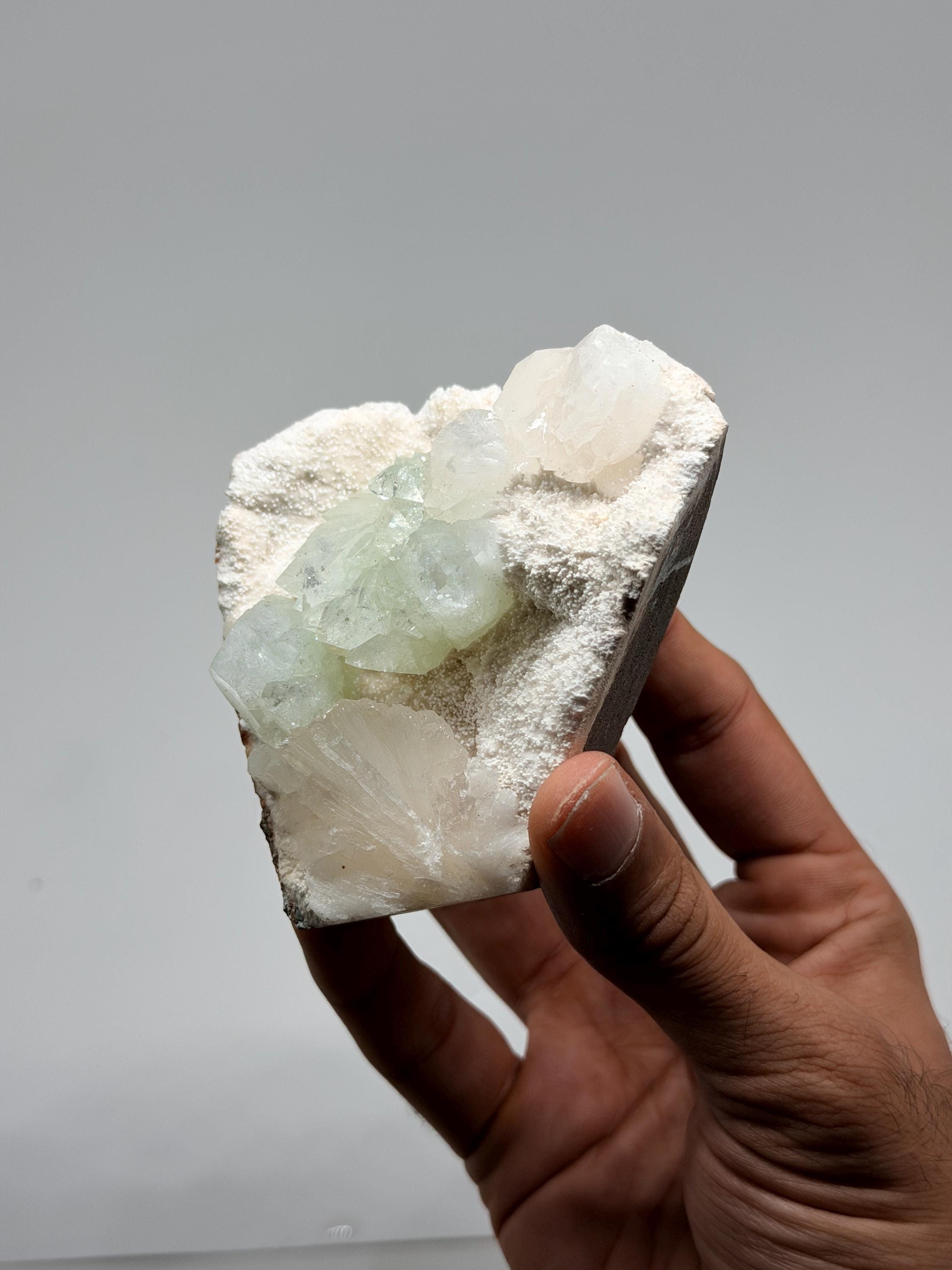
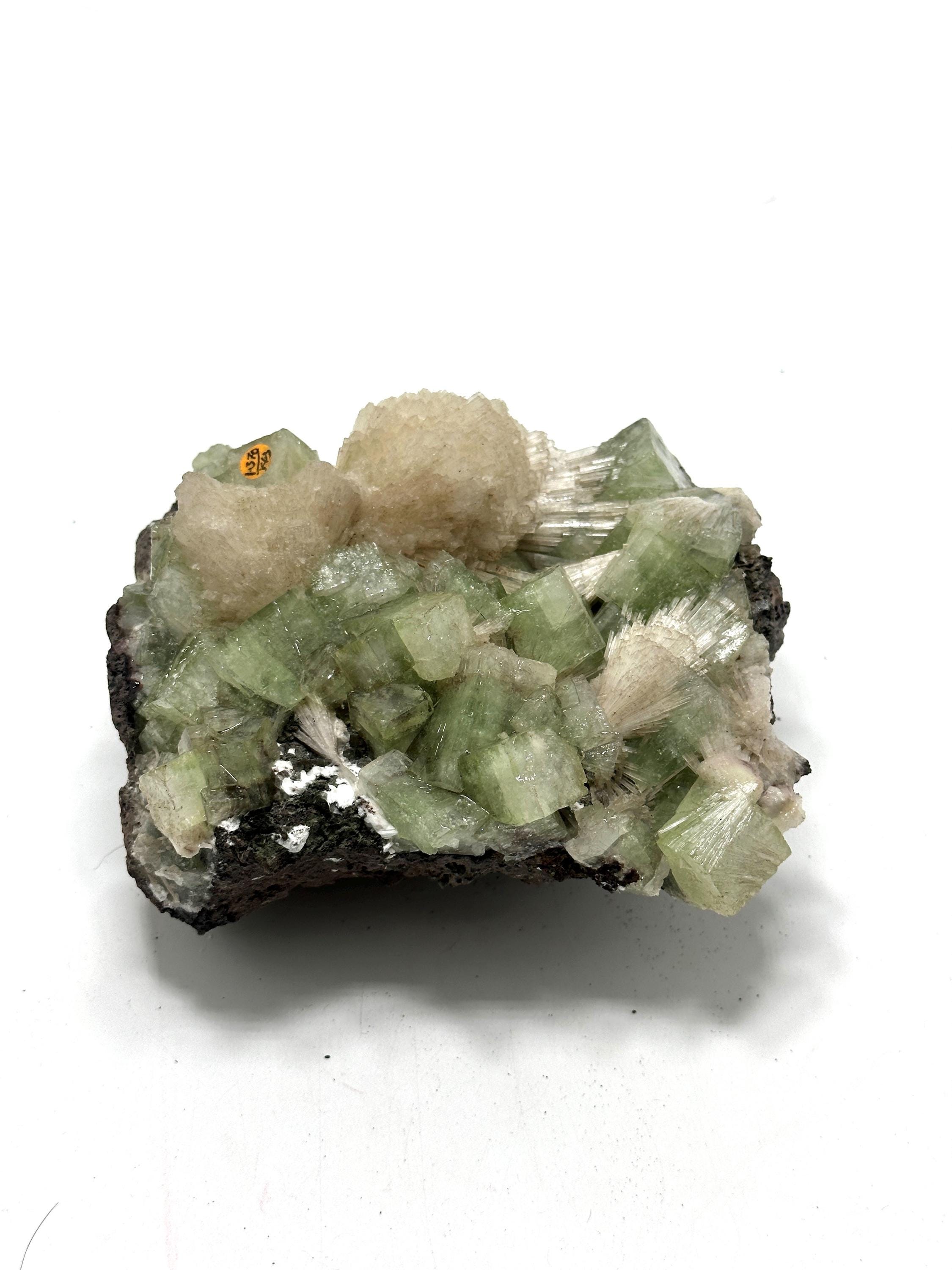
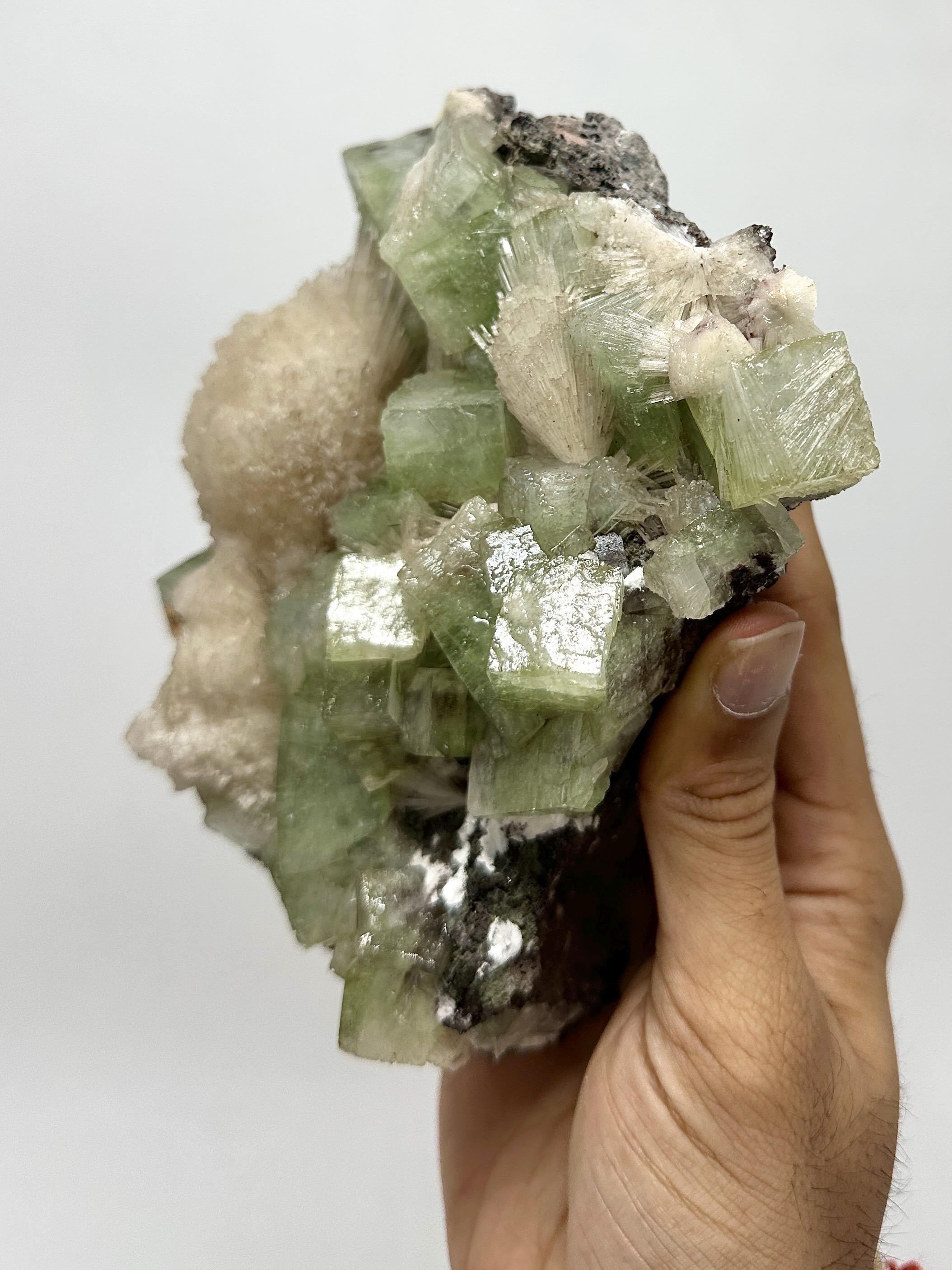
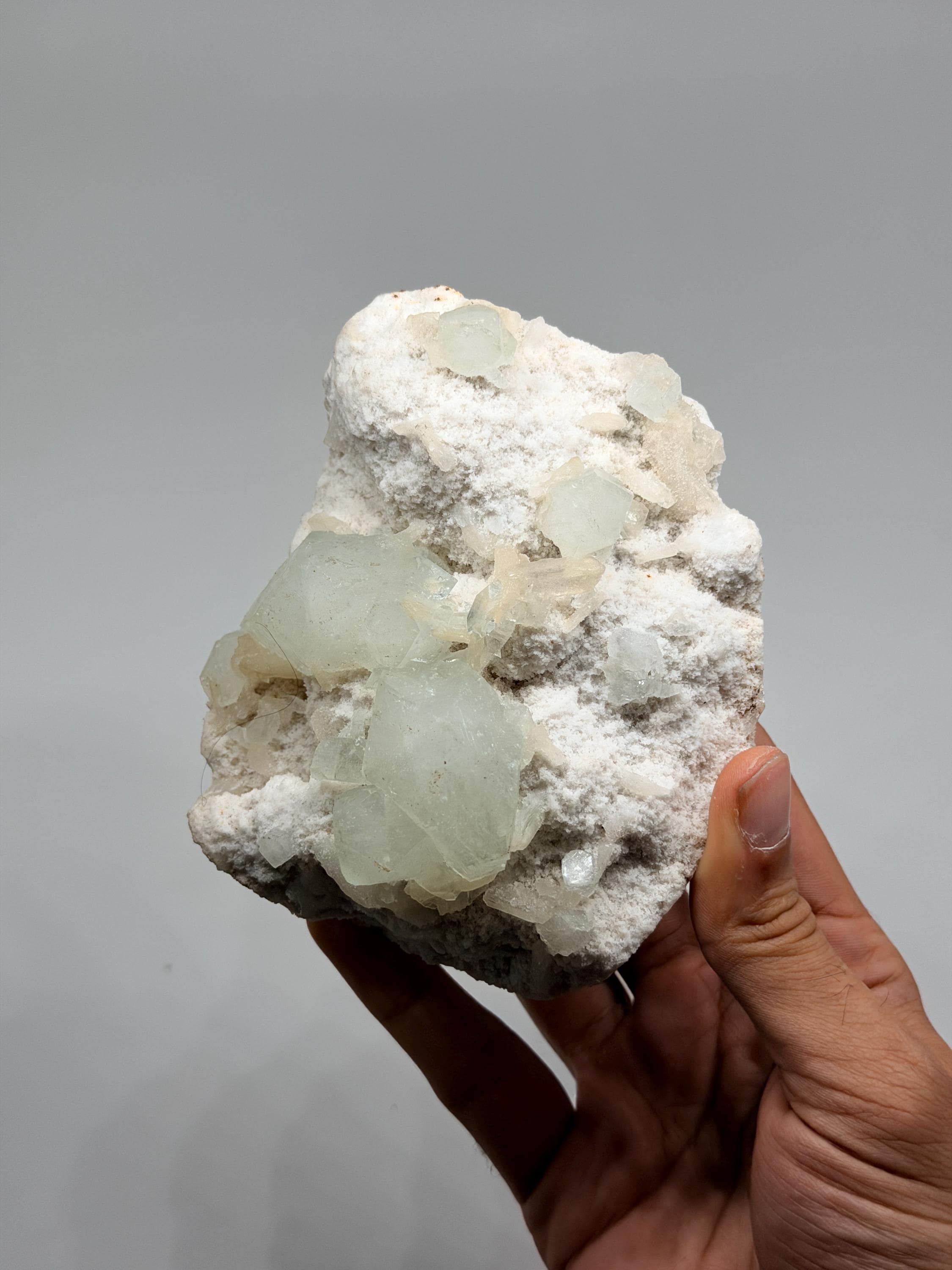
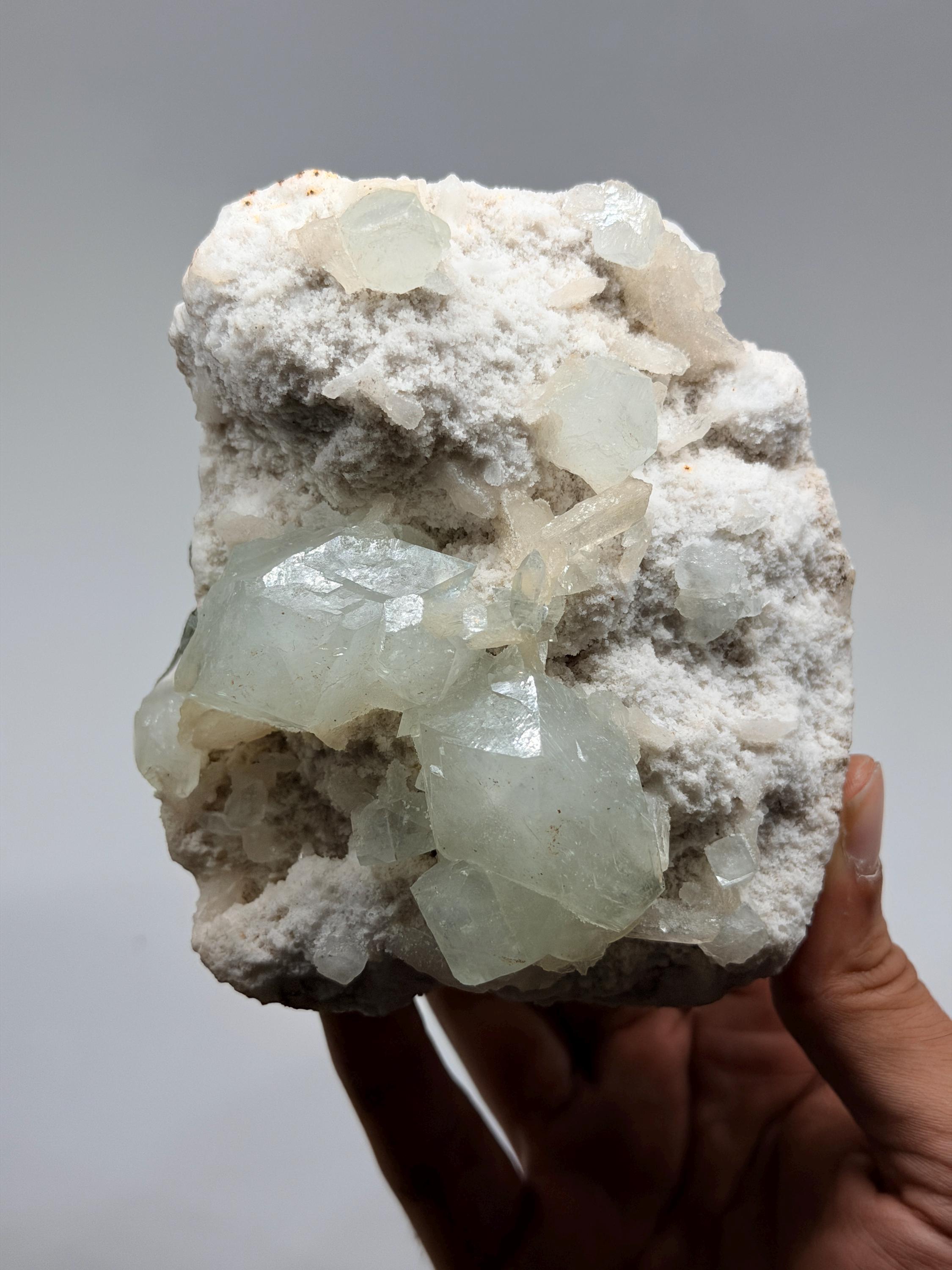
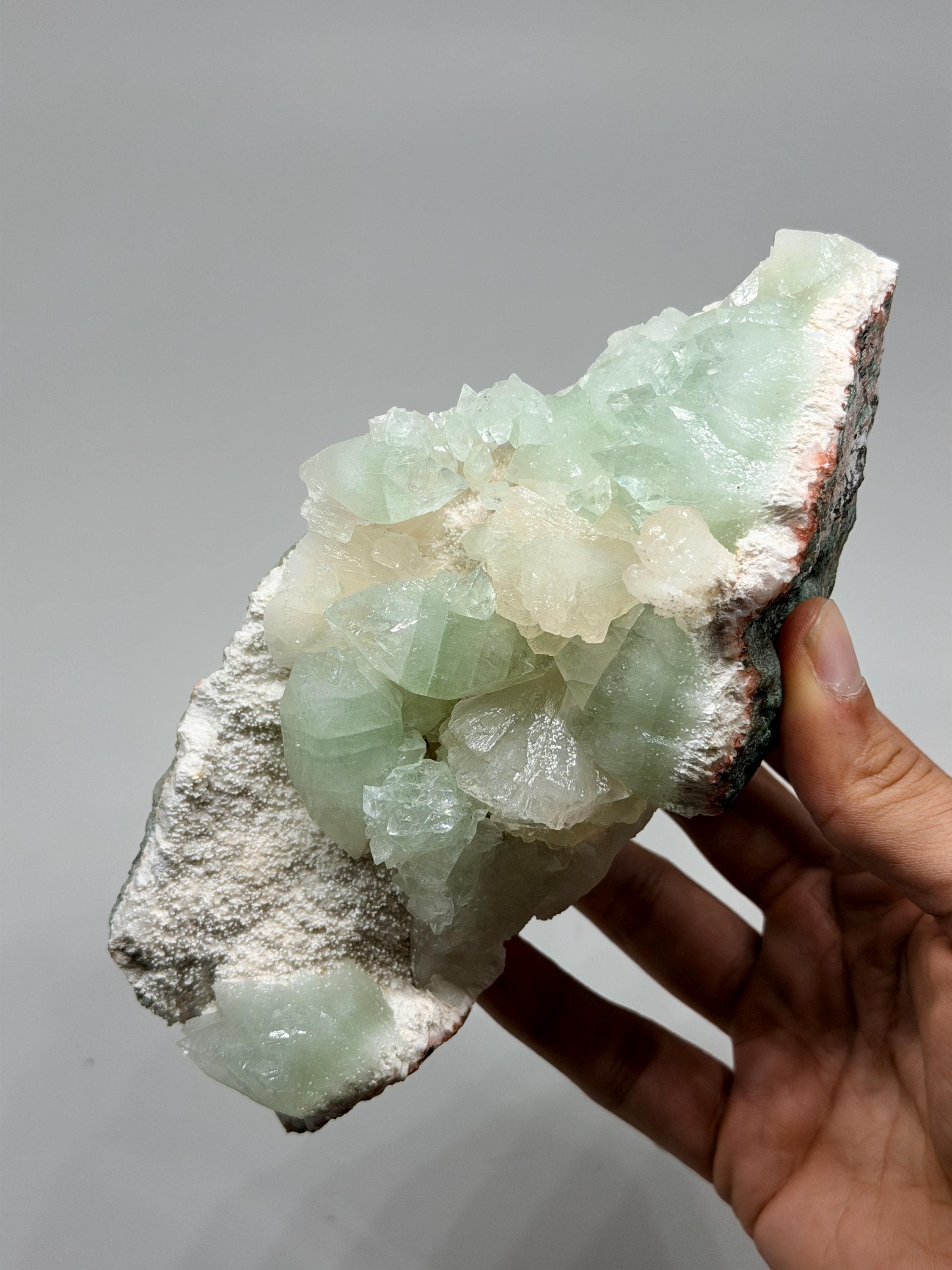
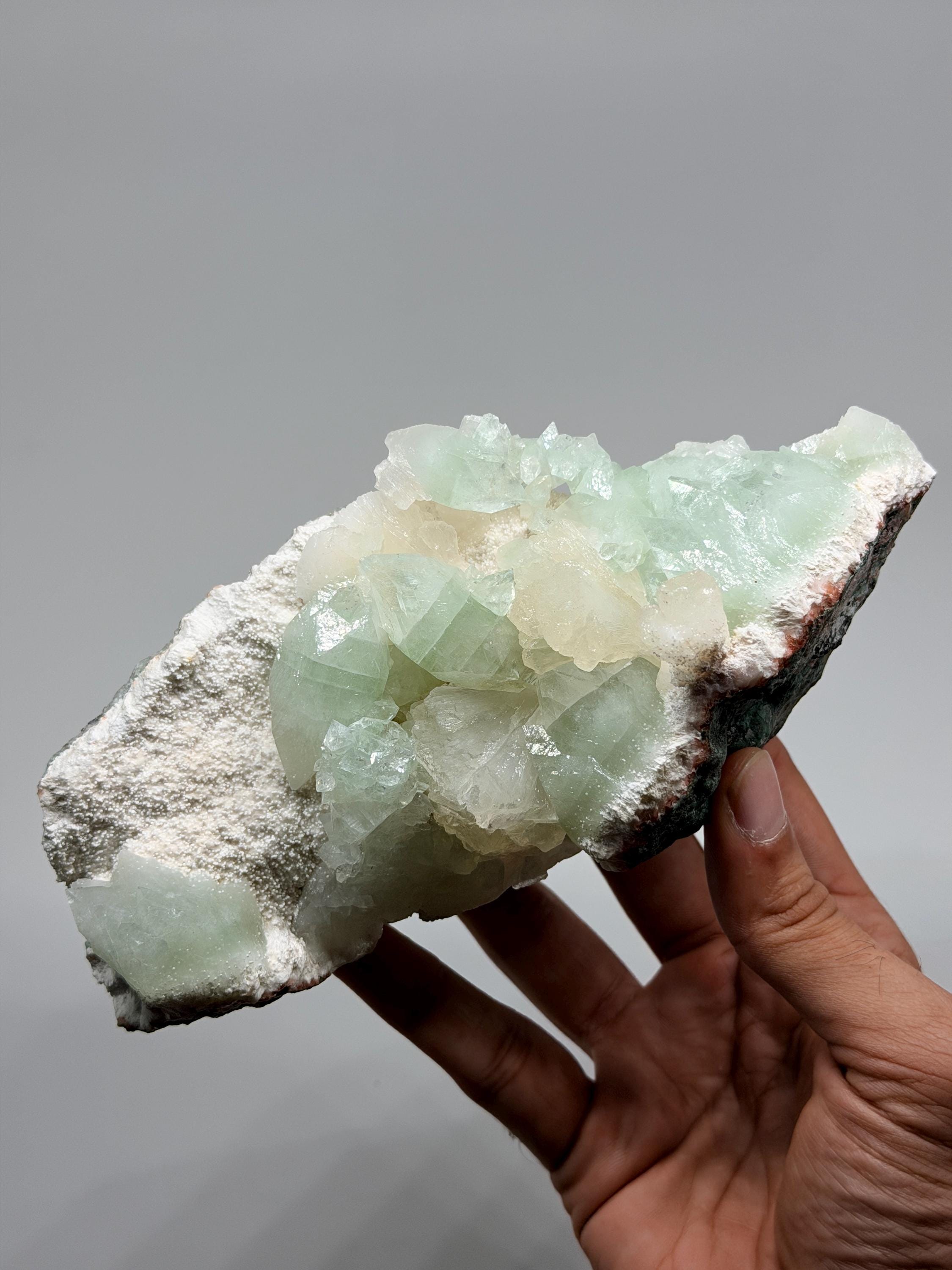
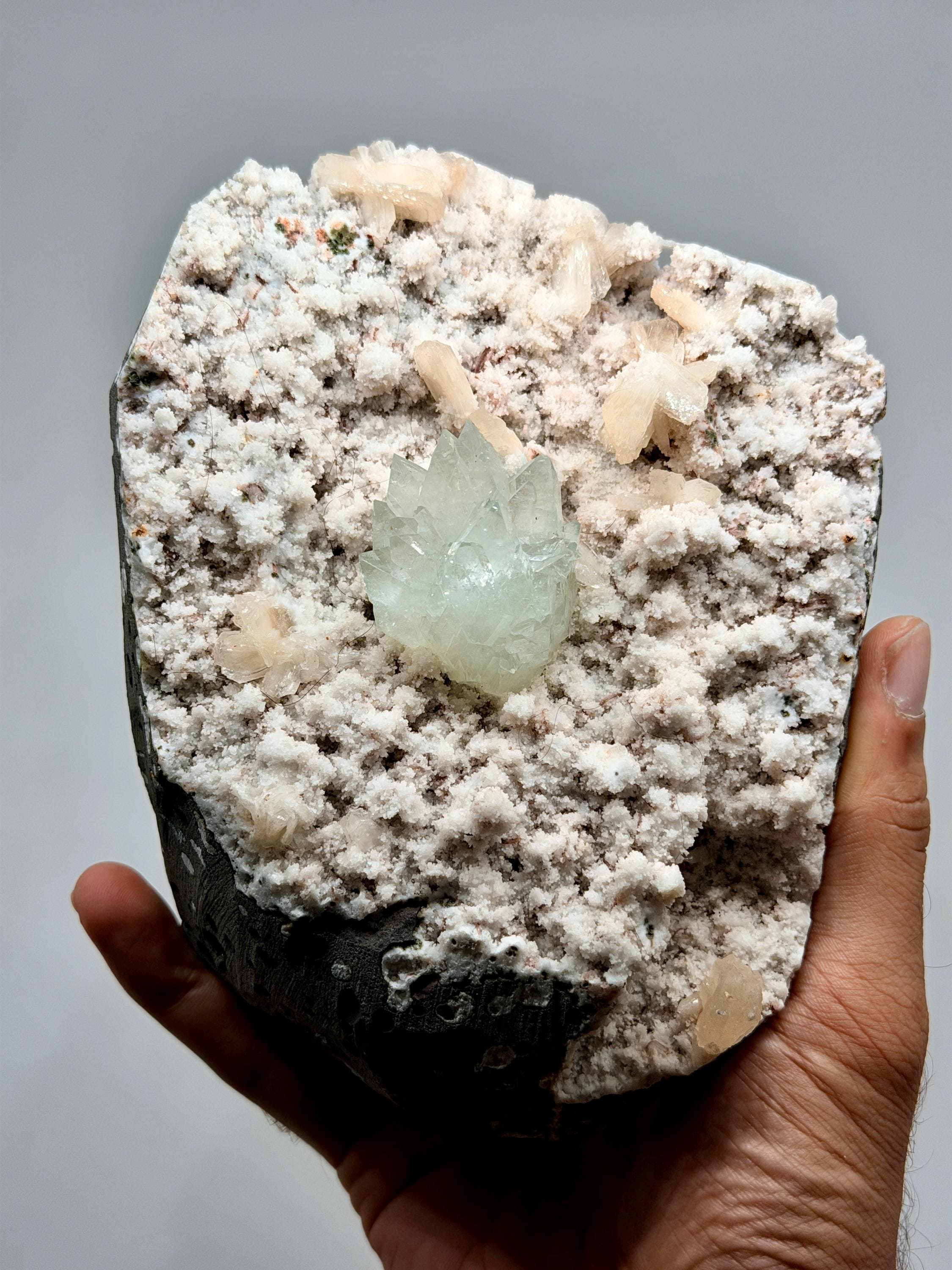
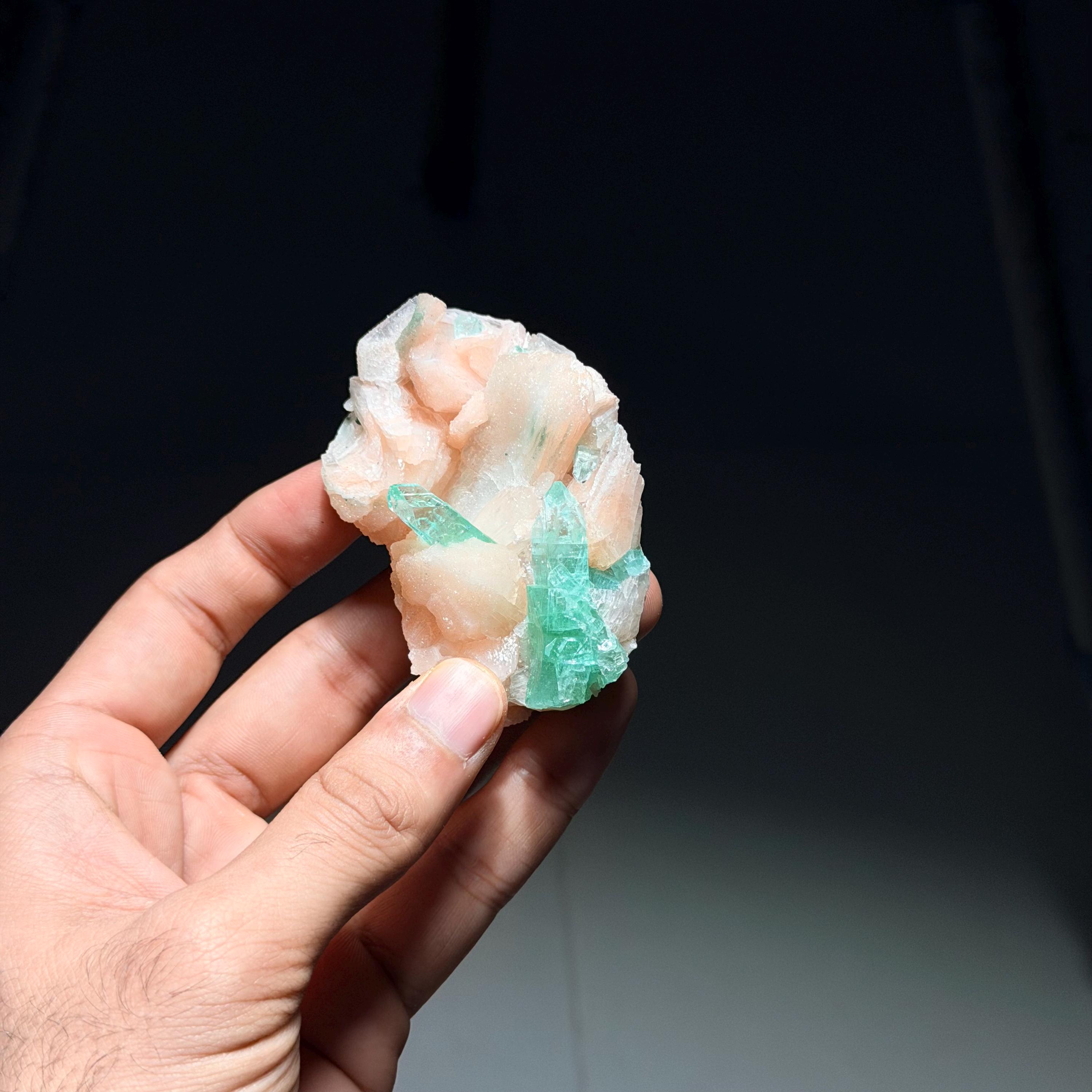
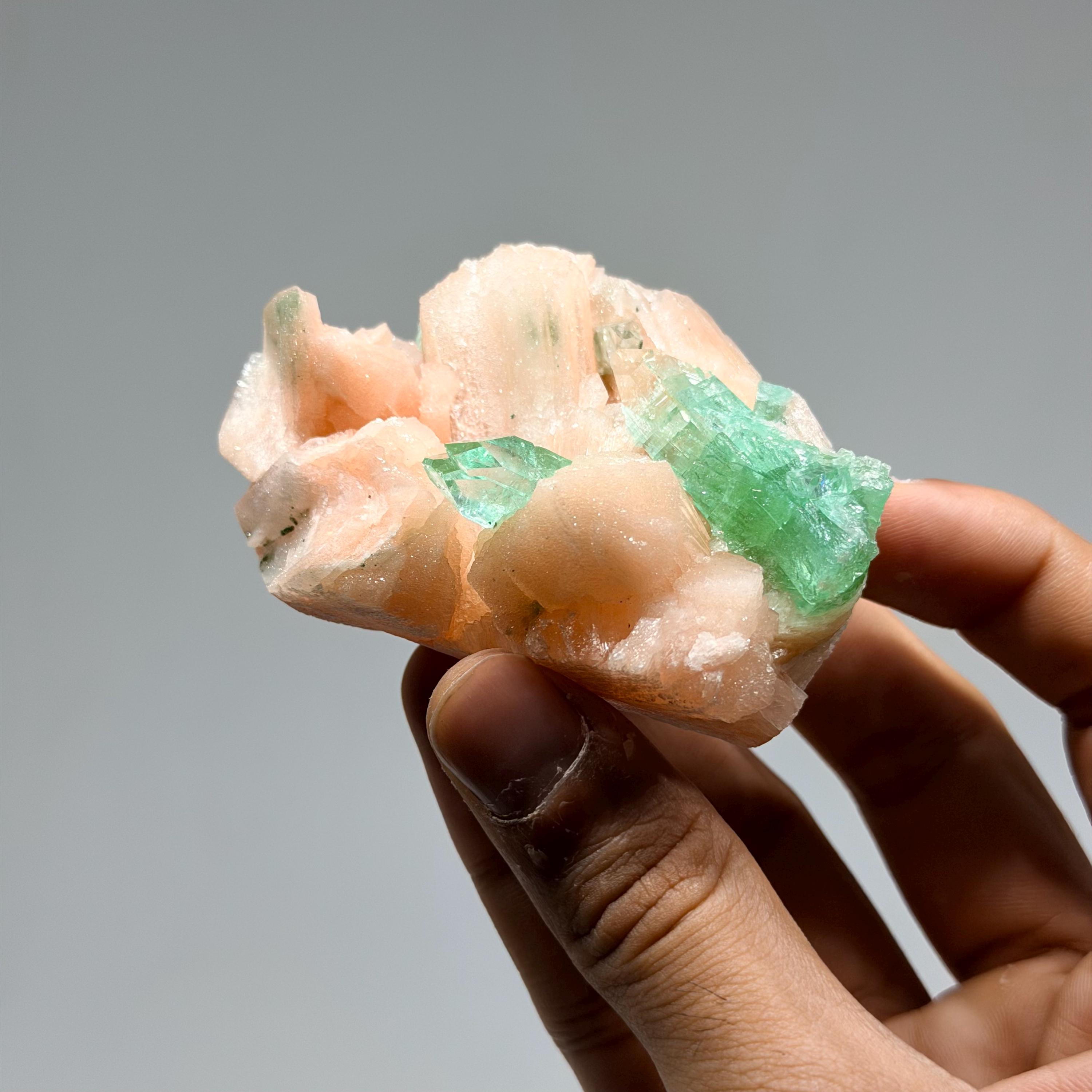
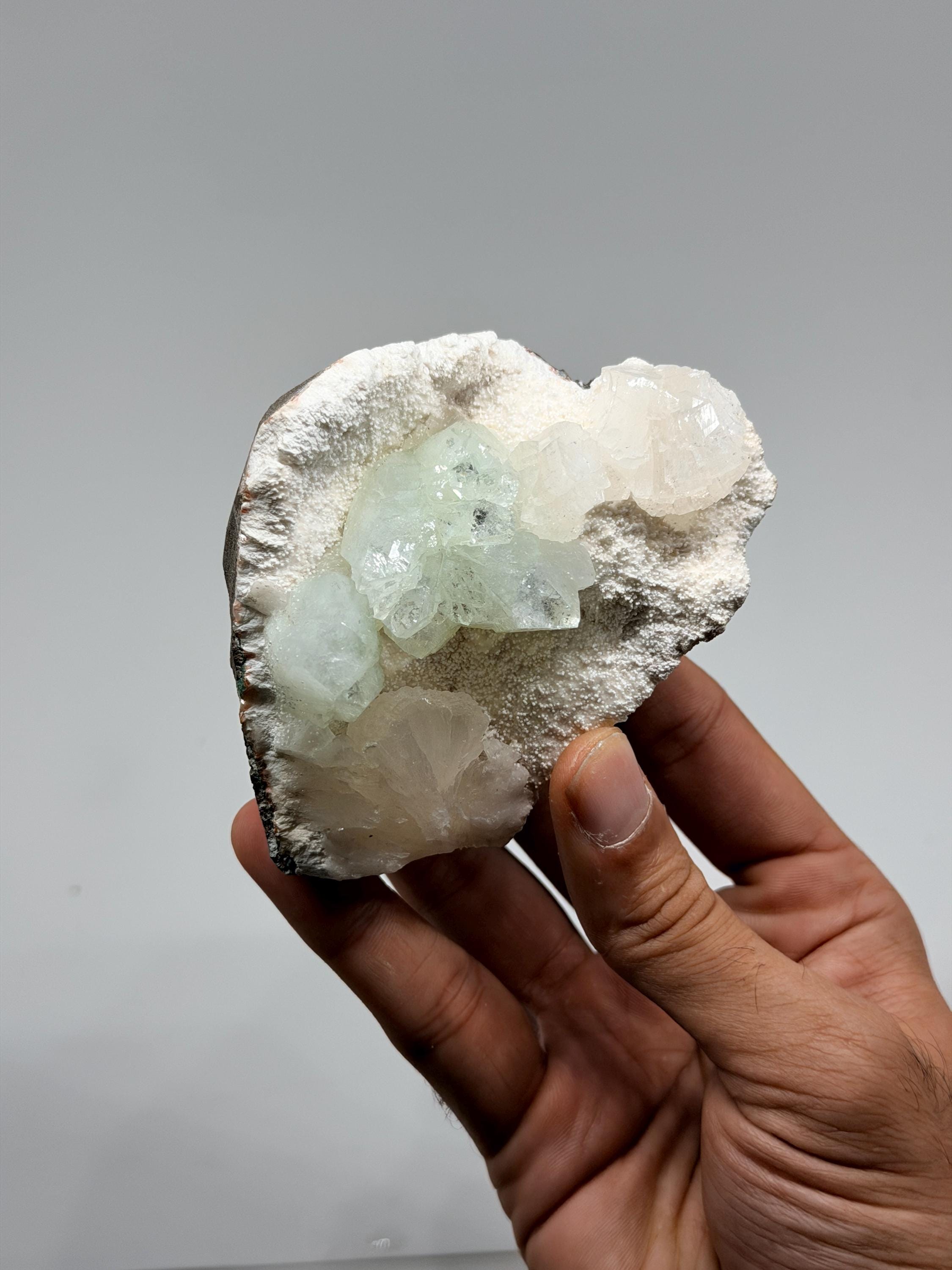
Apophyllite grows as blocky, glassy crystals, sometimes with square pyramids on top. Clear crystals are often called diamond apophyllite, and a small number of pockets, mostly around Nashik and Jalgaon, give a green colour that comes from traces of vanadium. The most sought-after green apophyllite sits on white stilbite, green against white.
Stilbite forms sheaves that pinch in the middle, like a bow tie, in white, cream, peach and salmon pink.
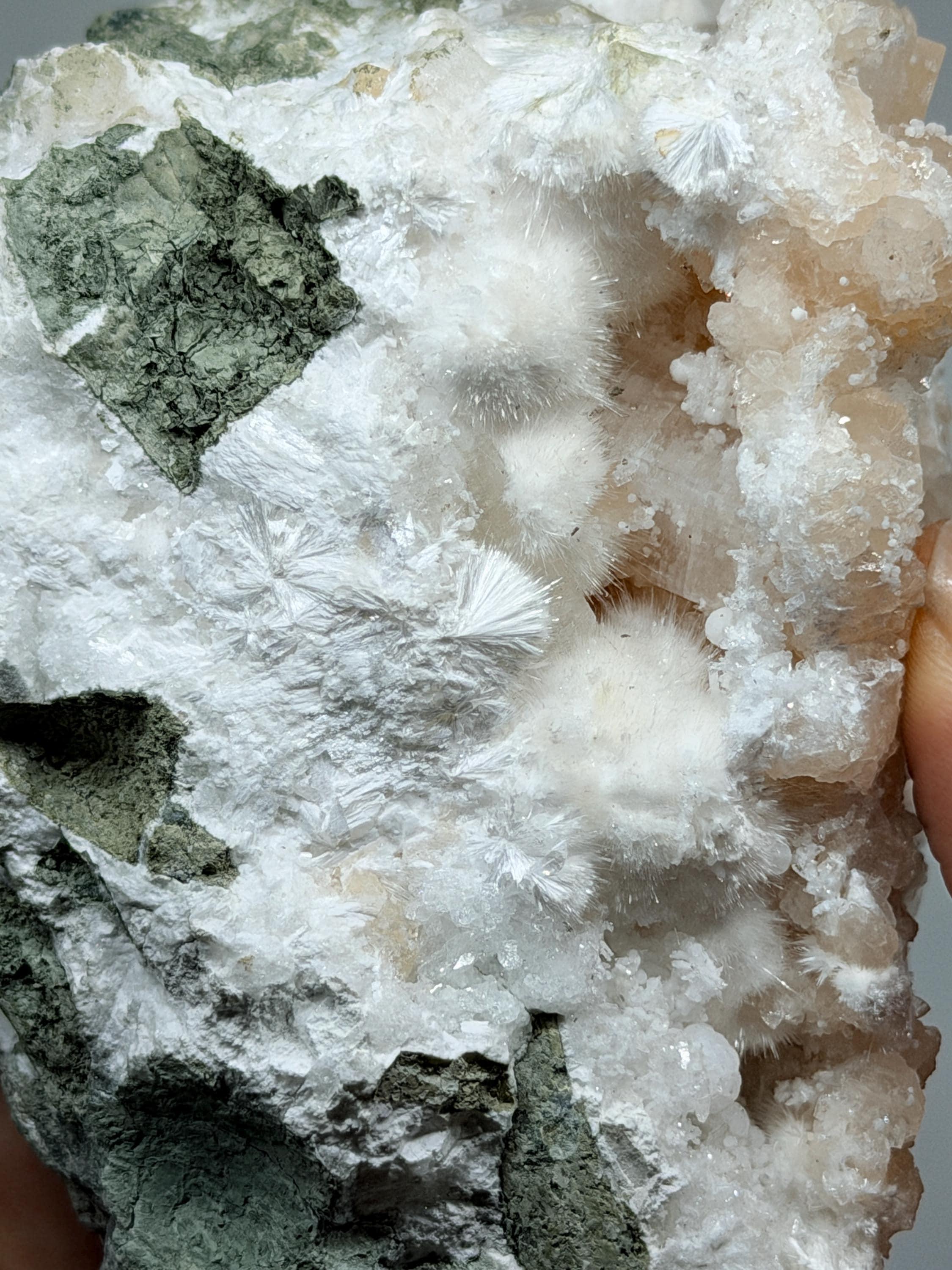
Scolecite and mesolite grow as long, fine needles that radiate out of a point, like frozen fireworks. Mesolite needles are so thin they look like cotton.
Okenite grows fibres so fine that a pocket of it looks like snowballs. It's soft to the eye and easily crushed, and almost all of the world's okenite is Indian.
Cavansite is the rarity: a vivid, almost electric blue, in small rosettes of radiating crystals. It was first described in the 1970s from Oregon, but the finest pieces known came later from the Wagholi quarries just outside Pune. You can see what we have on the cavansite page.
Found by accident
Nobody mines the Deccan Traps for crystals. The basalt is quarried for roads, dams and buildings: it's crushed into gravel and cut into blocks. When a blast or an excavator opens a pocket, the quarry workers put the specimens aside, and those are sold on to dealers in towns like Jalgaon, Nashik and Pune. Most pockets are lost to the crusher before anyone sees them, and good ones are found by people who know what they are looking at.
That also means supply comes and goes. A quarry that gave beautiful green apophyllite for two years can run out, flood or close, and that material is gone for good. When we buy a flat of specimens, we're buying from what one or two quarries happened to open that season.
Looking after them
Most of these minerals are soft and some are delicate. Apophyllite is about as hard as a steel knife blade and splits cleanly along one direction, so knocks leave flat, flaky breaks. Needle minerals like scolecite and mesolite break if you touch them, so lift a specimen by its base. Keep them dry, and dust them with a soft brush or a puff of air rather than water. There's more on our crystal care page.