Aventurine vs jade: how to tell them apart
Aventurine and jade are both carved into green beads and ornaments, but one is a sparkling quartz and the other one of the toughest rocks worked by hand.
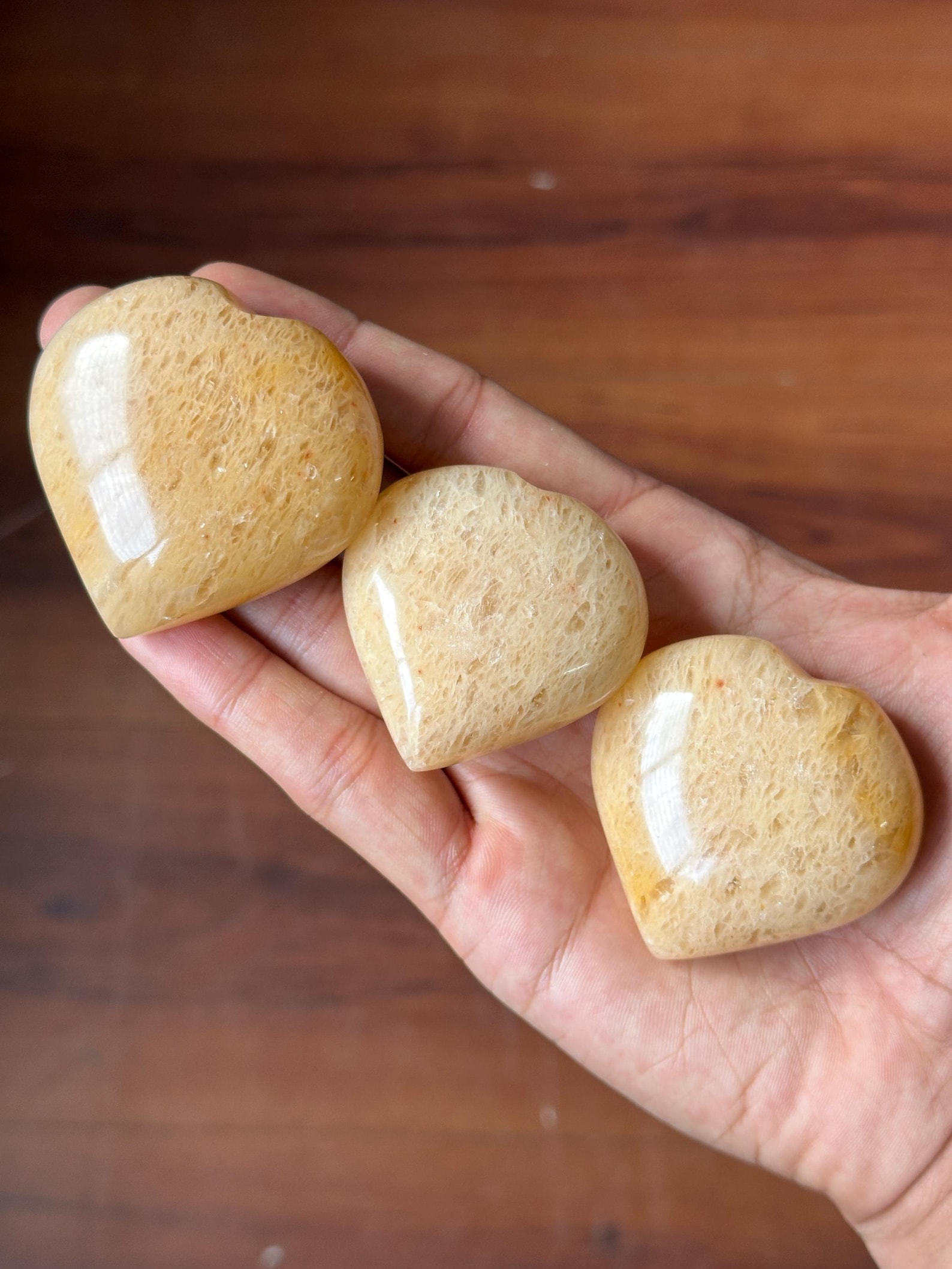
Two green stones can sit side by side in a bowl of polished pieces, cost very different amounts, and still look nearly identical to anyone who hasn't handled both. One is a common quartz rock dusted with sparkling mica. The other is one of the toughest stones ever worked by hand, carved into axe heads and chisels for thousands of years before anyone chose it for its looks. Telling aventurine from jade comes down to a handful of checks that don't need a lab.
Two different minerals, one shared colour
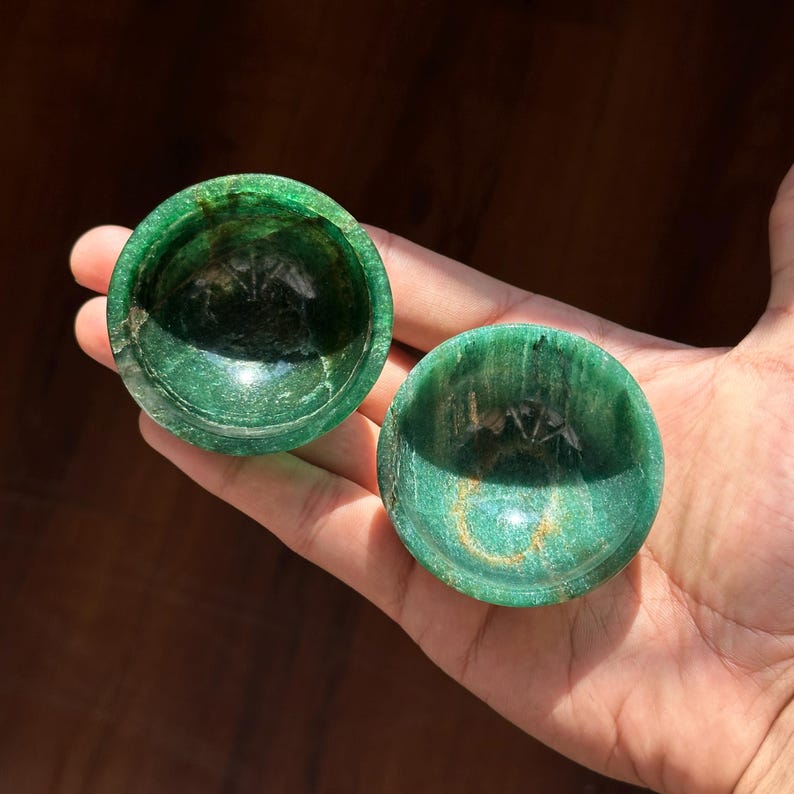
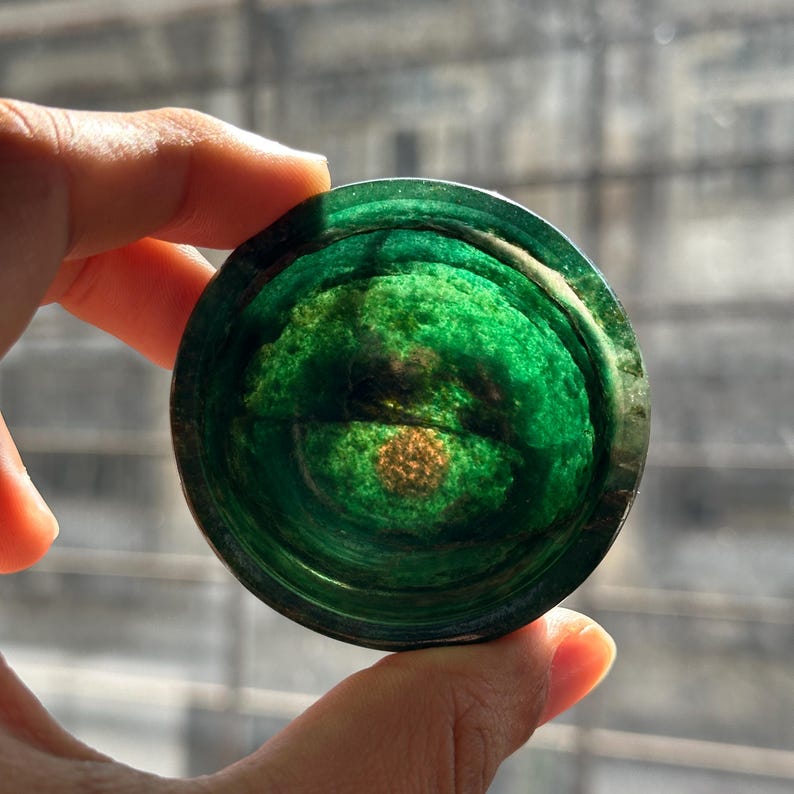
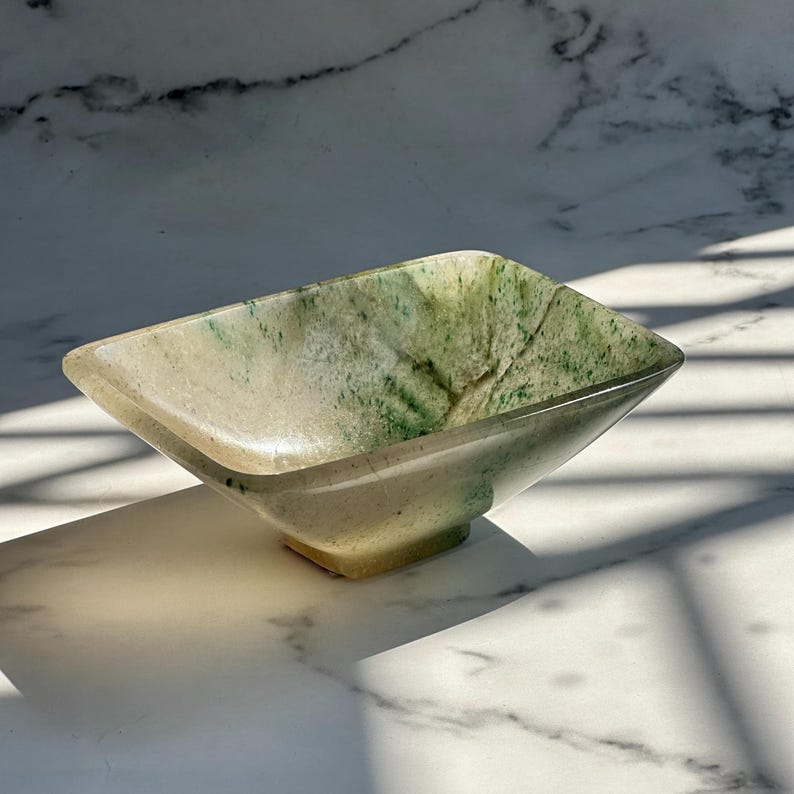
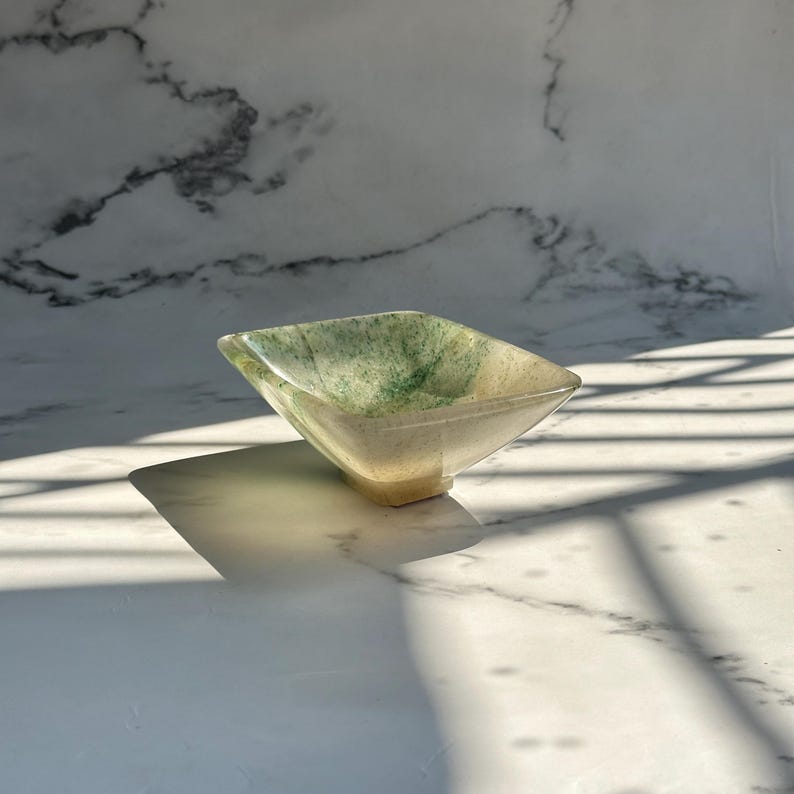
Green aventurine is a variety of quartz: a fine-grained rock made of countless tiny, interlocking quartz grains, known as quartzite, with flakes of a green mica called fuchsite scattered through it. The quartz itself is colourless; the green comes entirely from the mica. It's the same mineral that gives ruby in fuchsite its soft green shimmer, as we explain in ruby in kyanite, fuchsite or zoisite.
Jade isn't one mineral at all, but two unrelated ones that happen to share a name: nephrite, a calcium-magnesium amphibole, and jadeite, a sodium-aluminium pyroxene. Chinese carving tradition, which goes back thousands of years, worked almost entirely in nephrite until jadeite arrived from Myanmar centuries later and became the more prized of the two. Both form as a dense mat of microscopic, interlocking fibrous or granular crystals, which turns out to be the real secret behind what makes jade so distinctive.
The glitter test
Hold a piece under a lamp and tilt it. Aventurine answers with a scatter of tiny flat flashes as the mica flecks inside catch the light and let go, one after another, an effect called aventurescence (the broader shimmer family is actually named after aventurine, not the other way round, even though it also shows up in stones like sunstone). It's one of the easiest things to spot once you know to look for it.
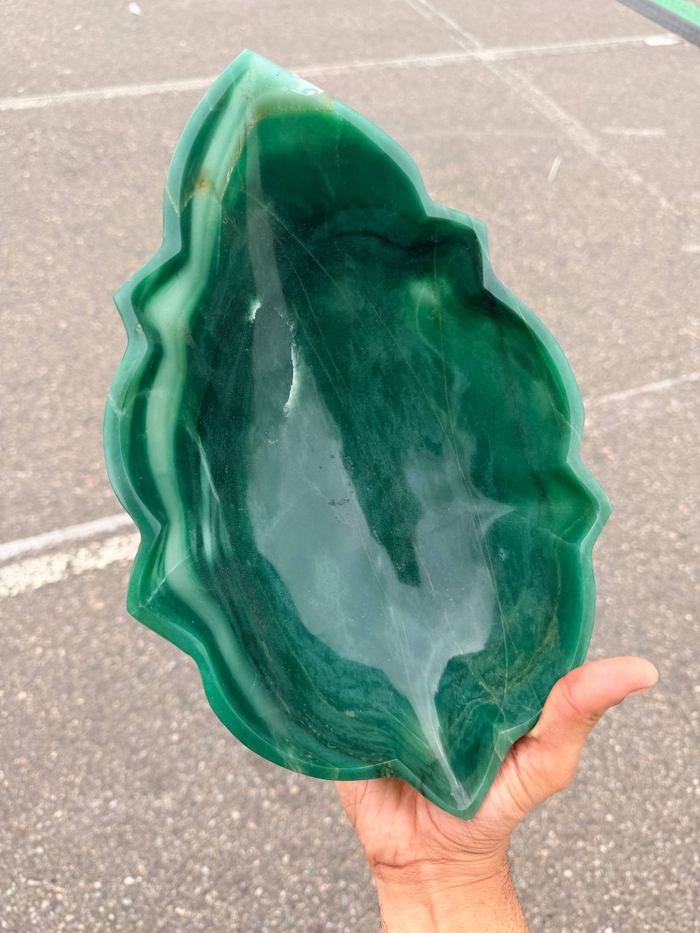
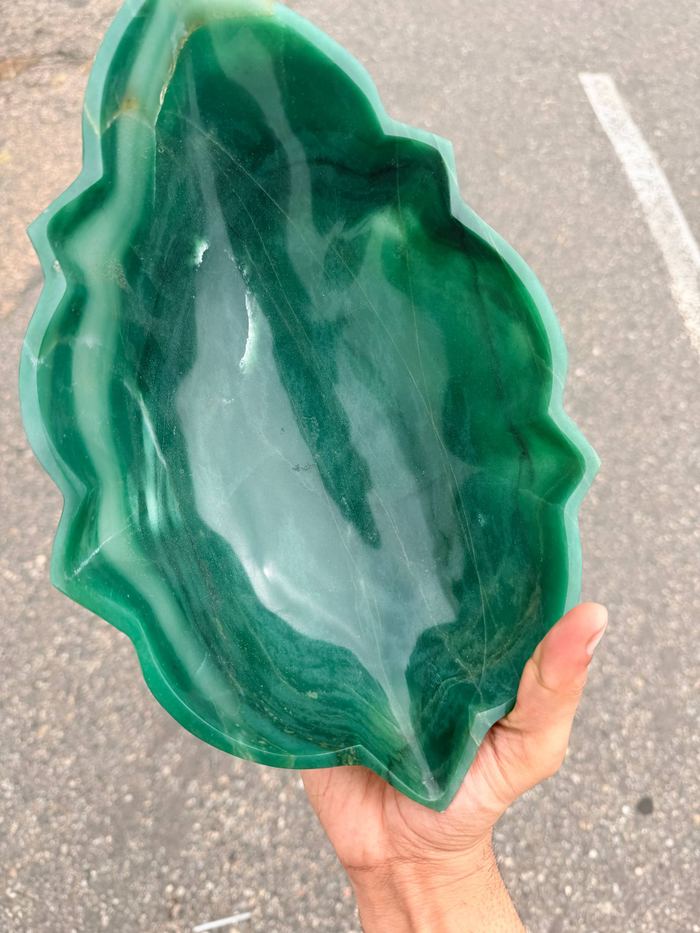
Jade doesn't do this. Its surface takes a smooth, slightly greasy-looking polish, closer to wax than to glass, and the colour sits evenly through the stone rather than flashing in and out as you turn it. If a green carving glitters, it isn't jade.
Weight and toughness
Pick both stones up, if you can, and the difference is physical as well as visual. Jadeite is noticeably heavier than quartz for the same size, and nephrite a little more so again; a jade piece feels dense in a way an aventurine piece of the same shape doesn't.
Hardness on the Mohs scale doesn't separate the two well, since aventurine and jade overlap at around 6 to 7. What really sets jade apart is toughness: resistance to cracking under a sharp blow, rather than resistance to scratching. The microscopic fibres in nephrite and jadeite interlock like matted fibreglass, so a crack that starts in one fibre runs into its neighbours at an angle and stops, rather than travelling straight through the stone. That's why jade was carved into axe heads, chisels and weapons across prehistoric China, New Zealand and Mesoamerica long before it became a decorative material: it held an edge and resisted shattering under use in a way flint and most other stone couldn't match. Aventurine, built from a single mineral with a single, predictable cleavage, has no such advantage; it breaks more like ordinary quartz.
"Indian jade" and other misnomers
Green aventurine has one more thing working against it: a long history of being sold under names that aren't its own. "Indian jade" is a trade name for green aventurine quartzite, much of it quarried in India, and it has nothing to do with real jade beyond the colour. Dyed green quartzite and dyed agate also turn up labelled as jade in cheaper jewellery, usually with a colour that's too uniform and too saturated to be the real, variably mottled stone; we cover dyed stone more generally in glass, dye and heat.
None of this makes aventurine a lesser stone. It's a genuine, naturally sparkling quartz with its own long history in carving and jewellery, and it's only a problem when it's sold as something it isn't.
Buying and caring for green stone
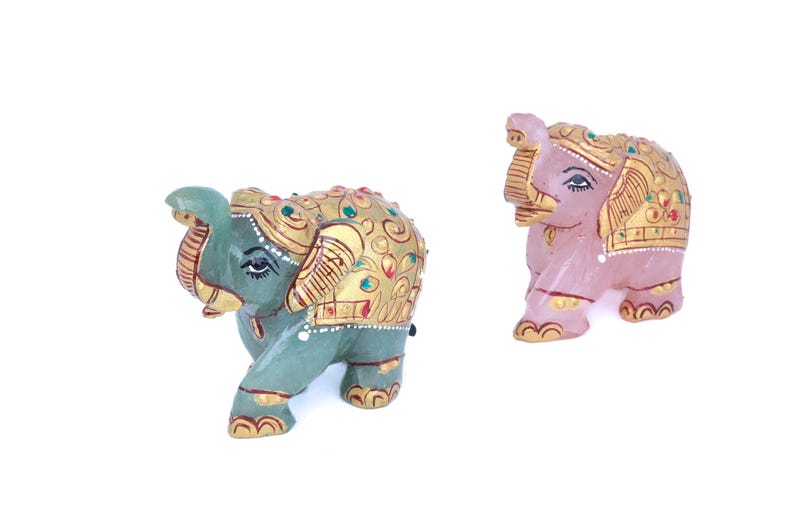
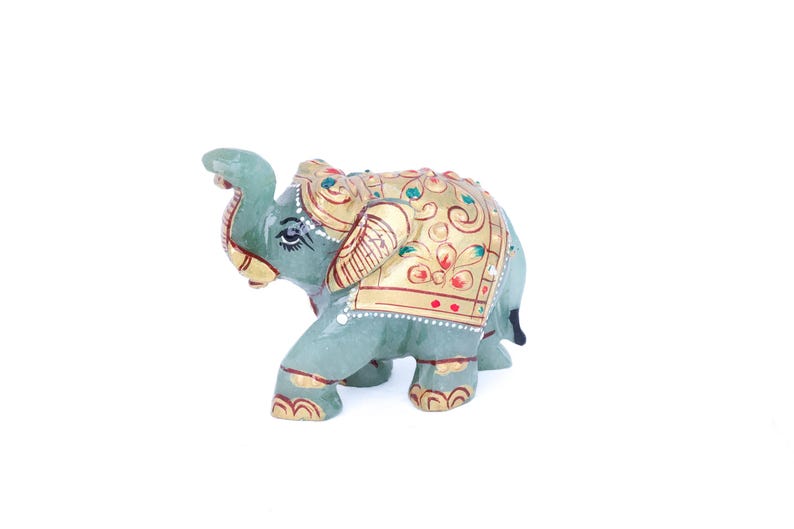
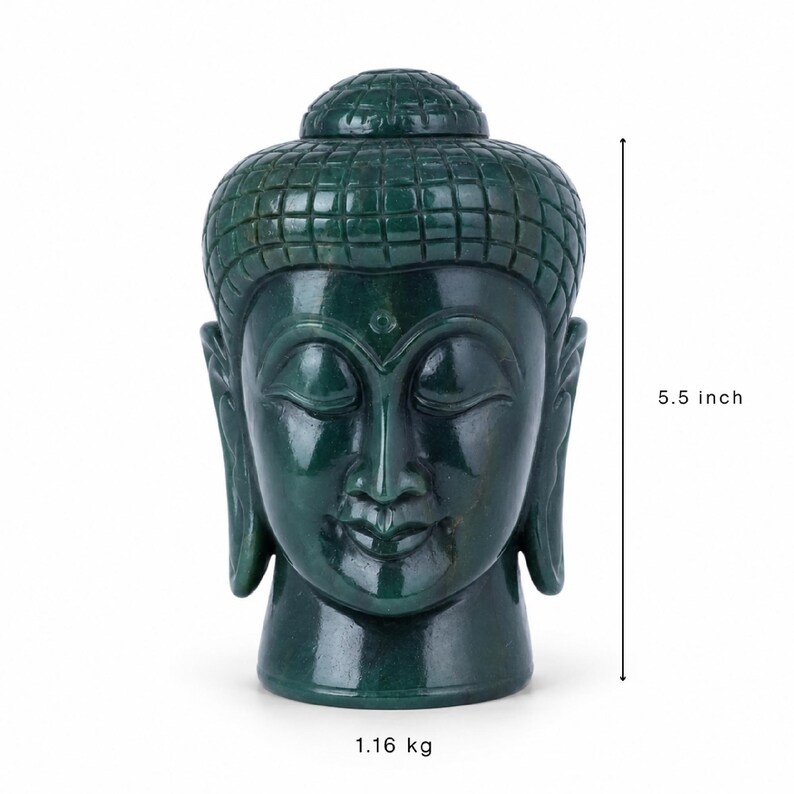
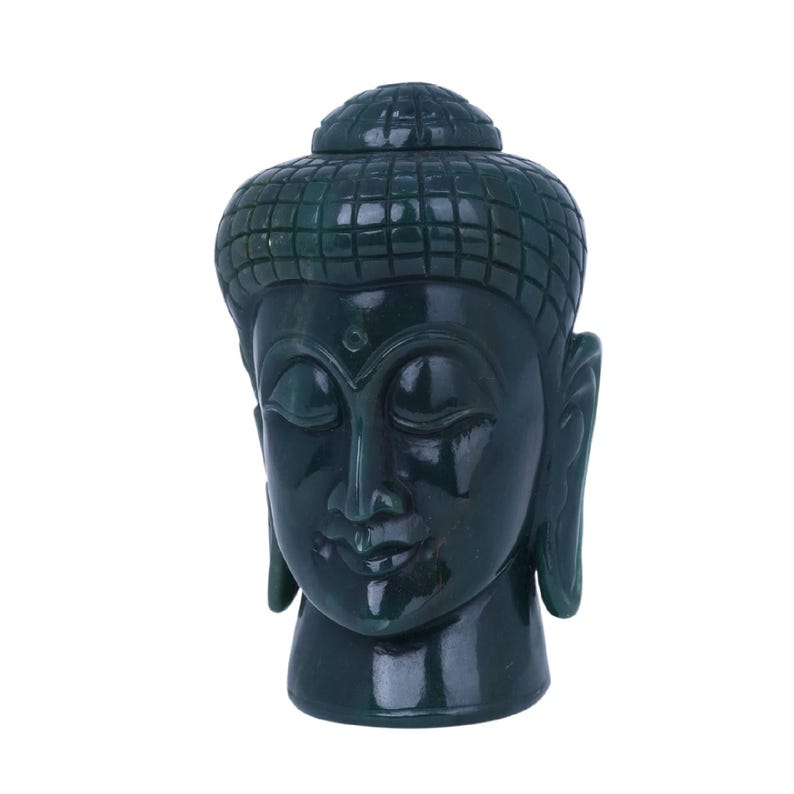
If you want to be reasonably sure which one you're holding: check for glitter (aventurine has it, jade doesn't), check the weight (jade feels denser for its size), and look at the surface finish (jade is waxy and smooth, aventurine shows visible grain and sparkle even under a high polish). Both stones are hard enough for everyday handling and don't need special care beyond keeping them away from harsh chemicals and sharp knocks. Jade is often cut into carvings and figures that lean on its toughness as much as its colour, while aventurine is more often sold as spheres, palmstones and simple polished pieces that show off the sparkle rather than working around it.