By Viveka Jhaveri, Director, Graduate Gemologist (GIA)
Why rose quartz is cloudy, not clear like other quartz
Rose quartz almost never forms sharp, clear crystals like amethyst or citrine. Here's why it grows massive and cloudy, and why some pieces fade in strong sun.
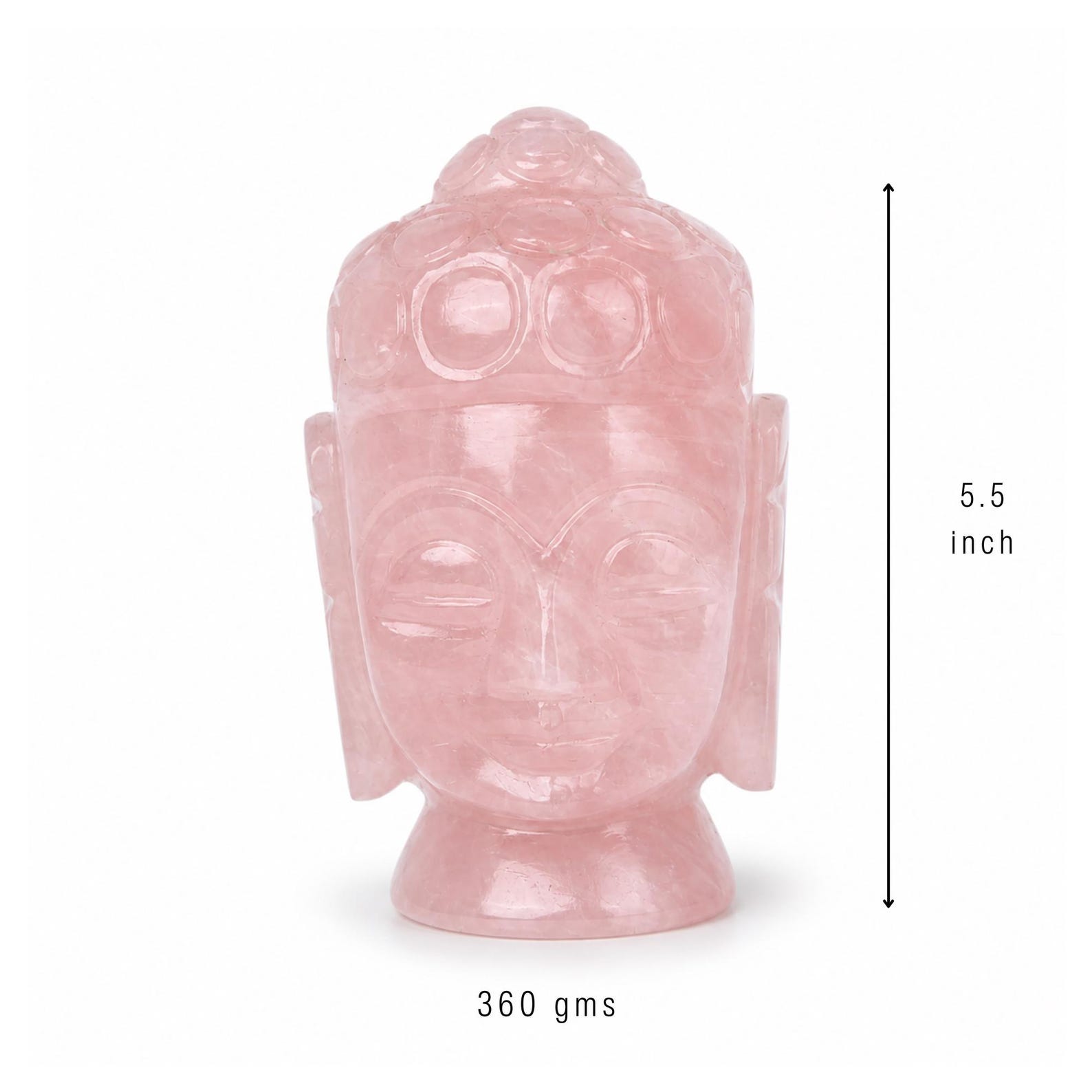
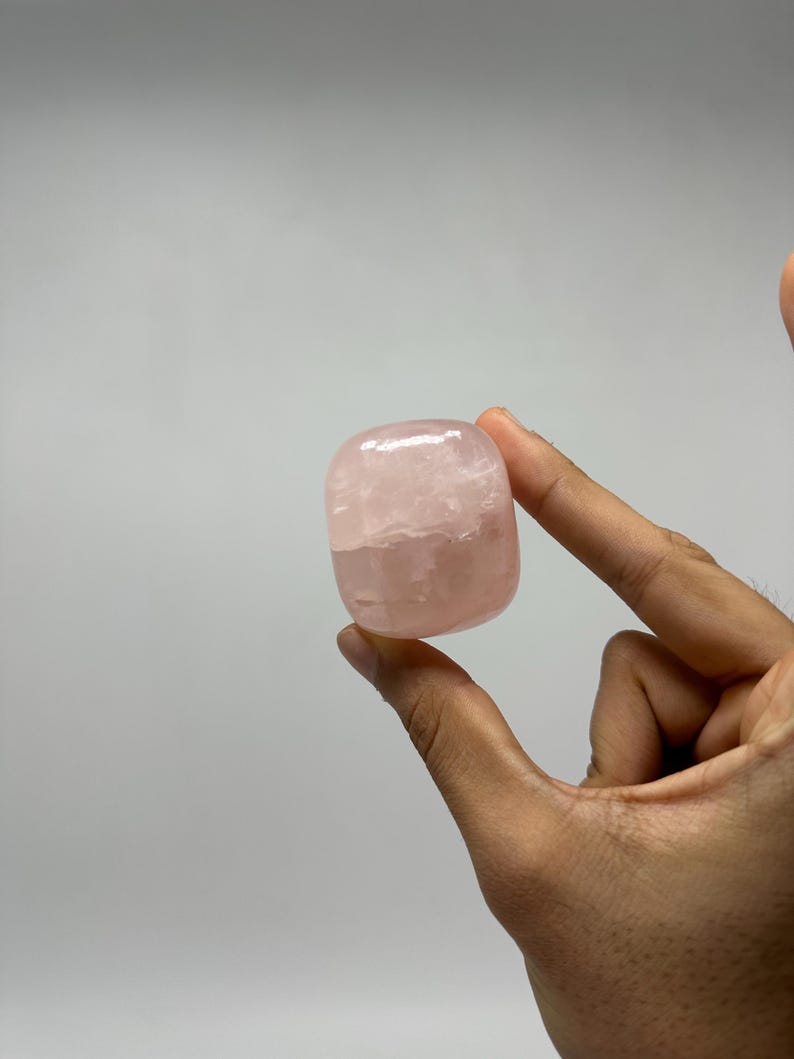
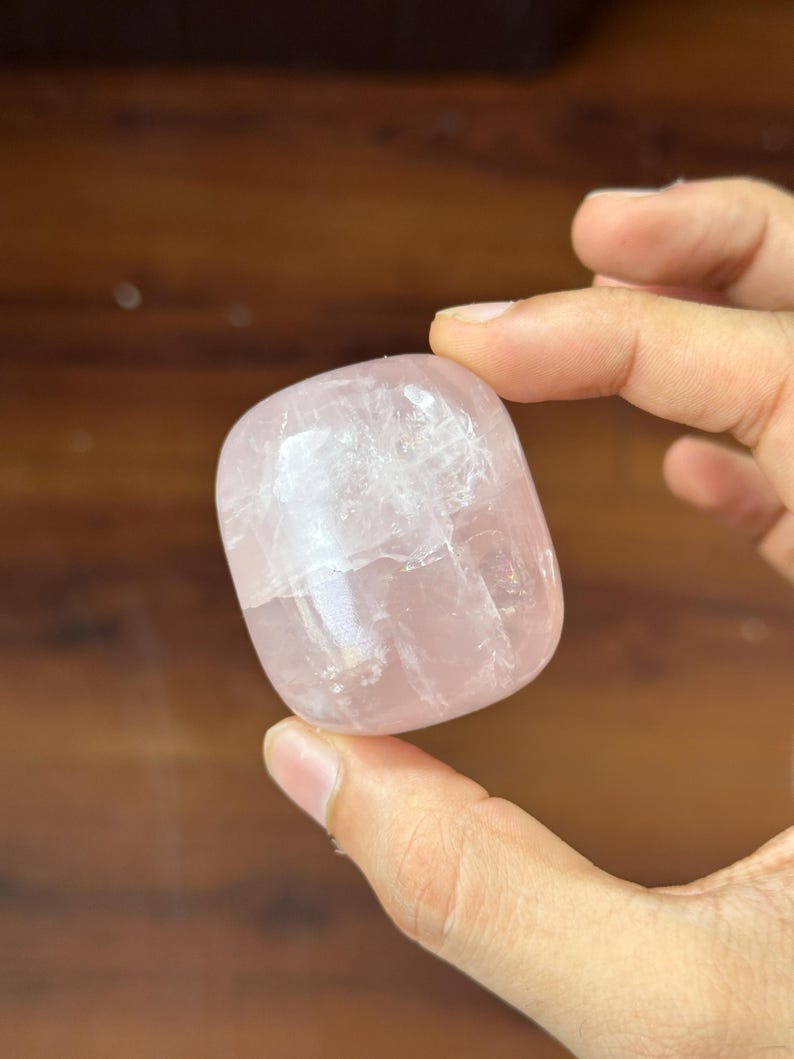
Pick up a piece of clear quartz and you can usually see a crystal: flat faces, a pointed tip, something you'd recognise as a "crystal" from a textbook diagram. Pick up rose quartz, and almost all of it is a smooth, cloudy pink lump with no crystal faces at all. That's not a lower grade of quartz. It's a different way of growing.
Most quartz grows into points. Rose quartz usually doesn't
Quartz crystals form slowly, over a long time, inside open cavities, gas pockets, veins and cracks where there's room for a crystal to grow outward into empty space. Given that room and enough time, silica builds itself into the familiar six-sided prism with a pointed termination. Amethyst and clear quartz usually get that treatment, which is why we read about how amethyst gets its colour alongside normal crystal growth.
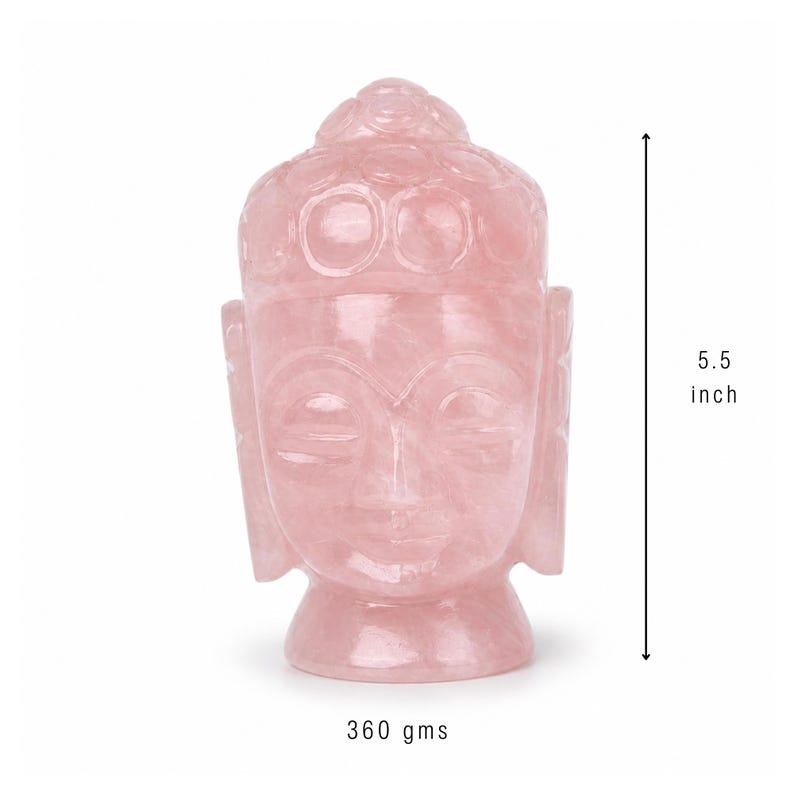
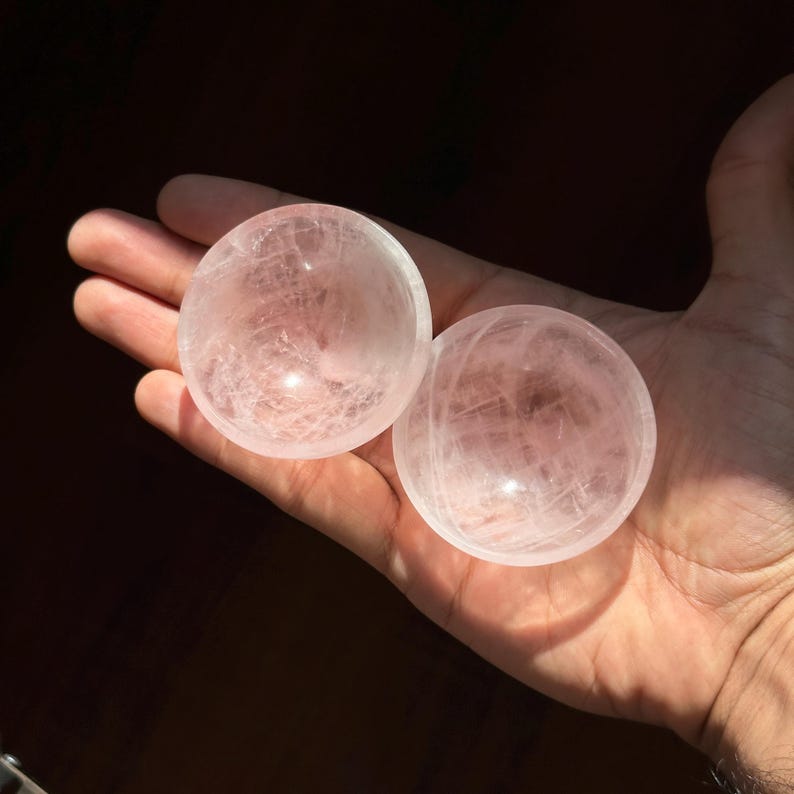
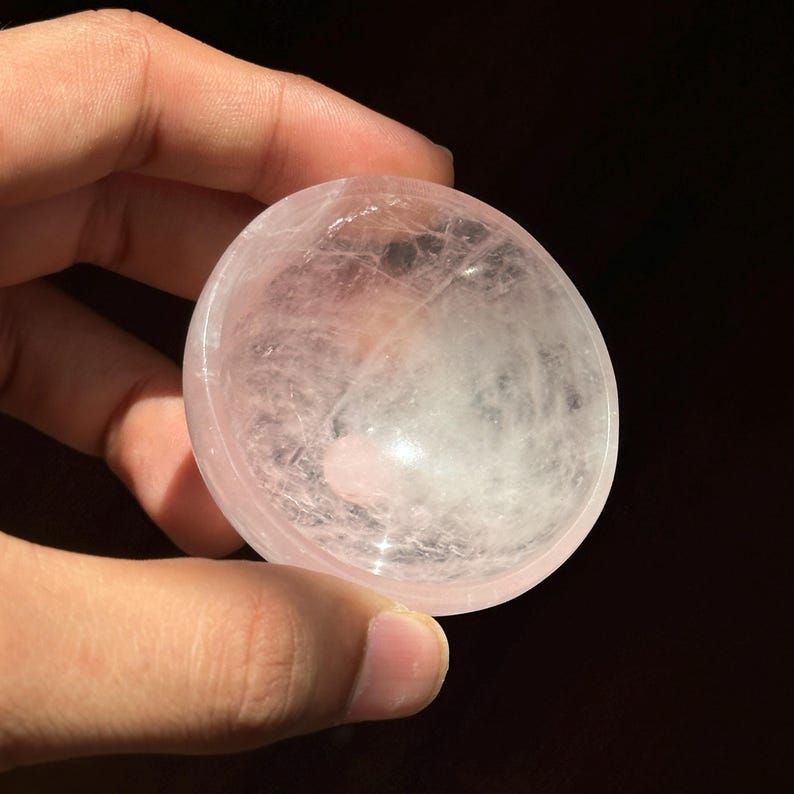
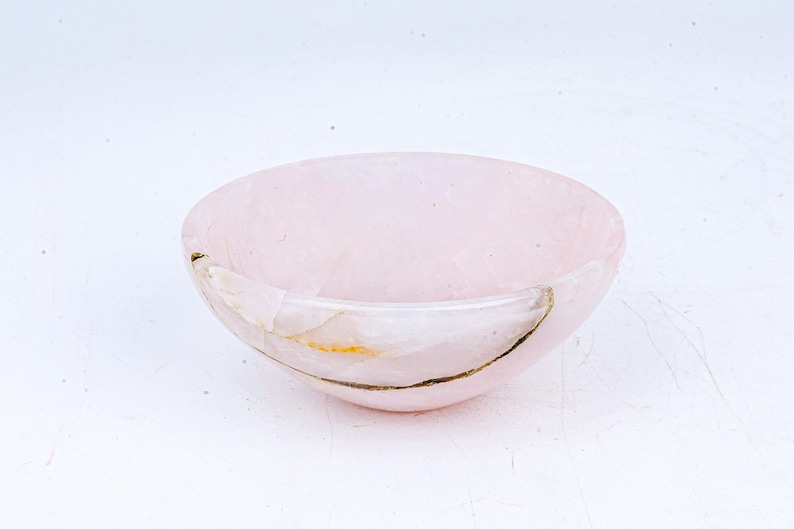
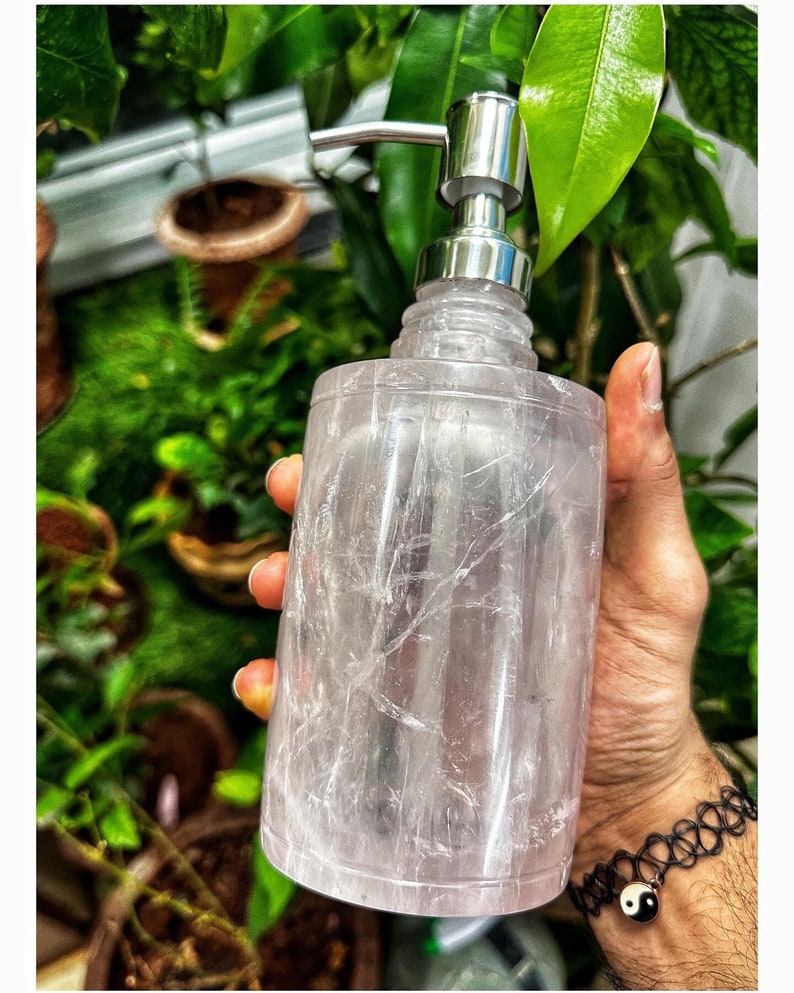
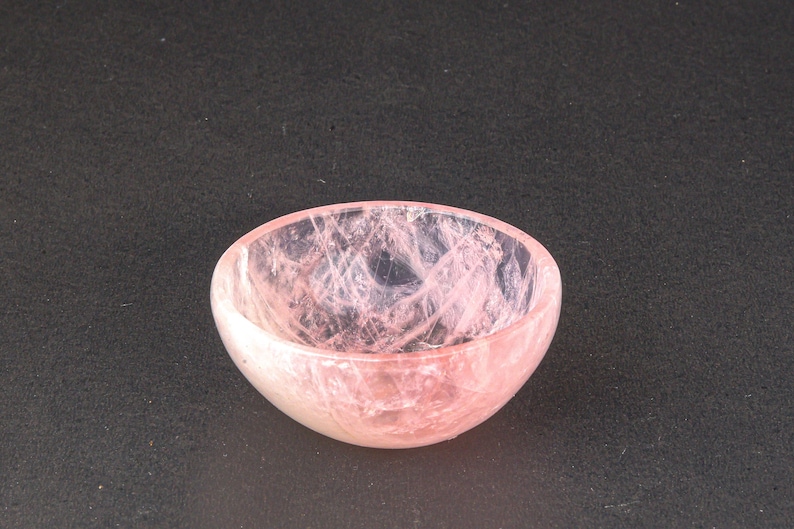
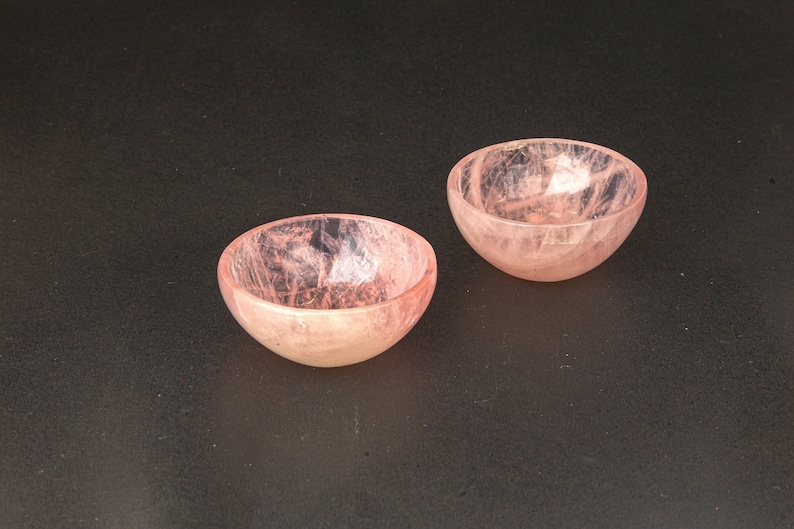
Most rose quartz forms differently: inside solid pegmatite, a coarse-grained rock that crystallises from the last, mineral-rich dregs of a cooling magma. There's no open space to grow into, just other minerals crystallising all around it at the same time, fighting for the same room. The quartz and its neighbours end up interlocked, and the rose quartz comes out as a solid, massive block rather than a pointed crystal. Cut and polished, that block is cloudy rather than glassy, because light bounces off countless internal boundaries and tiny fractures instead of passing straight through.
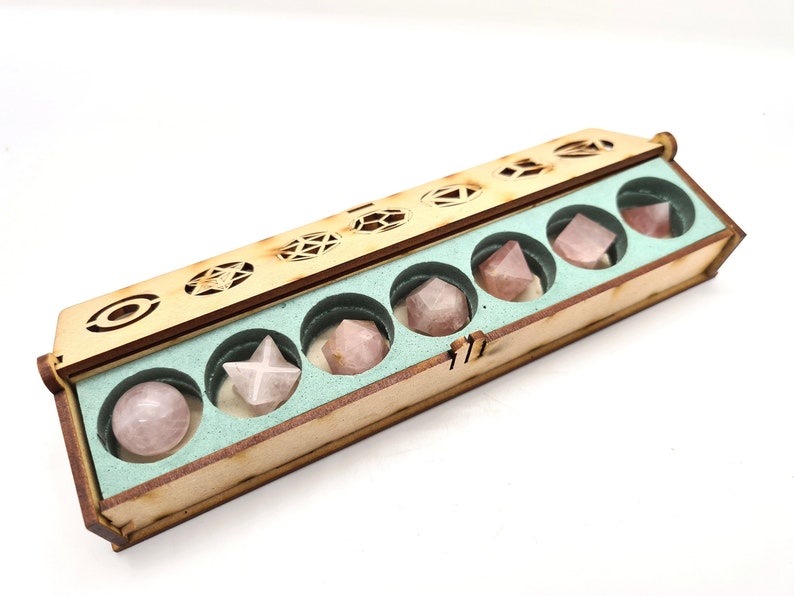
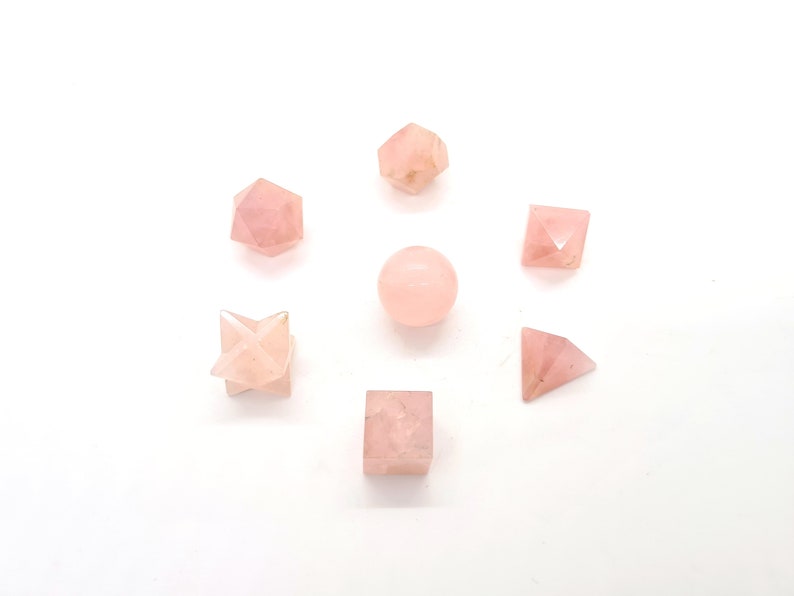
Crystallised rose quartz, with actual pointed terminations you can see, does exist. It's rare, usually pale, and comes from a small number of localities, most famously a pegmatite in Maine. Almost everything sold as rose quartz, including our own spheres and hearts, is the common massive kind, and there is nothing wrong with that: it's simply how the overwhelming majority of rose quartz in the world has always grown.
Where the colour comes from, and why it isn't permanent
The pink in rose quartz is delicate compared with other quartz colours. Amethyst's purple survives for geological ages because it comes from a stable combination of trace iron and natural background radiation. Rose quartz's pink is more easily disturbed, which is why a piece left for months on a sunny windowsill can visibly pale. Keep rose quartz out of strong, direct sun if you want the colour to stay as rich as the day you bought it; ordinary indoor light is no problem.
A small number of rose quartz pieces, usually cut as a dome, show a faint six-rayed star when a point light source hits them from the right angle. That star comes from microscopic fibrous inclusions, often the mineral dumortierite, running through the quartz in three directions, in the same way that fine rutile needles produce the stars we described in how a star gets into a ruby. Star rose quartz is a genuine mineralogical curiosity rather than a trick of the cutting.
Where it comes from
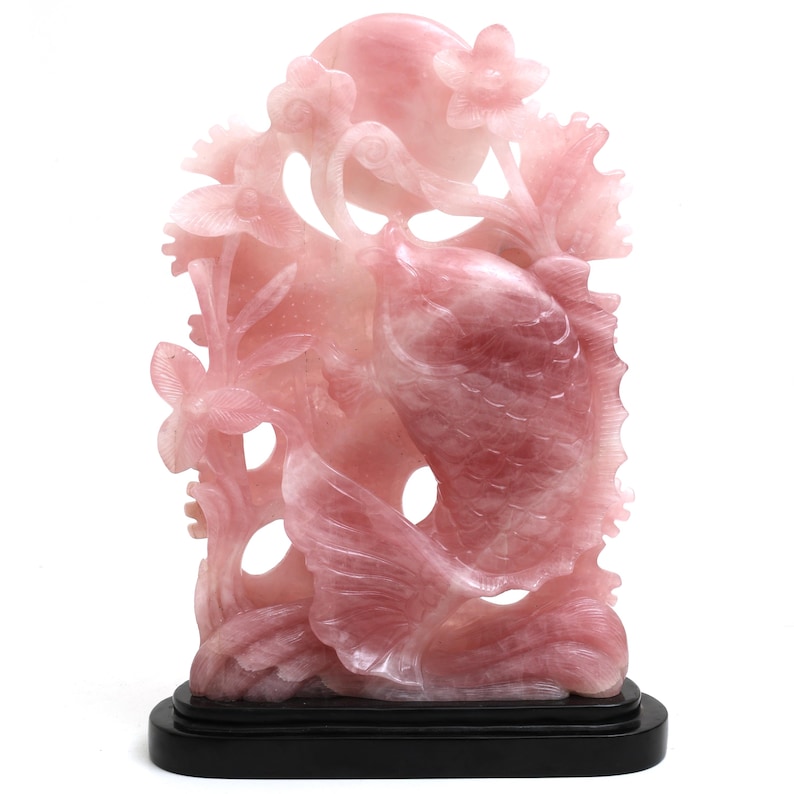
The major sources of gem-quality rose quartz are pegmatite belts in Brazil and Madagascar, with Mozambique and parts of the United States also producing it. Massive rose quartz is abundant enough, and the deposits large enough, that it has never carried the kind of scarcity premium that shapes the market for, say, ruby or sapphire. It is cut into everything from small tumbled stones to substantial carvings and spheres a foot across, limited mostly by the size of a clean, fracture-free block rather than by rarity of the material itself.
Telling good rose quartz from the rest
Because rose quartz is so common and so cheap to produce, it's rarely worth anyone's trouble to fake it with dyed glass the way some rarer pink stones get imitated. The things to look for are about quality rather than authenticity: even colour without obvious white or grey patches running through it, a minimum of visible internal cracks, and and a polish that comes up glossy rather than dull or pitted, which tells you the piece was finished with care rather than rushed. Quartz as a family sits at 7 on the Mohs scale, hard enough for everyday handling and resistant to scratching from household dust and most other minerals it might sit next to, so there's no particular care routine beyond the usual advice on sunlight.
A family trait, not an exception
Rose quartz's habit of growing massive rather than crystalline isn't unique to it. Smoky quartz and amethyst both commonly occur in open-cavity crystal form because they tend to form in geodes and veins where there's room to spare, while rose quartz's usual pegmatite setting works against it from the start. The same chemistry, silicon dioxide, produces startlingly different results depending on nothing more than where and how it happened to crystallise, which is a theme that runs through the whole quartz family, from the glassy points of clear quartz to the fibrous glow of tiger's eye and the structured bands of agate. Rose quartz's cloudiness isn't a flaw to look past. It's the direct, visible record of a crowded, pressured place to grow.