How geodes form, from empty bubble to crystal lining
Why some geodes are hollow and crystal-lined while others are solid agate, why so many are amethyst, and how to spot a dyed or glued fake.
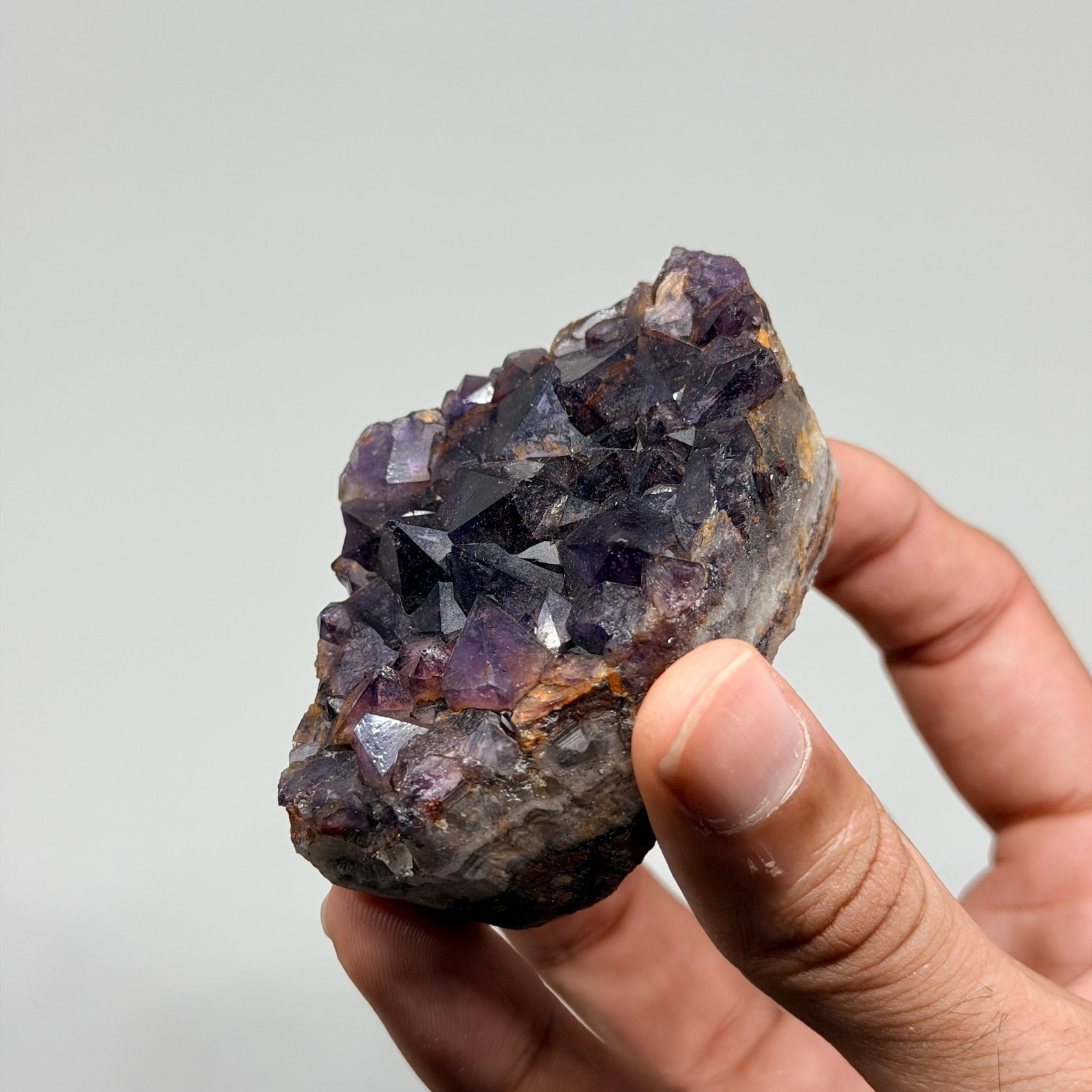
Crack open a plain, round grey stone and sometimes the inside is a small cave lined wall to wall with glittering purple points. There's no trick to it. A geode starts out as nothing more than an empty space, usually a gas bubble, and almost everything about how it turns out, hollow or solid, plain quartz or deep purple amethyst, comes down to how much mineral-rich water moved through that space, and for how long.
A bubble, then a very long wait
Most geodes begin inside volcanic rock. Lava is full of dissolved gas, and as a flow cools, that gas collects into bubbles the way it does in a loaf of baking bread, leaving the hardened rock riddled with rounded cavities once the gas escapes. Some geodes form a different way, inside sedimentary rock, where a nodule of soft mud or a buried shell slowly dissolves away and leaves a cavity in its place, but the next stage is the same either way: an empty pocket sitting inside solid rock, waiting.
Groundwater does the rest. As rain and buried water move slowly through the surrounding rock, they dissolve tiny amounts of silica and other minerals out of it. When that water reaches the open cavity and conditions are right, usually as the water cools or its chemistry shifts slightly, it can't hold as much dissolved mineral and starts depositing it on the cavity wall instead. This happens in extremely thin layers, over what is generally thought to be a very long stretch of geological time, which is why a geode found in young lava can still be almost empty while one from older rock is lined or filled solid.
Agate first, then crystals
The lining almost always starts the same way: a skin of chalcedony, the same microcrystalline quartz that makes agate, coats the inside of the cavity first. If silica-rich water kept flowing after that skin formed, it laid the chalcedony down in layer after layer, following the shape of the cavity, which is exactly how banded agate nodules form. Cut one in half and the bands you see are a record of the water supply changing slightly, layer by layer, for as long as it kept coming.
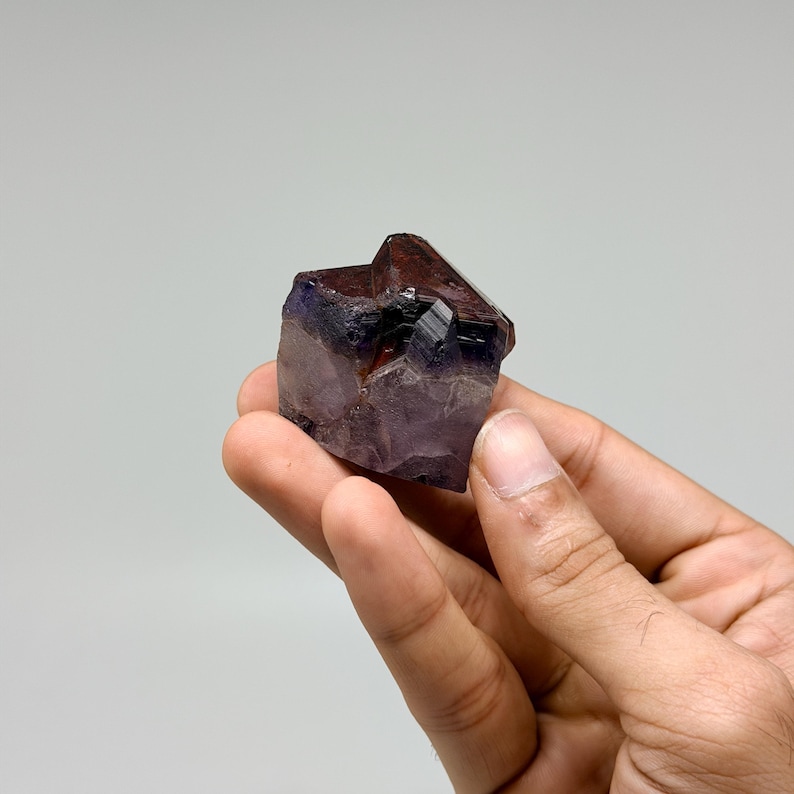
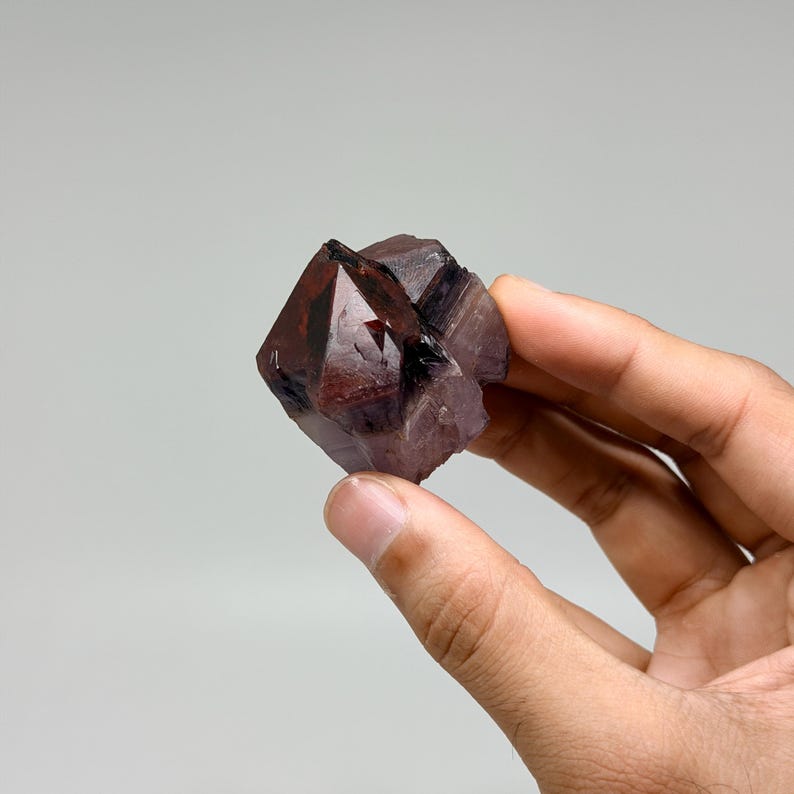
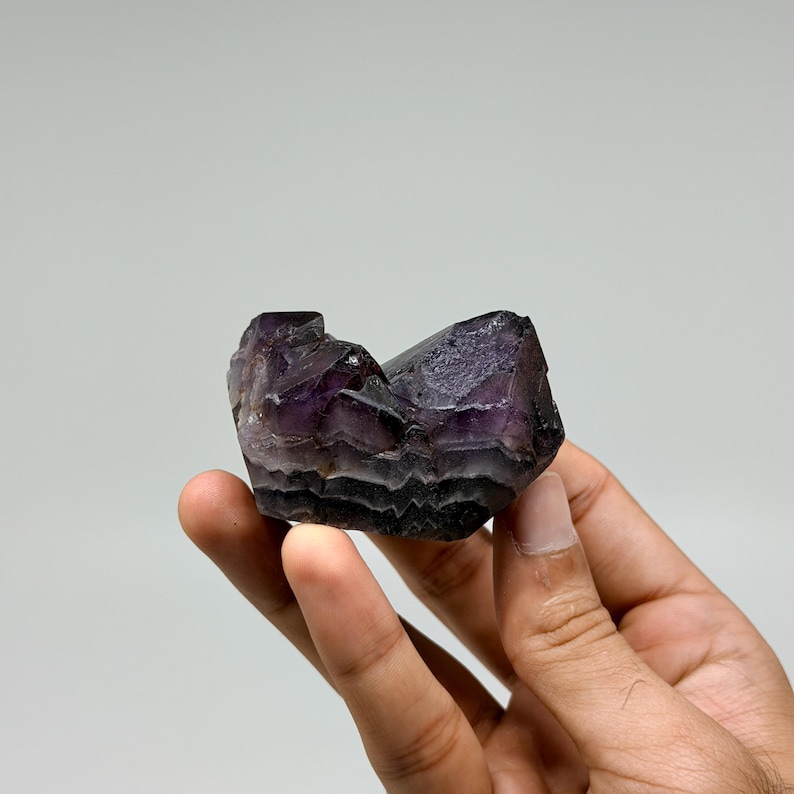
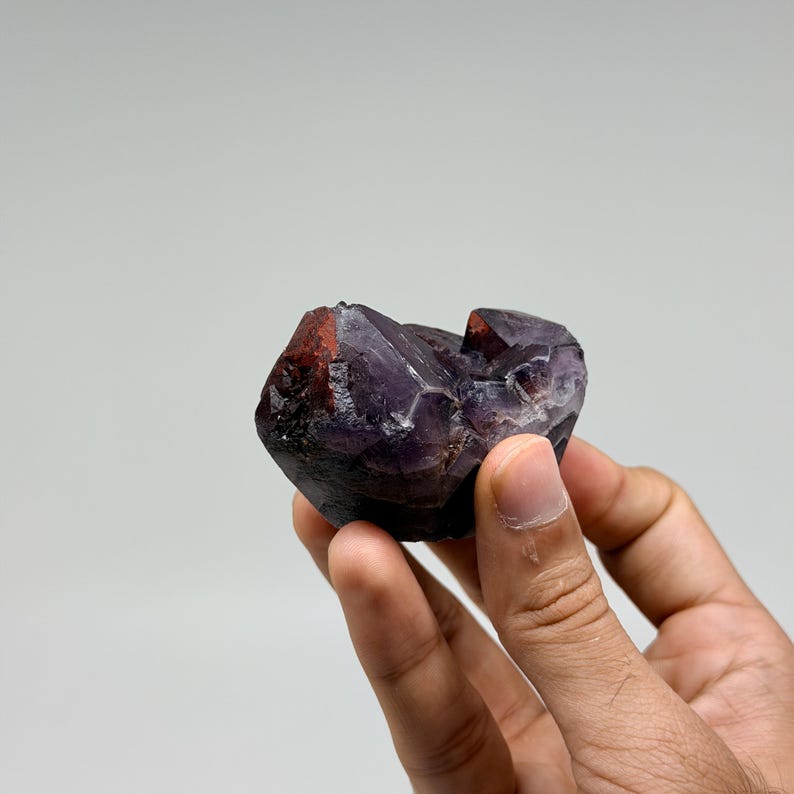
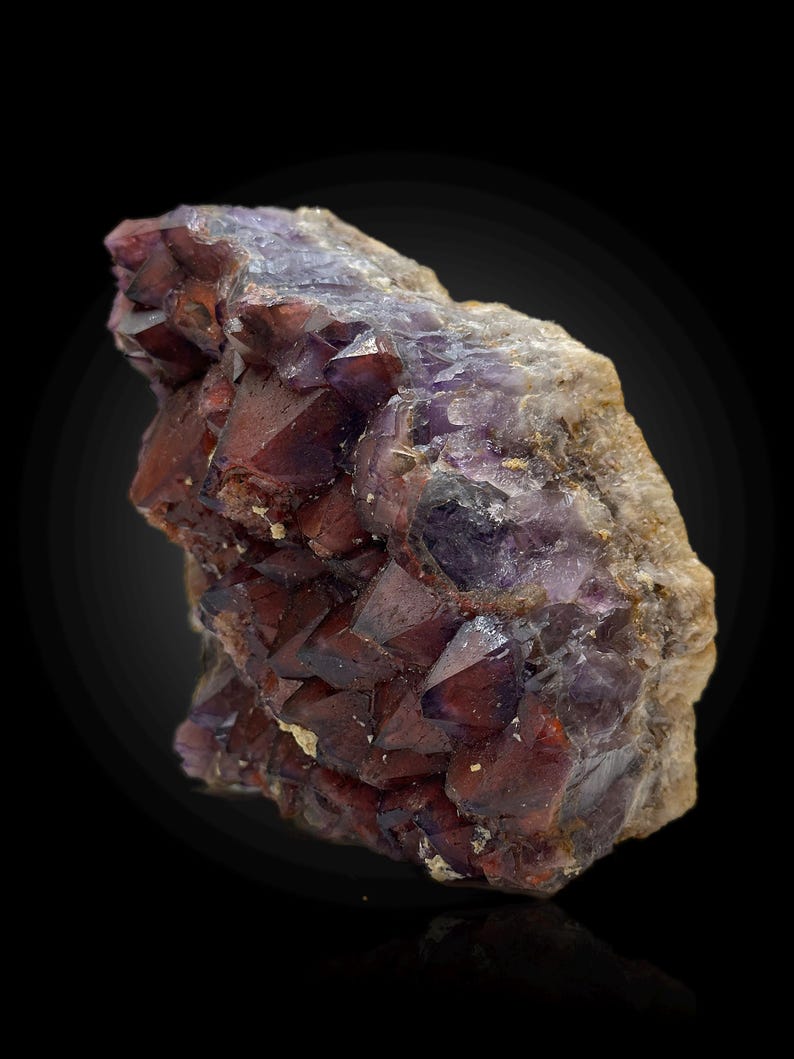
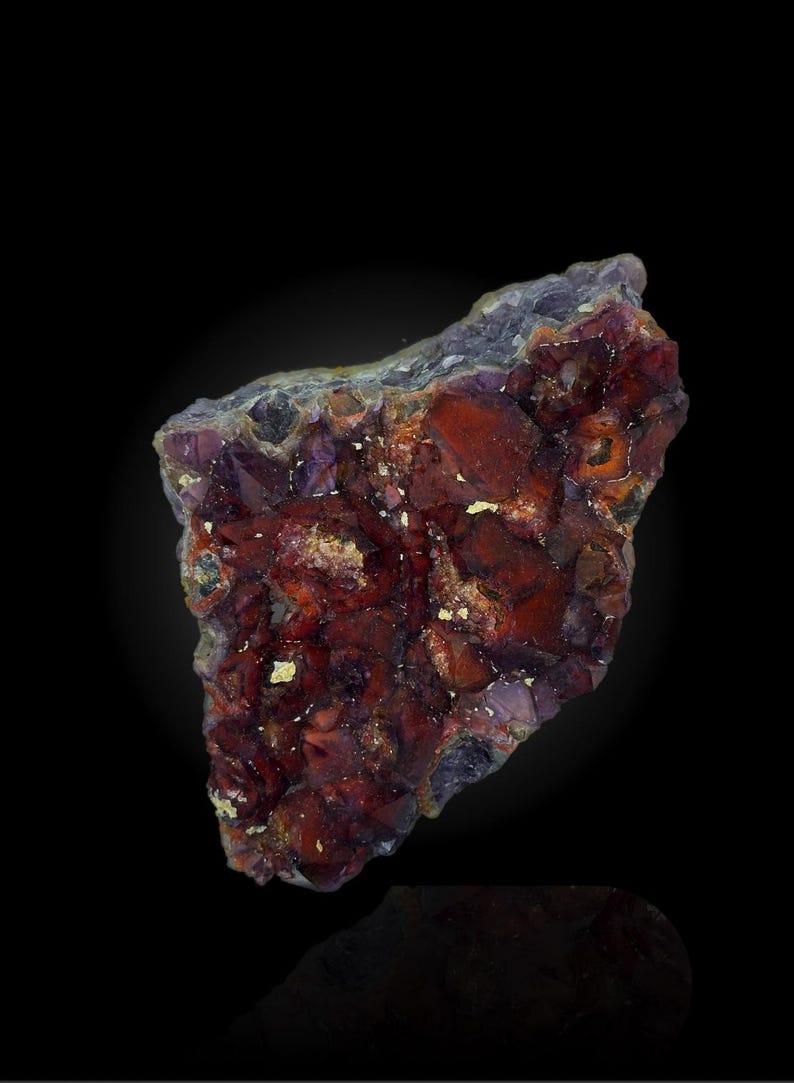
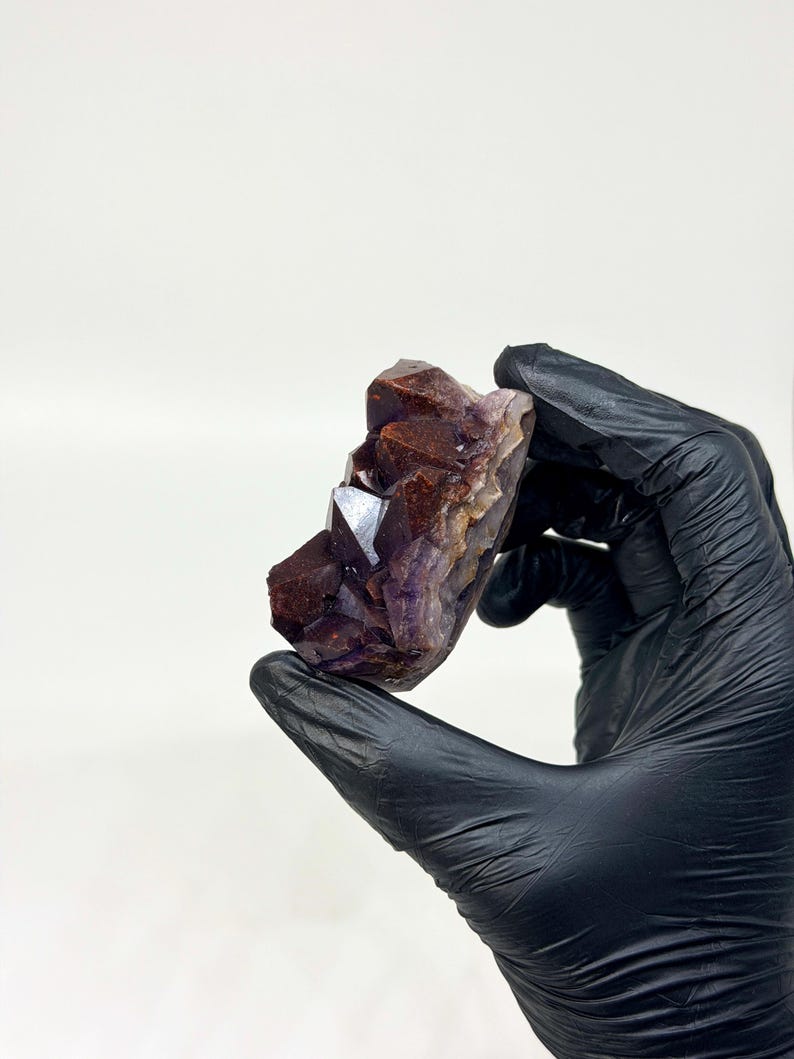
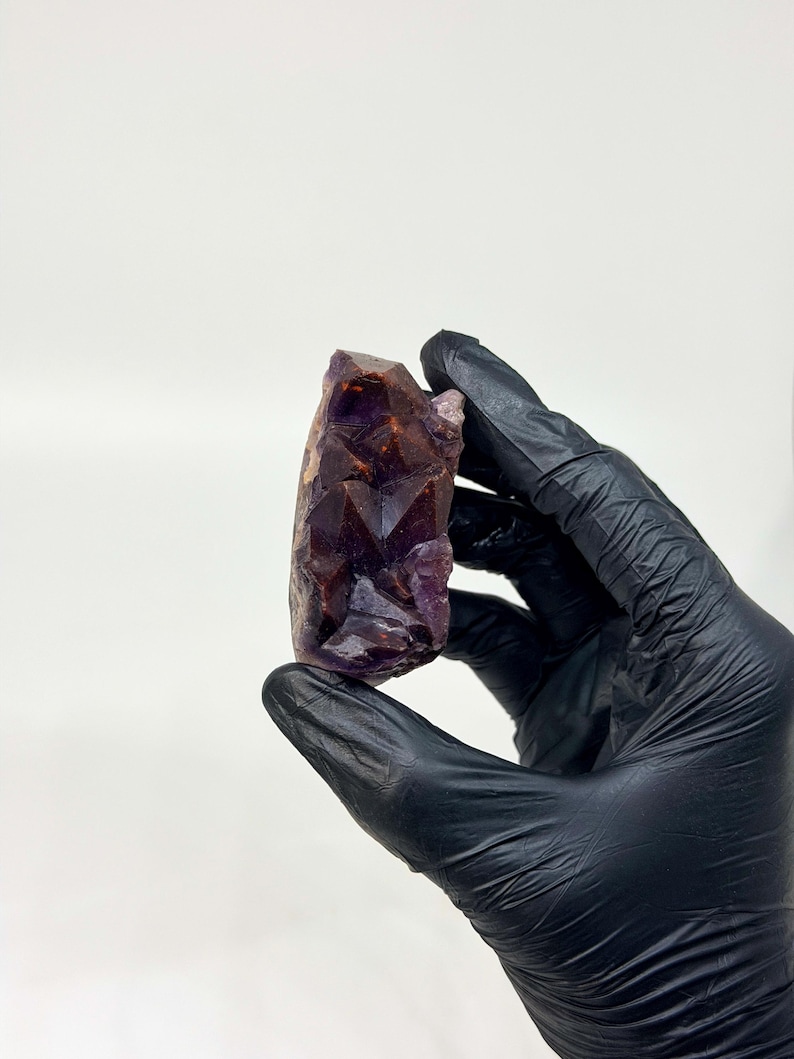
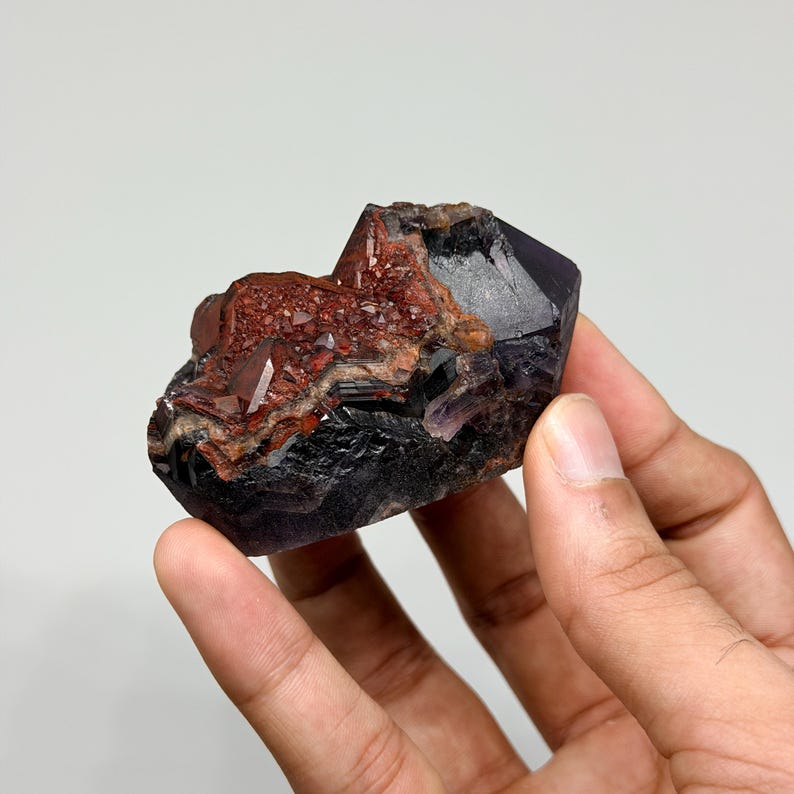
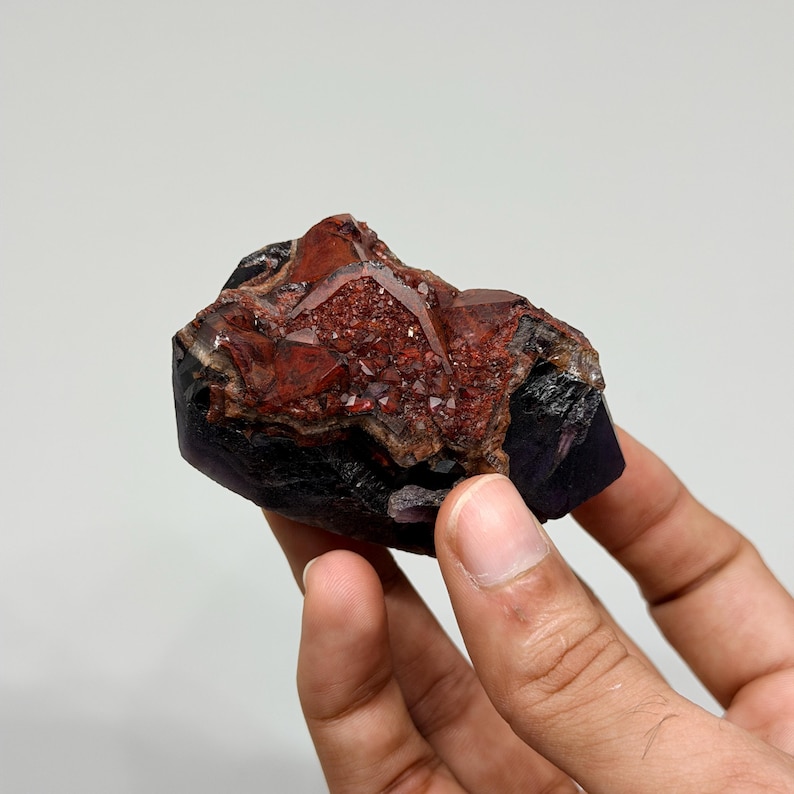
If the supply of silica outlasted the space available for flat banding, something else can happen: rather than more thin layers, the silica starts growing inward as individual crystals, points reaching toward the centre of the cavity from every wall at once. That's the moment a geode stops being a banded nodule and becomes a crystal-lined one. Clear quartz is what grows if the water is clean; other elements trapped in the crystal as it grows are what turn it into something else entirely.
Why so many geodes are amethyst
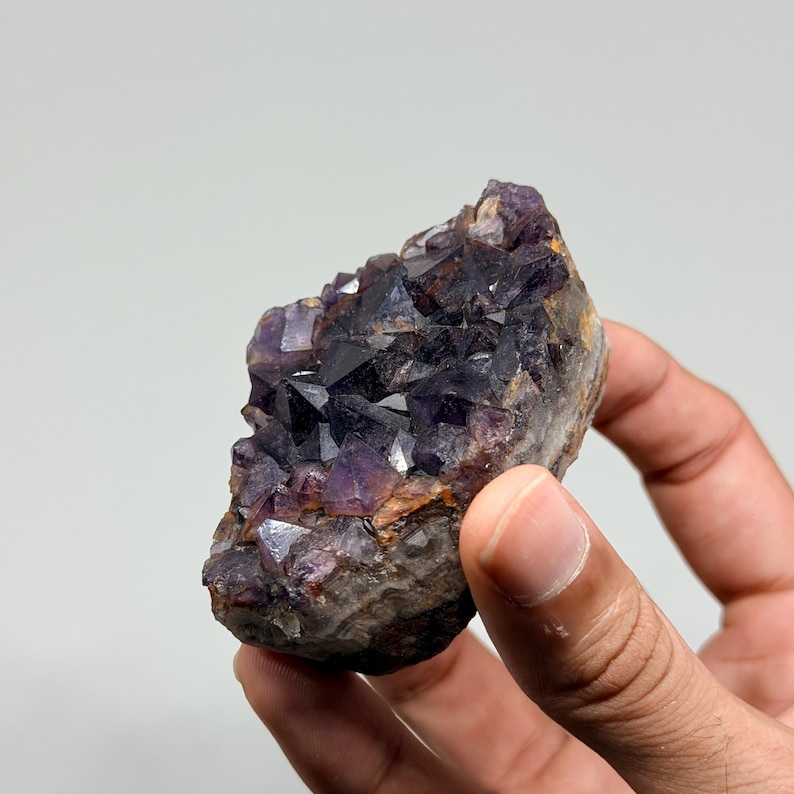
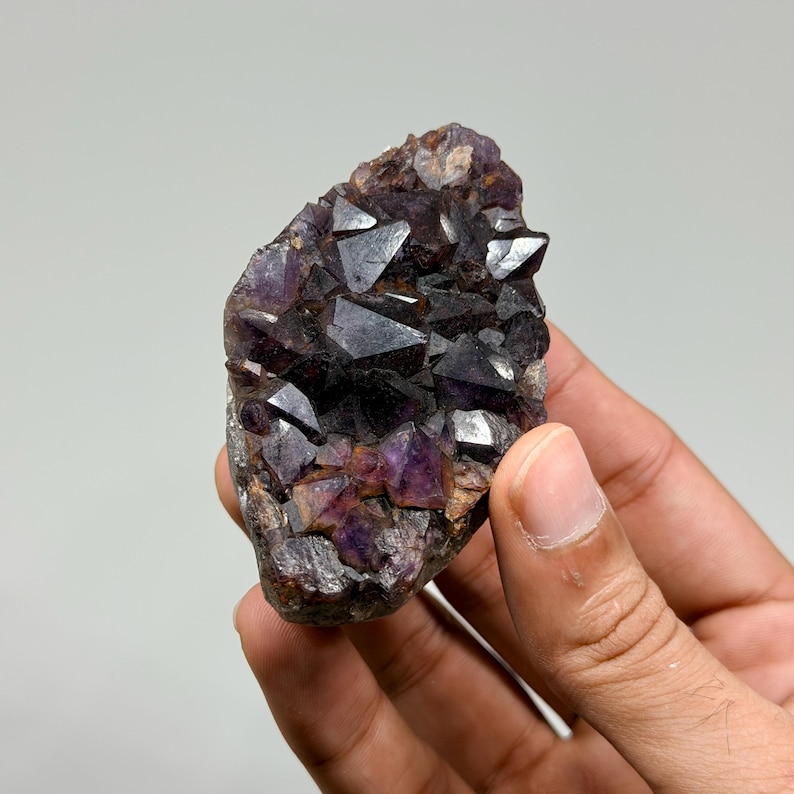
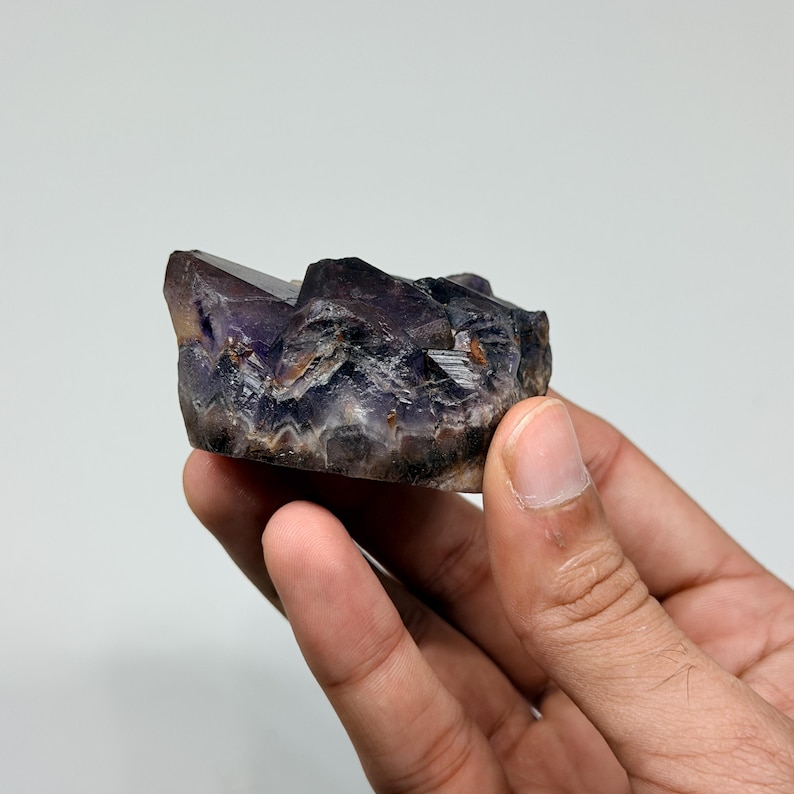
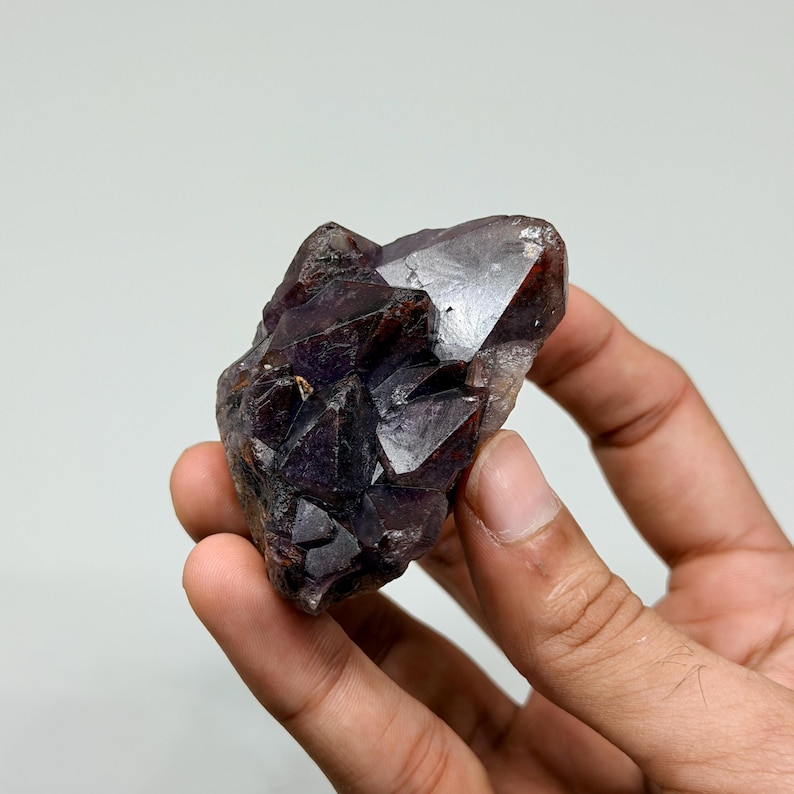
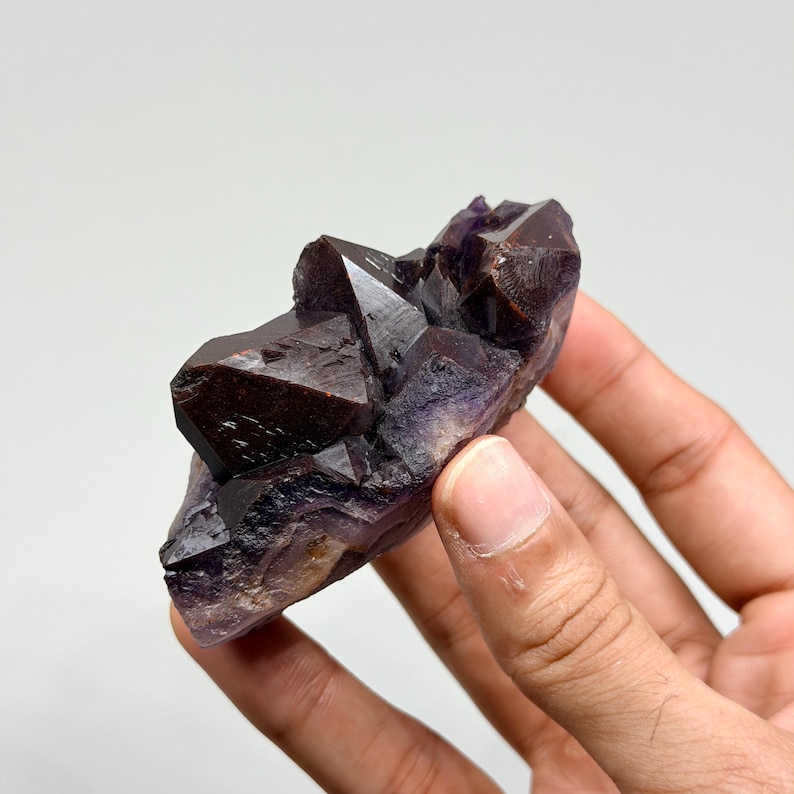
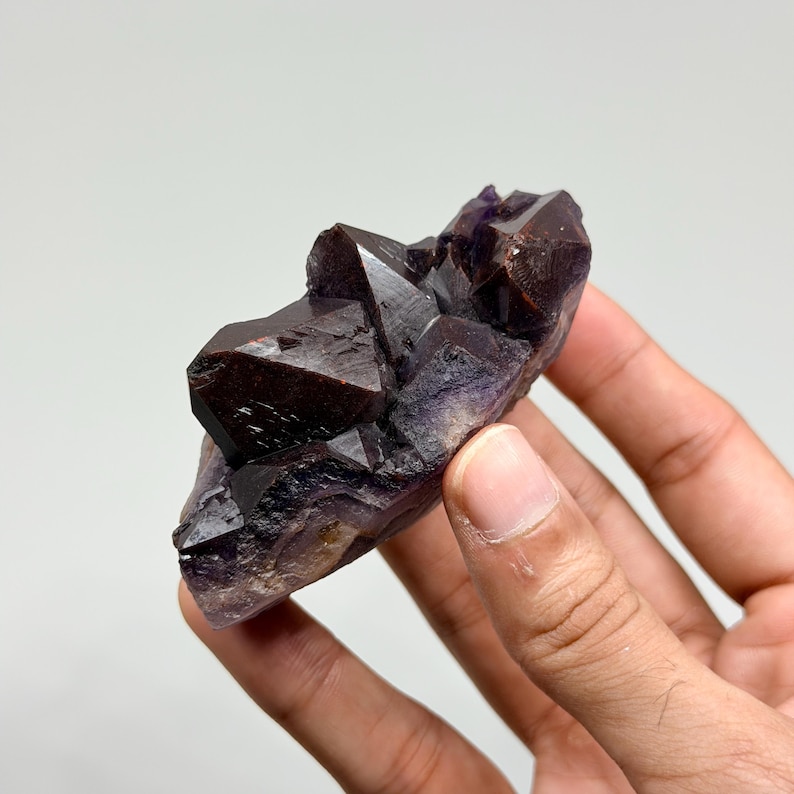
Amethyst is quartz coloured by trace iron that has been altered by natural background irradiation in the rock, and we've written before about why amethyst is purple in more detail. Geode cavities turn out to be an unusually good place for that to happen: growing slowly into open space from a wall rich in iron-bearing minerals gives the crystal plenty of time and the right chemistry to pick up that trace iron as it forms. The world's best amethyst geodes come from the basalt lava flows of southern Brazil and Uruguay, a volcanic story with a cousin much closer to home: the same kind of gas-bubble cavity, filled slowly by groundwater, is how most of India's apophyllite and zeolites grow in the basalt of the Deccan Traps, which we cover in why India's road quarries are full of crystals. Not every bubble fills with amethyst, though. Depending on what the groundwater is carrying, the same kind of cavity can instead fill with plain clear quartz, with calcite, or, less often, with other minerals entirely; calcite geodes are softer and show rhombic crystal faces rather than quartz's six-sided points, which is usually the fastest way to tell the two apart.
Hollow, solid, or somewhere in between
How far the process gets before it runs out of silica decides the geode's whole character. Stop early and you get a thin agate shell around a mostly empty cavity. Stop partway and you get a geode that's banded agate on the outside with a crust of small crystals further in. Keep going long enough and the crystals can grow all the way to the centre, closing the empty space entirely into a solid ball, which is really just an agate nodule by another name. None of this is predictable from the outside: a plain, round stone the size of a fist might be solid rock, a small crystal pocket, or a cavern you could fit a hand into, which is part of why cutting geodes open, rather than buying them pre-cut, has always had an element of a lottery to it.
Buying one, and spotting a fake
A genuine geode's crystals grow out of its own wall as one continuous piece of rock; there's no seam, and the points get smaller and less developed the closer they sit to the outer shell, since the ones nearer the centre had the most open space and the longest run to grow into. Be wary of a "geode" with an obvious ring of glue around the crystal cluster, or one where the colour looks painted onto the rock rather than growing from inside it: dyed and reconstructed geodes, sometimes built from cheap quartz chips set into a ring of resin, are common in the lower end of the market. We've covered the general signs of dye, glass and heat treatment across different stones in an honest guide to what's natural, and the same checks apply here: natural colour follows the crystal structure and shifts gradually, where dye tends to sit on the surface or pool in cracks. Geode halves are usually sold as a matched pair cut from the same stone, which is worth asking about if you want two that once fit together, and whole, uncut geodes are sold for the simple pleasure of still not knowing exactly what's inside.